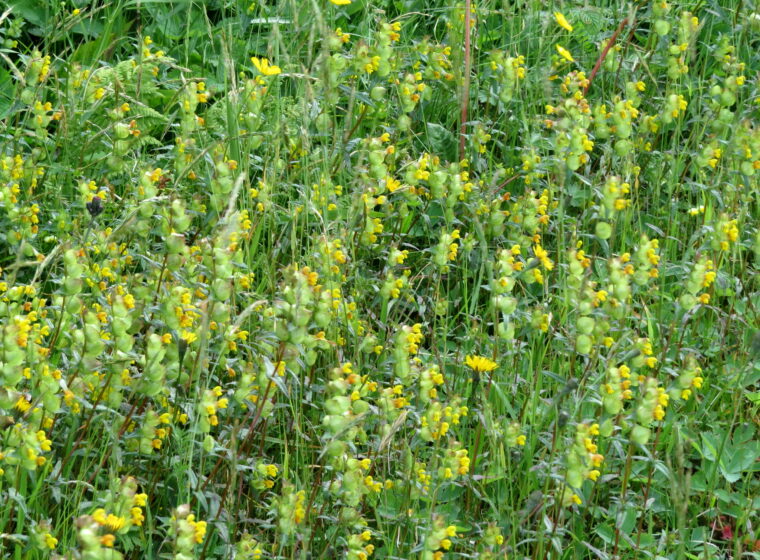
Holding the Line with Hayfield Invasives
Read about how one of our Grassland Ambassadors controls a villainous invasive species in his hayfields, while at the same time providing habitat for grassland birds.
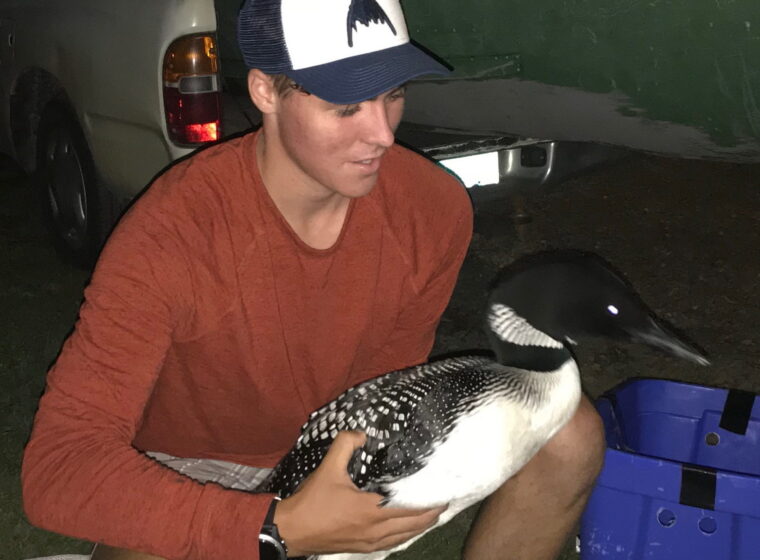
Field Update: Loon Wins and Losses
Every year, some of our returning loons get themselves into “hot water,” so to speak. Eric Hanson, VCE’s loon biologist, gives us his mid-season good news/bad news update here.
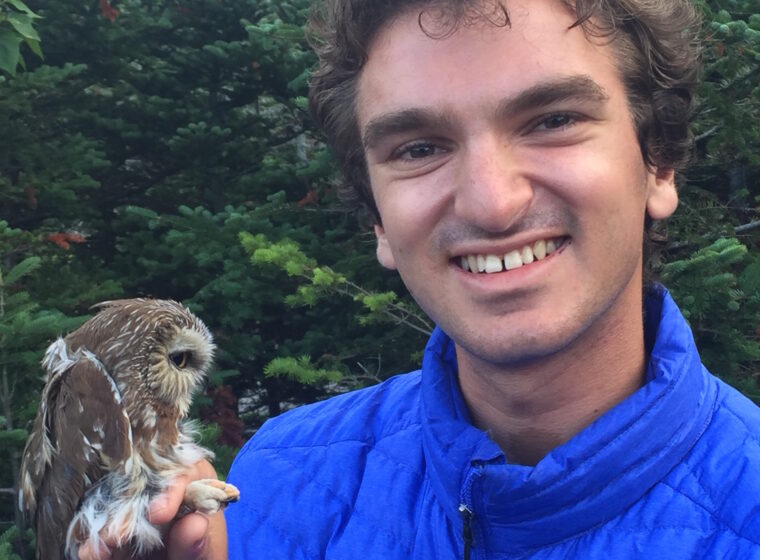
Mansfield Reflection: A Bird in the Hand Instills a Conservation Ethic
Alex Kulungian’s summerlong VCE internship gained him a wealth of experience and insight, including how vital it is that we expose and inspire our youth to take action on behalf of the natural world. An encounter as simple as releasing a banded bird on Mt. Mansfield can be the trigger for a lifetime commitment to conservation.
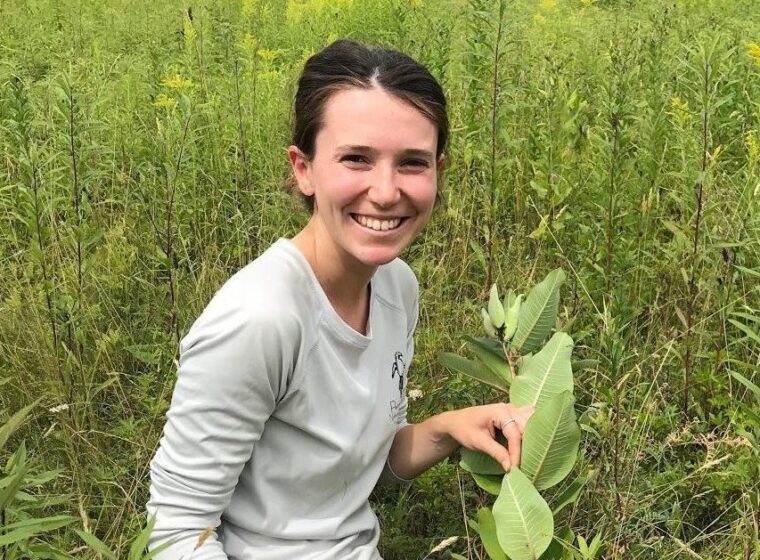
Mission Monarch Nearly Nixed by Missing Milkweed
What had been promised as an easy venture turned into something of a quest.
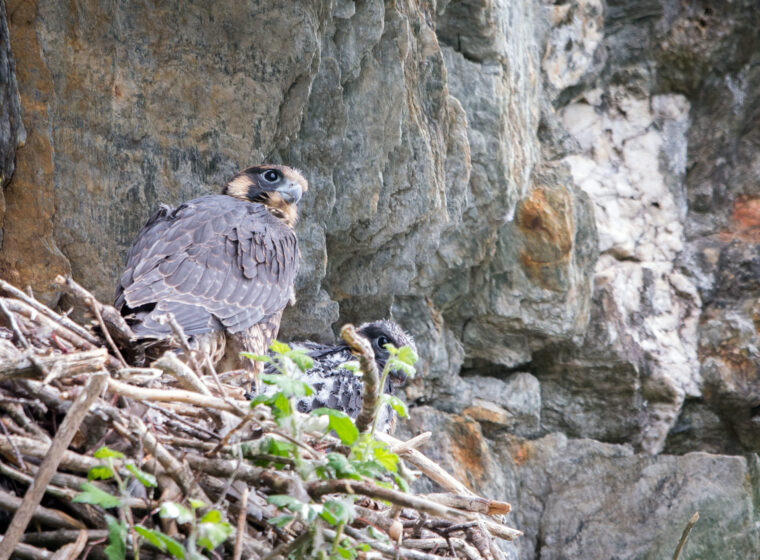
2018 Peregrine Falcon Nesting Season Complete
The Vermont Fish & Wildlife Department recently announced that Peregrine Falcon nesting season has ended, so hikers and rock climbers can return to Vermont cliffs starting August 1, 2018.
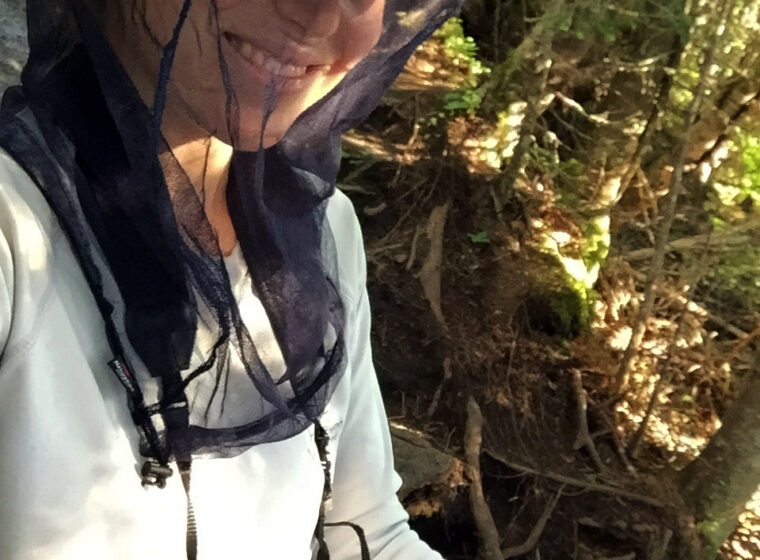
Weathering Whitcomb for Mountain Birdwatch
Tara Rodkey, VCE’s 2018 Alexander Dickey Conservation Intern, shares her reflections on a particular Mountain Birdwatch site on a mid-summer’s day (and night).
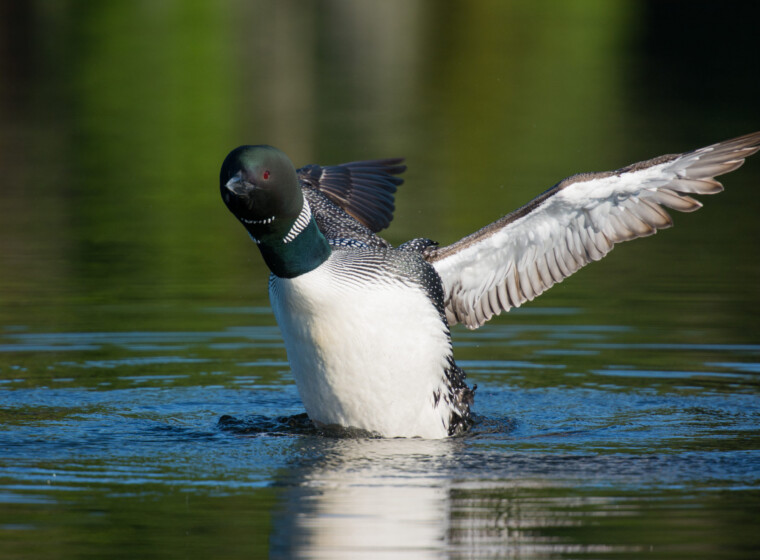
Give ‘Em Space: Observe Nesting Loons from a Distance
The Vermont Fish & Wildlife Department is asking boaters and anglers to enjoy loons from a safe distance this summer.
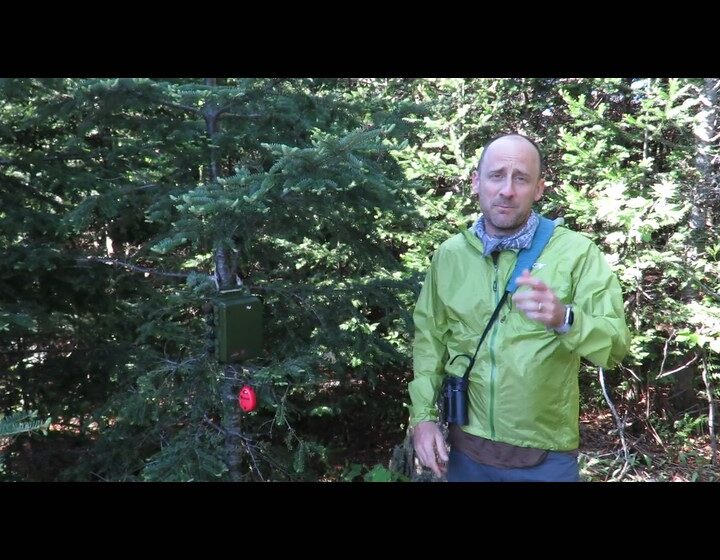
VCE Vlog: Field Update from the Great North Woods
VCE Director of Science John Lloyd recently emerged from the Great North Woods long enough to seek out a WiFi signal to share this brief update from the field. All of us here at VCE were relieved to see that the mosquitoes had not yet carried him away.
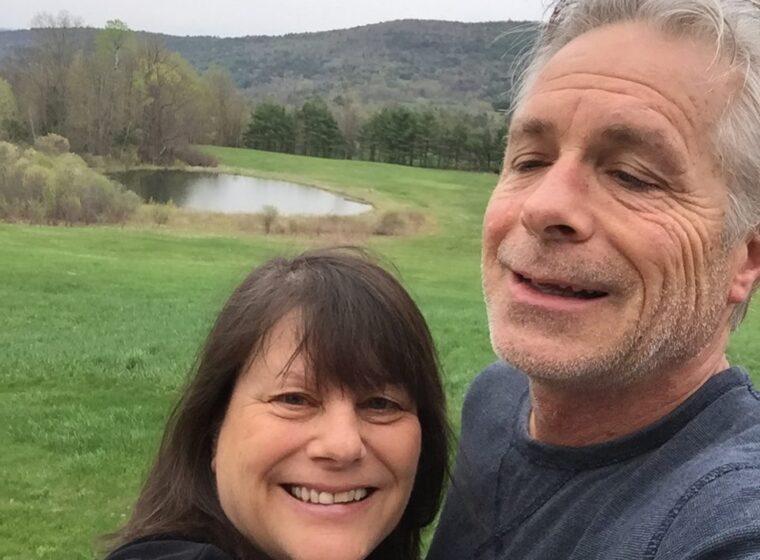
Grassland Ambassadors: Laughing Brook Farm
The Bobolink’s bubbly song has filled the summer fields of Julia and Greg Smist’s 100-acre farm in Westminster, VT for at least 30 years. A decade or so after buying the farm, Julia noticed fewer Bobolinks in the fields. Her observations echo a grim region-wide statistic: Bobolinks have declined by 75% in the region over the past 50 years.
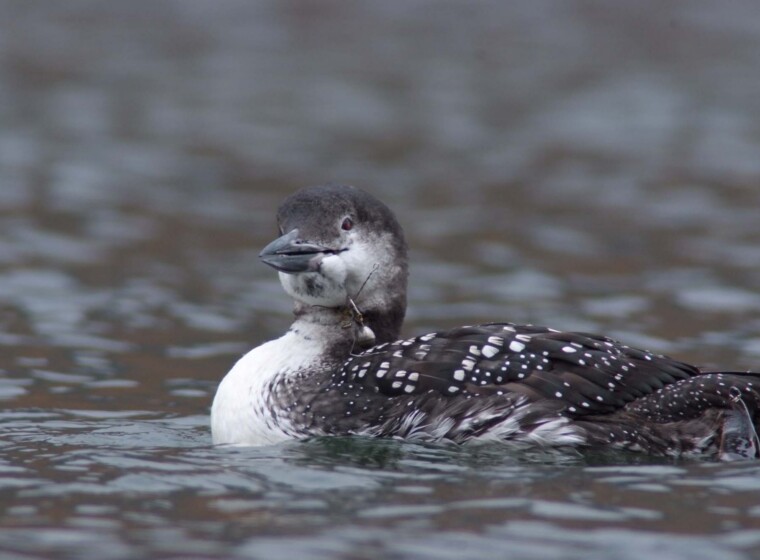
Lead Fishing Tackle Detrimental to NH Loon Population
A recent study of mortality in New Hampshire loons over 24 years reveals that ingestion of lead fishing gear (primarily jigs and sinkers) is the leading cause of death among adults. This troubling discovery helped spur a regulatory ban on sale and use of lead tackle, and lead-caused loon mortality rates have since declined statewide.
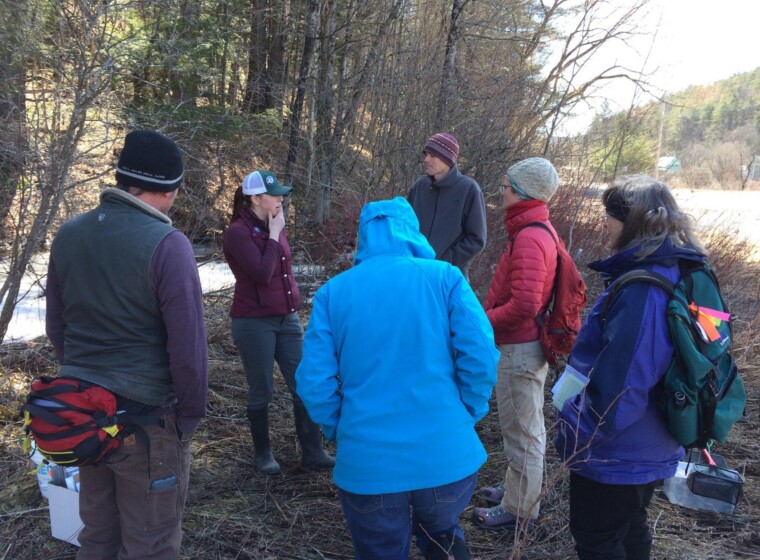
VCE Awarded 2018 TechGrant
VCE’s scientists continually seek to incorporate emerging technologies to enhance their data gathering and analysis capabilities, and thanks to a generous 2018 TechGrant award from the TechFoundation, VCE’s Vernal Pool Monitoring Project will benefit from such a technological boost.

Success: Crossing Boundaries for Conservation
VCE announces finalization of the Strategic Conservation Plan for Sierra de Bahoruco National Park in the Dominican Republic. The plan, which VCE helped to both fund and facilitate, aims to preserve the park’s unique forested habitats for the benefit of plants, wildlife, and humans alike.