How Birds Are Impacted by Atlantic Hurricanes
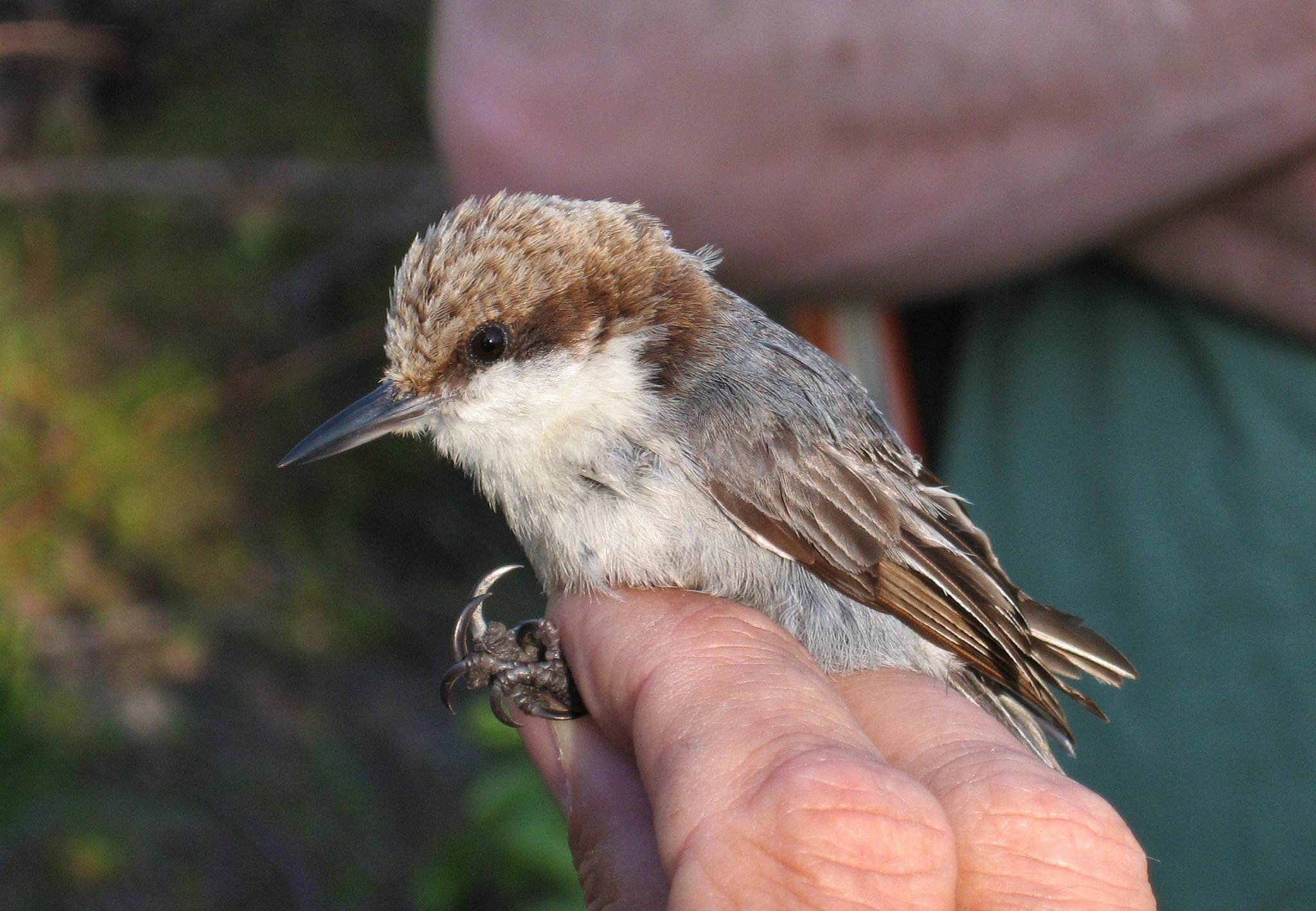
No one has seen a Bahama Nuthatch (Sitta insularis) since a 2019 hurricane wiped out its favored habitat. This observation is from 2007. © Tom Benson on iNaturalist, some rights reserved CC-BY-NC
Support migratory bird research and other projects like this by making a donation to Vermont Center for Ecostudies! Learn about other ways to support VCE here.
So devastating were these storms that we have little to report in the way of storm-blown birds: the affected areas were too damaged and inaccessible to permit birding, and many beloved birding and banding areas along the Gulf of Mexico coast were altered beyond recognition.
—Brian L. Sullivan and Christopher L. Wood “The Changing Seasons: A Plea for the Common Birds,” North American Birds (2005 vol. 59, no. 1)
The highest windspeed I’ve ever felt was 60 miles per hour on the Mount Mansfield ridgeline, on a fall day that was sunny and clear. To my disappointment, it was not strong enough to lean into, but it did keep me off balance as I headed for the peak.
As VCE’s Caribbean conservation coordinator, I have been on the edge of a few hurricanes, but luckily never too close. When the tropical hurricane season rolls in each June, I think about the power of winds more than twice as strong as I’ve ever known and what it must be like to be a small songbird in that storm.
In the Storm
The challenges that storms cause for people are not all that different for birds. First, they must survive the storm, then survive its aftermath, with all the changes it has wrought on the neighborhood. Just like for people, there are long-term effects in the wake of hurricanes that play out over years or even decades that will affect how they thrive in the place they’ve known as home.
As tough as birds are, surviving winds greater than 100 miles per hour and driving rain can’t be easy. For most birds, the best option is probably to just hunker down the best they can in thicker vegetation and wait it out for a day or three. A healthy, dense forest is a songbird’s port in a storm. 
Any birds that the storm sweeps up must keep flying until they find cover or the storm relents. These storm-wrecked birds may end up hundreds or thousands of miles from their native range. Such was the case in August 1893, when a Category 3 tropical cyclone struck New York City and moved up the Hudson Valley. In its wake, people in Virginia, central New York, Toronto, Vermont and New Hampshire all found storm-wrecked Black-capped Petrels: crow-sized seabirds that usually live out their happy lives on the coasts and islands in tropical climes. Similarly, in September 2008, Category 4 Hurricane Ike deposited a Magnificent Frigatebird—usually found in the Caribbean—on Cayuga Lake, in central New York.
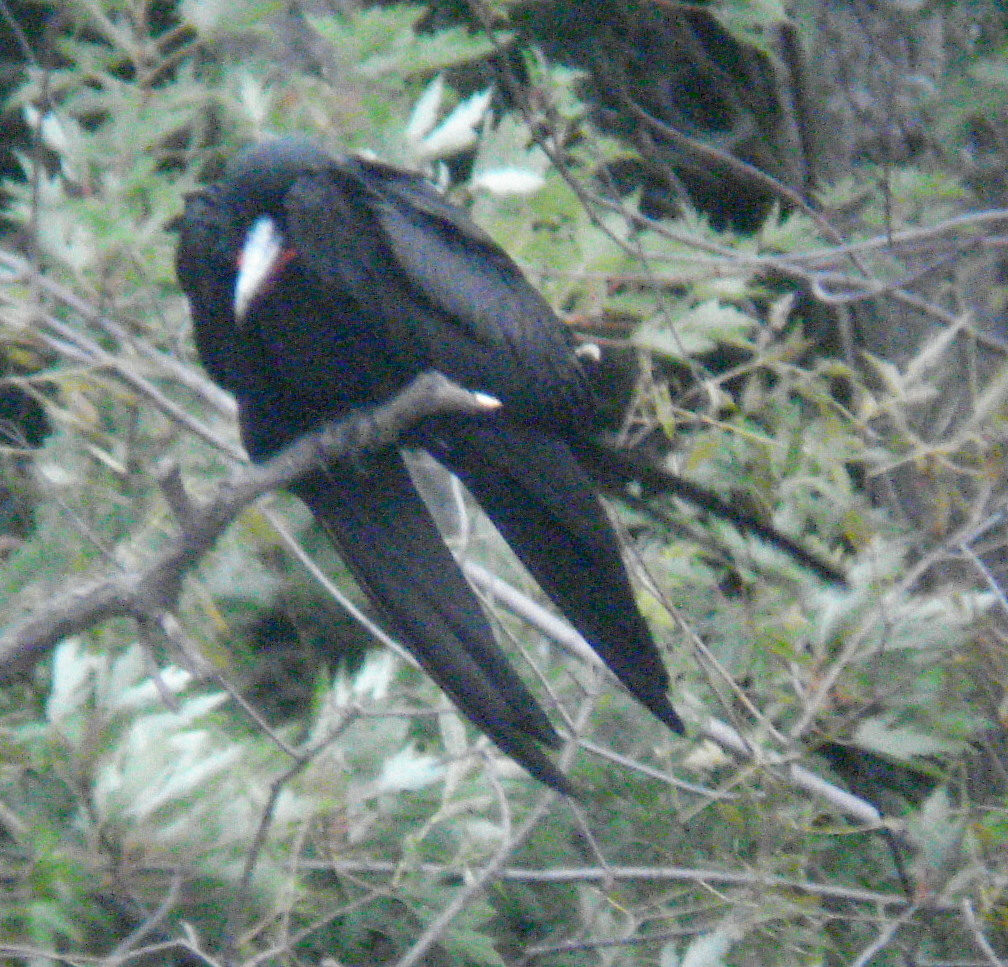
An observation of a storm-wrecked Magnificent Frigatebird (Fregata magnificens) in the Cayuga Lake basin. © Chris Tessaglia-Hymes on iNaturalist, some rights reserved, CC-BY-NC
Unsurprisingly, so far from home, neither the frigatebird nor petrels survived very long. Although high-tech GPS tracking of frigatebirds has shown that they can fly for months without ever touching land, that works only when they can find food along the way. This one perished one day after it was first observed inland.
What about songbirds that may be migrating south as a hurricane comes north? There are two things that songbirds do to increase their chance of success before making big jumps across open water, such as the Gulf of Mexico. First, they eat voraciously for a week or two to pile on fat that will power a flight that may last 30 hours or more. Blackpoll Warblers double their weight before migrating. (For your typical car, this would be like having a 600-gallon gas tank!) Second, they wait for favorable winds. They are unlikely to take off right into a hurricane.
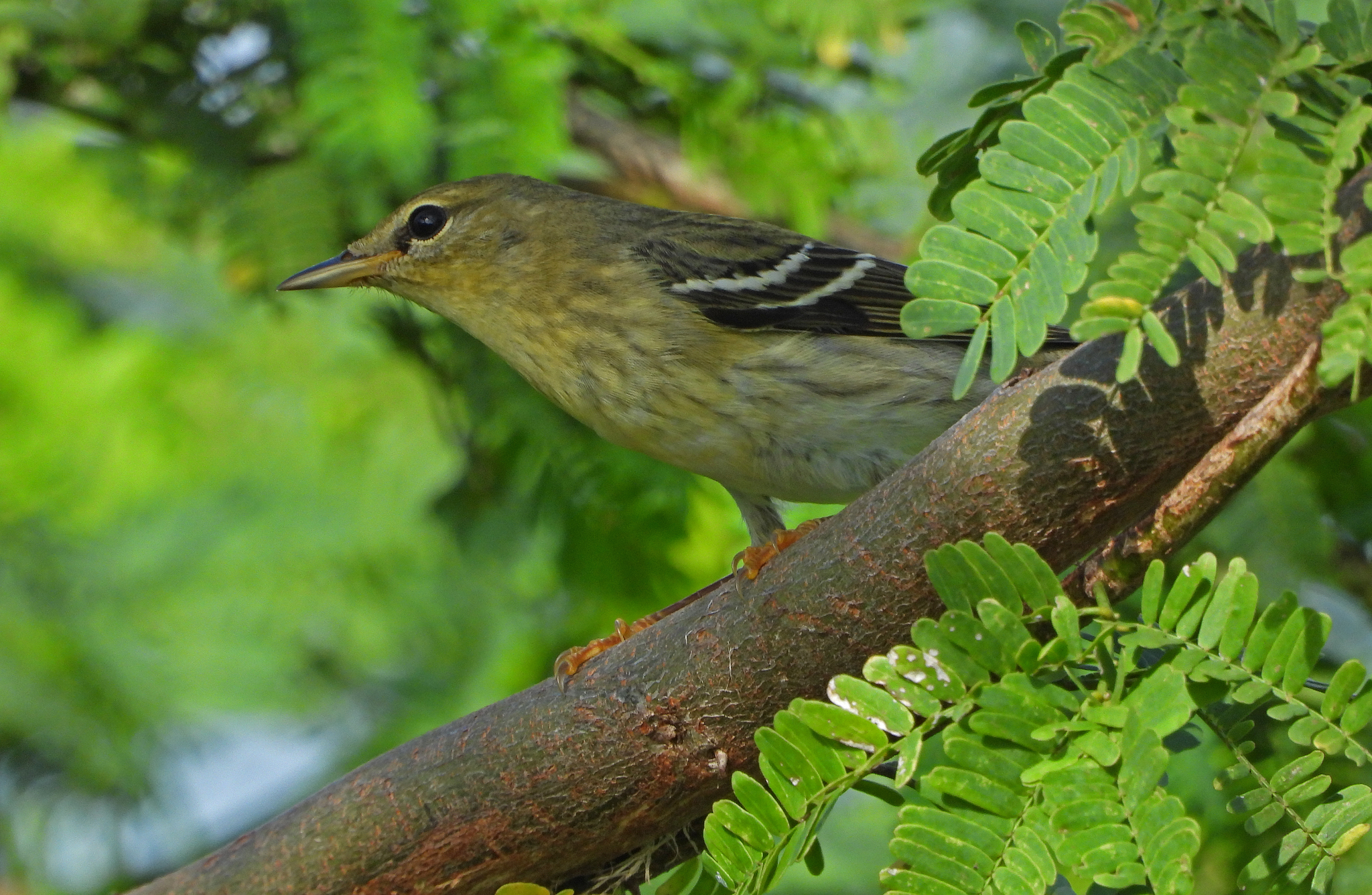
Blackpoll Warblers (Setophaga striata), like this one seen wintering on the island of Antigua and Barbuda, double their weight in preparation to migrate over the Atlantic. © Paul Lewis on iNaturalist, some rights reserved CC-BY-NC
So what if a bird is already far offshore when it encounters the storm? It might come down to luck. Because hurricanes in the northern hemisphere rotate counterclockwise, if the bird is on the west side of the storm, it may get a welcome tailwind that helps it on its way and saves energy. If the bird is on the east side, it will encounter stiff headwinds and will likely be in big trouble.
After the Storm
As with the frigatebird, surviving the storm is only the beginning. Birds that took shelter for a few days during the storm urgently need to restore their energy stores but often find that nature’s larder is bare. Intense winds can flatten whole forests, but even moderate hurricane winds break branches and can strip trees of every last leaf, fruit and flower. Insect populations may bottom out as well.
The populations of nectar eaters (like hummingbirds) and fruit eaters (like parrots) typically plummet after hurricanes, and local populations may take years to recover. Leaves take at least a few weeks to grow back on the stumps of branches on what trees remain, and a whole year’s crop of a variety of fruits may be lost.
Anywhere that a violent storm has leveled a forest, it will take decades, if not centuries to fully recover. Birds that nest in cavities in large trees may disappear from the area. Even if they stick around, they may fail to breed successfully. Along the shore, storm surges can flood forests with saltwater that can wipe out large swaths of coastal vegetation. High winds can physically spread invasive species, and the way that hurricanes can set the clock back to zero for ecological succession can provide the perfect opportunity for invasive grasses and shrubs to get a toehold.
In the worst case, populations do not recover. For dozens of species in the Caribbean that are confined to small islands with reduced populations and degraded habitat, extinction may be just one big hurricane away. In 2019, Hurricane Dorian, a Category 5 storm, hit the Bahamas with 185 mph winds and wiped out the Caribbean Pine habitat of Bahama Nuthatches. Nobody has seen them since.
The opening quote from Sullivan and Wood points out an abiding challenge for scientists who seek to understand the impact of hurricanes on wild populations of birds and other wildlife and their habitats: It is not easy to collect data in the wake of a hurricane, because the access is difficult and often dangerous. Local people—even the most ardent bird lovers—are fully focused on their own recovery and helping their neighbors.
Before the Storm
Another challenge is that many areas swept by hurricanes had scant data on the health of bird populations before the hurricanes did their damage.
Data collection using platforms such as eBird, iNaturalist and iButterfly won’t totally solve the problem, but they can help a lot. So before hurricane season really gets started, make sure to get out there and eBird and iNat!
Support migratory bird research and other projects like this by making a donation to Vermont Center for Ecostudies! Learn about other ways to support VCE here.