The Story of VCE
The Vermont Center for Ecostudies was founded in 2007 by a small group of conservation biologists.
Their goal was to conduct long term biodiversity monitoring and research to aid in the conservation of wildlife such as birds, insects, and amphibians. Since then, our organization has developed an international reputation for rigorous, groundbreaking, and community-based research that has benefitted wildlife throughout the Americas.
A History of VCE’s Impact
In the early 1990s, VCE cofounder Chris Rimmer hired Steve Faccio as the second full-time biologist at the Vermont Institute of Natural Science (VINS), joining Rosalind Renfrew, who was a seasonal field technician for peregrines, loons, and terns. Faccio took the reins of the VINS bird-banding station and the Vermont Forest Bird Monitoring Program, and Kent McFarland joined the team a year later.
In 1991, Rimmer watched a presentation suggesting that Bicknell’s Thrush was a distinct species, apart from Gray-cheeked Thrush. Rimmer decided to learn more about this bird, and from 1992 to 1995, he and volunteer community scientists conducted hiking surveys in June on 100 different peaks in five northeastern states, and found Bicknell’s Thrush on 63 of them. This three-year study was the forerunner of what would become Mountain Birdwatch .
Jim Chace and Dan Lambert ran the fall banding station daily © Kent McFarland
Rimmer and McFarland then established study sites from the Catskills to the northern Green Mountains to study Bicknell’s Thrush breeding ecology. Many young biologists and ornithologists, including VCE’s current-day Associate Director Dan Lambert and Caribbean Conservation Coordinator Jim Goetz, got their start on those mountaintops. As seasonal technicians, they captured and tagged birds, color-banding them so they could count them and track individuals, and placed lightweight backpacks with radiotelemetry tags to monitor their activities on the mountain and in the Dominican Republic, where the scientists followed the birds during the winter. That research quickly expanded to encompass other mountain songbirds and continues today on Mount Mansfield and in the DR .
In 1998, Eric Hanson joined the team at VINS to oversee the Vermont Loon Conservation Project, a joint project with the Vermont Fish and Wildlife Department. There were 30 nesting loon pairs counted in the state at the time, about a quarter of the number we have today.
In 1999, Rimmer hired Dan Lambert to increase community engagement and launch Mountain Birdwatch, which became a cornerstone of the Northeast Coordinated Bird Monitoring Partnership (2007-2009).
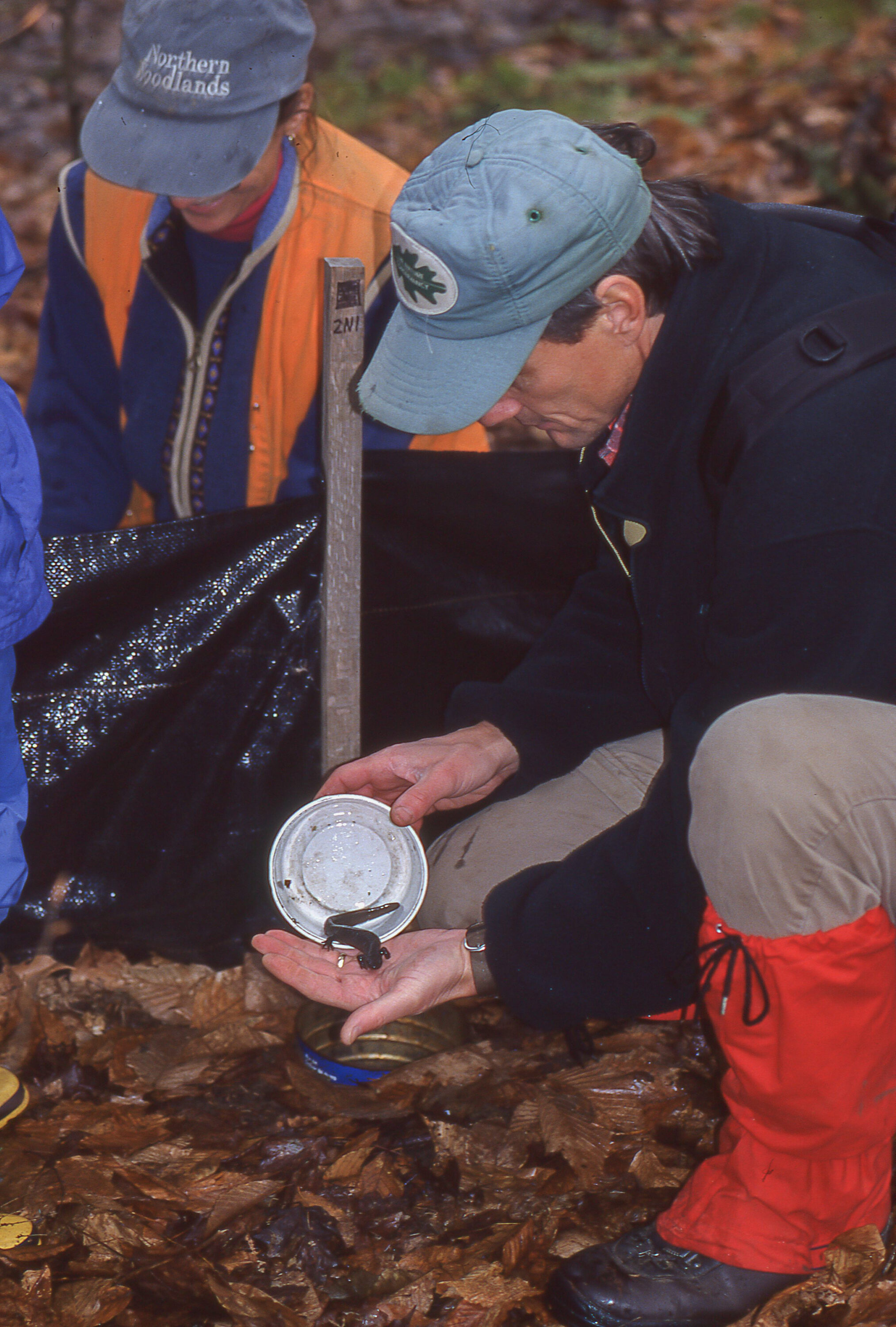
Biologist Steve Faccio releasing a Jefferson’s salamander near a vernal pool on spring migration. © Kent McFarland
In 2000, Faccio expanded his focus from Peregrine Falcon and songbird monitoring to break new ground with a telemetry study of Ambystoma salamanders. By implanting tiny radio transmitters in Jefferson and Spotted Salamanders, then tracking them from their vernal pool breeding sites, he discovered that they overwinter in subterranean rodent tunnels and utilize terrestrial life zones up to 157 meters from their breeding pools. His published research led directly to the establishment of legally protected buffer zones around vernal pools.
In 2001, Susan Hindinger became director of the VINS branch office in Manchester.
From 2002 to 2007, McFarland led the first Vermont Butterfly Atlas, a crowdsourced effort to document every butterfly species present in the state of Vermont. Renfrew rejoined VINS’ Conservation Biology Department after grad school to lead the Second Vermont Breeding Bird Atlas, a follow-up to the first atlas spearheaded by VINS cofounder Sally Laughlin. Renfrew also started to research grassland birds in New England.
In 2003, McFarland started Vermont eBird, the first state portal for eBird, a web platform by the Cornell Lab of Ornithology devoted to collecting bird counts from volunteers.
In 2005, Common Loon and Peregrine Falcon were removed from the Vermont Threatened and Endangered Species thanks in large part to the monitoring and recovery efforts of VINS biologists and their partners. That same year, the team published a ground-breaking paper that documented pervasive mercury concentrations in the blood and feathers of mountain-dwelling Bicknell’s Thrush. Those findings not only surprised many previously skeptical scientists, who considered mercury to be strictly a problem of aquatic ecosystems, but helped spur regulations that led to reduced industrial mercury-laden emissions in the Northeast.
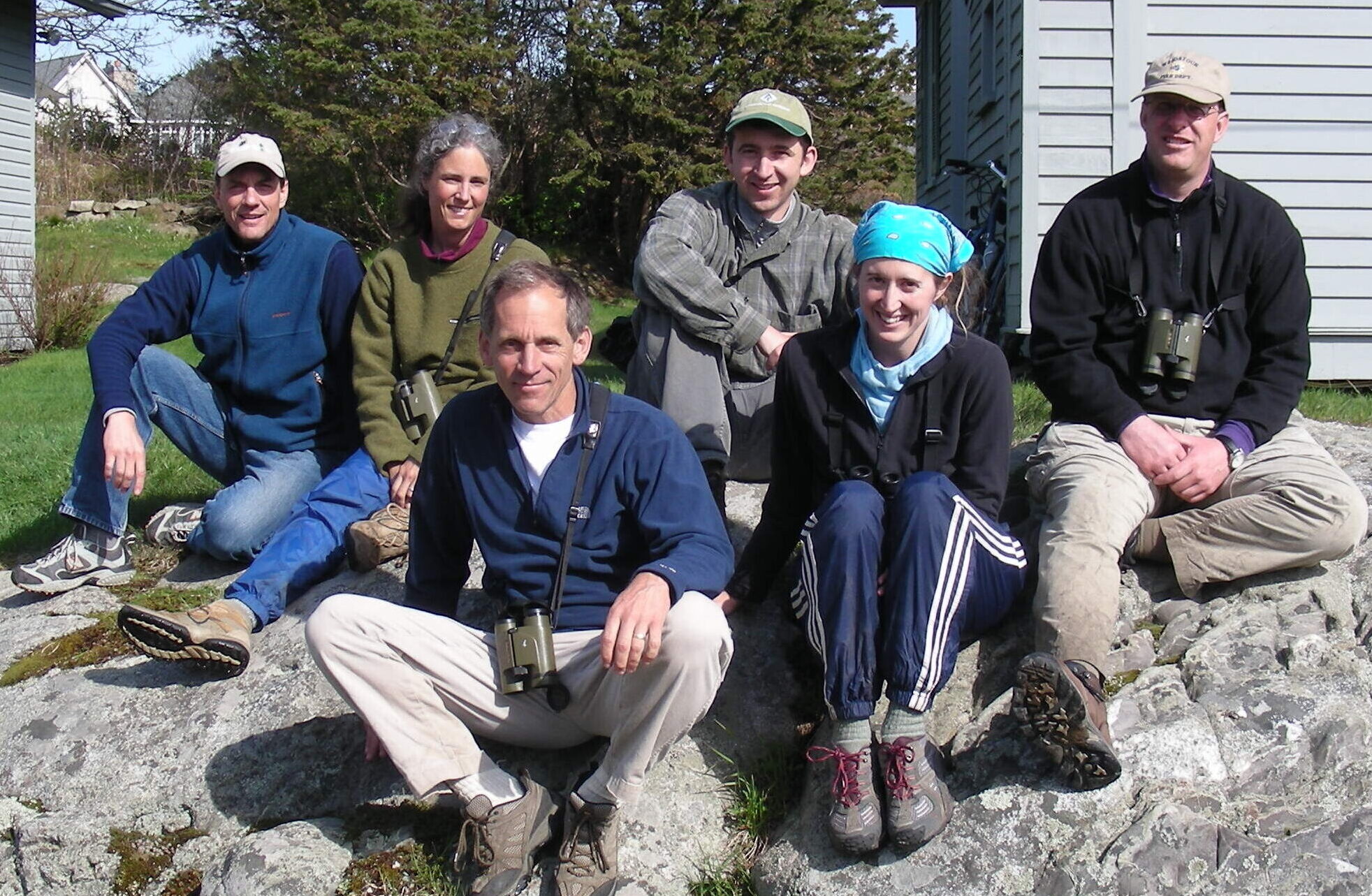
The early days, 2007 Birdathon
In 2007, the Conservation Biology Department of VINS broke away to found a research-focused conservation institution: the Vermont Center for Ecostudies (VCE), renting an office in White River Junction. VCE still collaborates with VINS today on loon rehabilitation and conservation outreach.
McFarland and Rimmer also established the International Bicknell’s Thrush Conservation Group, with partners from academia and government in the U.S., the Dominican Republic, Canada, and other countries with a responsibility for part of the Bicknell’s Thrush’s annual cycle.
Renfrew published the first of several groundbreaking papers on the wintering distribution and ecology of the Bobolinks in South America.
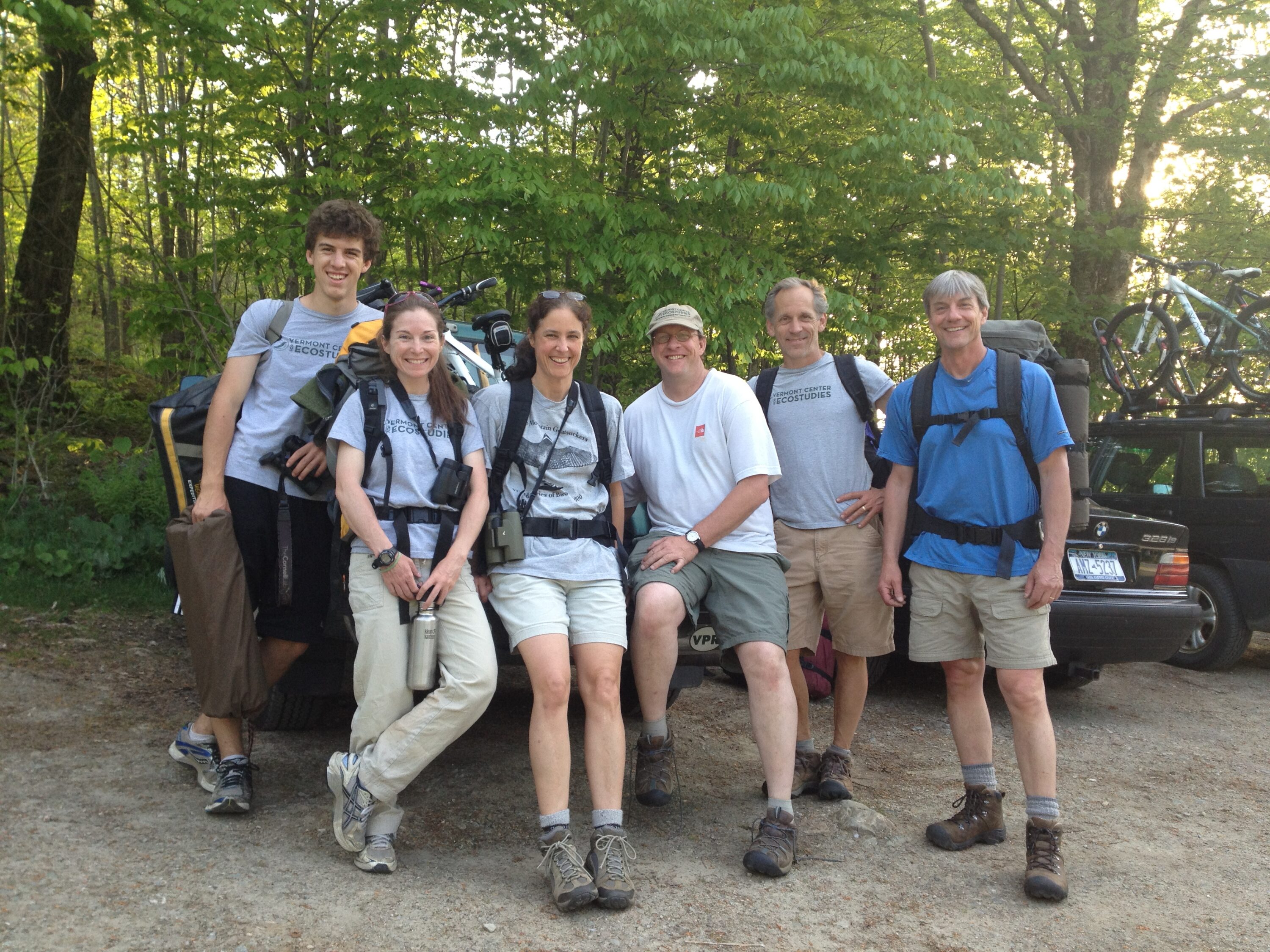
Spencer Hardy and VCE founders in 2012.
In 2012, VCE continued its expansion, hiring more seasonal technicians, including a local recent high school grad, Spencer Hardy, who would become VCE’s bee biologist.
In 2013, McFarland launched an audacious project to document every species of living thing found in Vermont, called the Vermont Atlas of Life (VAL), a website, database, and crowdsourced map that allows anyone to add observations of plants and wildlife, and look up what has been observed near them. VCE was an early adopter of the tool iNaturalist, using it to populate VAL with the prescient hope that crowdsourcing data could allow researchers to more efficiently and accurately assess the health and status of species populations in the state. This early adoption would lead to Vermont today having by far the most observations per capita of any state.
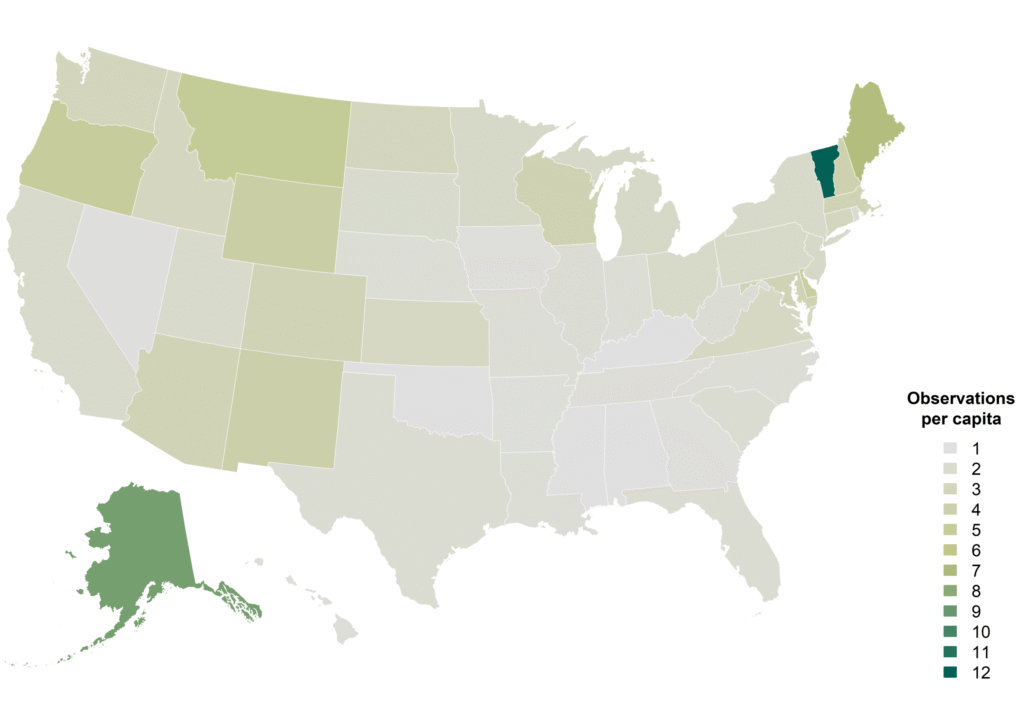
Community scientists in Vermont lead the nation with more biodiversity observations shared per capita than any other state.
The book documenting the results of the Second Atlas of Breeding Birds of Vermont, a project led by Renfrew, was published.
Kent McFarland surveying for butterflies. © Nathaniel Sharp
In 2014, McFarland helped expand e-Butterfly.org, an online butterfly tracking tool that had been created in Canada, to the United States.
In 2015 , McFarland launched the Phoenix Project, a volunteer effort to digitize thousands of handwritten species records to get them into the Vermont Atlas of Life. VCE also collaborated with Canadian researchers to fit new, lightweight radio receivers to tiny migrating Blackpoll Warblers to discover their astonishing, 1,500-mile nonstop journey over the Atlantic to their winter breeding grounds. Jason Hill joined the staff as a post-doctoral researcher.
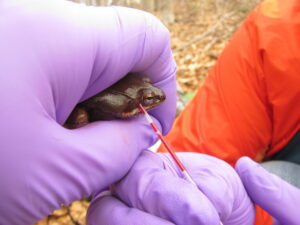
Collecting a blood sample from the facial vein of a Wood Frog for mercury analysis. © Steve Faccio
From 2015 to 2017, Faccio documented methylmercury bioaccumulation in vernal-pool-breeding Wood Frogs and Spotted Salamanders. He next launched the volunteer-driven Vermont Vernal Pool Monitoring Project, then created the Vernal Pool Atlas, an online database and map of pool locations for community scientists. Location data and field verification methods from the Vermont Vernal Pool Atlas are used extensively by wetland biologists to ensure compliance with regulatory protections, and have inspired similar efforts in Canada and the Midwest.
In 2018, buoyed by the success of its cooperative, evidence-based approach, VCE’s leadership set out to dramatically increase VCE’s capacity and conservation impact with a fundraising campaign to raise $5 million. VCE’s second five-year strategic plan set out three goals:
- invest in pioneering science;
- collaborate for conservation outcomes; and
- broaden our vision for community science.
That year, Jason Loomis also joined the team to help build out VAL’s data-processing technology.
In 2019, VCE’s Bumble Bee Atlas revealed a striking decline in Vermont’s bumble bees, spurring legislative measures to protect them. VCE researchers discovered the secrets of multi-generational migration among Common Green Darner dragonflies using its experience with stable isotope chemical analysis and observation data. It also launched the Wild Bee Atlas, coordinated by Spencer Hardy.
VCE and the U.S. Fish and Wildlife Service published a Full Lifecycle Conservation Plan for Bobolink, a pioneering approach to migratory bird protection and the result of massive cross-national effort led by Renfrew. Renfrew left VCE and eventually became the Wildlife Diversity Program Manager at the Vermont Fish & Wildlife Department, where she continues to work closely with VCE biologists.
In 2020, VCE scientists mobilized volunteers to document lady beetles for the pilot year of the Vermont Lady Beetle Atlas, yielding the rediscovery of two species that had been lost for more than 40 years: the Four-spotted Spurleg Lady Beetle and the Octavia Lady Beetle. Kevin Tolan joined the team after a stint as an Americorps member.
In 2021, VCE led short-term volunteer efforts to document Giant Silkmoth cocoons in the winter and Eastern Meadowlarks in the summer, and continued a tradition of the July Moth Blitz, gathering valuable information about the health and locations of these treasured species. Michael Hallworth, Ryan Rebozo, and Eloise Girard all joined the science team.
A study led by Hallworth used tracking technology, community science, and remote sensing technology to show that forest habitat loss in the breeding grounds of a long-distance migratory songbird, the Connecticut Warbler, is a primary driver of population declines, pointing to the importance of protecting large forested patches on the breeding grounds for migratory songbirds.
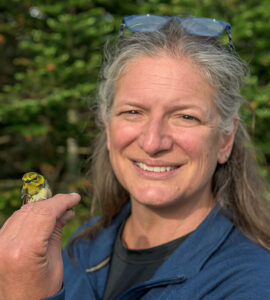 In 2022, founding Executive Director Chris Rimmer retired and passed the torch to Susan Hindinger, who had joined VCE in 2014 as Associate Director. VCE also bought the building housing its office, and published “The State of Vermont’s Wild Bees,” the first-ever report on the status, threats, and conservation opportunities for these critical pollinators. It identified 55 species in urgent need of protection in Vermont. Kent McFarland and a team of biologists, engineers, and computer scientists from around the world launched an AI-assisted automated moth monitoring system.
In 2023, the 2nd Vermont Butterfly Atlas was launched. Desirée Narango joined the science team as a principal investigator, and Amber Jones joined as a seasonal technician. Jim Goetz returned to chair the International Bicknell’s Thrush Conservation Group (IBTCG) and serve as VCE’s Caribbean Conservation Coordinator.
In 2024, VCE launched the final phase of its fundraising campaign: ALL IN for Biodiversity, ultimately finding success in raising funds for an expansion. Brian Kron joined the science team as a postdoc, Megan Massa joined to manage VCE’s vast catalogue of Vermont biodiversity data, and Dana Williams joined to guide volunteers for VCE’s community science projects.
A study led by Hallworth showed that tree mast events across the Northeast—when trees produce an unusually high amount of seeds—leads to higher red squirrel populations and an expansion into the montane spruce-fir zone, which leads to increased nest predation, reducing nest survival of breeding songbirds.
With the help of other cofounders of the Vermont Pollinator Working Group (which was formed based on an action item suggestion in VCE’s State of Wild Bees 2022 report), VCE’s wild bee research lent the urgency needed to spur the passage of Act 182, making Vermont only the second U.S. state to restrict the widespread use of neonicotinoid-coated seeds.