Join Our Team
Biodiversity loss is one of the most pressing challenges of our time, and VCE is confronting the issue by assessing the status of wildlife and plant populations and generating the science needed to reverse declines.
Together with volunteer naturalists and partner organizations, we study birds, amphibians, insects, and other taxa in a variety of ecosystems, sharing results widely to help inform environmental decisions. VCE leads and participates in significant collaborations with state and federal wildlife agencies, non-governmental organizations, and universities throughout New England and as far away as the Caribbean Basin. Our scientists are nationally and internationally recognized for their expertise in participatory, applied, and quantitative ecology.
While our programs and influence reach far beyond Vermont, collaboration with community members remains a hallmark of our work. A deeply embedded culture of environmental stewardship in the state enables the uptake of VCE’s science in on-the-ground conservation and management decisions locally, with ripple effects across the globe.
Help VCE Find Our Next Executive Director
An inspiring opportunity to guide an internationally respected conservation science organization.
The Executive Director is responsible for the strategic leadership and compassionate management of VCE’s staff while reporting to and working closely with the Board of Directors. They provide leadership for all aspects of VCE, including strategy, fundraising, external relations, program development, financial management, and partnerships with other institutions and the broader community. The Executive Director also works to increase VCE’s national and international visibility and impact, and to ensure that the organization’s structure and systems keep pace as programs evolve. The organization’s renowned profile in a small state affords VCE’s leader the opportunity to be an influential voice for science-based conservation at a critical moment for biodiversity protection.
VCE approaches major donor engagement as a partnership among the Executive Director, Director of Development, and Board of Directors, working in concert with senior staff. Following the recent completion of a $5M campaign and an increase in organizational capacity, VCE is poised to welcome a new leader to help grow unrestricted revenue over the next five years at an average rate of 10-15%. These ambitious targets are attainable given VCE’s strong reputation, deep community goodwill, and significant untapped donor capacity.
Executive Director Candidate Profile
The ideal candidate will be a collaborative, mission-driven leader with demonstrated experience in nonprofit or scientific organizational leadership, fundraising, and strategic management. They will bring a strong understanding of conservation science, exceptional communication and relationship-building skills, and a commitment to fostering an inclusive and supportive organizational culture.
While no one candidate will have every experience outlined in the position description, strong candidates will display many of the following professional and personal qualities, skills, and characteristics:
- 5+ years of experience leading a nonprofit organization, academic enterprise, or public entity focused on science and/or conservation.
- Experience leading an organization through a period of growth and increasing complexity, including demonstrated success identifying and leveraging external partnerships to drive outsized impact.
- Ability to communicate complex scientific concepts clearly to broad, non-scientific audiences.
- Ability to carry out external responsibilities while motivating a results-oriented team.
- Extensive fundraising experience with a knack for building authentic relationships with supporters.
- Demonstrated financial management skills, including budgeting, analysis, and reporting.
- Experience engaging volunteers, supporters, and collaborators in discussions of biodiversity research, monitoring, and conservation.
- Strong written and verbal communication skills, including an engaging and persuasive style.
- A strong commitment to furthering diversity, equity, access, and inclusion.
- Excellent management skills, including the ability to foster collaboration among staff members and facilitate advances in efficiency and effectiveness.
- Experience recruiting, developing, and supervising a senior management team.
- A record of thoughtful, respectful leadership and a willingness to lead by example.
- Experience working with Board members and managing board development.
- An advanced degree in natural science with a corresponding record of professional achievement, or advanced degree in leadership, nonprofit management, or other related fields.
Get in Touch About this Executive Director Position
DSG | Koya has been exclusively retained for this engagement, which is being led by Liz Lombard and Ariella Pasackow. You may express interest in this role by submitting your resume and cover letter to the DSG | Koya Talent Profile. All inquiries and discussions are strictly confidential. Application materials will be reviewed by a member of the team and an update on your candidacy will be shared to the email you provided. Please note that DSG | Koya does not employ AI screening technology; it may take several weeks to ensure thorough review. To suggest leaders as potential candidates, you can contact our search team directly at: ariella.pasackow@dsgco.com.
VCE is an equal opportunity employer. We celebrate diversity and are committed to creating an inclusive environment for all employees regardless of race, color, religion, sex, sexual orientation, gender identity, national origin, age, disability, or veteran status.
 Avian Ecology Project Manager
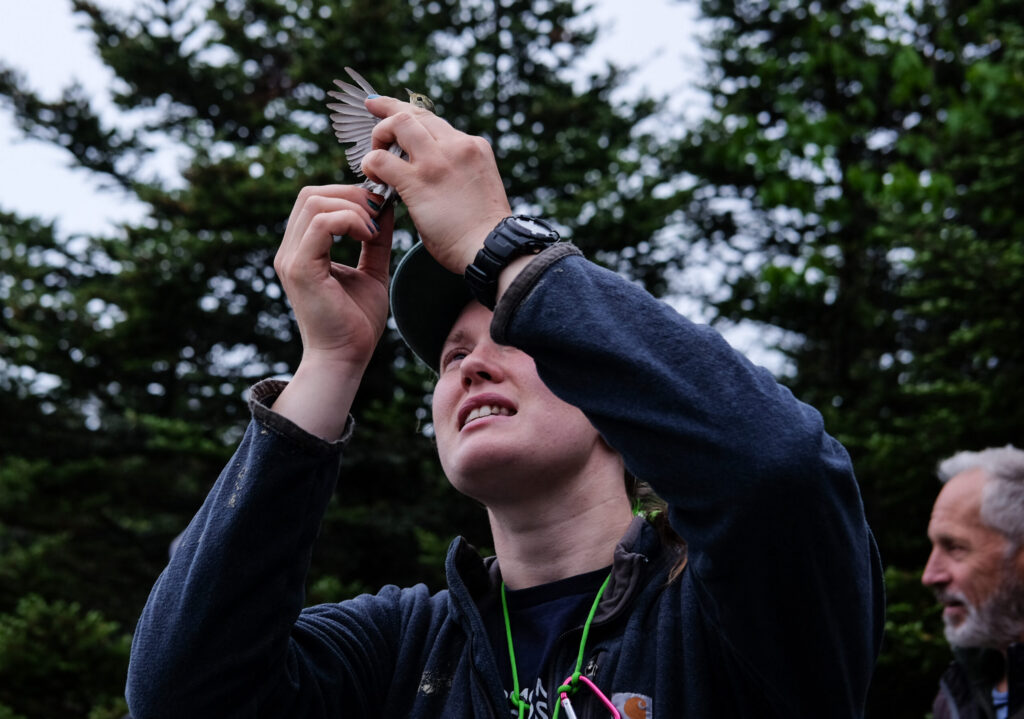
VCE seeks to hire an avian ecology project manager to help lead with field and data tasks associated with VCE’s avian research projects throughout the year. In the summer, you’ll run weekly banding at our Mt. Mansfield Songbird Research Program, supervise interns and volunteers, and work with community-science volunteers on our Backyard Pesticide Project. In fall and winter, you’ll turn to acoustic data, analyzing recordings and spatial data to understand where Bicknell’s Thrush stops over during migration and spends the winter. There may also be opportunities for fieldwork in the Mid-Atlantic and the Dominican Republic. This role is ideal for a post-bac or post-M.S. candidate with advanced banding experience who is considering a PhD or a career in avian ecology. Experience with R, spatial analysis, acoustic data, or Spanish is a plus. The position pays $22–24/hour, with opportunities to contribute to scientific publications.
Apply by December 15, 2026. See the full position description and application instructions (PDF).
Seasonal Positions
Seasonal positions with VCE are short-term, nonexempt roles that provide invaluable support for one or more specific projects.
 Avian Ecology Field Technician
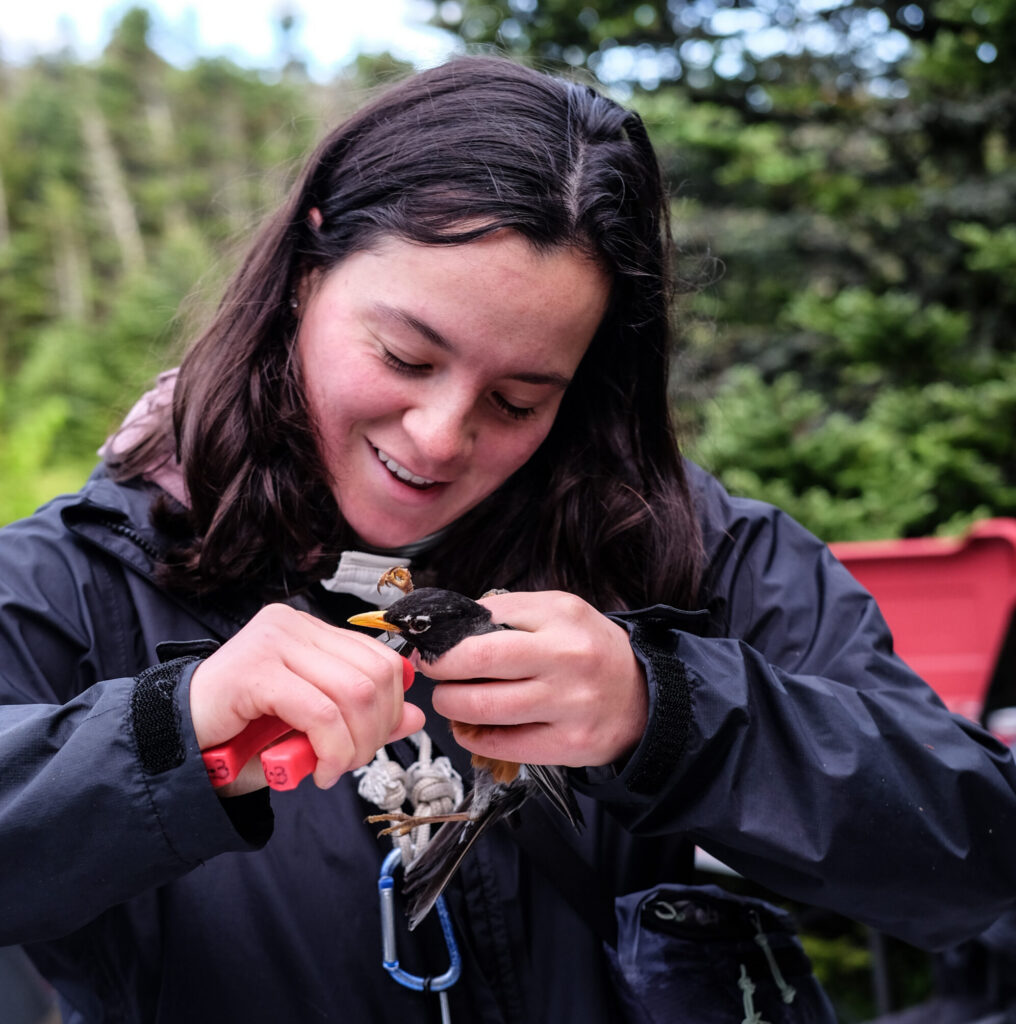
Spend summer 2027 banding birds from the high-elevation forests of Mt. Mansfield to the backyards of Vermont neighborhoods. Our field technician will join VCE’s avian ecology team for 13 weeks, helping monitor Mt. Mansfield’s mountaintop songbird community and tracking cavity-nesting birds for our Backyard Pesticide Project. You’ll net and band birds, collect biological samples, work with community science volunteers, and may help deploy Motus tracking tags. Applicants should have mist-netting and banding experience and coursework in ecology or a related field. The position pays $20–21/hour, and field work is based mainly in Stowe and White River Junction. Training is provided for all data collection techniques.
Apply by December 15, 2026. See the full position description and application instructions (PDF).
Diversity and Inclusion
We at the Vermont Center for Ecostudies know that biological communities and organizations are strongest and most resilient when they are most diverse. However, we have much work to do to create and sustain diversity and equity in the field of ecology itself—one of the least diverse fields of science. As an organization that aims to “unite people and science for conservation,” we recognize that to truly advance that goal we must create a culture that celebrates diversity, fosters inclusivity, and values dissenting opinions and rigorous examination within our own community.
Diversity drives innovation. We will more actively seek to increase the diversity of our staff, board, volunteers, and supporters to more closely resemble the diverse communities that utilize our science and research. We are committed to a workplace free of discrimination based on race, ethnicity, or nationality; gender, gender identity, or sexual orientation; socio-economic class; age; accessibility needs; religion or worship practices; veteran or military service status; education; or political affiliation.
Equity is our ethos. We strive to implement policies and practices that ensure everyone has fair, equitable access to opportunities to contribute and thrive. To achieve this goal, we must identify and break down barriers that prevent some groups from fully engaging with us through employment, volunteer, and educational opportunities.
Inclusion empowers. People who feel included are creative and inspired by the culture around them to grow and to reach outside their community. Only by feeling included can any of us reach our potential as individuals, and as collaborative actors. We will know we are inclusive when we see it develop in our colleagues–as they shed their skins and become inspired speakers and actors in their professional work, willing to take risks, and to grow.
VCE values diversity, equity, and inclusion, and we are committed to action that creates and sustains meaningful change, both within our organization and our broader sphere of influence.
We endeavor to:
- seek out the science and research of Black, Indigenous, People of Color naturalists and biologists, and amplify their voices through VCE’s work and outreach channels;
- explore avenues for increasing diversity within the birding and naturalist communities and improving access to naturalist pursuits in Vermont;
- bring increased focus to the biodiversity value of urban landscapes in Vermont and beyond;
- reexamine our partnerships to collaborate with racially diverse institutions;
- evaluate our outreach, employment, and programming practices and priorities to build diversity across our organization—including volunteers, interns, staff, board, and constituents.
- prominently display this Commitment to Diversity, Equity, and Inclusion statement on our website
Read More
Read VCE’s Commitment to Racial Justice
Embracing the Community: It’s time to take the “citizen” out of citizen science