Ask a Conservation Biologist: What Native, Near-Native, and Local Plants Should I Cultivate in the Yard?
When a Northeast resident reaches out by phone or email with a biodiversity question, we try to find the right biologist on our staff to help them. After all, our vision is for “a society that sustains healthy ecosystems through science-based decision making.” We provide the science, you make the planting decisions! Some of these questions are ones we think many in our community would like to know, so with the inquirer’s permission, we’re sharing VCE Conservation Biologist Desirée Narango’s answer here.
Hello,
I am a Hartford, Vermont resident. I live in a condominium complex which has historically been very hostile to all plants but turf grass, hostas, and lilacs. I pull invasive plants that sprout along the edge of the lawn, and keep the forested fraction of the property free of garlic mustard.
I recently received permission to plant wildflowers along the edges of the property, and in some of the mulch beds. My goal is to introduce somewhat aggressive natives that can self spread along the lawn’s edge and provide as much benefit to native wildlife as possible. I currently intend to plant mixed milkweeds (genus Asclepias) and yarrow (genus Achillea) in the high sun areas and the mulch beds, and to spread the existing American Spikenard and Hobblebush along the forest edge.
I have encountered a few questions that I’m struggling to get a clear answer on.
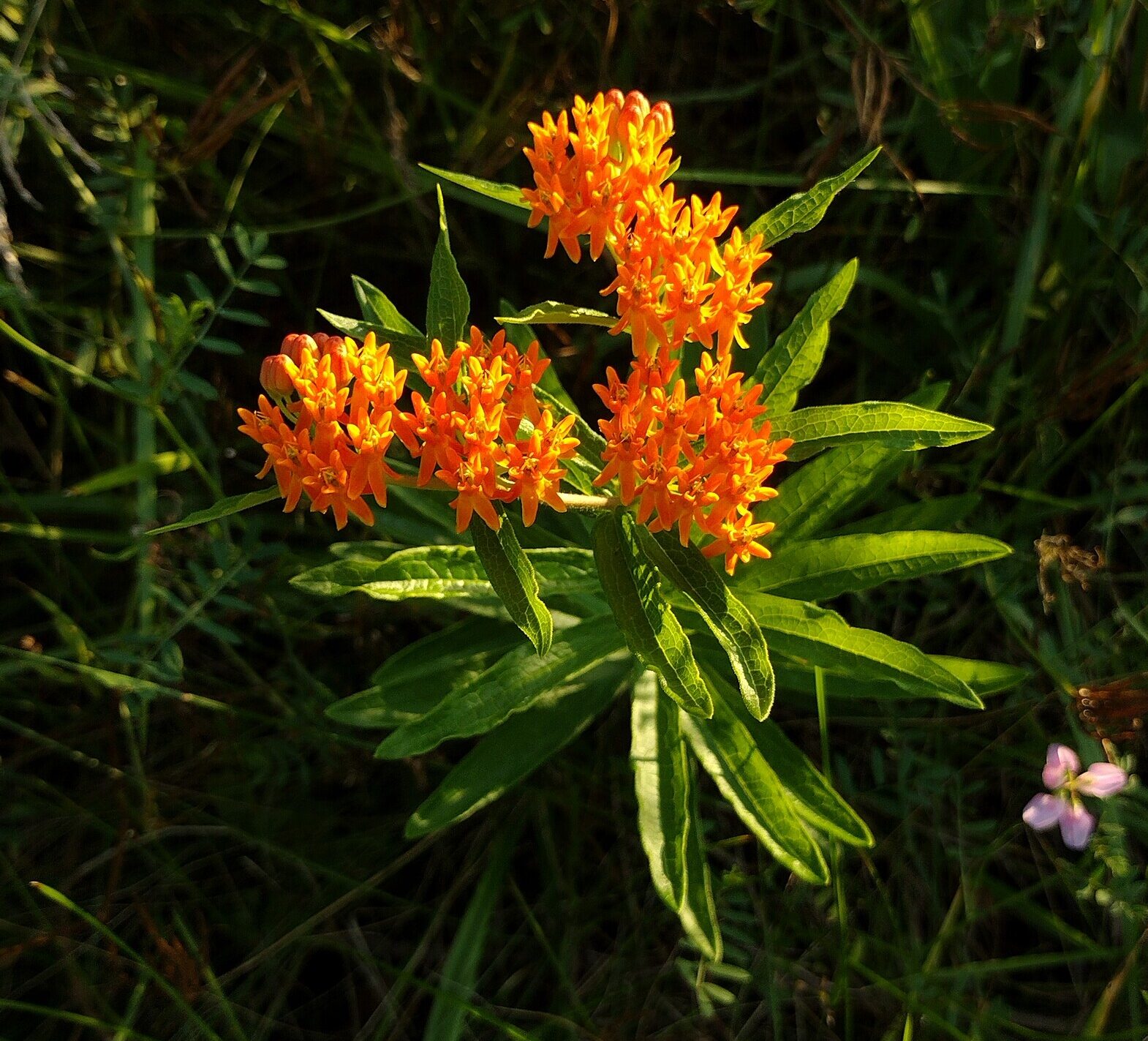
Butterfly Milkweed (Asclepias tuberosa) by @swords on iNaturalist, public domain
First, a UVM resource on VT native wildflowers says, “gardeners should reconsider planting the orange-flowered butterfly weed (Asclepias tuberosa) in gardens”, which surprised me. My intention was to spread wild seeds that I gathered from the forest in Norwich, but I don’t know of any wild butterfly milkweed that I could collect pods from. In your professional opinion, should I stick to only plants that I can collect seeds from in the wild, or is it okay to supplement with purchased seeds that are not native genetics?
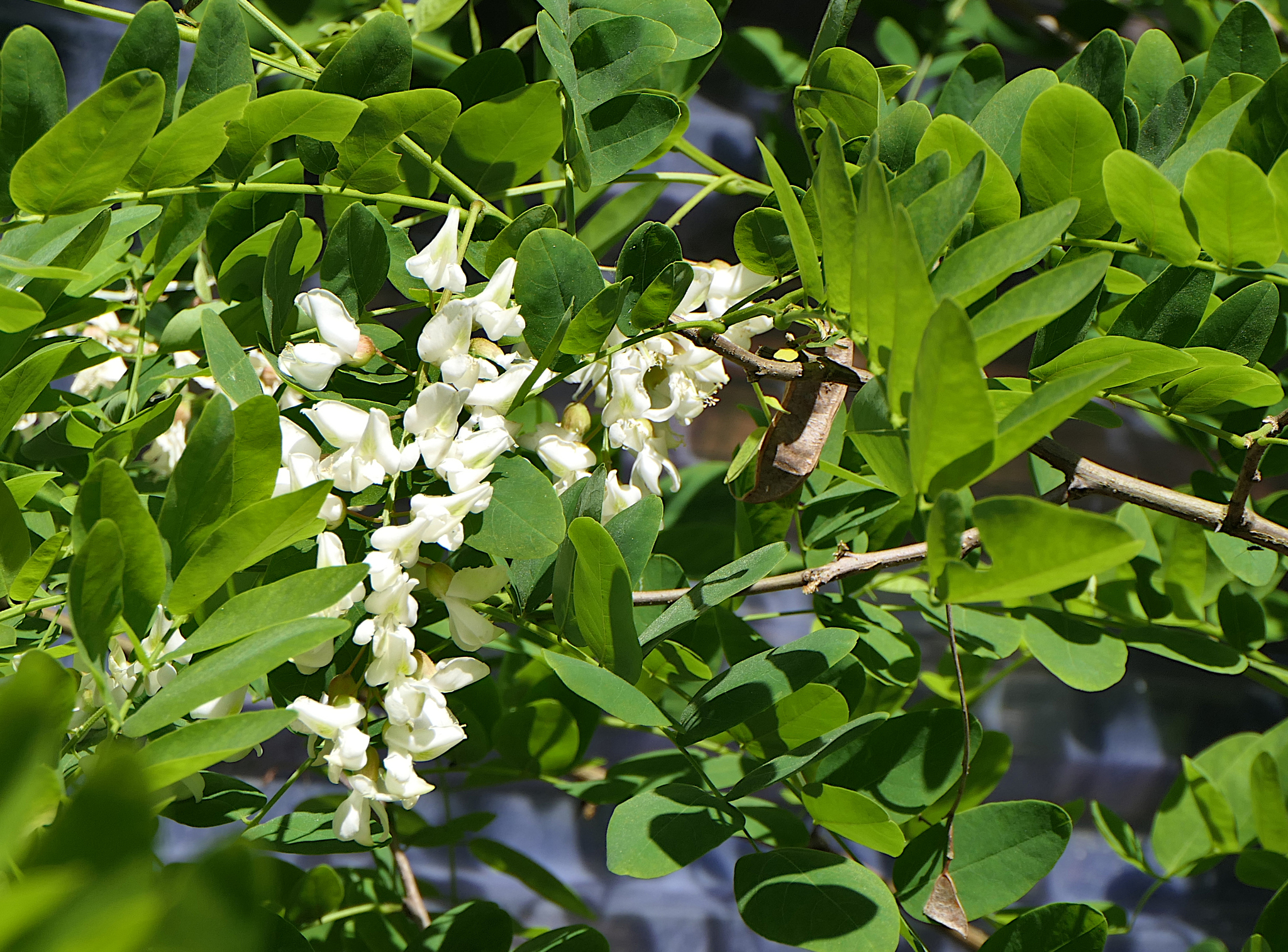
By @hhkaaks on iNaturalist, public domain
Second, the condominium property regularly sprouts new black locust seedlings. Most of them are taken out by the landscapers, but there are two saplings, about 15′-20′ tall, that are far enough off the lawn that they have been left to grow so far. I confirmed that because they are off the lawn, I can cut them and plant other species if I want. I know black locust is technically native further south on the East Coast, but I’m curious if you would leave the saplings, or try to replace them with something more locally native.
Thank you so much for taking the time to read and respond to my questions! I hope with your advice, I can slowly turn my property into a haven for native pollinators!
Sincerely,
Nick
Hi Nick,
Your question of whether it matters if we source native seeds from non-local locations is a good one. From a restoration perspective, planting local ‘ecotypes’ (seed from populations adapted to this region) is a good idea to ensure planting are maintaining regional adaptations to the climate, soil, etc. and promote success and resilience.
In a cultivated garden setting though, conditions and ecological goals can be quite different. We are currently looking into this question with an experiment called VCE’s Native Plant Ecotype project. Within the experiment we are comparing how well local and non-local ecotypes support pollinators, with an emphasis on testing whether there are differences in the identity and traits of pollinators supported. Do local ecotypes support more specialist pollinators? More activity? More bees or butterflies? Truthfully, we don’t know yet, but we have two seasons of data and will be crunching the numbers this fall to find out. Our preliminary data suggest that non-local ecotypes have very different flowering phenology (timing) which could affect our pollinators.
But finding local seed or ecotypes is hard! Some locations near Hartford you might want to try are Cedar Circle Farm in Thetford, or Nasami Farm in Whatley, MA. Nasami also sells wholesale which is helpful for larger scale plantings.
The primary milkweed that is regularly discouraged from planting by gardeners is the non-native tropical milkweed (Asclepias curassavica) which is also colloquially called ‘butterflyweed’ and can be found regularly in nurseries. This is not to be confused with the native ‘butterflyweed’ with the scientific name Asclepias tuberosa, which is native to Vermont.
While I knew that wild Asclepias tuberosa was rare, I did not realize until I read the UVM resource you shared that it was state protected. In this situation, UVM Extension is recommending that local Vermonters not plant this popular native milkweed. There are similar efforts for state protected species like Lupinus perennis, especially immediately around the remnant populations. The concern is that by introducing foreign genetics we could introduce pathogens, or make the enforcement of protections for native populations more difficult as it becomes harder to differentiate wild populations from those that escaped cultivation. However, on the list for rare and uncommon vermont flora, A. tuberosa is listed as historical with records in just a few Vermont towns, so there are unlikely to be any remnant populations left in the state. In this case, I would lean toward recommendations from the state botanist, and to ensure your garden plantings aren’t near any remnant populations. You can contact Grace Glynn at grace.glynn@vermont.gov.
Given that other milkweeds are known to be more attractive to ovipositing Monarchs, you might do well to lean more toward Swamp Milkweed (Asclepias incarnata), Common Milkweed (Asclepias syriaca), and Poke Milkweed (Asclepias exaltata), which can be found in local native plant nurseries.
As for the Black Locust saplings, some of our research has found that near-native species can still support some of our local insects. However, Black Locust is also a nitrogen-fixing plant that alters soil chemistry to nitrogen levels much higher than other native plants can tolerate, which can make the rest of your planting efforts more challenging. It can also be highly aggressive. For those reasons I would replace the black locust with a more locally native species with more wildlife value, like one of the keystone genera (Quercus, Betula, Prunus, Salix, Pinus, and others) that are native to Vermont.
Cheers,
Desirée Narango
VCE Conservation Biologist and Principle Investigator, Native Plant Ecotype Experiment