Demand for native plants is booming, as communities work to repair and restore ecosystems in cities and suburbs. However, many native plants have distributions that cover a wide range of ecoregions in the U.S. Due to limitations in the horticultural supply chain, the native plants available in your local nursery may have come thousands of kilometers away.
Plants are often locally adapted to the areas from which they were sourced. Thus, even within the same species, plants from different regions can be genetically and functionally different, which can have cascading impacts on how that plant grows, when it flowers, or how well it provides resources like nectar or pollen.
Does this matter for our local beneficial insects? VCE scientists are embarking on new research to answer this question.
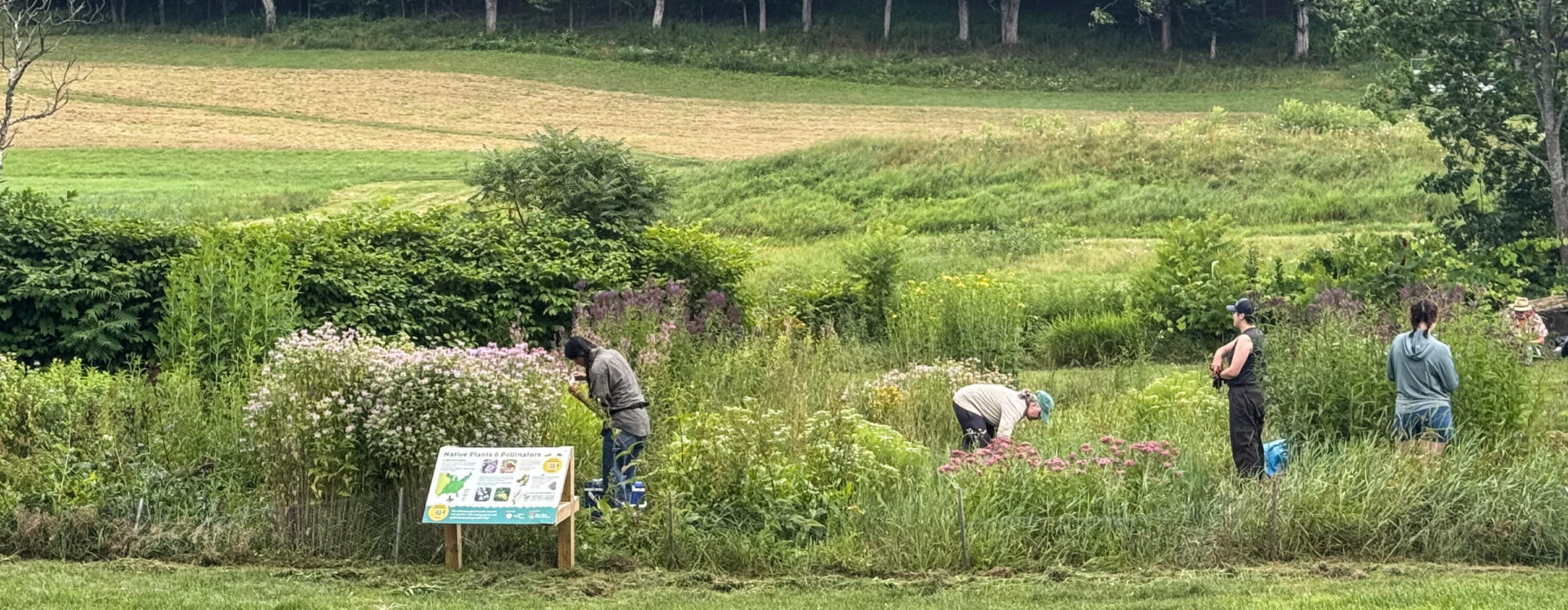
VCE Conservation Biologist Desiree Narango and Director of Conservation Scientist Ryan Rebozo are collaborating with Native Plant Trust on a first-of-its-kind, community-based garden experiment to assess how plant provenance (where seeds come from) influences plant phenology, flower resources, and pollinator support. This experiment includes plants with origins more than 1,700 kilometers apart.
Starting in August 2024, the VCE team planted nearly 1,100 plants from three distinct ecoregions in six public gardens in the Upper Valley of Vermont and New Hampshire. In 2025, once the plants were established, the team began conducting measurements of the plants and pollinator visitation.
The Experimental Plant Species
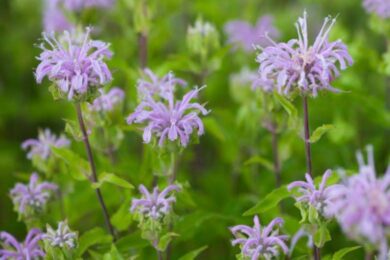
Monarda fistulosa
Gravity-Dispersed:
- Wild Bergamot (Monarda fistulosa)
- Narrow-leaf Mountain Mint (Pycnanthemum tenuifolium)
- Blue Vervain (Verbena hastata)
- Golden Alexanders (Zizia aurea)
Wind-dispersed:
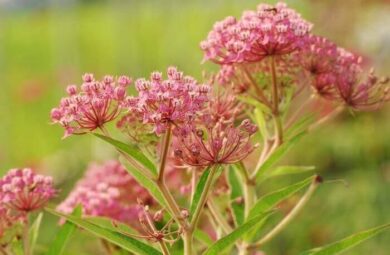
Asclepias incarnata
- Swamp Milkweed/Rose Milkweed (Asclepias incarnata)
- Boneset (Eupatorium perfoliatum)
- Gray Goldenrod (Solidago nemoralis)
- Blue Wood Aster (Symphyotrichum cordifolium)
Animal-Dispersed: