A Screech and a Lifer at the Green Mountain Goatsuckers Birdathon
The Green Mountain Goatsuckers met in the dark at 3:30 a.m. at the Vermont Center for Ecostudies office on Tuesday, May 19 to start its day of birding. Even that early, we heard cardinals and robins singing near the parking lot.
This was VCE’s 20th annual Birdathon, and this year, as VCE’s team captain, I had decided to focus on the upper Champlain Valley. Our goal: See as many species as possible and try to win the Big Day Birder award. My teammates were staff biologist Kevin Tolan, conservation biologist Desirée Narango, and executive director Susan Hindinger.
Our first unique bird of the day came from a quick Dunkin’ stop for road fuel (read: coffee) that netted us a surprise Merlin in the predawn light. It was an extremely poor day for raptors, so this was a spot of false hope!
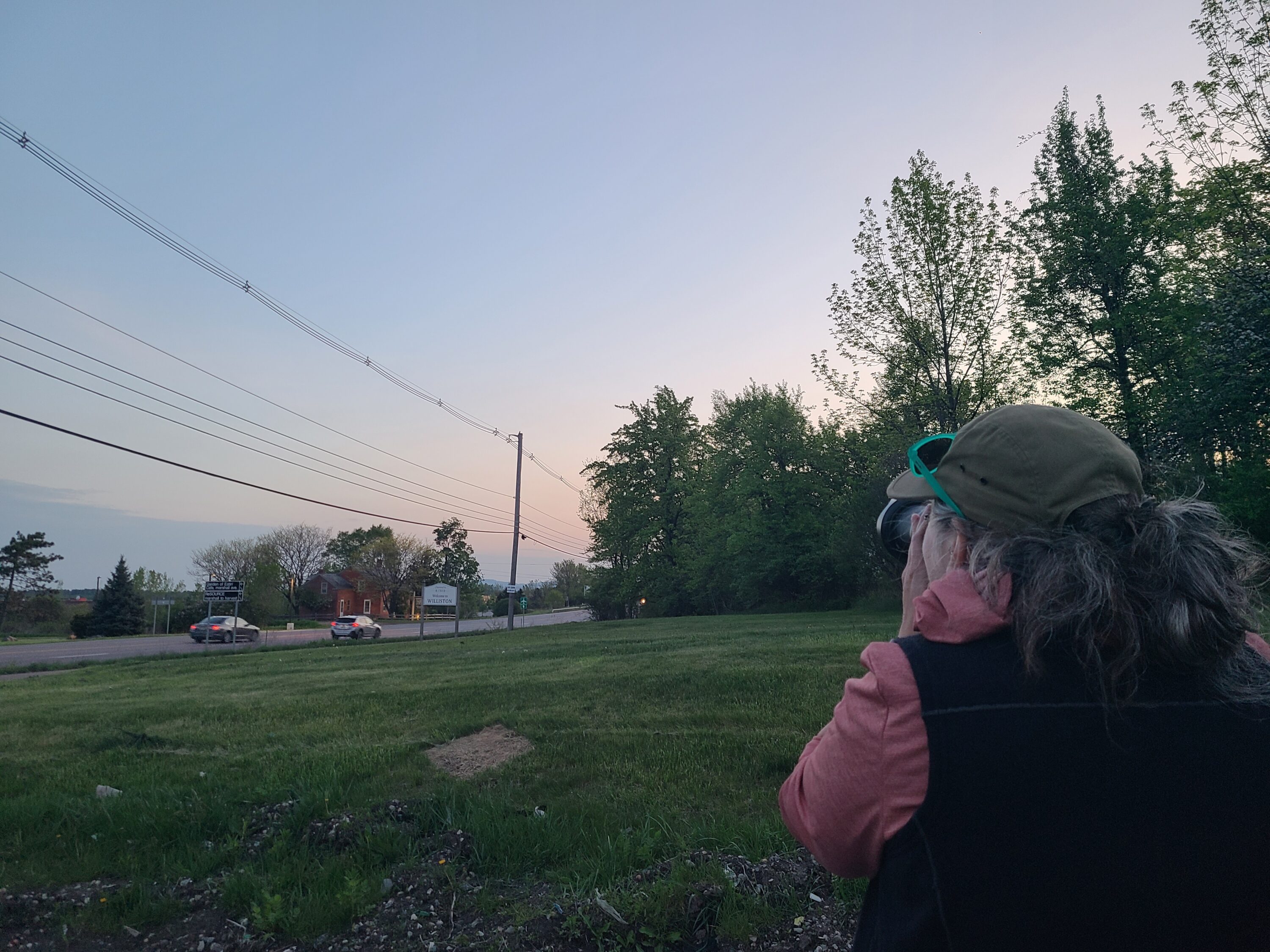
Desirée photographing the Merlin (tiny speck on the utility pole) in the Dunkin’ parking lot. © Megan Massa
Geprag Community Park in Hinesburg is a known location for Golden- and Blue-winged warblers and other scrub-loving species. Standing in the parking lot, Kevin and I heard something and immediately turned to each other with a raised brow. Two people who have studied grassland birds had just locked onto the same sound: the high, thin tik-tik-tssssssssss of a Grasshopper Sparrow. Across the street, a single bird was singing amid the Bobolinks and the deeper, but similar, song of Savannah Sparrow. Then, an Eastern Meadowlark sang from a high perch to (nearly) complete the suite of Vermont’s grassland birds.
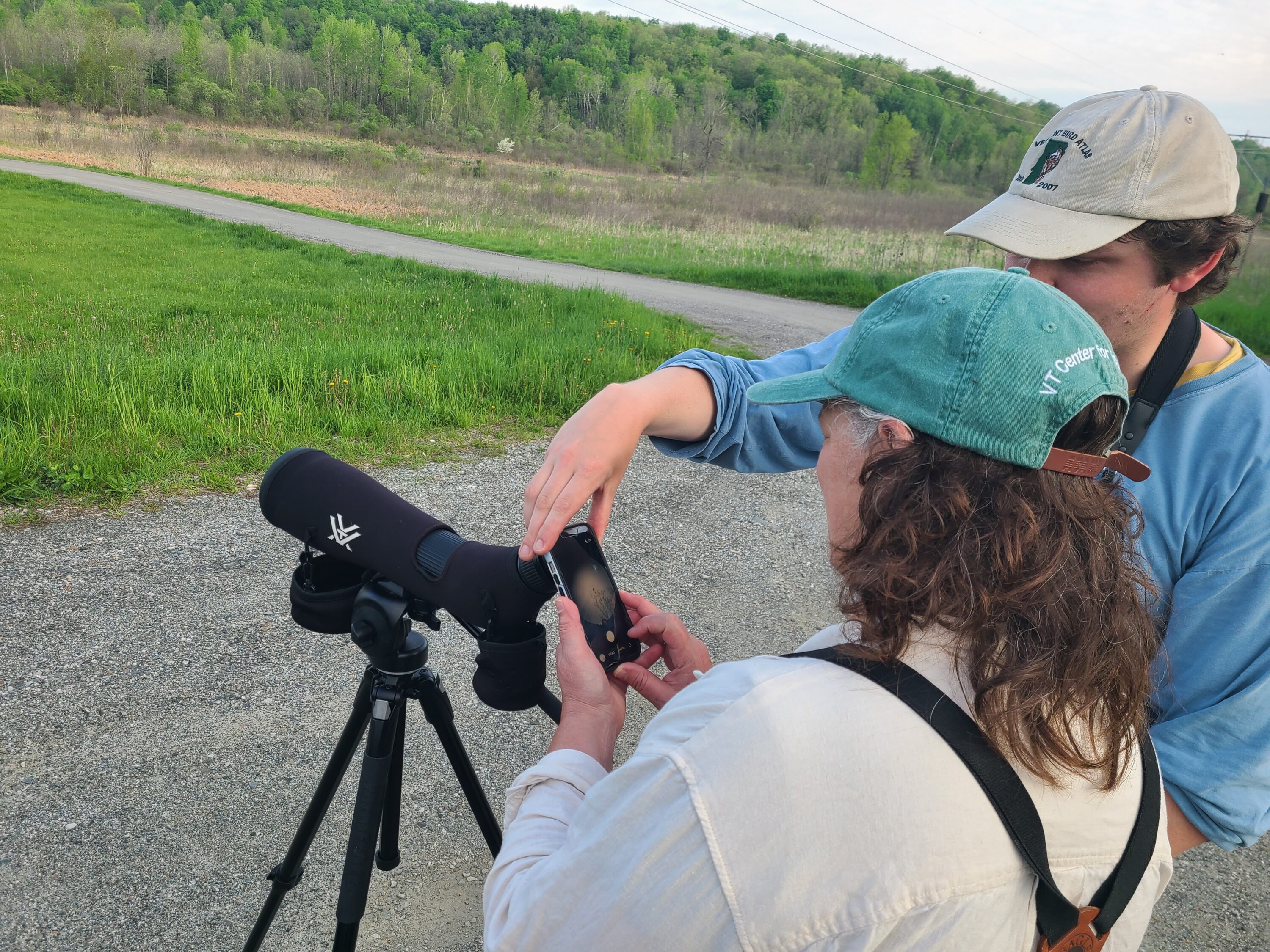
Susan and Kevin work together to “digiscope” the Eastern Meadowlark by taking a phone picture through the spotting scope. © Megan Massa
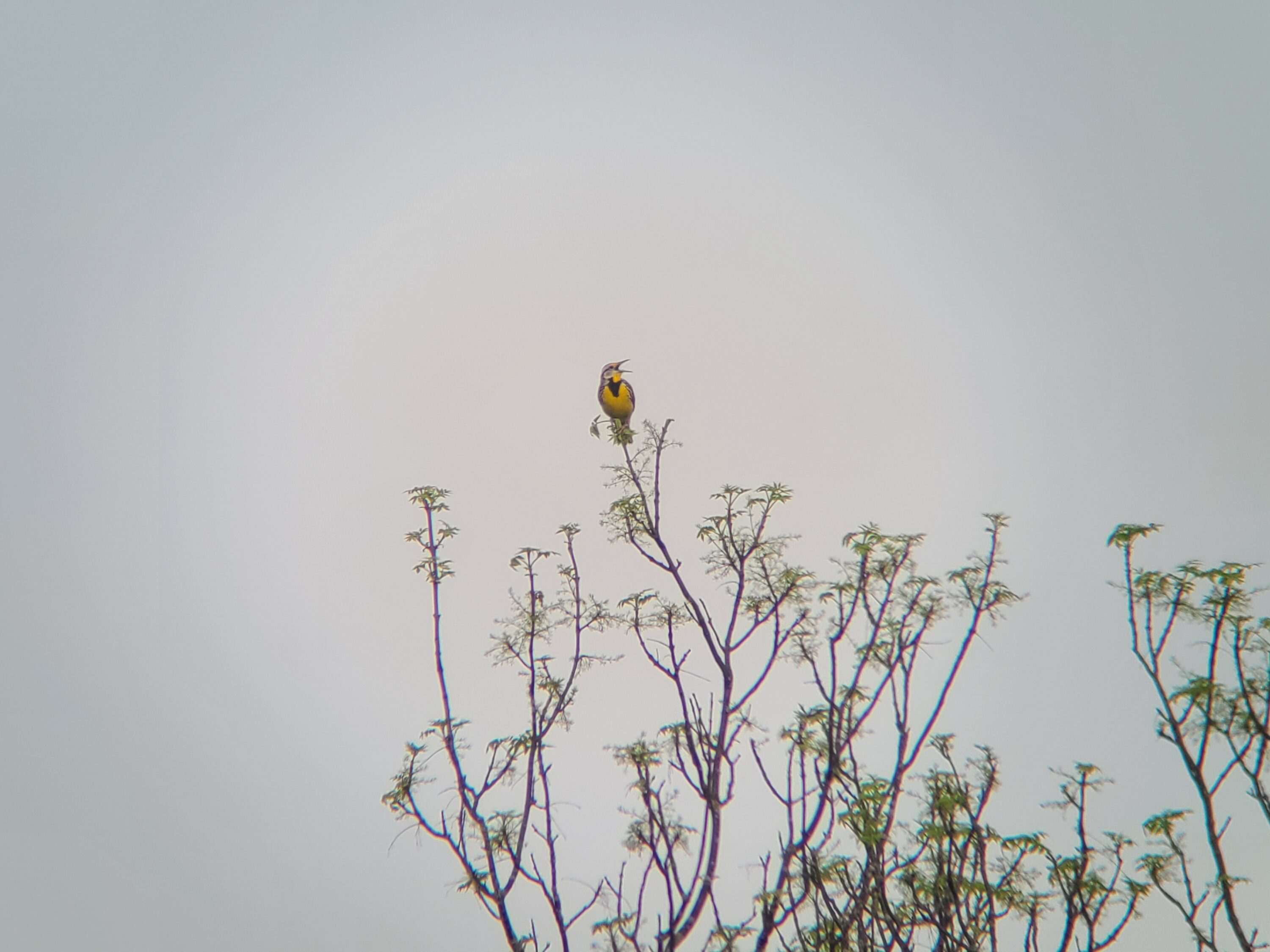
An Eastern Meadowlark sings on top of a tree, as taken by a phone through a scope. © Megan Massa
Geprag Park produced our only confirmed look at one of those “winged-warblers,” a Golden-winged. The extensive gene flow and inter-learning of songs between these closely-related species means that calling one to species requires a really good look. That’s tough for a bird that loves scrubby fields and young forest. Later in the day we’d have several birds singing the typical Blue-winged Warbler song but we couldn’t spot them, so they were left unidentified.
Heading from Geprag toward Shelburne Bay, we cruised Pond Road south of Shelburne Pond for marsh birds. We mostly struck out here, besides the cooing of a Least Bittern and a briefly-calling Common Gallinule.
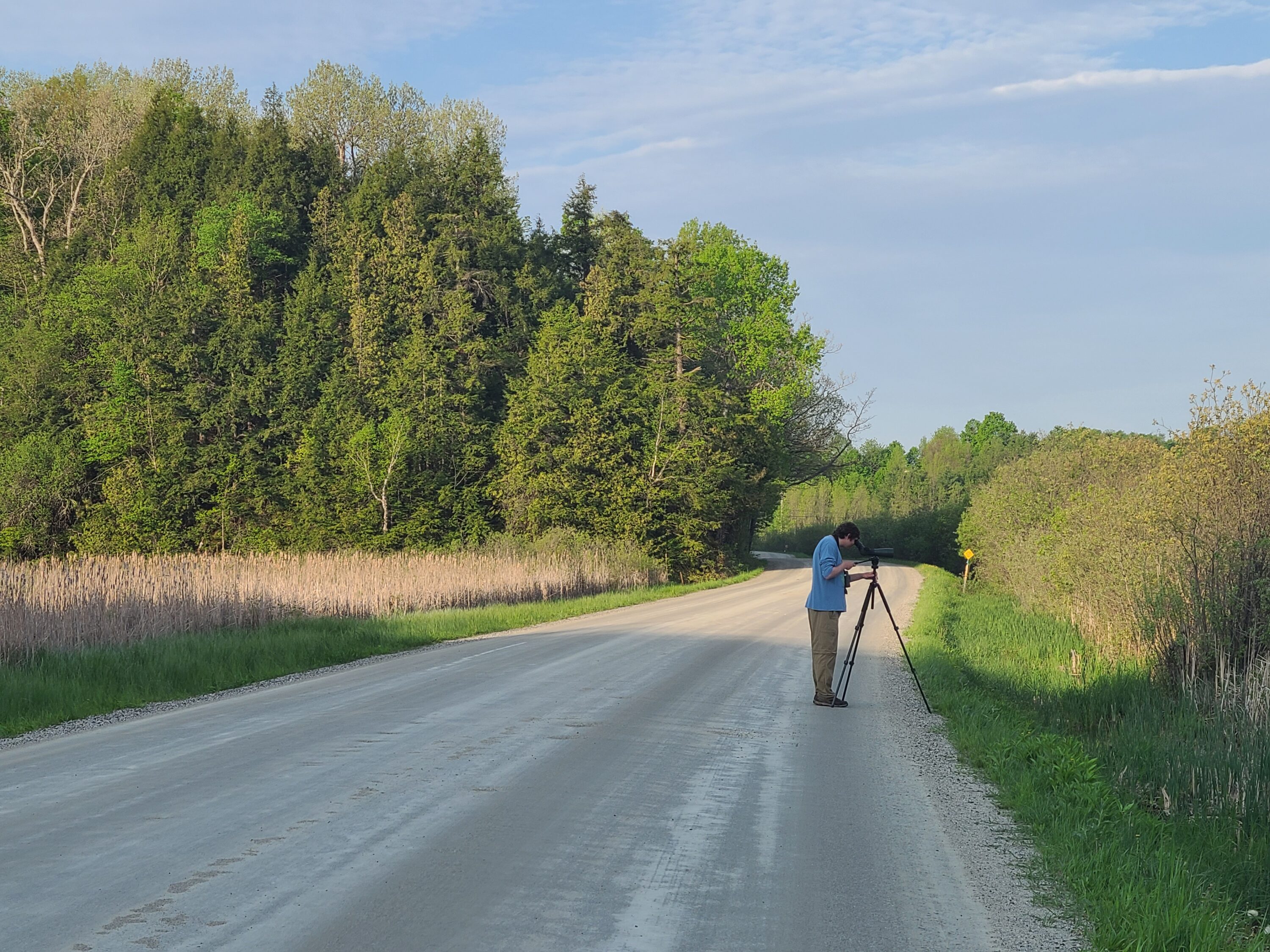
Kevin scans the marsh on Pond Road looking for rails or bitterns. © Megan Massa
We pushed on to the shores of Lake Champlain where the Laplatte River enters Shelburne Bay, encountering some of the marsh species we’d missed earlier. Desirée spotted a Black-crowned Night Heron and Kevin held an impromptu “herp clinic,” sharing identification tips with the team as we observed an Eastern Garter Snake, Pickerel Frog, abundant Northern Leopard Frogs, and both Map and Painted Turtles.
The next necessary stop was at a gas station to refuel again (read: more coffee). Chimney Swift and House Sparrow were plentiful urban pickups on our drive through Shelburne Road traffic to our next spot, Delta Park in Colchester. As we wound through suburban to urban neighborhoods, our eyes were peeled for our biggest miss from last year’s Birdathon, Northern Mockingbird. To no avail! I must have said fifteen times that day, “Show me mockingbird! Where the @!#$ is Northern Mockingbird?!”
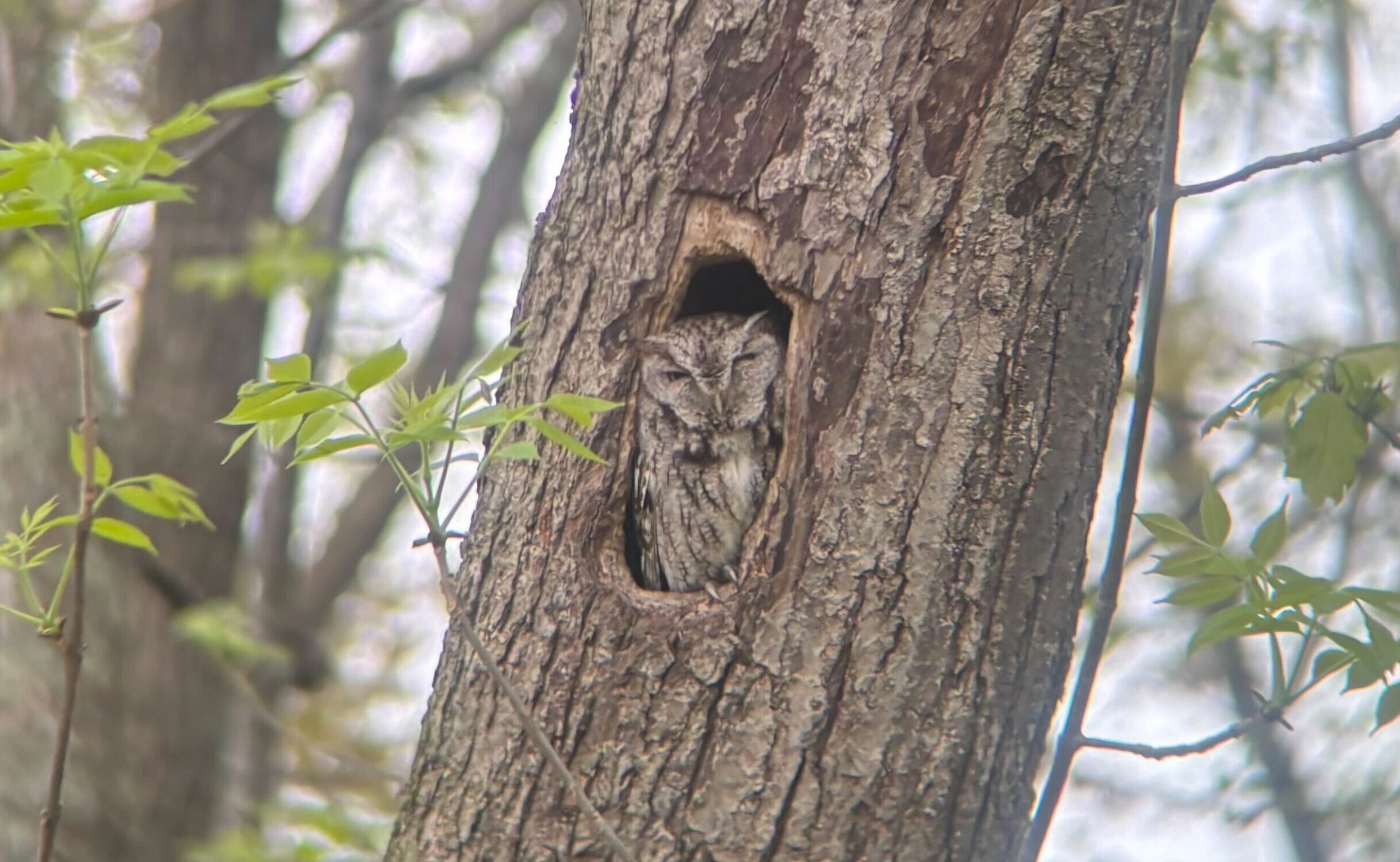
Eastern Screech-Owl © Kevin Tolan
North of Burlington, where the Winooski River spills into Lake Champlain, Delta Park promised a very special and well-documented bird. Some friends had provided painstakingly exact instructions on where to find it: a super chill, super cooperative Eastern Screech-Owl at the entrance to the bike path. I think every Birdathon team that observed Eastern Screech-Owl visited this individual. VCE communications director Alden Wicker joined us at this stop and added this species to her life list. We did get beeped at by a biker not pleased that we were enjoying the owl while standing smack dab in the middle of the bike path. Oops.
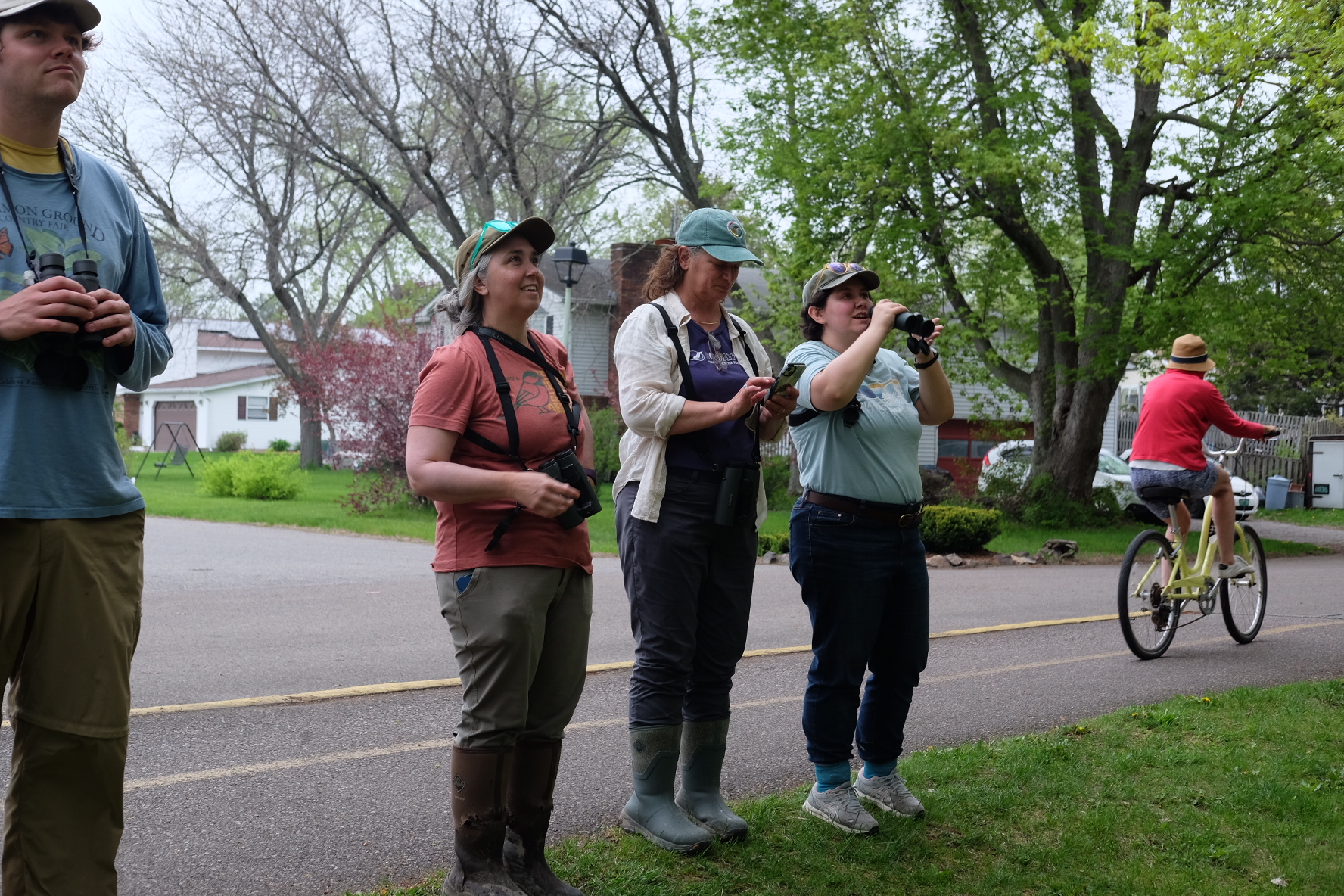
The Green Mountain Goatsuckers looking at a Eastern Screech-Owl © Alden Wicker
Dark clouds rolled in overhead and a cool breeze tempered the hot, dry air. Any relief was temporary, though, as only a few raindrops fell before the baking sun turned back on.
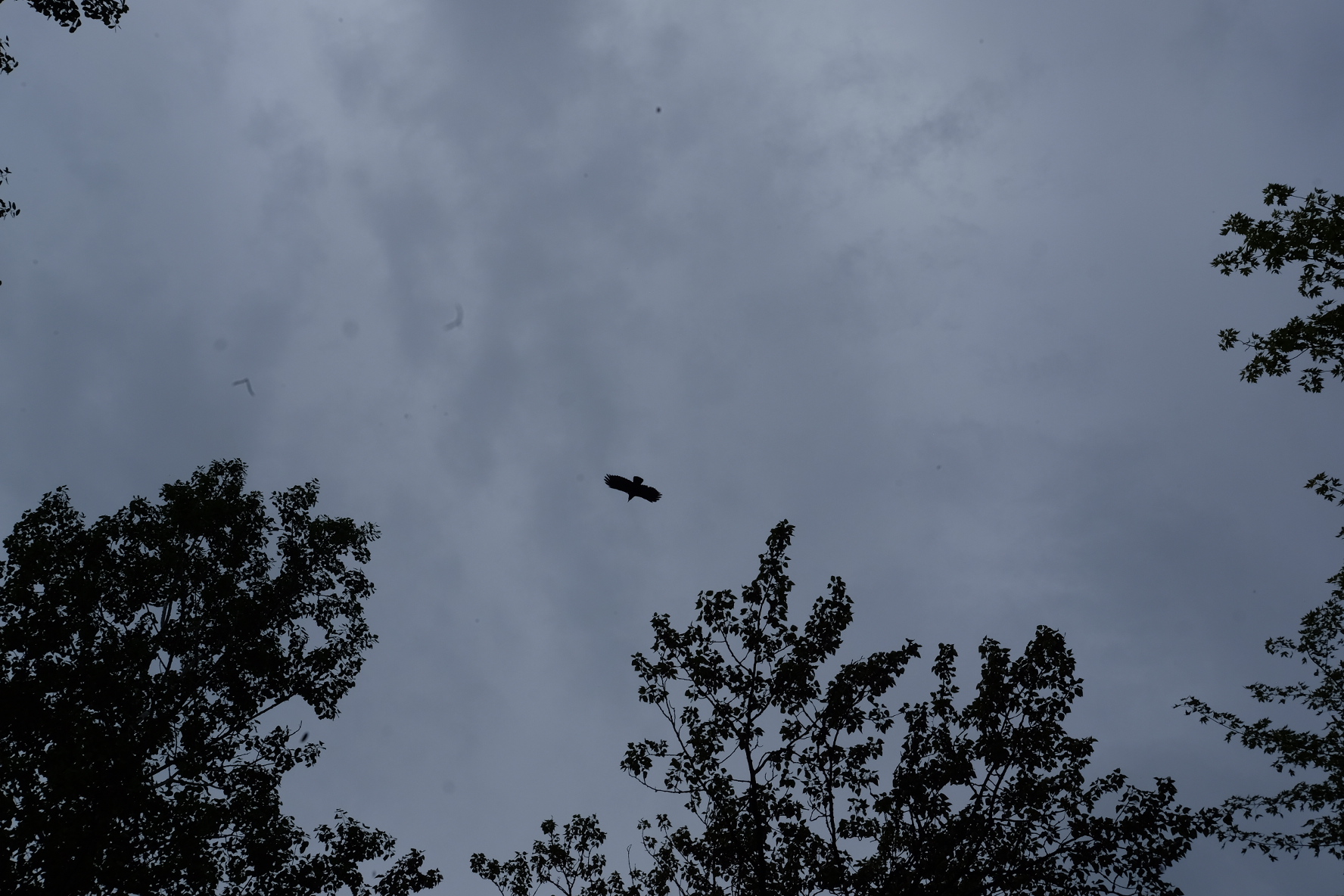
A Fish Crow flies overhead at the compost dump at St. Michael’s College Natural Area © Alden Wicker
Heedless of the heat, onwards we went to the compost dump at St. Michael’s College Natural Area, one of few reliable spots for Fish Crow, who gave us a single nasal caw to confirm. A surprise Great Black-backed Gull was an added treat here. We ran into Gavin Young, who was also looking for a Philadelphia Vireo reported earlier that day, but it hadn’t been resighted. We decided to bail out but not before I found a huge female Grayish Jumping Spider and made everyone stop so I could photograph her.
By this time it was getting truly hot and it was time to break for lunch. We went to a beachy-monikered “Lakeshore” establishment where it turned out you couldn’t actually see the water at all. But food and ice-cold beverages gave us the strength to plan the rest of our day.
Colchester Pond brought more sun and a seemingly endless supply of Northern Yellow Warblers, plus two “self-found” rare birds… that it turned out were well-known to other birders already. A distant speck on the water turned out to be a Red-necked Grebe, and a Prairie Warbler sang from the powerline cut. The most fun thing here was a toad party on the shore, where maybe 10 to 15 American Toads were singing, in amplexus, and laying eggs in the water. A woman passing us on the trail was so excited to see the toads that she called her husband on the phone to come look.
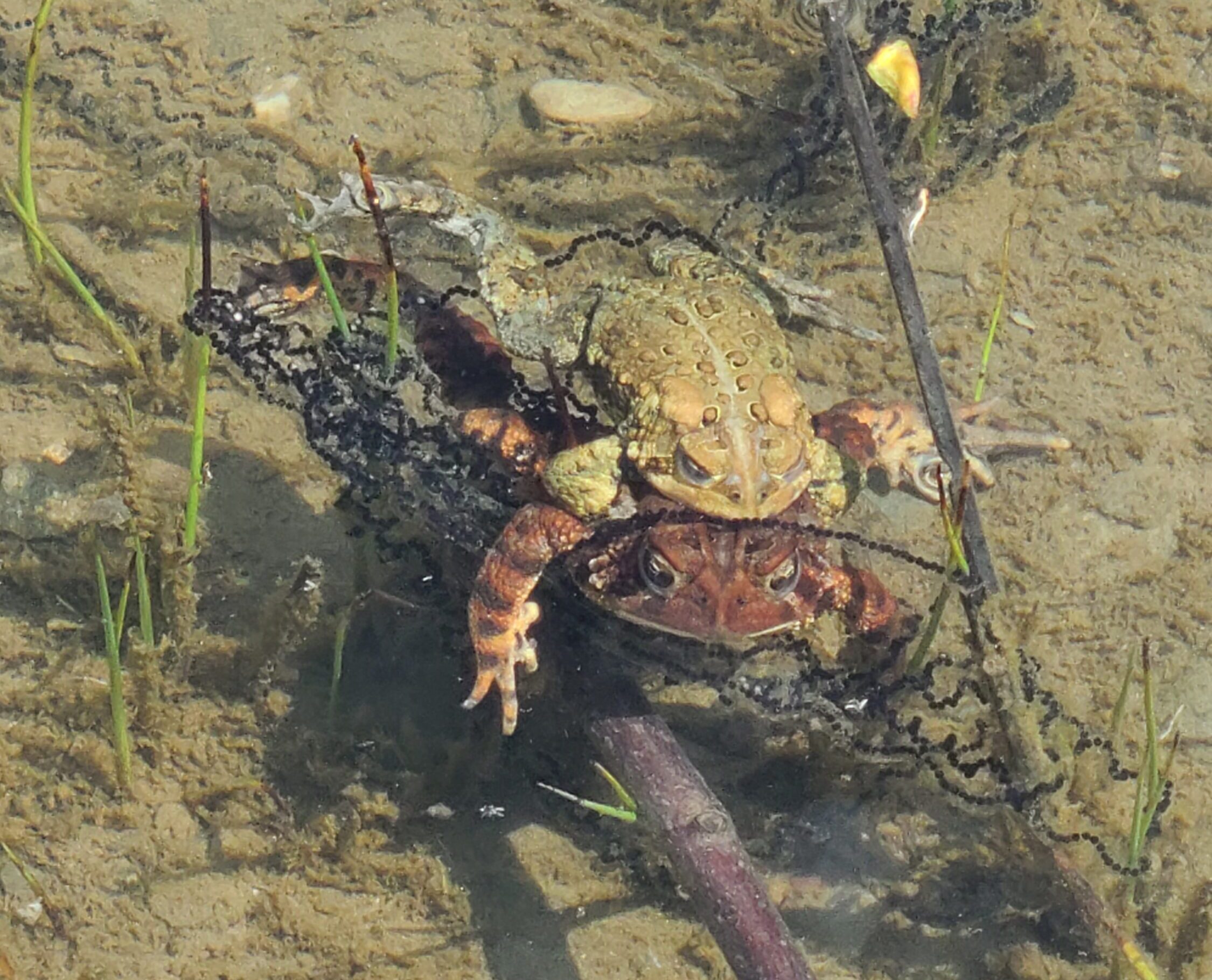
Toad party. The black “strings” are chains of toad eggs. © Megan Massa
Next it was time to haul up to Franklin county. We’d planned to hit the airport for Grasshopper Sparrow, but with our serendipitous find at dawn we got to skip that stop and head instead to Missisquoi NWR, where we watched Cliff and Barn Swallows nesting under the roof of the visitors center in the now-brutal 4 p.m. heat. Also brutal was a recently crashed truck that had gone off the road and was buried to its hood in marsh mud. The driver, Border Control, state troopers, and recovery vehicles worked over the next hour to extract it.
We made our way to a long-shot spot: Rock River WMA, a stone’s throw from Canada. A Prothonotary Warbler enjoying the flooded forest here had been seen the previous few mornings, and a Cerulean Warbler had been reported just down the road. These more southern species are quite rare in Vermont. On a cooler day, they might have remained active into the afternoon, but our late 5 p.m. visit on an abnormally hot day meant we missed them both. Let it be known that timing really matters!
Nearly 15 hours into our birdathon day, we were starting to flag. Our final stop of the evening bore most potential: Desirée could score a lifer in Upland Sandpiper, which had been putting in regular appearances at Ed Choiniere’s farm along Gore Rd. He welcomes birders and he visited with us as we scoped the fields as golden hour set in. Finally, I spotted a large tan and white shape fluttering over the fields. The uppie landed on a fencepost where we all got to see it, including Ed. We celebrated with lifer pie made by Susan, chatted with Ed about the history of his farm, and then the Green Mountain Goatsuckers called it a day with 116 species!
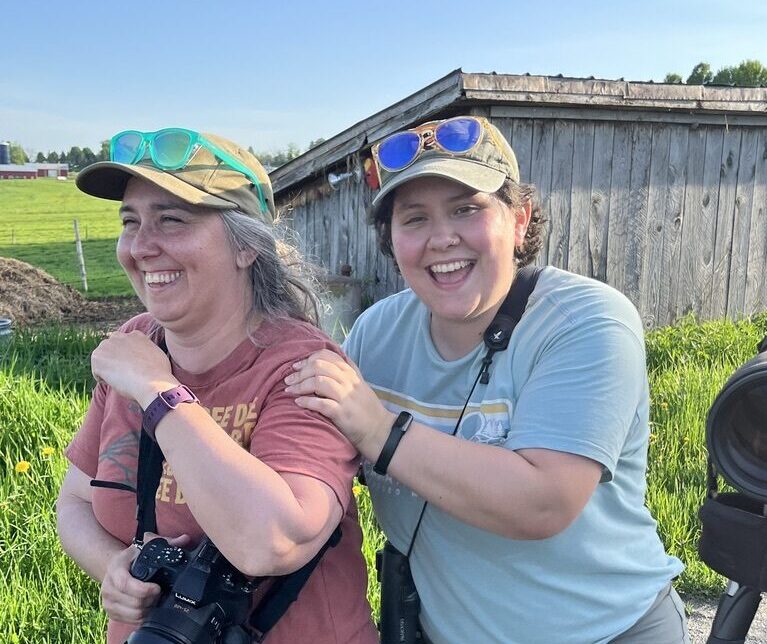
Megan and Desirée celebrate seeing an Upland Sandpiper. © Megan Massa
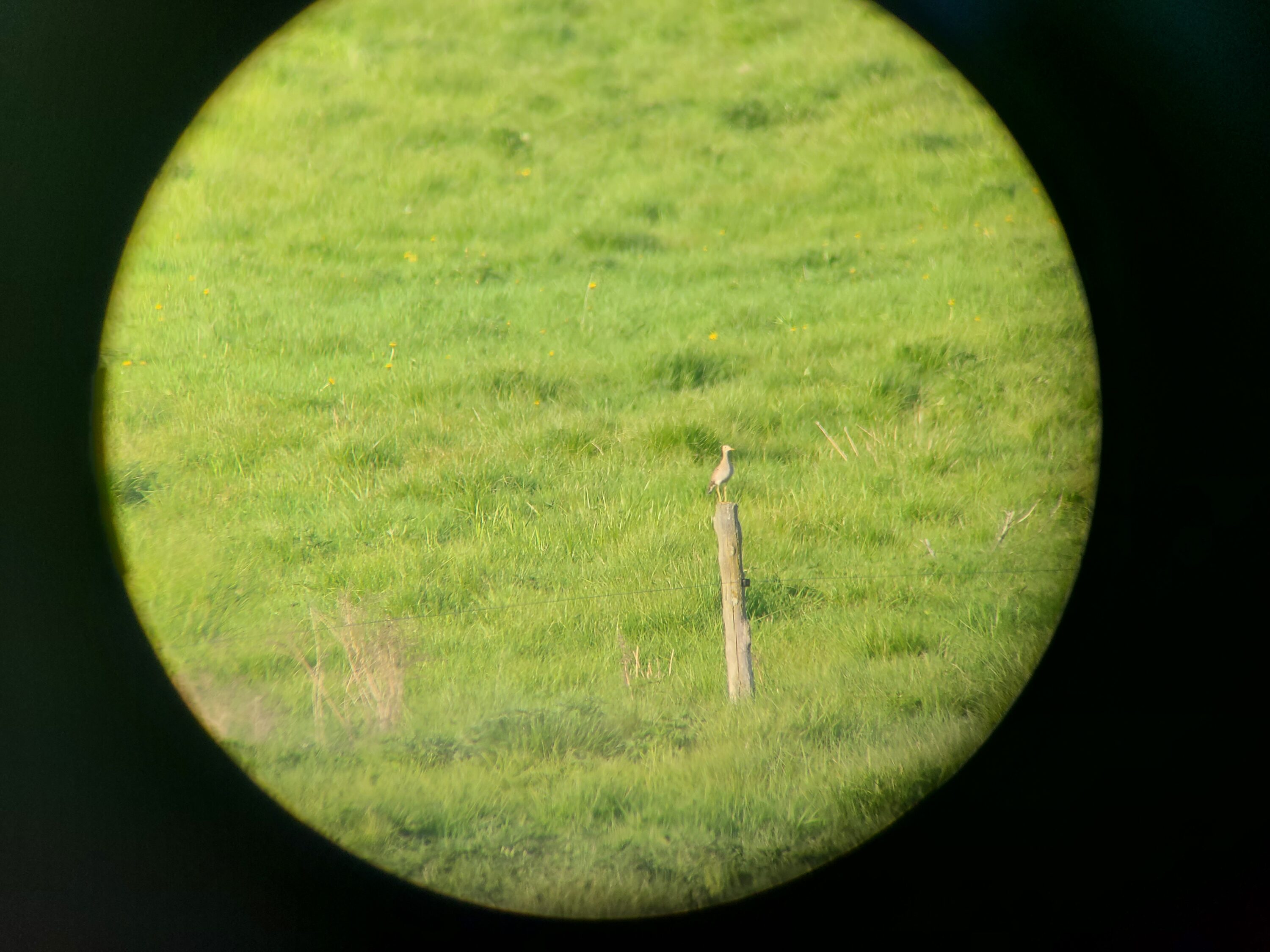
An Upland Sandpiper through a scope © Megan Massa
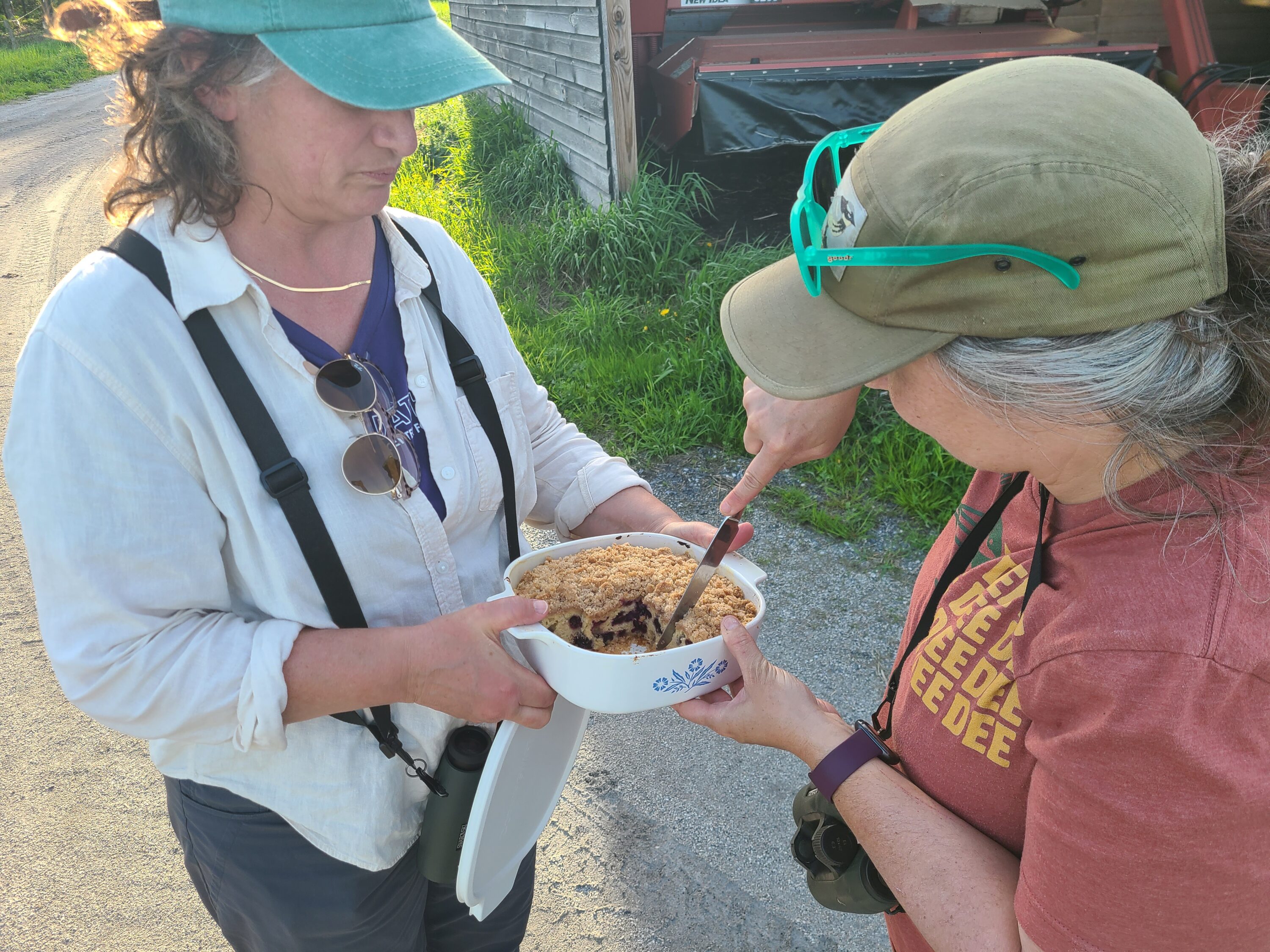
Lifer pie for Desirée made by Susan © Megan Massa
As with any big day, we had some bizarre misses. You’ll notice that Northern Harrier and Turkey Vulture were the only hawks we found. We also missed a lot of typical forest species, like Black-throated Blue Warbler. Rich hardwood forest is less common in the Champlain Valley than the Upper Valley, and we never found ourselves in deep forest.
We all arrived home by 10 p.m.—exhausted, a little sunburned, and deeply satisfied with a full day’s work. Paying rapt attention to everything you see and hear, constantly scanning trees and shorelines and listening to the full spring chorus is almost more tiring than the heat of the day. And despite our intense focus, STILL NO MOCKINGBIRD!
Thank you to everyone who supported any of the VCE teams in this year’s Birdathon. Check out our full list on our eBird trip report. Your support made our day in the field a huge success and funds all the great work we get to do here at VCE. I’m already looking forward to next year!!
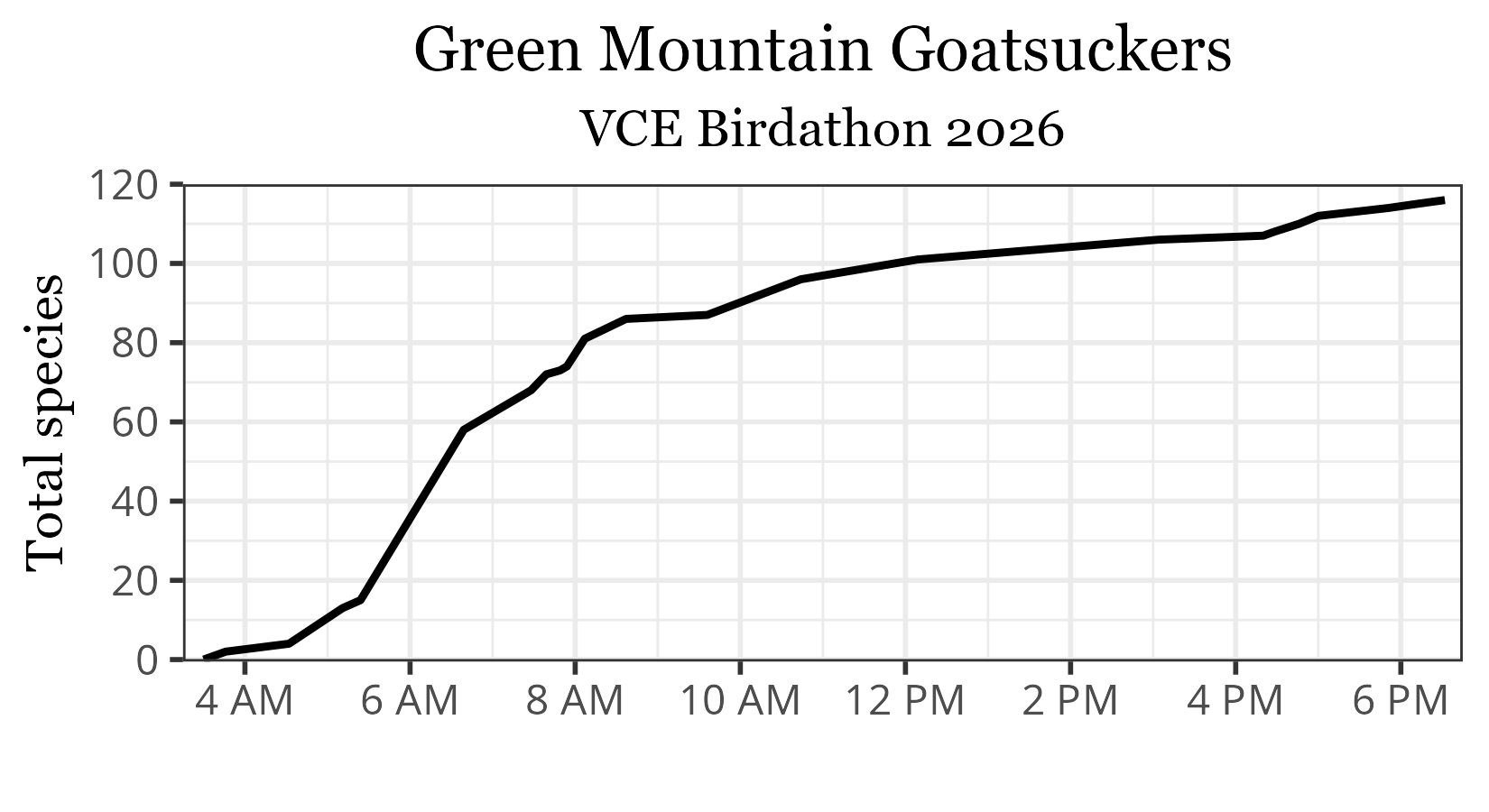
Species accumulation over the course of the day. © Megan Massa