Birders Rush Toward the Friday the 13th Fallout (of Ducks)
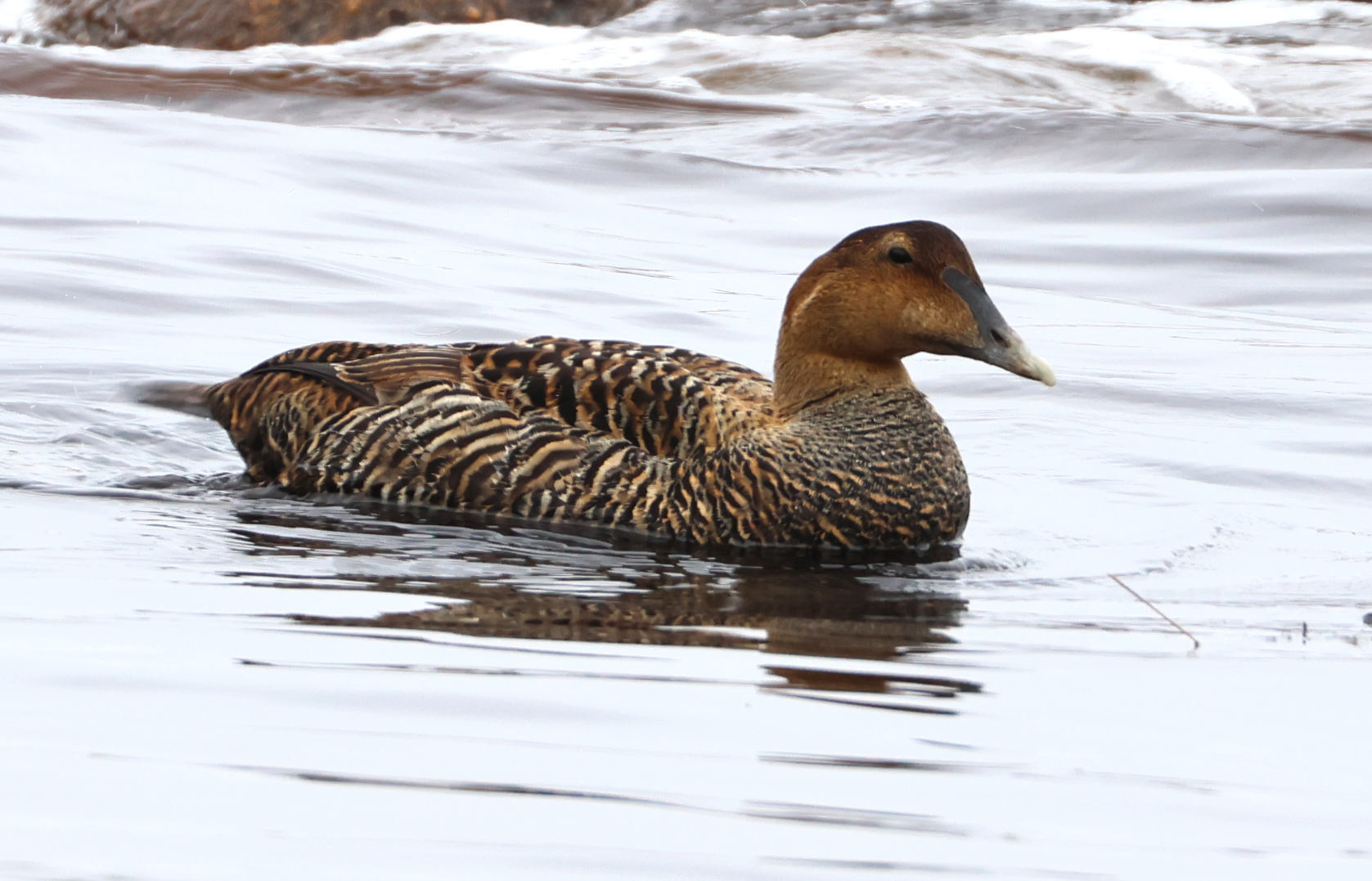
Female Common Eider © Mark Dennis / iNaturalist, some rights reserved (CC-BY-NC)
Do you know a kid interested in learning about birding? The Upper Valley Youth Birding Club meets this Saturday, November 21 at Kilowatt Park. Register here.
Thursday November 12 and Friday the 13, 2026 were dark, wet days that delivered the first dusting of snow at elevation in the Upper Valley. Most people may have slept in, still adjusting to the recent time change. But along the Connecticut River, there was a major fallout. Not the nuclear kind, but of birds.
At dawn, the normally placid waters were teeming with waterfowl: Common Eider, a seafaring duck that only appears in Vermont once every few years. Red-breasted Merganser. Rafts of Bufflehead with their huge white crests. White-winged and Black Scoter. Long-tailed Duck. Red-necked Grebe. Common Loon. Even a dainty Bonaparte’s Gull. Most of these species are uncommon or even rare on a typical late fall day, but there were multiple reports, in much greater numbers than normal.
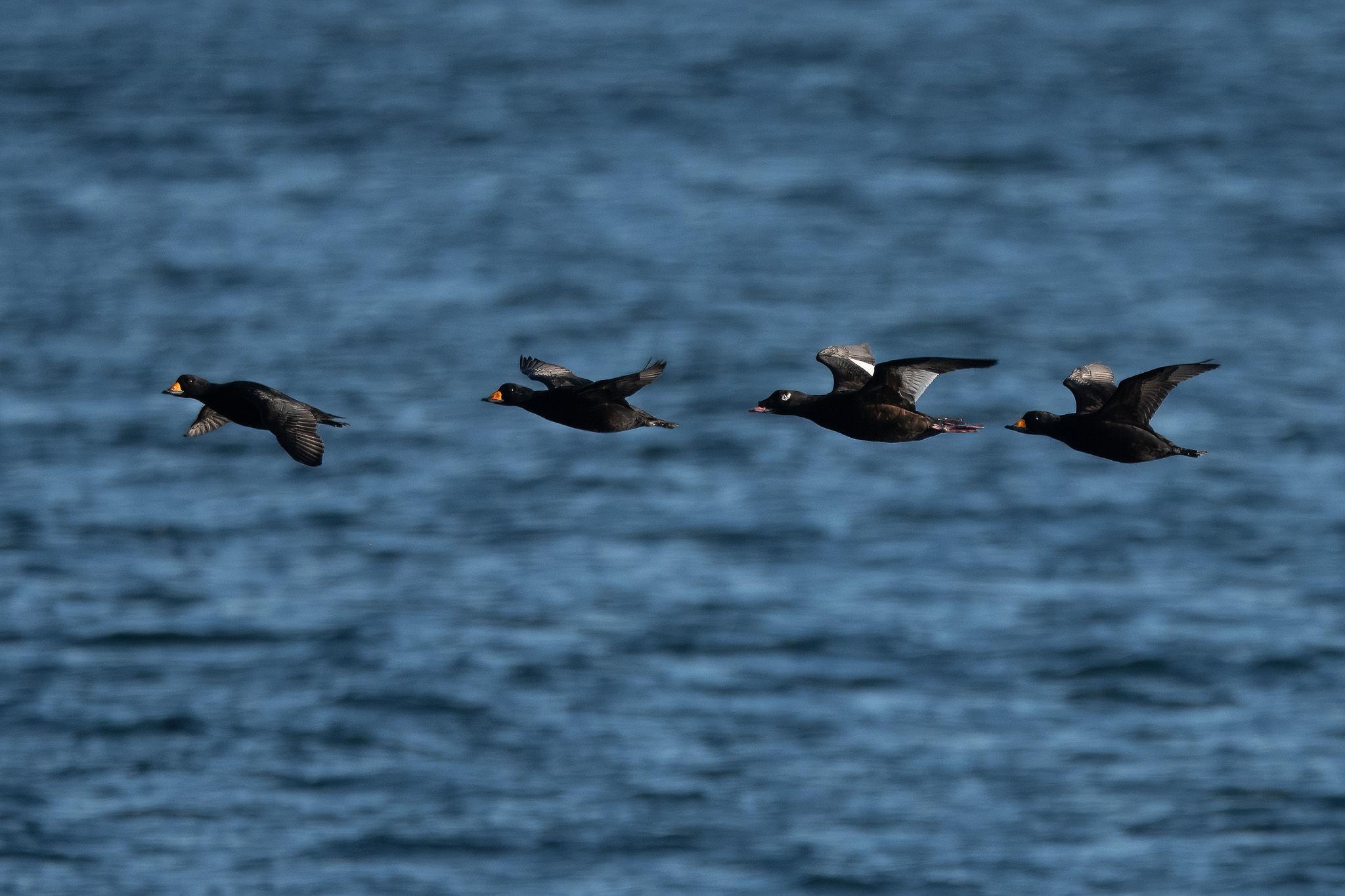
Black Scoters and a White-winged Scoter. © John Matthew Erickson / iNaturalist, some rights reserved (CC-BY)
Phones began buzzing across the Upper Valley as birders put out the word. But why were these birds here in the first place?
This phenomenon is called migratory fallout. Many species of waterfowl breed in northern Canada and move south over the Great Lakes, ultimately heading for the coast of the Atlantic ocean where they will spend the winter. They have a long way to go, but ducks can cover hundreds of miles in a single flight. They can go even farther with strong tailwinds, which in fall means wind blowing out of the north. They only stop when they need to.
When weather conditions suddenly turn bad, with rain, snow, or even dense fog, ducks can drop down (“fall out” of the sky) and land on any open body of water they see. Fallouts are most commonly seen in the spring, when nocturnally-migrating songbirds racing north can be grounded by the thousands by a night of bad weather. At one fallout in 2011, warblers carpeted every surface of a lighthouse on Machias Seal Island. These conditions can be dangerous, especially for songbirds, because they will desperately need to find enough food to refuel. Fallout also puts songbirds at greater risk of colliding with buildings; a 2023 study found that overnight tailwinds followed by a change to headwinds, which can create fallout, led to more collisions. Ducks are a bit hardier than a twelve-gram warbler, but even they go to ground when the rain starts.
November 12 and 13 had a perfect storm of these conditions. The Cornell Lab of Ornithology’s BirdCast tool, which uses weather radar to forecast and measure the passage of birds, estimated that almost 105,000 birds crossed Windsor County on consistent north-northwest tailwinds Wednesday night. But when a wintry mix hit on Thursday, only 18,000 were estimated to have moved that night. Much like the nationwide ground stop of air traffic that would take place that Friday afternoon, the birds dropped from the sky and began to gather, waiting until it was safe to fly again.
For those birders who obsessively watch the weather forecast, it was clear that this would be a good few days. And when a great day of migration happens, they let each other know.
“The eBird alerts and the UV listserv have been connecting local birders for years, but this week showed how much the community has grown,” says Erica Faughnan, a birder from Norwich and one of the coordinators of the Upper Valley Youth Birding Club. “Between group texts, GroupMe, and Discord, word reached more people faster, and more of us than ever were out with scopes within the hour.”
Birders came from Essex and Burlington, drawn by the rare ducks. Multiple staff at VCE ducked out for quick trips to nearby Kilowatt Park, where many of these ducks were congregating on the reservoir above Wilder Dam. Lake Morey in Fairlee and several ponds in Quechee also hosted many birds and birders.
Despite the rain and snow, the birders were happy to be out witnessing the spectacle. So next time you encounter a rainy day during spring or fall migration, head out and check for fallout!
Do you know a kid interested in learning about birding? The Upper Valley Youth Birding Club meets this Saturday, November 21 at Kilowatt Park. Register here.