Explore All of Vermont’s Natural Nooks with the Second Vermont Butterfly Atlas
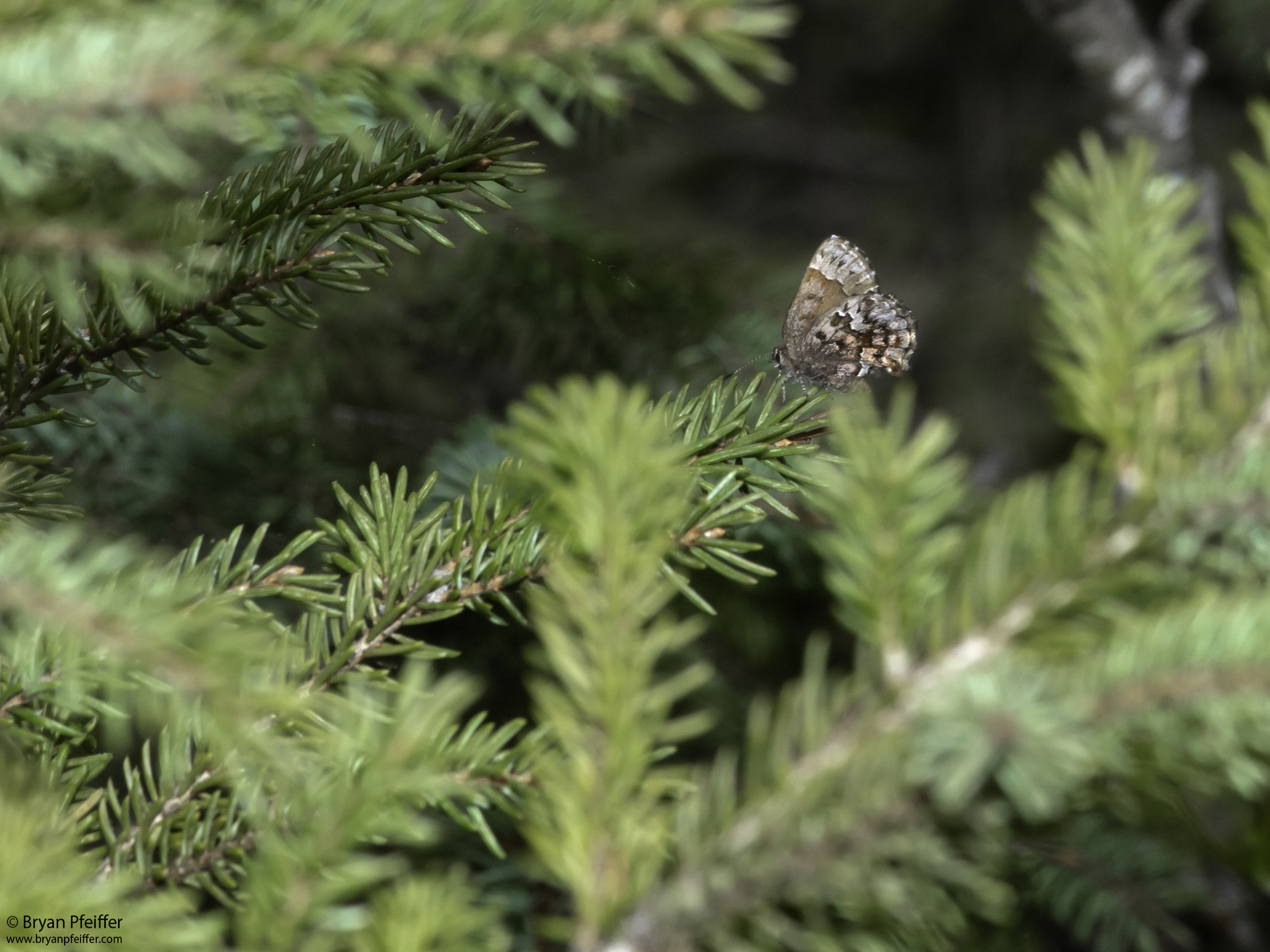
A rare Bog Elfin (Callophrys lanoraieensis), which is only found in Black Spruce bogs © Bryan Pfeiffer, some rights reserved CC-BY-NC
VCE is hosting butterfly blitzes all over Vermont through early August! Get hands-on butterfly atlas training—check out if there is one happening near you.
Vermonters and visitors alike love Vermont for its secret green corners. There are winding dirt roads that lead to unnamed marshes, high-elevation ridgelines accessible only by a quiet hike, and wildflower meadows tucked behind old farmsteads.
While many of us have our favorite local haunts to visit, we sometimes need a nudge to get out and explore all of the other hidden gems that Vermont has to offer. The Second Vermont Butterfly Atlas invites you to step off the roads and well-trod trails, and search for butterflies in 184 priority blocks across the state.
“I hadn’t expected to gain so much from volunteering for the Vermont Butterfly Atlas,” Linda Lynton, a VBA volunteer, told us earlier this year. “I had recently moved to Vermont, after decades of living in New York City, when an email came over asking for volunteers. The experience has proved to be both intellectually and geographically expansive. I’ve learned more about butterflies, moths and insects than I ever imagined, met some fascinating people, and I’ve explored back roads I probably would never have thought of visiting.”
Putting Butterfly Species on a Map
Do you remember the book of road atlas maps that everyone used to carry in their cars? These maps helped us navigate around before phone apps, and the Butterfly Atlas isn’t much different. A scientific atlas maps species locations and population size across a state, usually within a given time period. This creates a “snapshot” map that land and wildlife managers can use to decide which species need the most help. After all, we can’t protect Vermont’s rare species if we don’t know where they are.
The Second Vermont Butterfly Atlas, the first “Second” atlas in the U.S., is our five-year effort to update our maps for the current 120 butterfly species in the state. This update will help us understand how our butterflies have changed over the past 20 years as the climate warmed and our forests and farms turned into neighborhoods. In fact, data collected by volunteers across Vermont was used to update our State Wildlife Action Plan, a roadmap for future conservation efforts by the state.
We need people like you to become an explorer and butterfly cartographer.
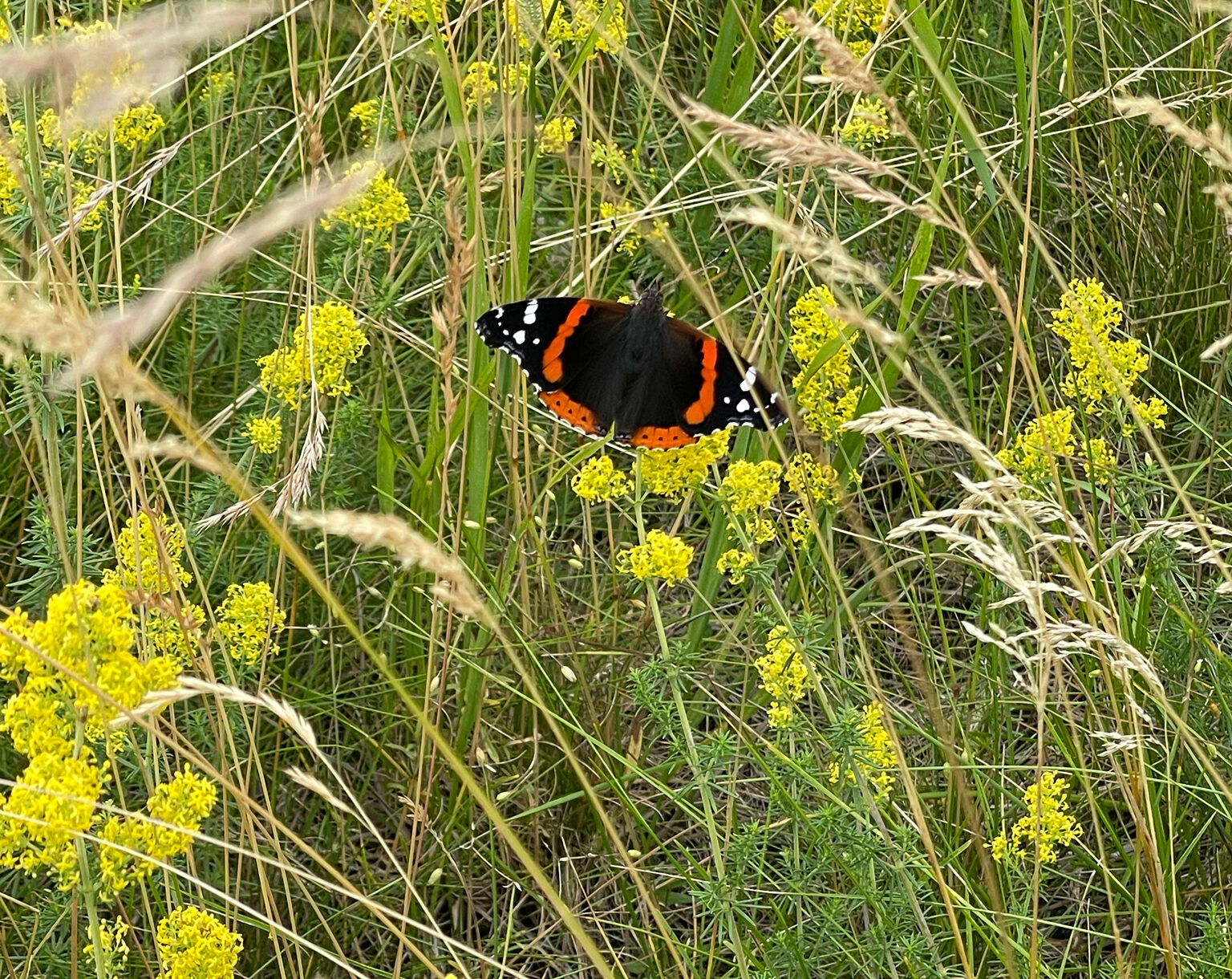
A Red Admiral (Vanessa atalanta) near the Camp Ingalls Butternut Hill Natural Area on Lake Champlain © csaundersvt on iNaturalist, some rights reserved CC-BY-NC
Every Type of Vermont Landscape
Imagine the state of Vermont divided into a grid of 1,177 squares, each one three miles by three miles square. We can’t visit every one of those blocks in five years, but we have selected a subset of them that make that atlas “snapshot” more accurate for the whole state.
These priority blocks were chosen to cover every type of Vermont landscape—from the boreal forest atop Jay Peak to the mixed hardwood forests around Harriman Reservoir. This ensures that we find common “generalist” butterflies like the Red Admiral, which you can find in almost any backyard, as well as “specialists” like the tiny Bog Elfin, which only lives in black spruce bogs. It helps us map out where butterflies thrive, and not just our most popular hiking trails. Many of these priority blocks are also in blank spots on our biological map. We need your help to fill them in—you might be the very first person to ever record a species there!
What You Can Do to Help
🦋Attend a hands-on training or butterfly blitz led by one of our scientists! VCE is hosting butterfly blitzes all over Vermont through early August. Check out if there is one happening near you.
🦋Participating in the Atlas is easy. If you can snap a picture on your phone, you can be a community scientist. Start here with our guides to learn how to upload these shots to iNaturalist.org or e-Butterfly.org. You don’t need to be a butterfly expert to participate, just have a sense of adventure or a curiosity for the unknown! If you’re planning to visit a site multiple times, you can adopt a block to tell us “I’ll be surveying here.” Visit the VBA’s block mapper tool to find a priority block in an area you’d like to explore and find what hidden gems are waiting for you. (Watch this quick start guide to get started!)
🦋Explore with the VBA! Choose an area of Vermont that you’re excited to explore. Maybe you’ve always wanted to visit a popular site like the scenic Moose Bog in the Northeast Kingdom or you’re looking for hidden treasures like a glimpse of the world’s oldest reefs at Fisk Quarry Preserve on Isle La Motte. Both of these sites are in priority blocks!
🦋 You don’t have to visit the far corners of the state either—there’s probably a priority block with local trails right near you. Take a hike in the D.A.R. state park in Addison, at Buttermilk Falls in Ludlow, or on Jay Peak in Jay. Combine a trip to look into history with a trip to butterfly in a cemetery in a priority block, or explore the rural parts of Vermont by biking and butterflying along a dirt road.
🦋Go on a butterfly scavenger hunt! Take a trip to a priority block to find new butterfly species for your life list. Find Vermont’s brightly colored Pink-edged Sulphur or the rare Henry’s Elfin at the priority blocks in Silvio O. Conte National Fish and Wildlife Refuge or take a spring stroll along a dirt road in southwestern Vermont for a glimpse of the elusive mint green Early Hairstreak. You can help us map the effects of climate change by butterflying along Rt. 9 in Southern Vermont, where southern species are beginning to move north from Massachusetts.
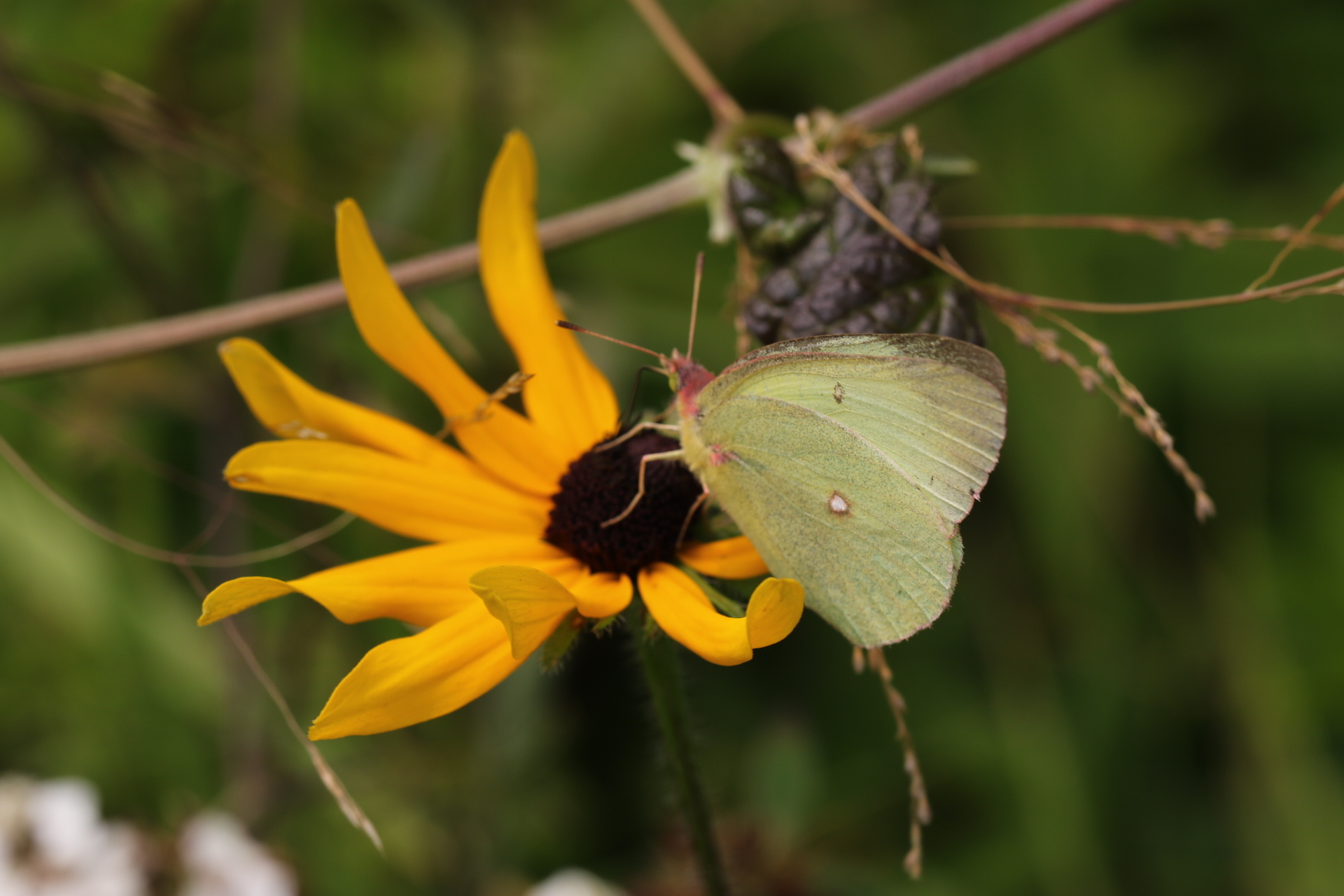
Pink-edged Sulphur (Colias interior), in Lewis, VT. © Spencer Hardy, some rights reserved CC-BY-NC
How to Check Off a Block
Our goal is to get 40 species on each priority block before the end of 2027. But don’t worry if you only find a few species on your first hike—every single butterfly you log counts towards the finish line. Think of it like a community relay. You might visit a block in May to look for early-spring species like the Eastern Comma, while another volunteer might visit in July to search for Fritillaries.
Even if you strike out, knowing where butterflies are NOT living is just as important as knowing where they ARE. It helps us see the whole picture of Vermont’s changing environment and decide where we need to take action.
Think of these 184 priority blocks as gateways to Vermont’s best-kept secrets. Within them, you might catch a glimpse of a rare species, or you might simply find your new favorite view of Vermont. Either way, the data you collect is a gift to Vermont’s future.
So, which block will you explore first? Your next great discovery is just a trailhead away.