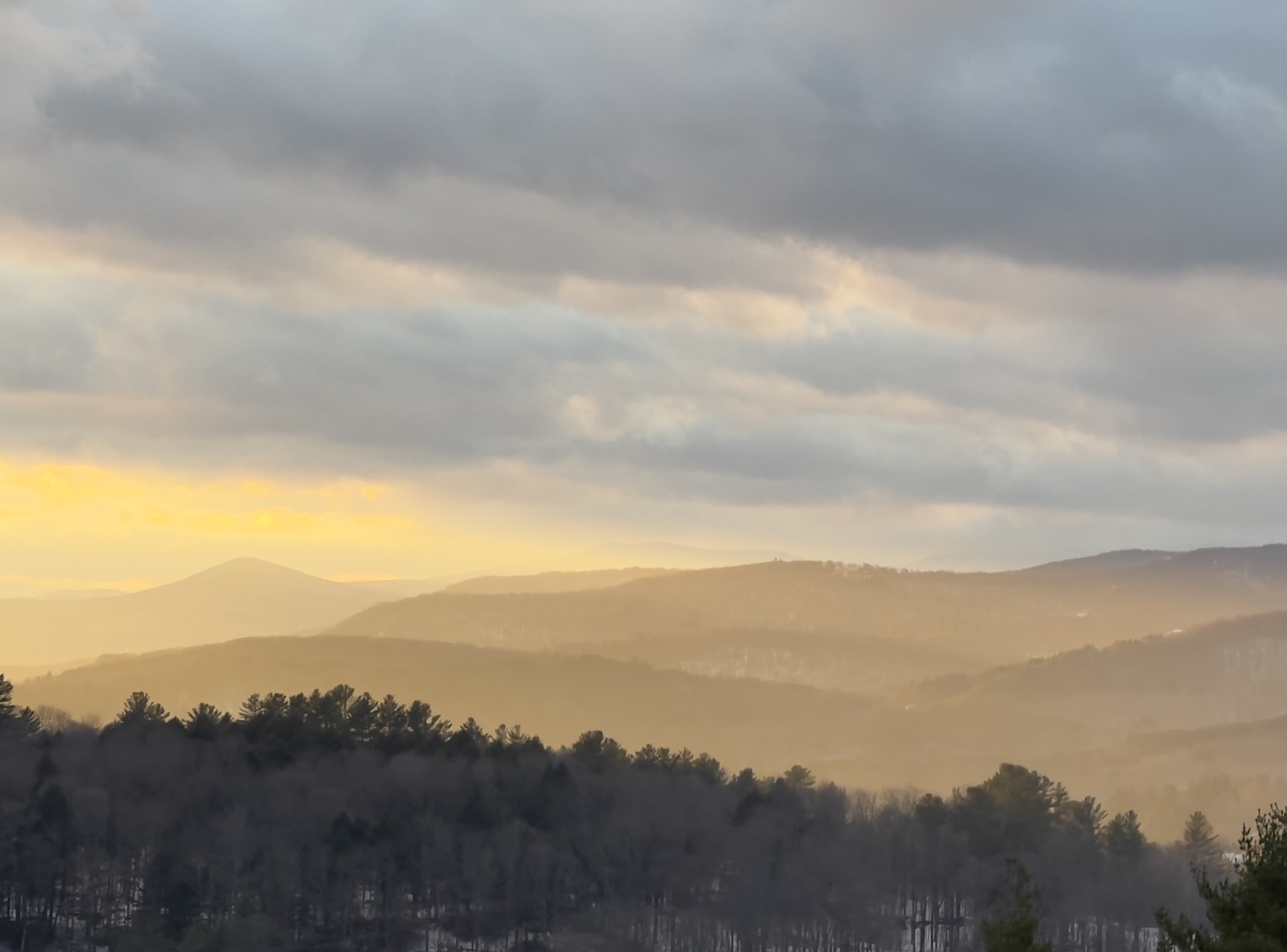
Winter
© Kent McFarland
As the light dwindles and the temperature drops, our scientists are thinking about the remarkable strategies overwintering species have evolved to survive New England's coldest months. Grab a hot tea (or cocoa) and cozy up to this freezing, fascinating world with December's Field Guide.
By Spencer Hardy and Jason Hill
Where do the bees go in the winter?
Step outside on a brisk December day, and you’re likely to be surrounded by bees. No, you’re not likely to observe a bee visiting your snowman or investigating your yellow parka while you shovel the walk; yet they are all around us, probably much closer than you would imagine.
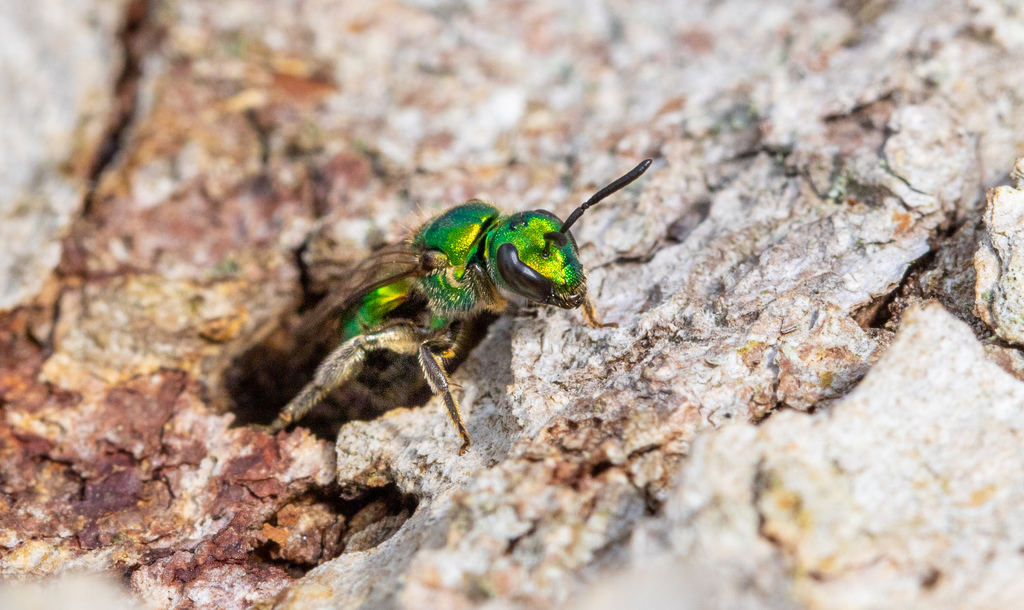
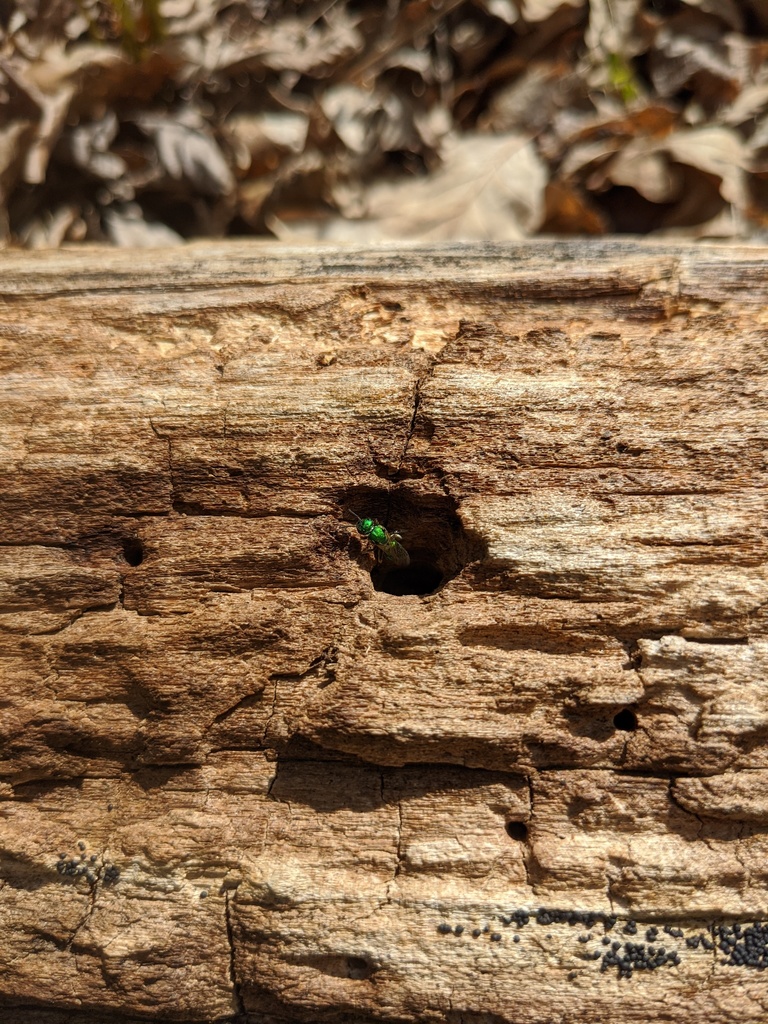
A rotten stump next to the mailbox? Yup: Pure Green Sweat Bee (Augochlora pura), Cresson’s Metallic-Sweat Bee (Lasioglossum cressonii), and maybe Black-and-green Metallic-Sweat Bee (Lasioglossum nigroviride). The patch of dirt at the edge of the driveway that never seems to grow grass? Yup: Probably Unequal Cellophane Bee (Colletes inaequalis) and likely many more. The raspberry patch in the garden that has gotten a little out of hand? For sure: Spurred Small Carpenter (Ceratina calcarata). The wooded slope down to the river? Right again! That’s where the queens are. (Bombus spp.)
Native bees in New England have evolved a number of different ways to survive a long, cold winter. So, through a three-part Field Guide series, we will dive into their main strategies, starting here with bumble bees and sweat bees.
Bumble bees (genus Bombus) are our most familiar native bees, and one of a handful of social species with distinct castes (queens, workers, drones). In autumn, all of our bumble bees except the future queens die off. These future queens store the sperm acquired from their late‐summer matings and seek out a sheltered spot like a rodent burrow, thick leaf litter, or a mossy bank to spend the winter.
Of the few studies that have monitored bumble bee overwinter survival in the wild, one from New England found that perhaps 60% of these future queens survive our cold winter. As temperatures warm in spring and day length increases, the soon-to-be queen wakes to initiate a new colony, relying on the early pollen and nectar provided by blooming maples and willows.
Halictidae, the sweat bee family, is a large group (97 species in Vermont) of small and often colorful bees. Most—perhaps all—share a similar overwintering strategy with the bumble bees in that only the females survive the winter, having mated and stored all the necessary genetic material needed for the following season. Male bumble bees and male sweat bees simply don’t exist for six or more months of the year!
When the overwintered female is ready to start the next generation, she will lay some unfertilized eggs, which will develop into males with a single set of chromosomes, and some fertilized eggs, which will develop into females with two sets of chromosomes.
Clearly this overwintering period is critical for the long-term survival of a species—and we can help make it a little easier for them with small modifications to our landscapes.
Promoting overwinter wild bee survival often means doing less around your property this autumn, not more. Leave some of your yard or garden a little wild through fall and winter—skip the raking and trimming in a few spots, and let stems, stumps, and leaf litter stay put until late spring. That messiness provides crucial insulation for overwintering queens and solitary females tucked into soil, hollow stems, and rotting wood. Avoid tilling bare patches of ground or your gardens where ground-nesting bees spend the cold months, and resist the urge to “clean up” flower beds too early. Even potted plants or brush piles can shelter dormant bees. Also avoid pesticide use, especially in late summer when bees are building fat reserves for winter.
If you’re worried about what the neighbors might think of your untidy yard (oh, my), then treat your property like a mullet for bees: business up front and a party for bees in the back. A little patience and untidiness now will reward you and your spring flowers with the quiet activity of native bees when the snow melts.
And tune in next month to learn about how Carpenter Bees survive the winter.
By Kent McFarland
Mistletoe has been a symbolic plant of love and fertility for thousands of years in Celtic, Greek, and Norse mythology. In England in the 17th century, it became associated with Christmas as a decoration under which lovers were expected to kiss.
Of course, this was the European Mistletoe (Viscum album), the only native mistletoe species that ranges across most of Europe. The tradition was carried to the New World where American Mistletoe (Phoradendron leucarpum)—similar but with shorter, broader leaves and longer clusters of berries—was adopted.
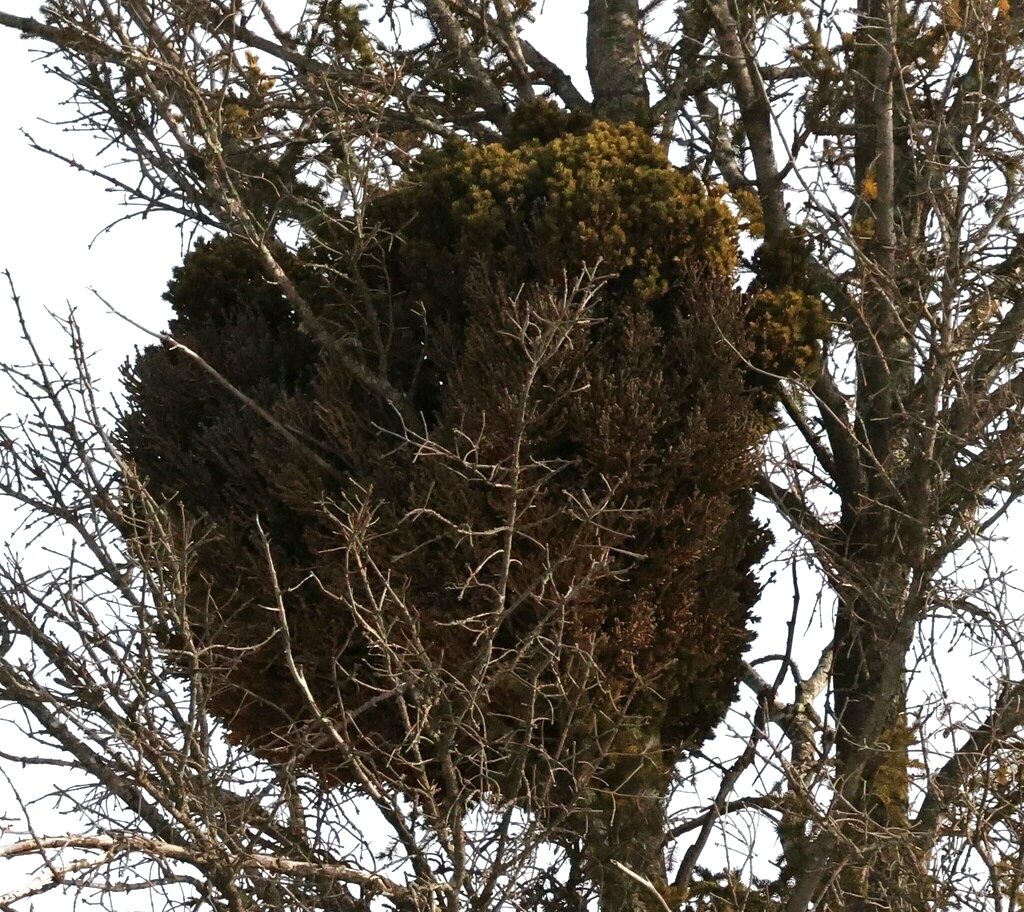
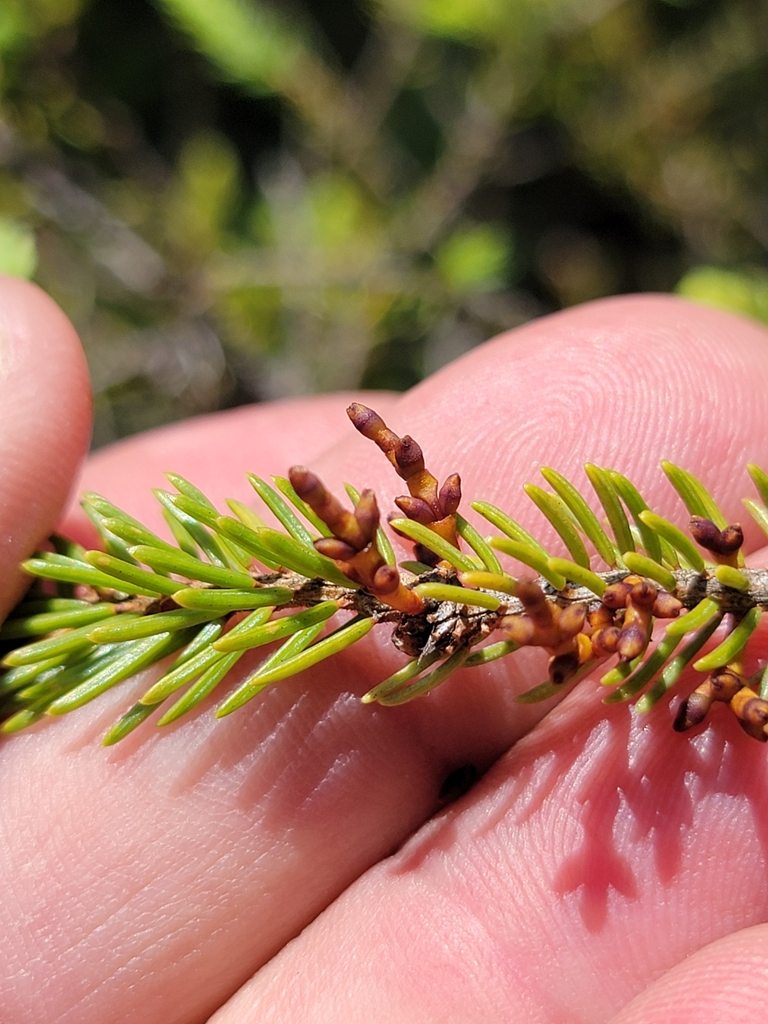
If you live here in the Northeast, you’re not going to be able to harvest your own mistletoe to hang for the holidays, since American Mistletoe only grows in the southern portion of the continent. We do have a unique mistletoe lurking in our northern forests, Eastern Dwarf-mistletoe (Arceuthobium pusillum), but it looks nothing like the holiday decoration.
Still, like other mistletoes, Dwarf-mistletoe is a bit of a thief, a hemiparasite, which means it steals nutrients and fluids from its host plant but also generates some of its own energy through photosynthesis. It grows within the branches of pine, fir, tamarack, or spruce—most commonly Black Spruce (Picea mariana)—sometimes causing unusual growths of twigs on the hostplant, called witches’ brooms.
After a couple to perhaps a dozen years of growth inside the host plant, Dwarf-mistletoe sends reddish-colored aerial stems out of the host branch. Flower buds develop in autumn and overwinter. The plants are dioecious, producing either male (staminate) or female (pistillate) flowers, which usually have longer shoots. They bloom between March and June, although the exact dates here in Vermont have not been fully explored. The anthers on male flowers are able to open or close in response to changes in environmental conditions, perhaps saving pollen for times when dispersal is optimal.
Insect pollination seems to be important for our Dwarf-mistletoe. Researchers in one study used nets around flowers to exclude insects, while allowing the passage of wind-blown pollen. They found that exclusion of up to 59 species of potential pollinators significantly reduced fruit production. The insects captured near pistillate flowers with the most pollen on them were flower flies (Syrphidae), tachinid flies (Tachinidae), firefly beetles (Lampyridae), and wasps (Aphidiidae, Ichneumonidae, Tenthredinidae, Vespidae).
Now comes the violent (but fertile!) part. The fruits of Dwarf-mistletoe mature during September and October, filling with fluid and building up pressure as they ripen until they violently explode. The sticky seeds are launched at 30 miles per hour and travel up to 40 feet. Of course, the seeds may spread much longer distances by animals too, sometimes sticking to Red Squirrel (Tamiasciurus hudsonicus) or bird feet.
If a seed sticks to a suitable host branch—a twig less than five years old—it will germinate, and its emerging radicle will pierce the stem. The new plant penetrates past the cambium layer and into the host’s xylem and phloem tissues, where it steals the nutrients needed for its own growth and reproduction. It passively draws water from the host by keeping its leaf stomata open day and night, creating a moisture gradient between the plant and its host.
Dwarf-mistletoe isn’t an easy plant to find. It’s rare in the Northeast and listed as endangered in Connecticut, New Jersey, and Rhode Island as well as threatened in Pennsylvania. It has mostly been found on spruce trees in bogs here in Vermont.
So keep your eyes open for witches’ brooms or other tree deformities, and if you find one, please kiss and tell! Snap a photo of the plant and report your sighting to iNaturalist Vermont.
By Kent McFarland and Emily Anderson
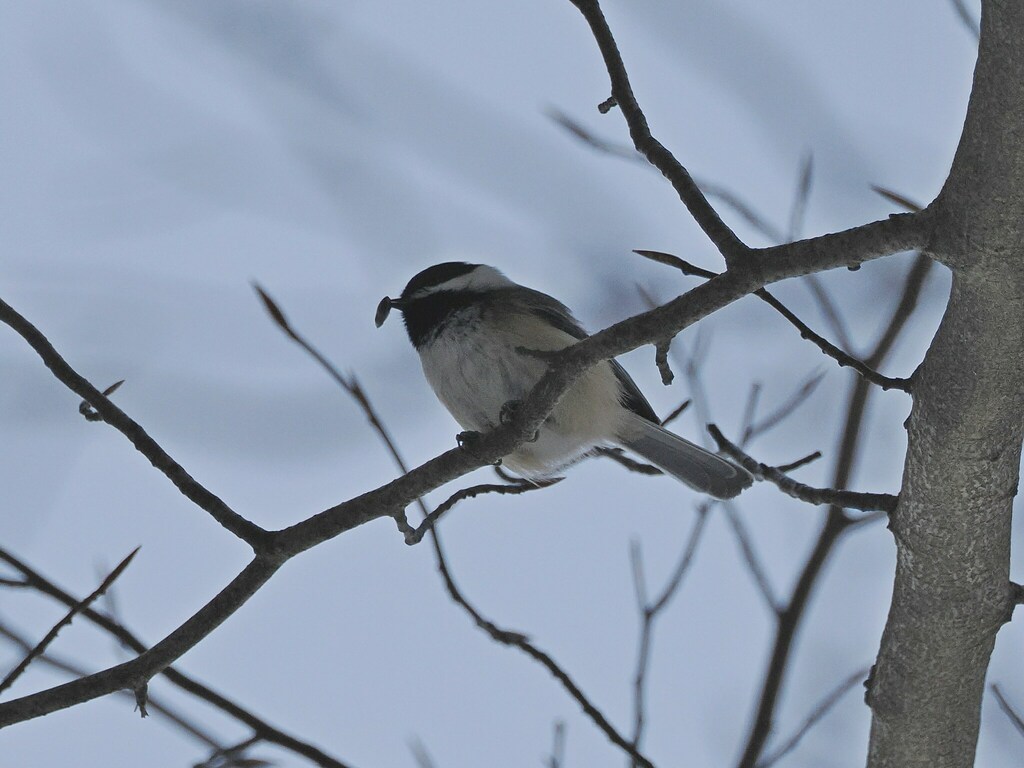
Once meant as an insult, being called “bird brain” should really be considered a compliment—especially if the bird in question is a Black-capped Chickadee. Scientists have amassed decades of research demonstrating the cognitive powers of these small, feisty birds.
As year-round northeastern residents, chickadees prepare for winter by hiding food in multiple locations, a practice also known as “scatter hoarding.” This tactic requires a keen memory, and chickadees can remember thousands of storage sites. But how do they do it?
Each autumn, Black-capped Chickadees grow new neurons in their hippocampus, a region of the brain critical for memory. These new cells provide extra room for memory storage and cause the hippocampus to expand by roughly 30%. As food stores decline leading up to spring and the need for massive memory space dwindles, the cells containing old information die off. You can read more about these changes in chickadee brain cells in Kent McFarland’s Outside Story article.
Most recently, scientists at Columbia University uncovered a new secret to Black-capped Chickadees’ astonishingly sharp memory: barcodes. The researchers found that a chickadee’s hippocampus will briefly light up with the same unique pattern when hiding a food item and when retrieving it later, similar to scanning an item at the grocery store. They also noticed neurons firing in a specific, repeated pattern based on whether the storage site had a seed.
So, as you go about your early-winter wanderings, take a second to watch the chickadees flitting among the trees and marvel at the amazing brains helping them thrive all winter long.


Very amazing and informative perusals! Thank you!
I look forward to these mini-marvels each month!
Would our brains do likewise as we age and can’t recall where the heck we left our keys!