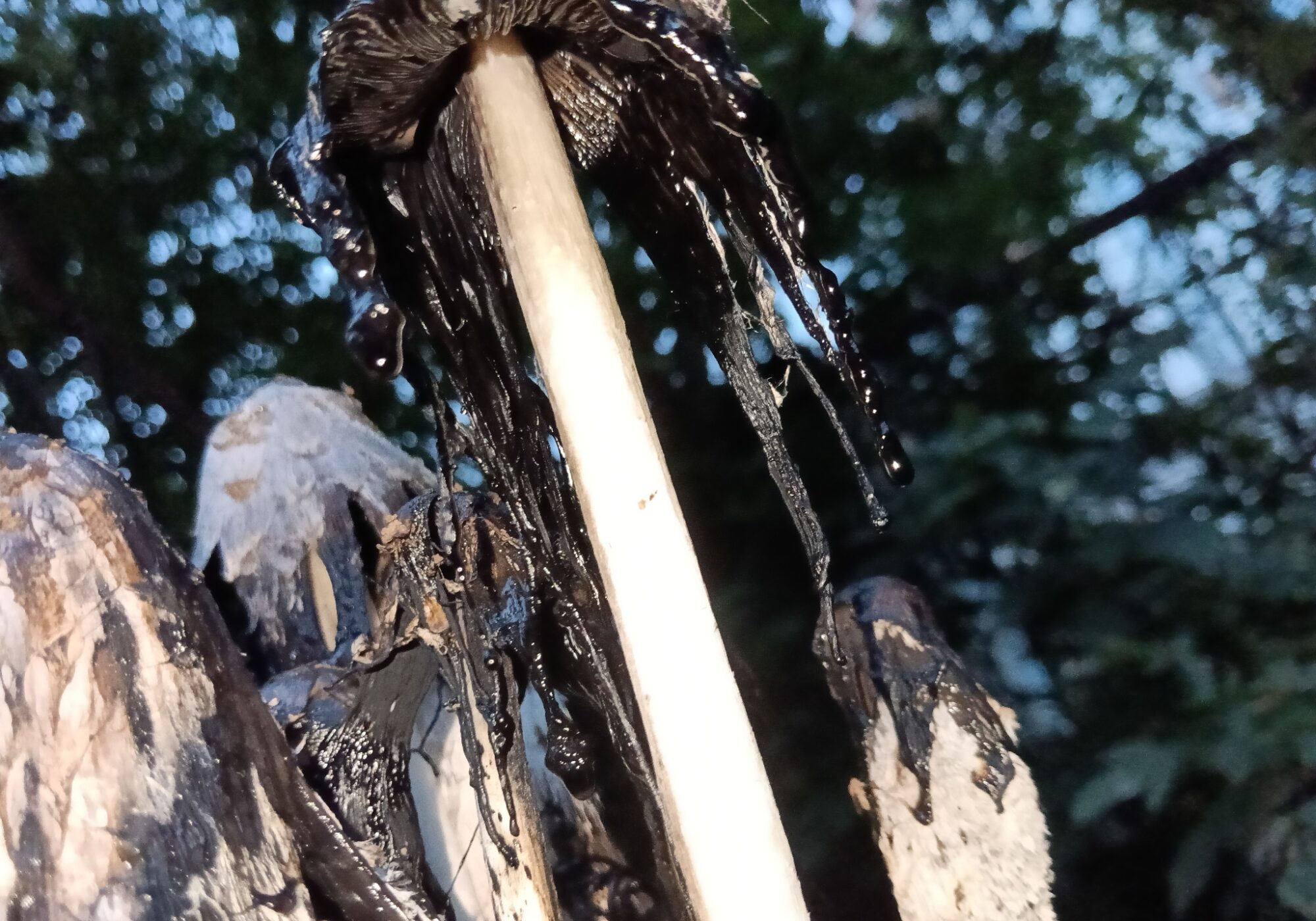
Shaggy Manes (Coprinus comatus)
© Alexander Petrunin-Suharev, some rights reserved CC-BY
Things are getting creepy up north! In celebration of the spooky season, check out these frightening fungi that you can find in your backyard.
You can help us understand and document mushrooms by posting pictures and locations on iNaturalist or collect samples for Sequence Every Mushroom in Vermont. The latter is a new statewide effort to understand the genetic diversity of fungi in the state. Visit their website to request a free collecting kit and learn how to collect, process, and ship your mushrooms for analysis.
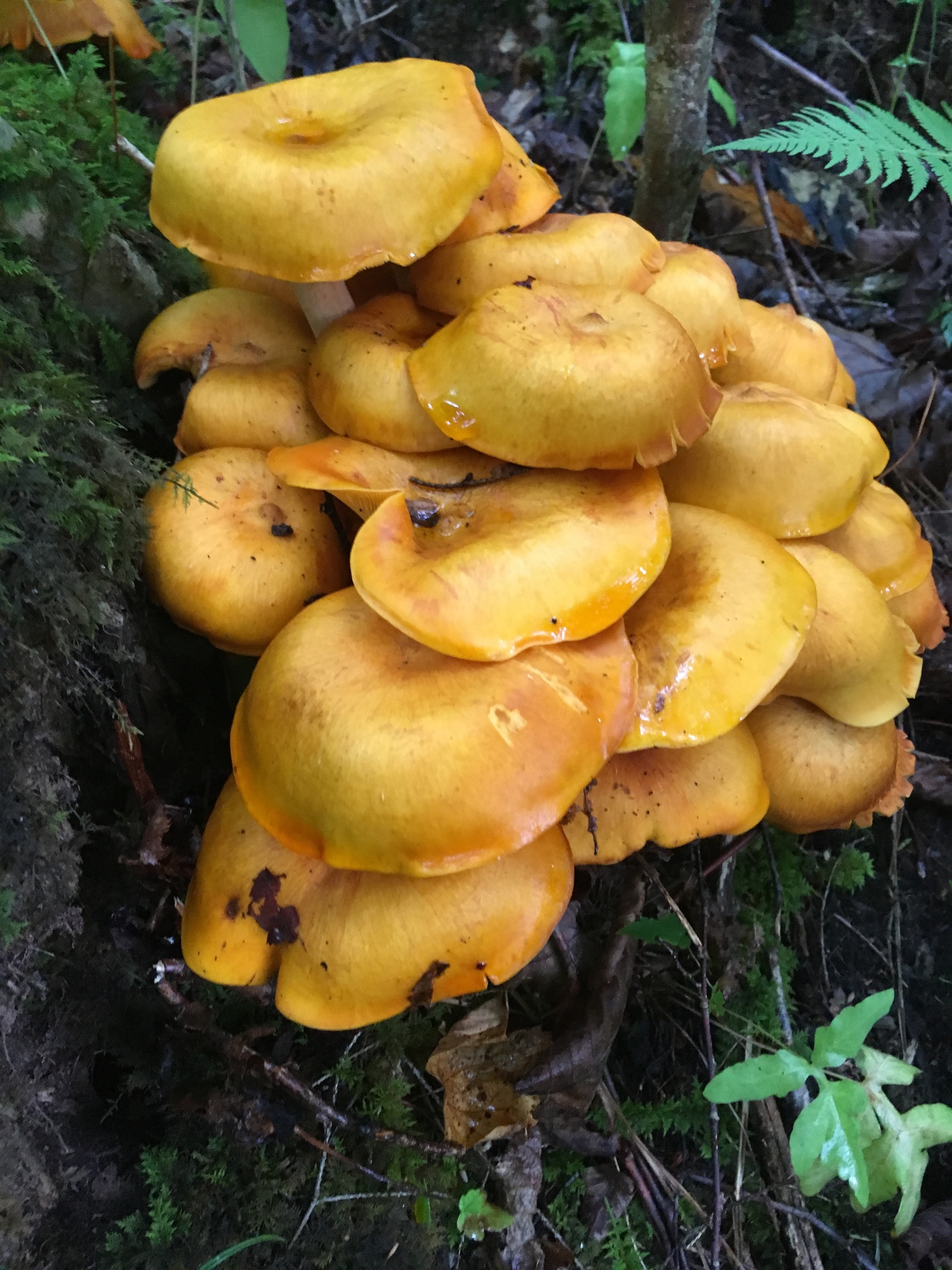
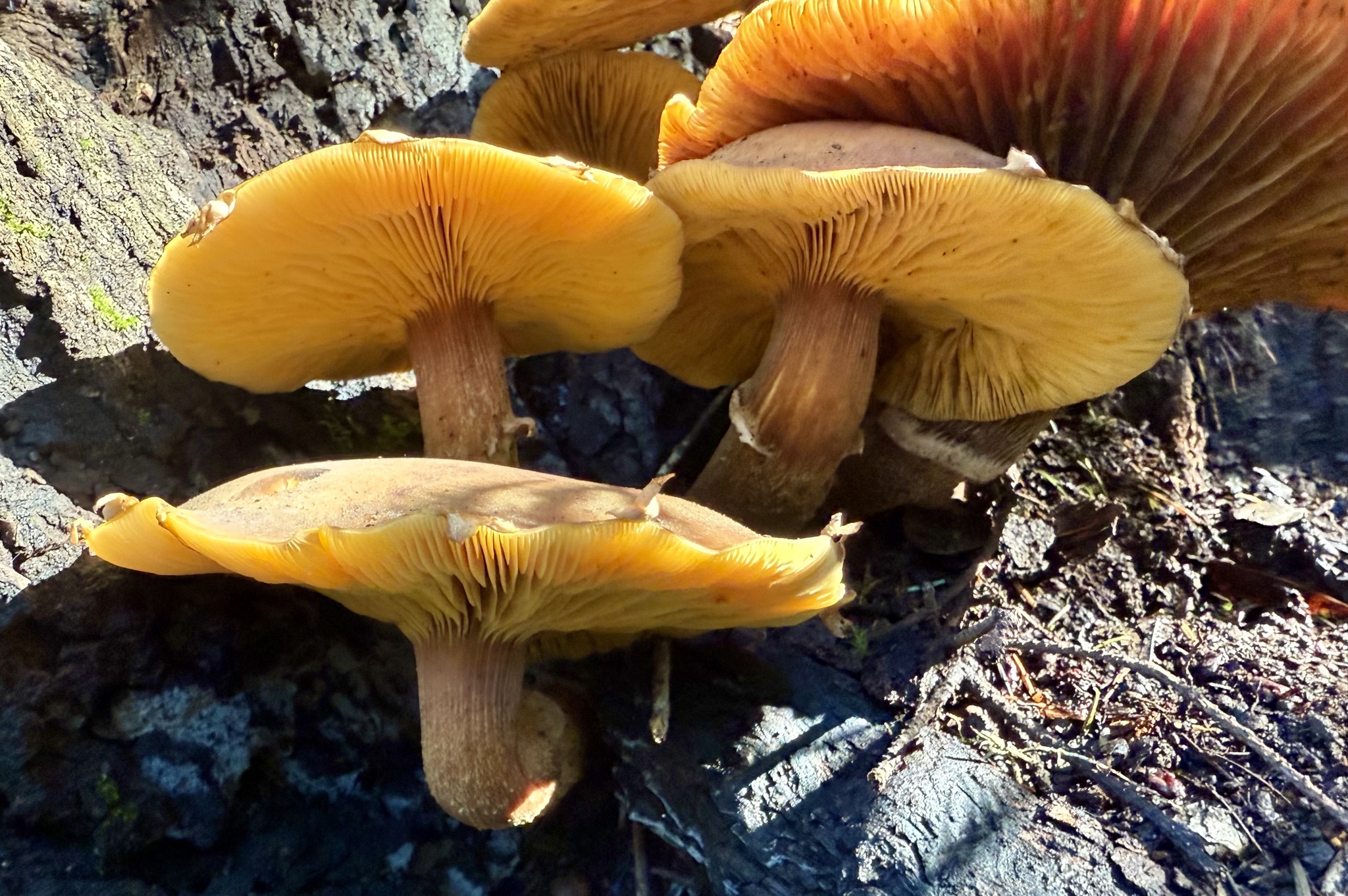
The Spooky Mushroom: Eastern American Jack-O’-Lantern Mushroom (Omphalotus illudens)
If you spot a pile of overlapping, large, gilled yellow-orange mushrooms at the base of a hardwood tree, stop and look closer. You may have just found the Eastern American Jack-O’-Lantern Mushroom. It gets its name from its bright orange color and because it has a weak glow around the gills, which can last 40 to 50 hours after they get picked. This glow helps insects find their way to the mushroom at night, where they pick up and disperse the mushrooms’ spores.
Tiny black and red Pleasing Beetles (Tritoma) are known to feed on them but none of the recorded species live in Vermont. We do have one rare species, Tritoma mimetica. Take pictures of any bugs you see on the mushrooms, upload them to iNaturalist, and you could be the first person to document an interaction between the two species!
Where can you find it? Most of Vermont, except in the Northern part of the state. It can be found in clumps on decaying hardwood logs or at the base of hardwood trees.
When is it out? May – November, peaks in August/September
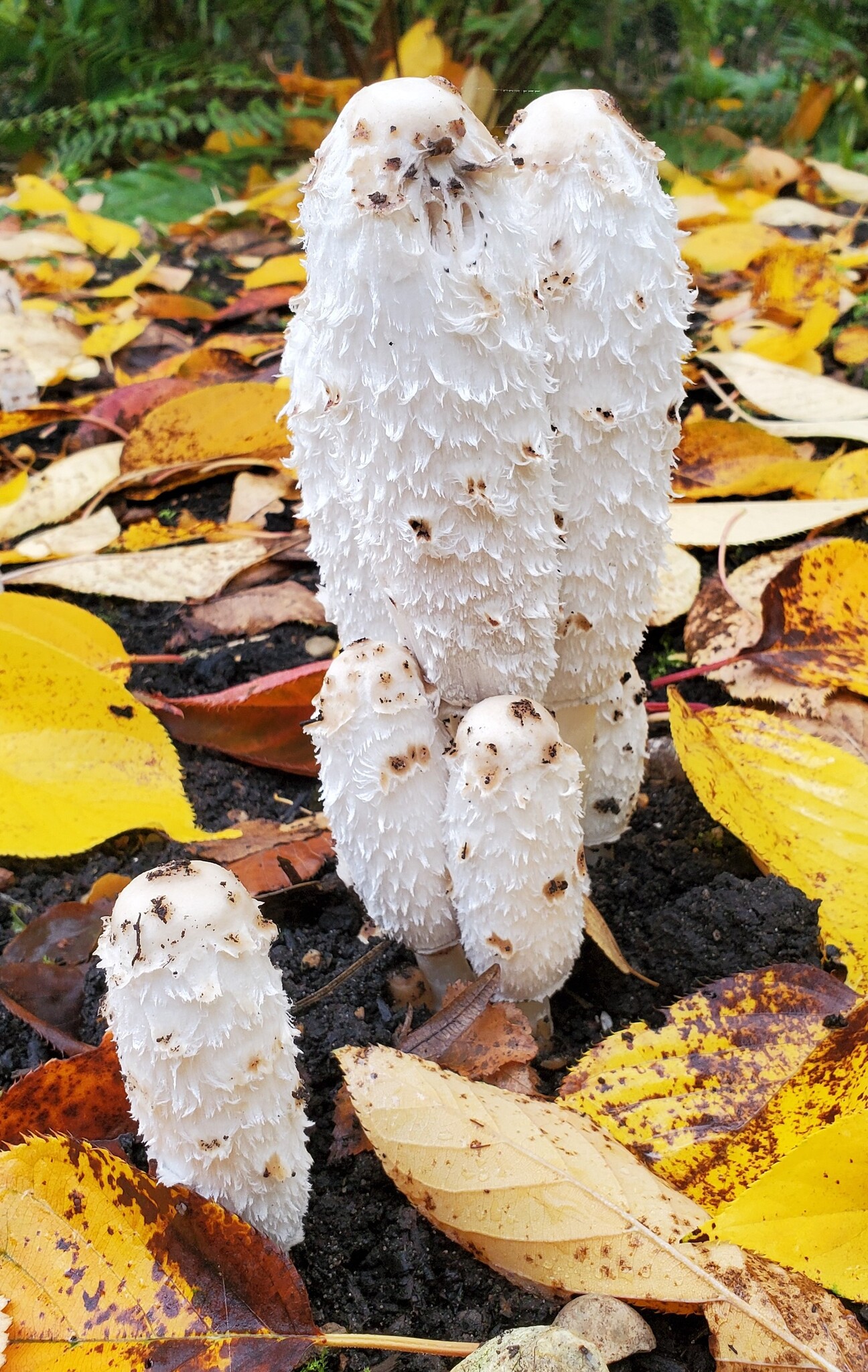
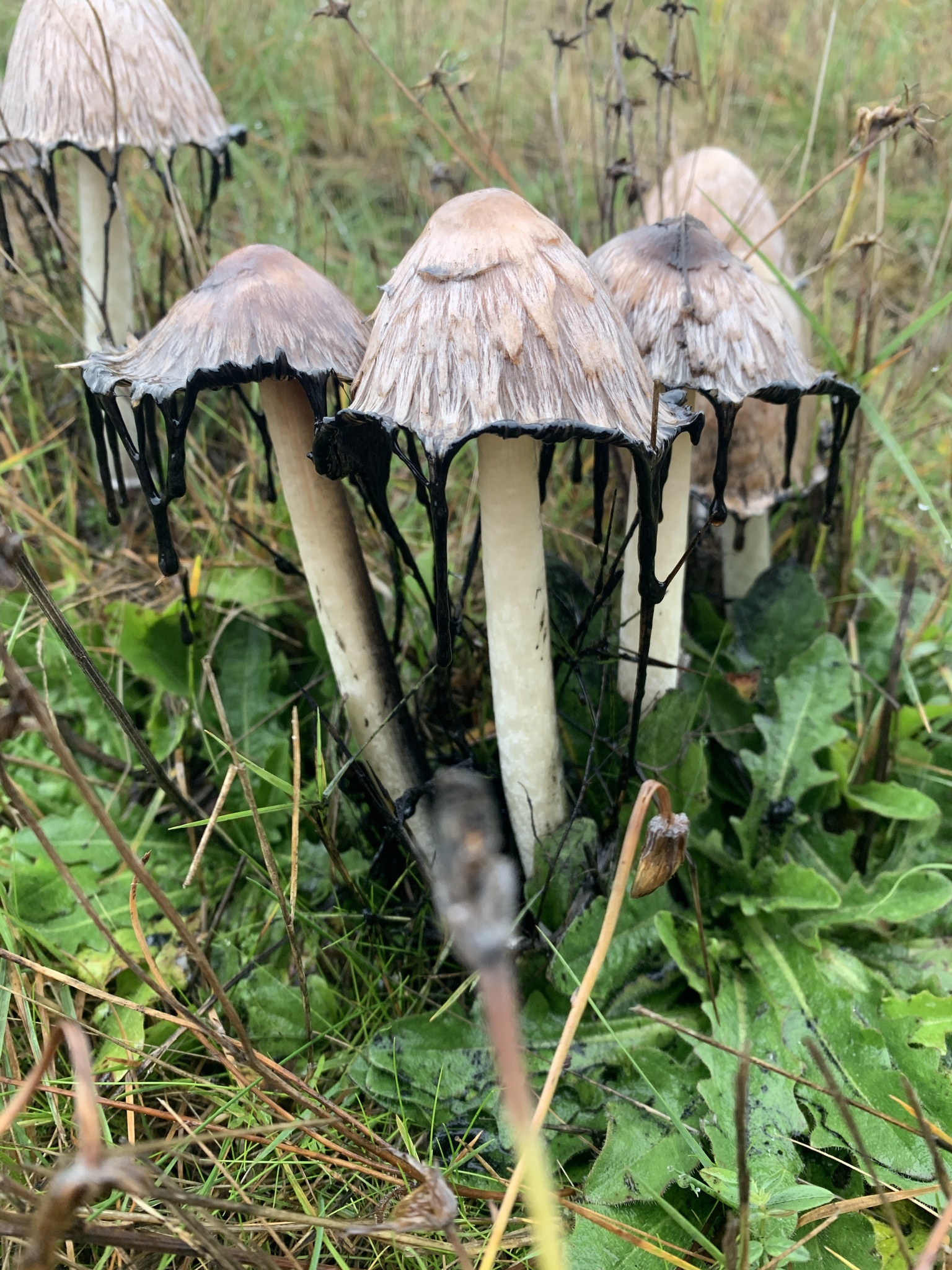
The Black Goo Mushroom: Shaggy Mane (Coprinus comatus)
As the weather turns cold, you may notice a small clump of white, cylinder-shaped and scaled mushrooms pushing their way up through the grass in your lawn or along the road. Just days later, you return and the mushrooms have dissolved into a dripping, black goo. This process is called deliquescence, where the mushroom releases enzymes in response to moisture in the air that break down the chitin in its body. The black goo carries the mushrooms’ spores away from their tightly packed gills and allows them to disperse. You can tell how close a mushroom is to deliquescing by checking its gill color. White means it just came up, pink means it is maturing, and black means prepare for the meltdown.
The mushroom doesn’t just dissolve itself, it’s also a killer. Underground, the mushrooms’ hyphae form spiny balls which lie in wait for nematodes, small worms that live in the soil. A few small scratches from the spines are enough to damage the nematodes’ cuticle, or their outer layer of “skin”, and cause them to explode. If that doesn’t work, the mushroom can also release toxins that paralyze the nematode in just a few hours.
Where can you find it? All over Vermont, especially in disturbed areas like lawns, gravel roadsides or waste areas.
When is it out? Between September and early November.
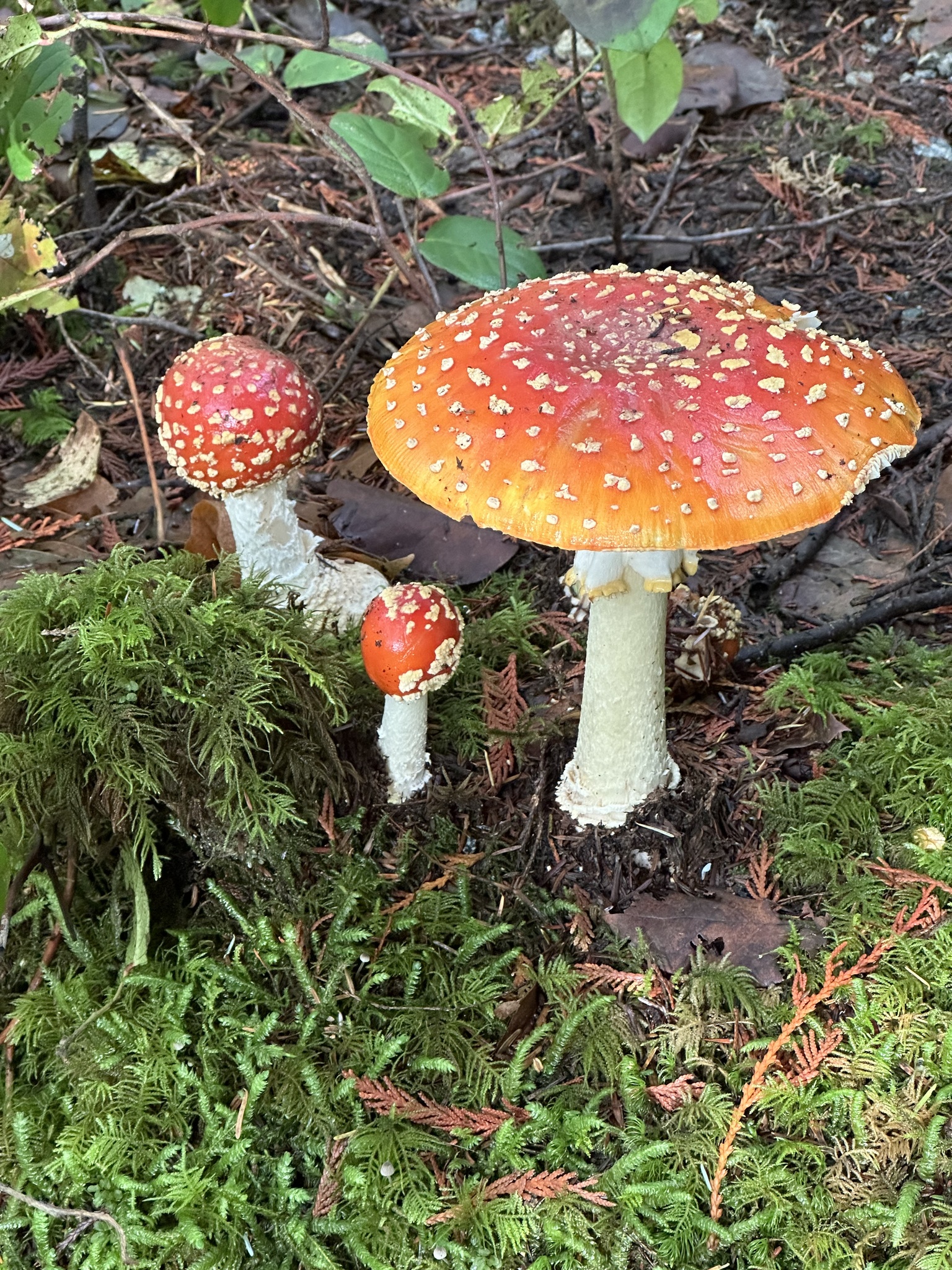
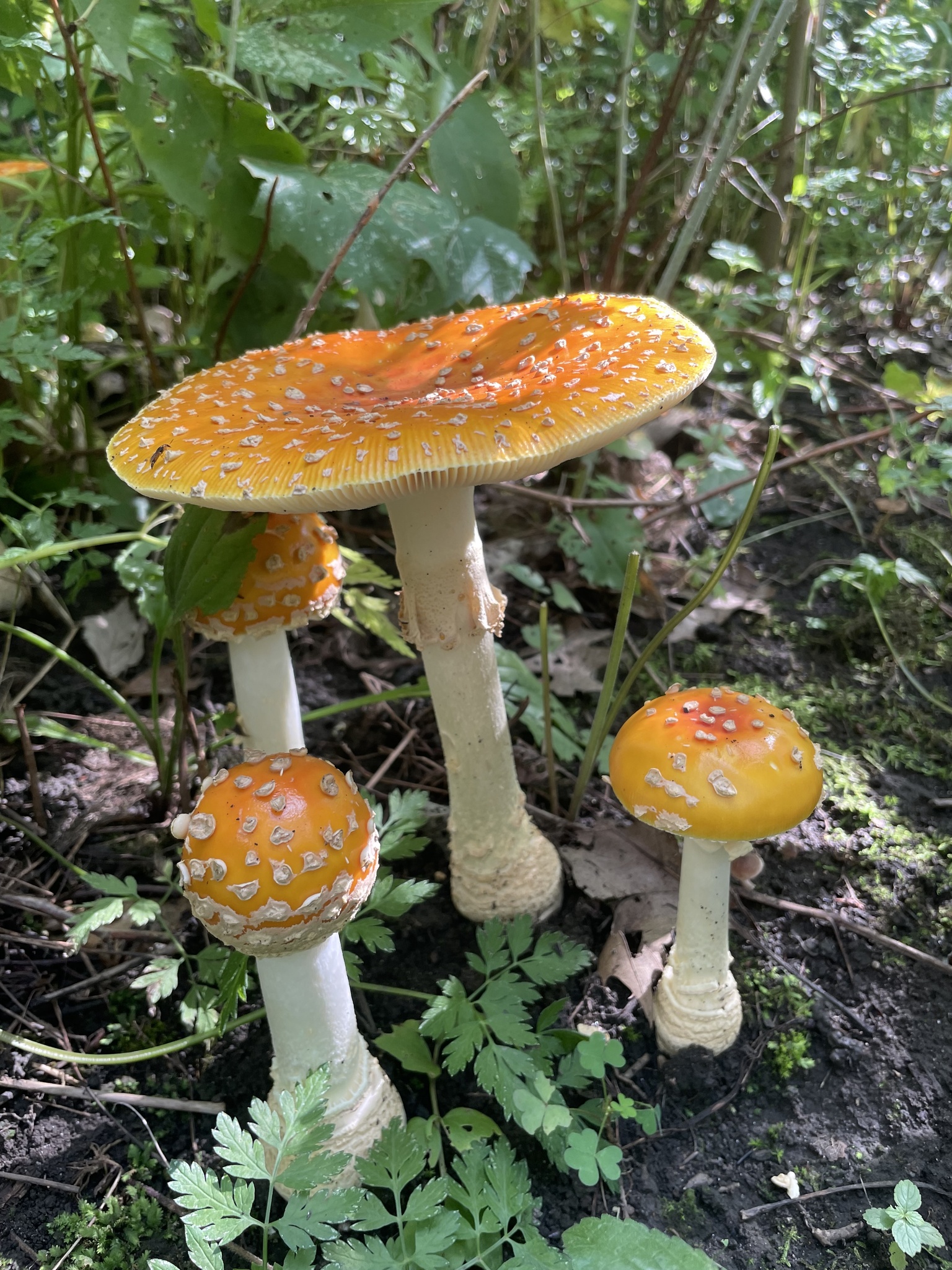
The Murder Mushroom Genus: Fly Agaric (Amanita muscaria)
When you picture a mushroom, it probably looks like a Fly Agaric—a classic red toadstool with white spots and stem. In Vermont, our subspecies American Yellow Fly Agaric (Amanita muscaria guessowii) is often yellow. This cosmopolitan species features in cultural works from Victorian era depictions of fairies to Super Mario. Its name may come from use in traditional European cultures to kill flies by methods such as soaking the mushroom in milk. Later experiments have found that the mushroom-milk combo at most makes the flies a little intoxicated.
While the Fly Agaric is only mildly toxic to adults, the Amanita genus contains some of the most deadly mushrooms like the Eastern North American Destroying Angel and Death Cap. Be careful what you search for— the Death Cap was the focal mushroom in the recent Leongatha mushroom murders in Australia. The prosecution claimed that the murders’ use of iNaturalist indicated premeditation.
Where can you find it? All over Vermont, where it typically grows in association with pine, oak, spruce, fir, birch or cedar. Y
When is it out? Can be found from May to November but it peaks between September and October.
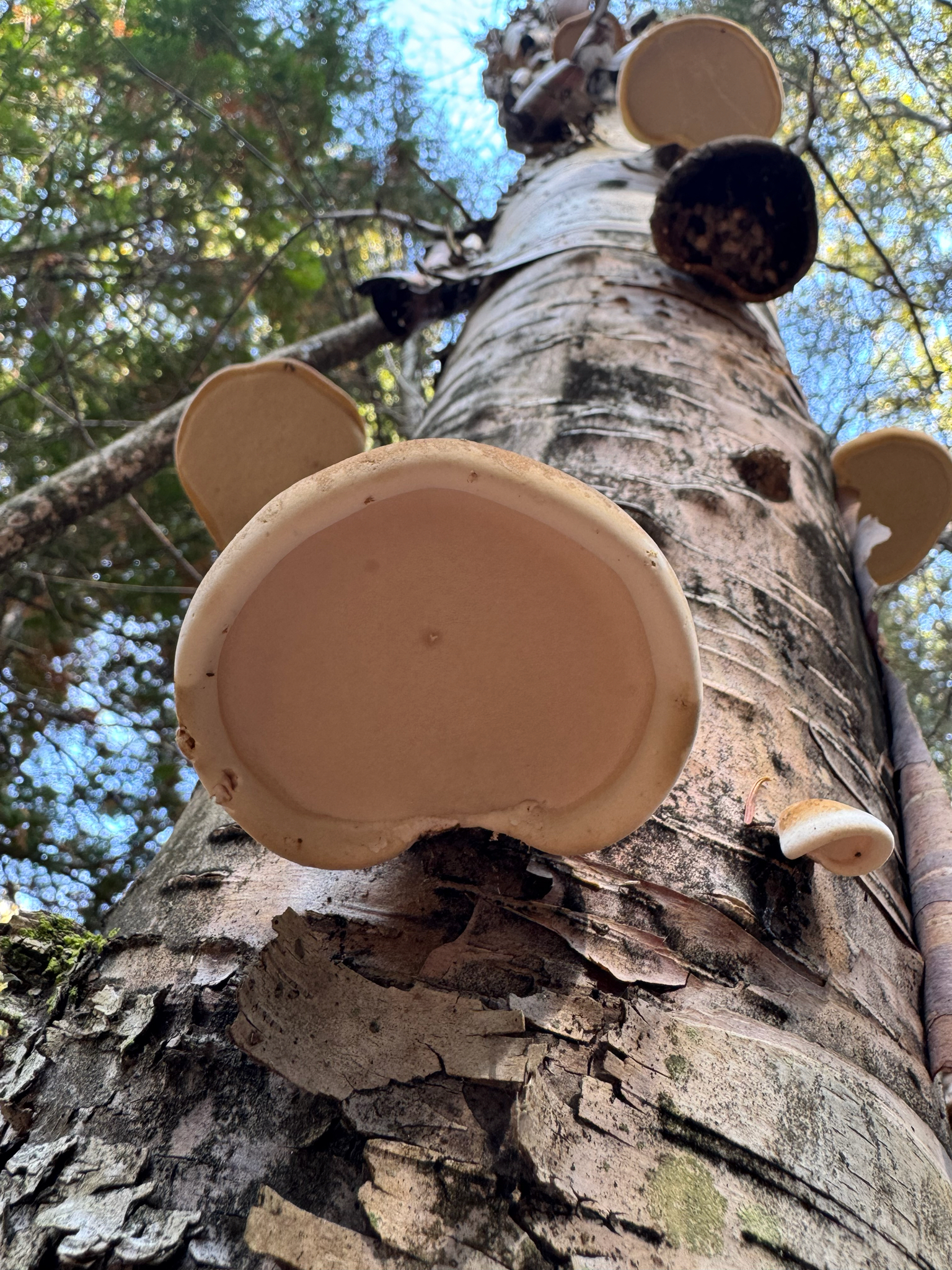
The Mummy’s Favorite: Birch Polypore (Fomitopsis betulina)
Don’t just look at the ground, take a look up at the trees. If you come across a birch tree, you may see this tan, hoof-shaped fungus sprouting along its trunk. These tough polypores can last all year. Ötzi the Iceman, the mummy from 3300 BCE found in the Austrian–Italian alps, carried Birch Polypore with him, likely as a helpful laxative to treat his case of Human Whipworms (Trichuris trichiura). Luckily, this parasitic nematode is absent from Vermont.
Where can you find it? All over Vermont on weakened birches.
When is it out? You can see them all year, but it has a small peak in the spring (March – May) and a much larger peak in the fall (August – November).
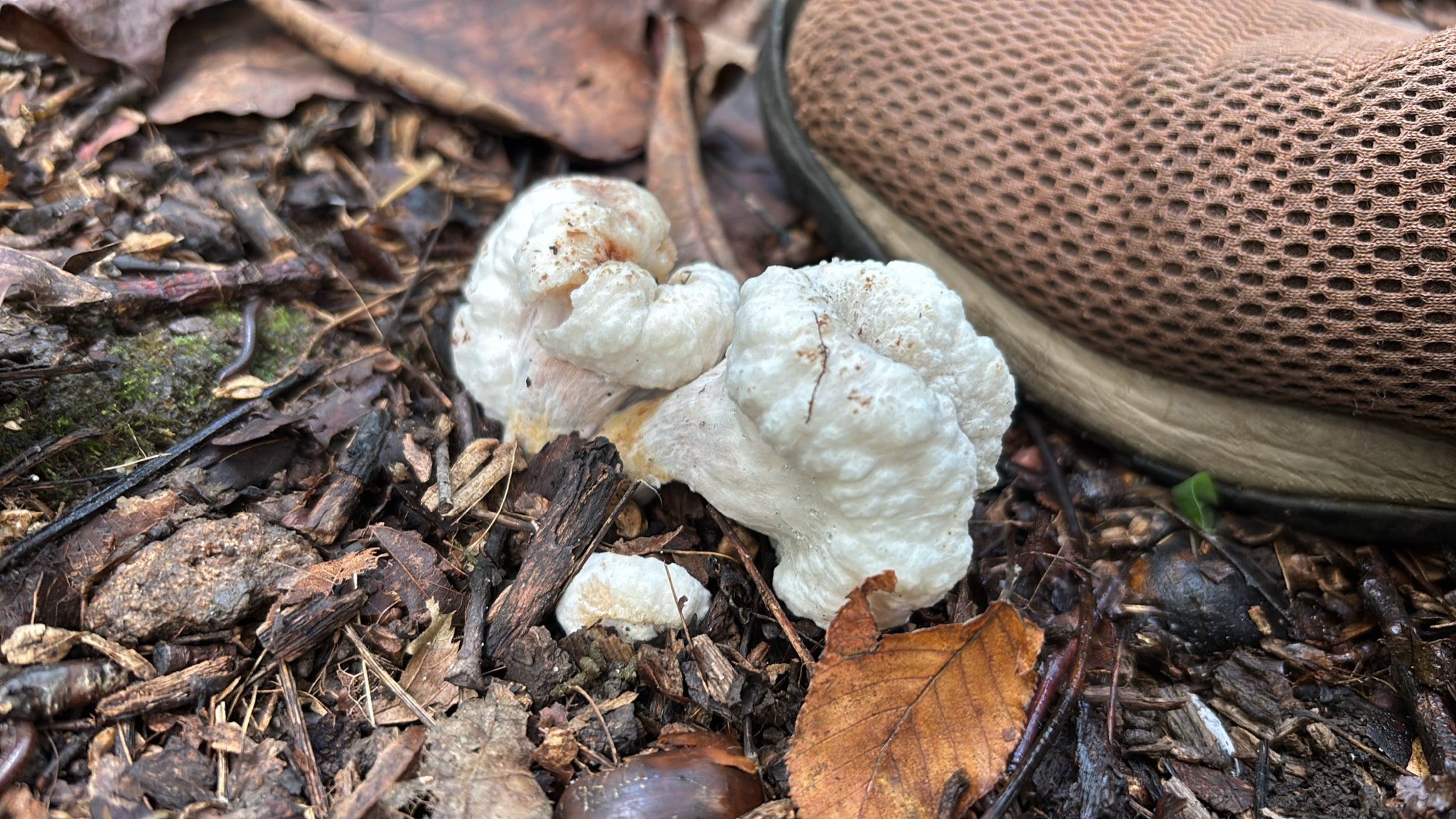
The Parasite: Aborted Entoloma (Entoloma abortivum)
Names like Shrimp of the Woods or Turkey Wattle (Mexico) give you a good mental image of what this weird, white, cauliflower-like mushroom looks like. In fact, this one structure is actually created from two fungi: the Honey Mushroom (genus Armillaria) and its parasite, the Entoloma abortivum. The Entoloma grows hyphae into the young, developing Honey Mushroom and disrupts its development. These fungi act as population control for the Honey Mushrooms, which otherwise can be long-lived and large—the largest known specimen (Armillaria ostoyae) is over three square miles and thousands of years old.
Where can you find it? All over Vermont, parasitizes Honey Mushrooms, which can grow on a wide variety of woody or herbaceous plants.
When is it out? Out from August to December with a peak around late September/early October.
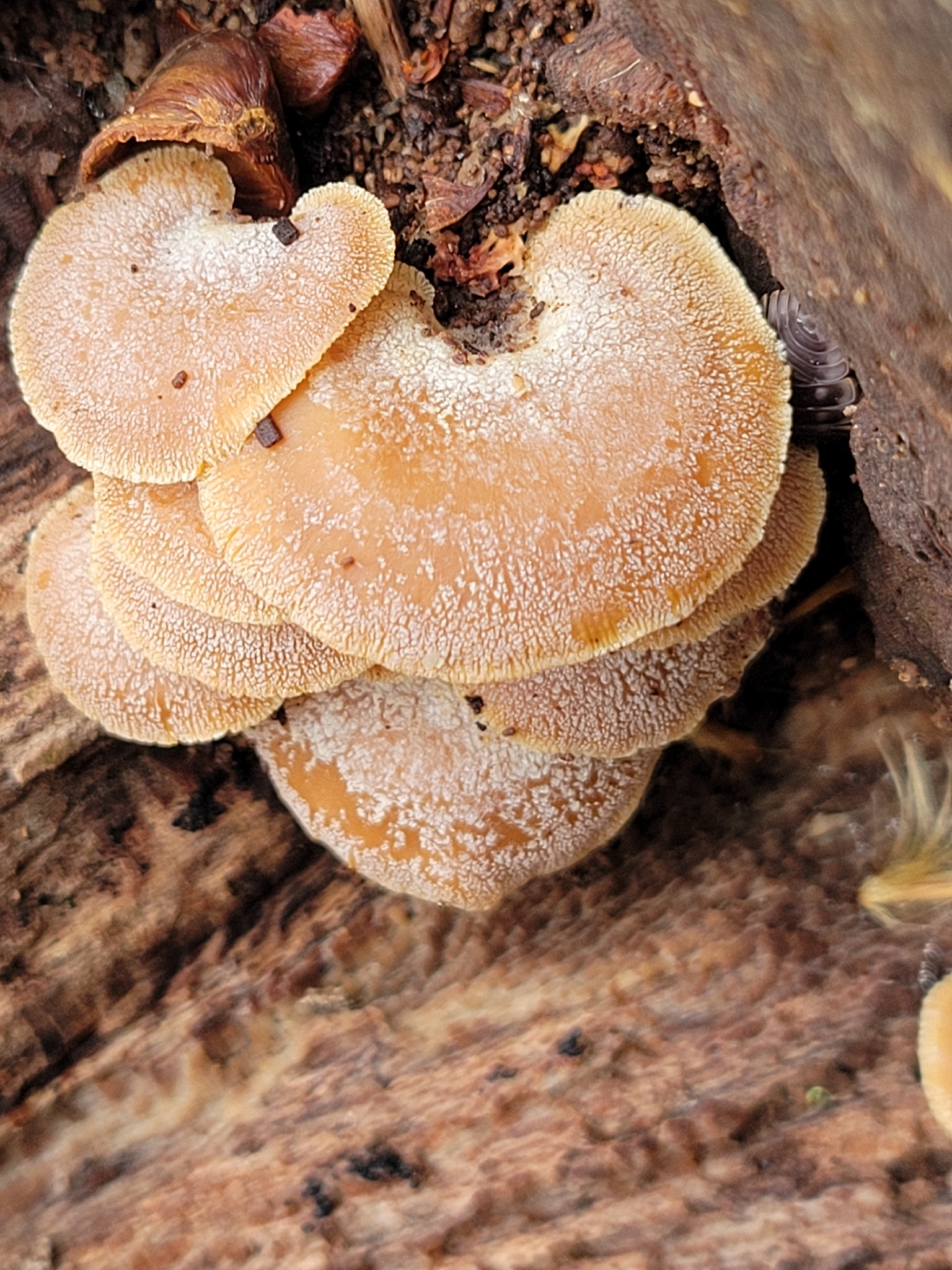
The Haunted Mushroom: Luminescent Panellus (Panellus stipticus)
Take a camera with you for a nighttime mushroom walk and you may get a long-exposure shot of the green light from the Luminescent Panellus. Although bioluminescent mushrooms are weak, they can glow for days. The chemicals that cause the glow are the same chemicals in Fireflies. This species glows at the edges of the gills and where the gills join the stem and cap.
This species is not just pretty to look at, it has the potential to clean up human messes—specifically the industrial kind. In studies, it has helped reduce waste from olive-processing plants in the Mediterranean and dioxin byproducts from paper mills, chlorination, and waste incineration.
Where can you find it? All over Vermont, but rare in the NEK. Usually found in dense clusters on deciduous trees like beech, oak and birch.
When is it out? All year with a peak in October.
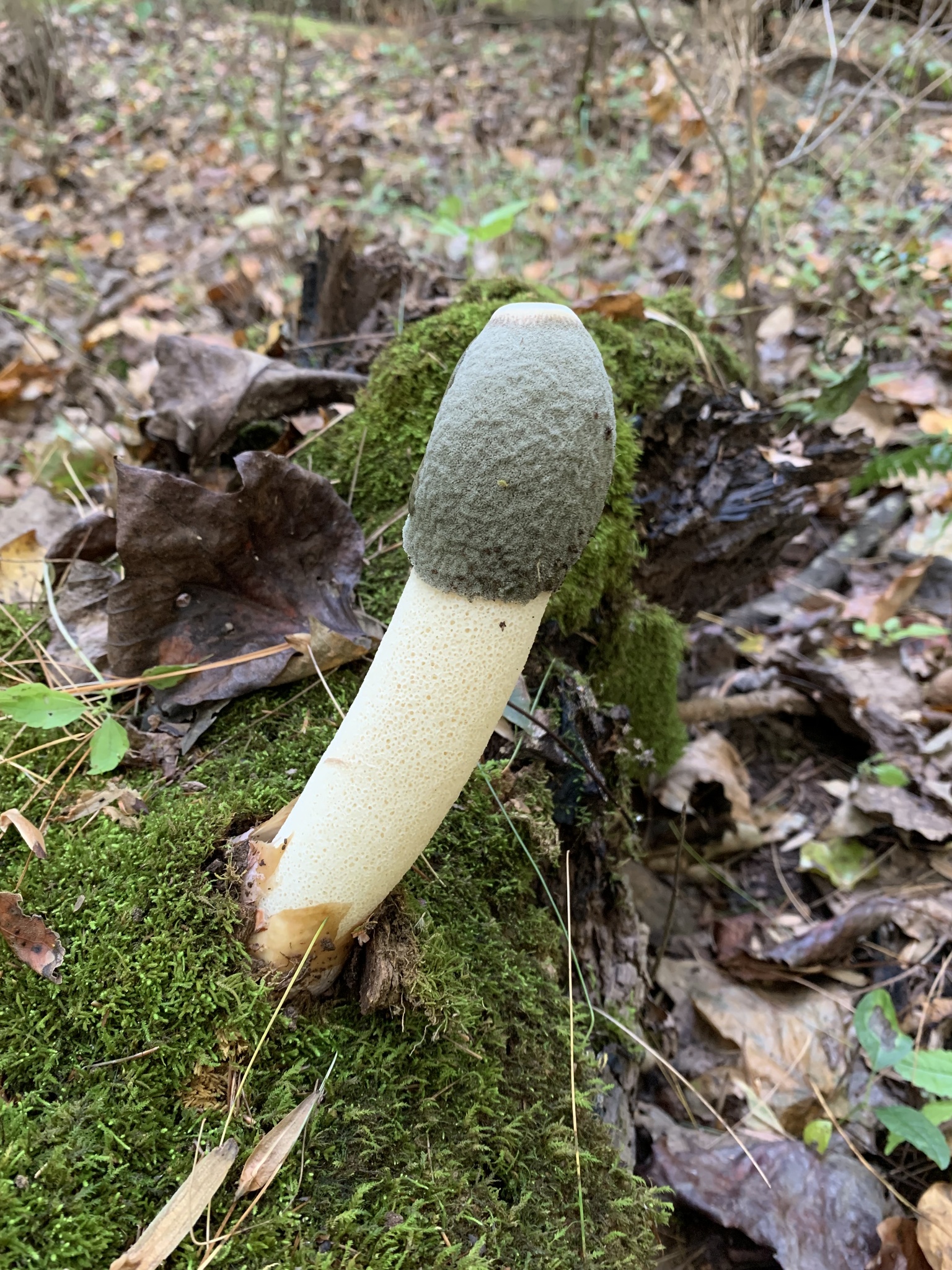
The Gross-out Mushroom: Ravenel’s Stinkhorn (Phallus ravenelii)
Take a sniff in your garden or at your compost pile and you may encounter the aroma of a Stinkhorn. While the smell may turn off a human, flies love it. These phallic-shaped mushrooms produce spore slime, a sticky, smelly olive green substance that attracts insects to help spread the mushrooms’ spores. The Ravenel’s is the most common Stinkhorn of Vermont.
Where can you find it? All over Vermont but rare by the Canadian border, anywhere with rich debris like mulched gardens or sawdust piles.
When is it out? Can usually be seen June through November, but peaks in September and October.

Mushrooms are fascinating both in color and shapes. They add an extra element when exploring the woods.
Sue Wetmore
This September at Brighton State Park the wide variety of mushrooms was most interesting.
That’s great to hear Sue! With the recent rain this fall, it seems like it has been a good mushroom year. In fact, just after writing this, I found a Skirted Stinkhorn right at the start of a trail.