How Your Winter Drinks Affect Our Wintering Songbirds
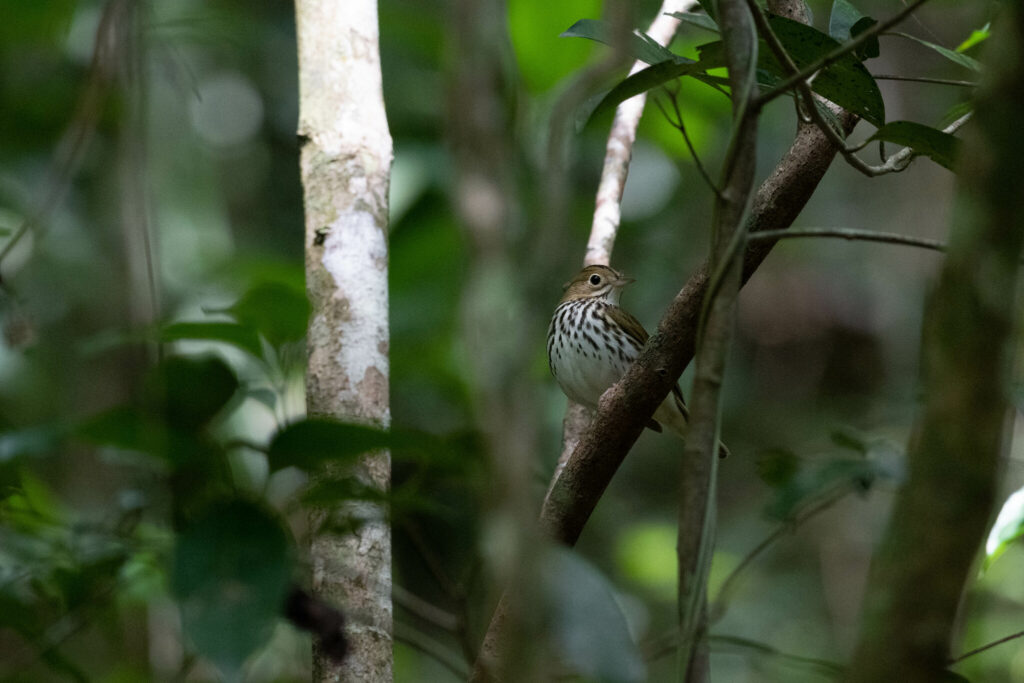
Ovenbird in the Dominican Republic, by @evan_7 on iNaturalist. Some rights reserved CC-BY-NC
At this point in the winter, you’ve likely settled into a morning routine, waking up to frigid temperatures with a hot beverage, or stopping for a quick coffee on your way to work, school, or your favorite winter birding spot.
The sweet, summery sound of warblers and birds feeding their young in nests is probably the last thing on your mind as a hot mug of chocolate or maple latte warms your hands. Yet, the two things are intimately linked.
That’s because the vast majority of our New England songbird species spend most of their year in the tropics, overwintering in places where coffee and cocoa are grown. In fact, coffee and cocoa beans and migratory birds don’t need to be at odds with one another. But they often are.
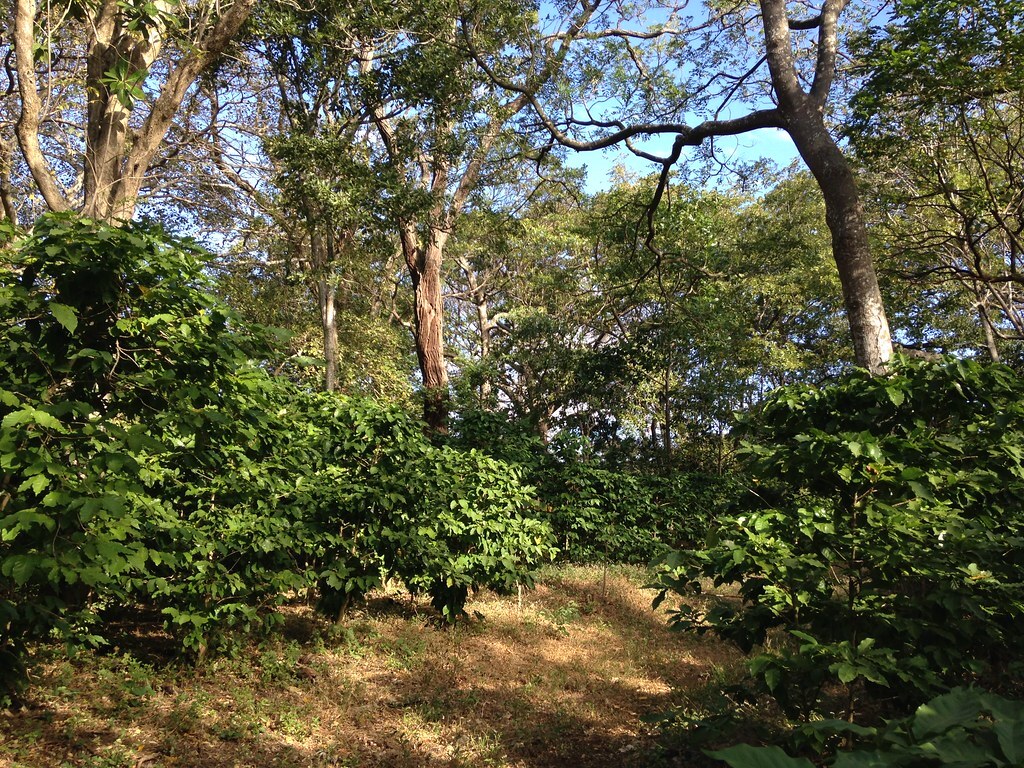
A bird-friendly coffee farm in Nicaragua where VCE Conservation Biologist Desirée Narango researched which canopy tree species best supported migratory birds on the wintering grounds. © Desirée Narango
Coffee Beans and Birds
All too often, forests are cleared to make way for sun-grown coffee. As trees fall, the species that depend on closed, primary (undisturbed) forest lose crucial habitat.
F or years, scientists have been studying how birds respond to coffee farms, plus programs used to help retain the ecological function of the forest while allowing sustainable coffee production. So we know there is a “Have your latte and drink it too” scenario.
Bird Friendly coffee is a shade-grown coffee certification through the Smithsonian Migratory Bird Center that helps maintain healthy habitats for migratory and resident birds by retaining canopy trees, planting diverse trees, and other sustainable practices.
The benefits to coffee producers come in many forms, from maintaining ecosystem functions like nitrogen fixation, water filtration and pest control (yay, birds!) which requires fewer pesticides, which leads to cost savings for producers.
In addition, many of these farms operate on a smaller scale, and distributors work directly with producers or a consortium of growers, so they receive a larger share of the profits. Finally, the coffee tastes great, and you can feel better about your cup ‘o joe.
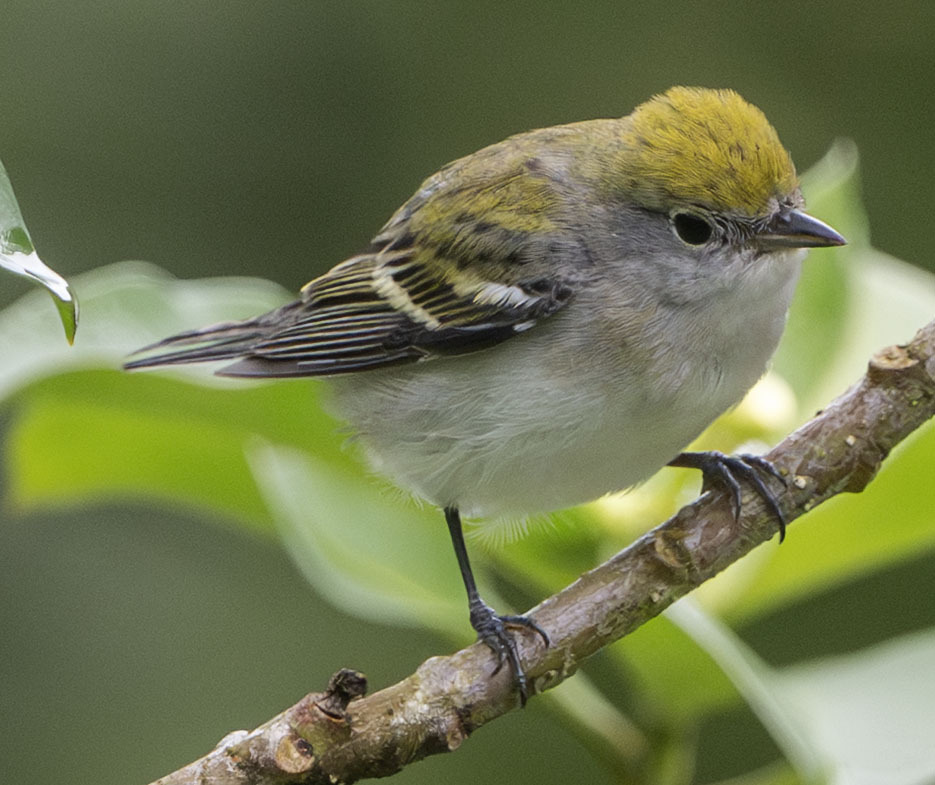
Chestnut-sided Warbler in Costa Rica © MeenaV on iNaturalist. Some rights reserved CC-BY-NC
Chocolate and Thrushes
The bulk of the world’s cacao is grown in Africa. However, recently, swollen shoot disease has infected the cacao belt and reduced harvests in the Ivory Coast and Ghana. The price of cacao has nearly tripled in the last few years, leading Caribbean farmers to expand cacao production.
Whereas coffee grows best at slightly higher elevations, cacao’s sweet spot (pun intended) is in the lower to middle elevations within the Greater Antilles. Like shade-grown coffee, cacao grows in the forest understory beneath a sparse canopy, and cacao farms remove the understory to make room for the cacao trees. The trees produce for a few years, then new ones are planted in their place
When we drive to our Bicknell’s Thrush field site in the Dominican Republic, nearly every finca (farm) with conditions suitable for cacao has trees planted. But fewer studies have examined the impact of cacao than coffee on bird communities, and even fewer have investigated how individual birds respond to cacao-dominated landscapes. However, we know that with more 30% shade, cacao farms can support similar bird communities to nearby forests.
The good news is that some farms have set aside land on their property for wildlife and biodiversity. Reserva Privada Zorzal, named for the thrushes it was created to protect, is the world’s first certified bird-friendly cacao farm.
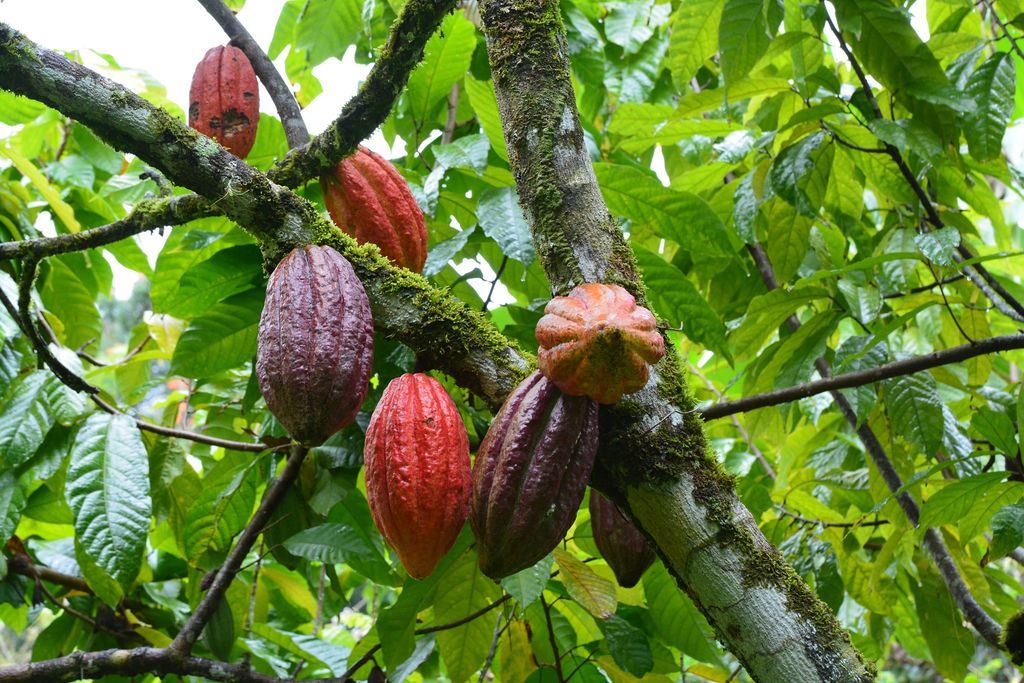
Cacao pods at Reserva Privada Zorzal, a Bird Friendly-certified farm in the Dominican Republic that sets aside habitat for birds. Photo courtesy of Sergio De La Rosa – Dominican Environmental Consortium
Our colleague Hodali Almonte studied the diet of Bicknell’s Thrush overwintering at Reserva Zorzal and conducted surveys to determine how birds use various habitat types on the farm. While more research is needed, one thing was clear: the areas Reserva Zorzal has set aside for biodiversity conservation support many resident and endemic species, as well as many warblers you may recognize on your next summer stroll through the woods. An eBird checklist comprised of Ovenbirds, Black-throated Blue Warblers, Yellow-rumped Warblers, and American Redstarts sounds like a stroll through a forested stand in New England, but these species are abundant at Reserva Zorzal.
 Sweetening the Deal for Birds
Bird-friendly agroforestry isn’t confined to the tropics; it’s practiced in our neck of the woods, too. In fact, you can sweeten Bird-friendly coffee with maple syrup and enjoy it without conservation guilt. Unlike coffee or cacao, a sugaring operation simply taps the mature native maple trees (sugarbush) that are present, instead of cutting down mature forest to plant a crop.
Still, there are practices that can make it even more conducive to birds throughout the year. Audubon’s Bird-friendly Maple is a program that enables landowners to manage forests for syrup production while also providing benefits and enhancing habitat for breeding songbirds.
Knowing all this, you better believe that here at the VCE office, we keep our pantry stocked with coffee from a longtime friend and local business Birds & Beans, and we recently switched our sweetener from honey to maple syrup. As winter’s grip begins to loosen and maple sap starts to flow, keep our feathered friends in mind as you order your next maple latte, hot chocolate, or cup o’ joe, and do your part to help them thrive by enjoying products that use Bird-friendly practices.