Hymenoptera Hotels: Is This a Trend We Should Be Promoting?
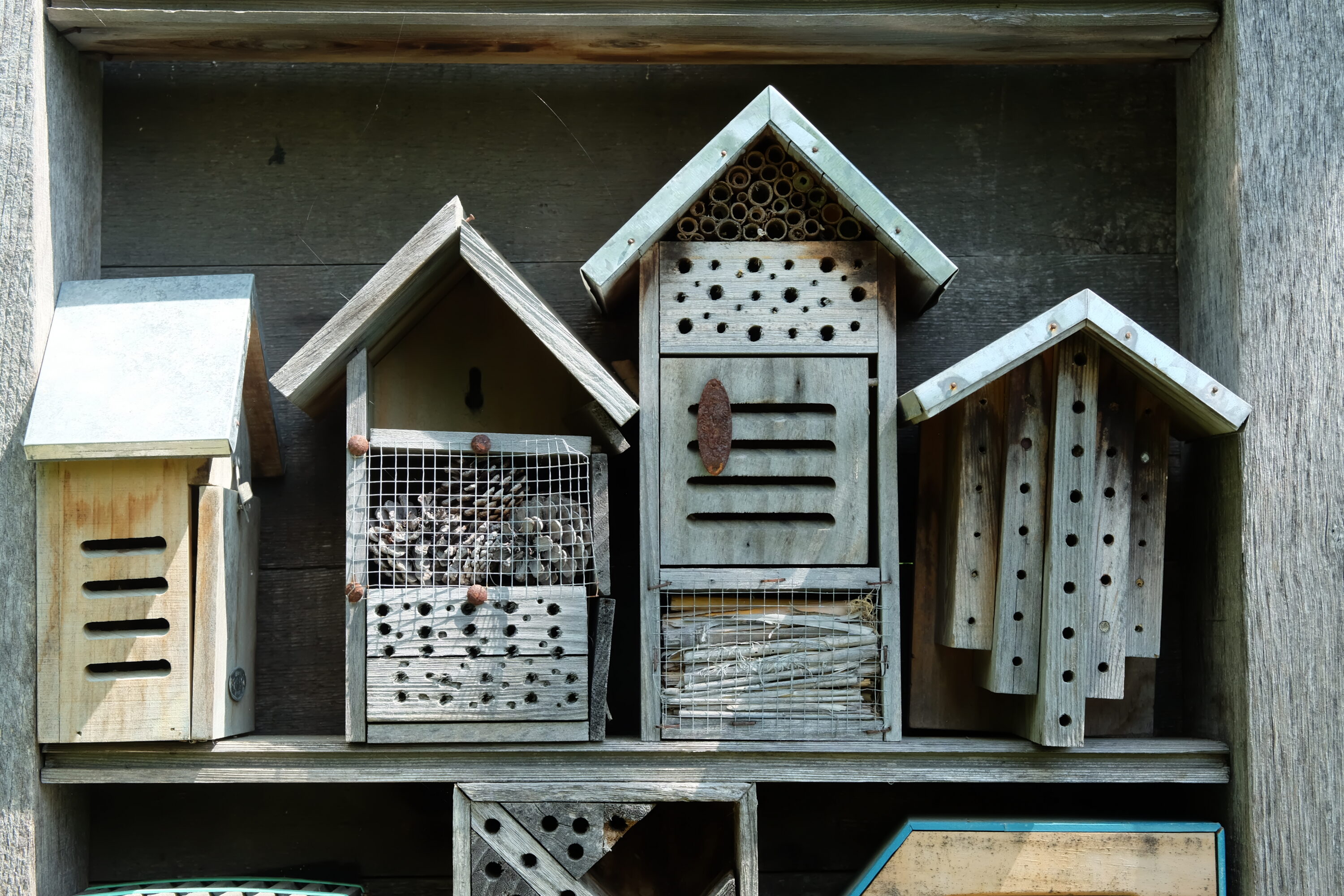
Bee hotels © Alden Wicker
This story ran in Field Notes, the Vermont Center for Ecostudies’ twice-yearly print magazine. Subscribe to receive the next issue in your mailbox.
You might know them as bee hotels. I’m talking about cavities for nesting insects, often made from bamboo or other hollow tubes.
Early in the spring, mason bees (subfamily Osmia) are the target demographic for these trendy, high-density housing complexes, but as the summer progresses, other Hymenoptera groups are likely to move in.
Mason and potter wasps (subfamily Eumeninae) are some of the most common nest occupants, and should be celebrated by gardeners—most of the more than 25 species in Vermont are caterpillar killers that also visit a wide range of flowers for nectar to sustain their hunting efforts. Another common hotel visitor is the Mexican Grass–carrying Wasp (Isodontia mexicana), which fills its nests with paralyzed tree crickets (genus Oecanthus).
(As always, we encourage folks to document the biodiversity in their backyard through iNaturalist. Observations of wasps are particularly valuable because there has not been a concentrated effort to document their diversity in the state like we’ve done for bees.)
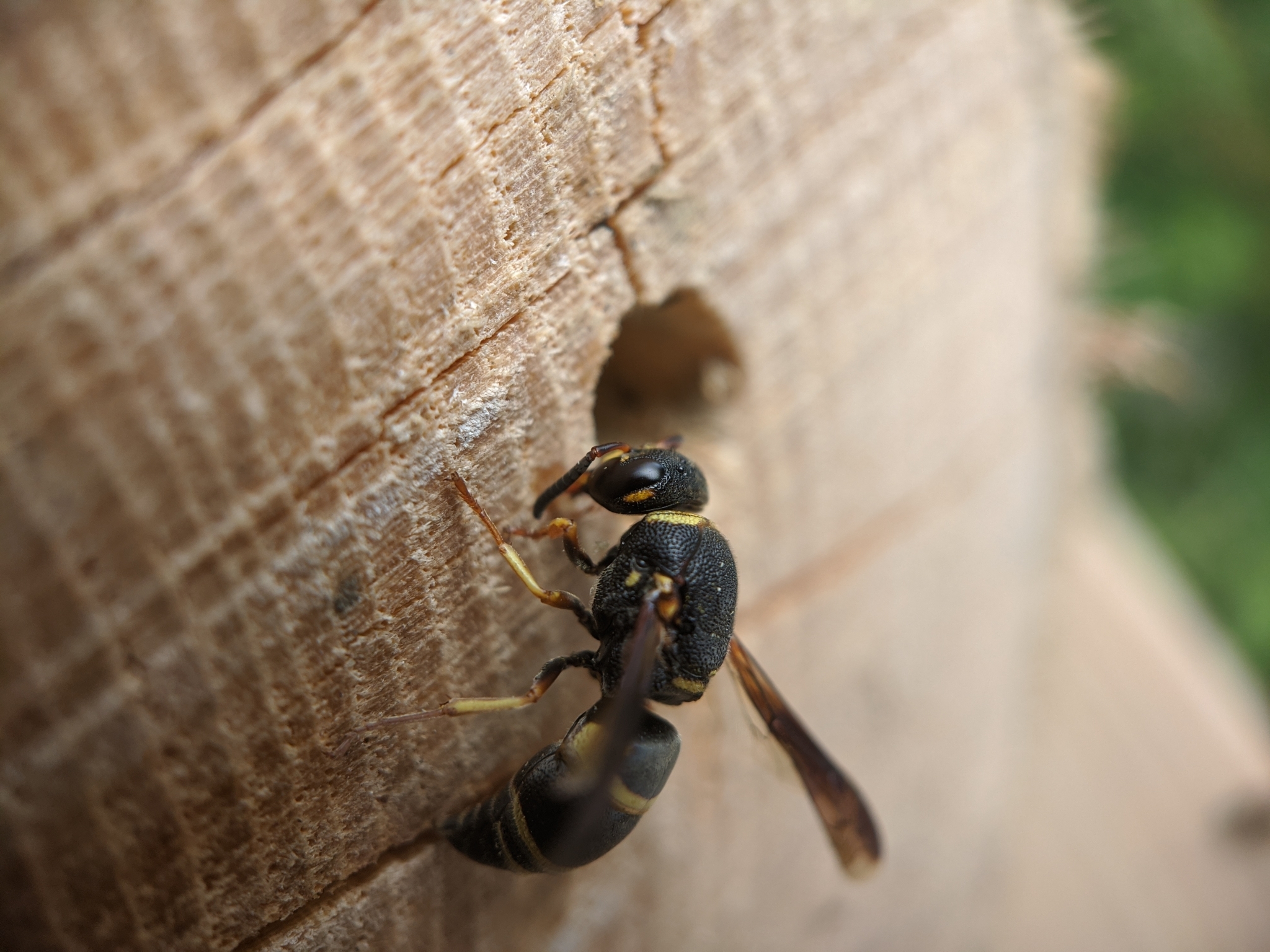
The first Vermont record of the Hidalgo Mason Wasp (Euodynerus hidalgo), from a bee hotel on a second-story porch in downtown Montpelier © Spencer Hardy
Still, is this a trend we should be promoting at all? Hymenoptera hotels come in a lot of different forms and serve a range of purposes, but they can also cause real problems for the intended beneficiaries. Most of the problems originate from unwanted guests: parasites, predators, and introduced competitors. Pollen-collecting bees and cavity-nesting wasps spend a great deal of energy aggregating dispersed resources from the surrounding landscape, and this rarely goes unnoticed by freeloaders. Dozens of wasps, flies, beetles, and moths have evolved to live off the stores of hard-working Hymenoptera. A quarter of the bee species in Vermont don’t even collect their own pollen!
Many of these pirates are a critical, native components of our ecosystems and deserve admiration and conservation. But there are several introduced parasites (including the Houdini Fly) that can quickly overrun a large bee hotel. Also of concern are a small number of nonnative bees—especially the Horn-faced Mason (Osmia cornifrons), recently established in much of the country—that are potentially displacing some of our native mason bees. Hotels can also become fast-food joints for woodpeckers and chickadees.
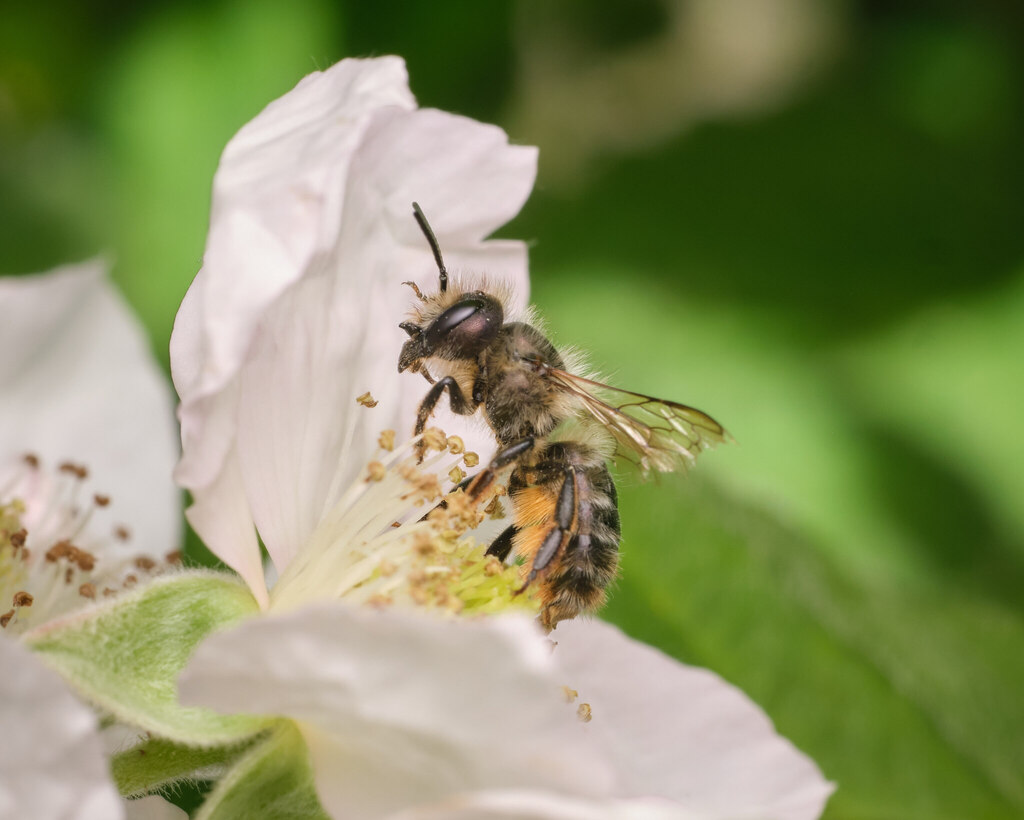
The nonnative horn-faced Mason Bee (Osmia cornifrons) could potentially take up residence in a bee hotel. © Mike Davidson (via iNaturalist, public domain)
So if you want to get into the hotel business, plan for some vigilance and ongoing management. Ideally each nest gets an annual winter cleaning, in which individual bee cocoons are sorted out and stored for release in the spring. Short of that, many problems can be avoided by building only small hotels and using natural materials that will break down after a few seasons, preventing the long-term buildup of pests and diseases.
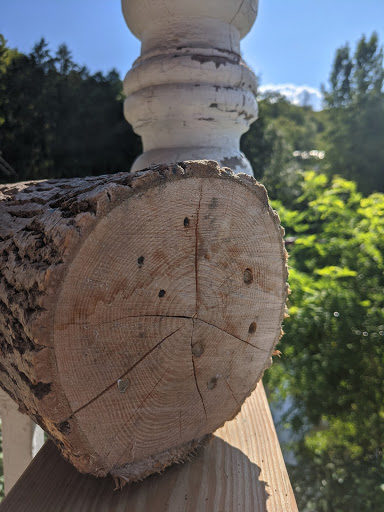
A simple hotel made by drilling holes of multiple sizes in the cut end of a log © Spencer Hardy
Even with the concerns laid out above, I think there is still a place for Hymenoptera hotels, and I’ve built a few in our own yard. In highly developed landscapes where natural nesting sites for these insects are limited, these hotels might be truly beneficial, but perhaps their greatest value is in the educational impact. Without them, observing nesting bees can be quite challenging and unpredictable. Even a simple piece of firewood with drilled holes can provide a full season of entertainment and discovery, with daily opportunities to watch the housekeepers at work. Unlike honey bees and social wasps, most bee-hotel occupants are unlikely to sting unless roughly handled. I’m looking forward to introducing our toddler to our winged neighbors this spring!
Building nesting sites is one way to bring more insects into your life, but your best bet is always adding more native plants to the landscape. Many native plants do double duty, providing both food and nesting sites in their hollow stems—the elderberries, sumacs, and brambles are some of the best for cavity-nesting Hymenoptera. Leaving the dead stalks and seed heads of perennials saves on garden cleanup and can provide nesting sites for a variety of bees (and food for birds) through the winter.
Check out our website (https://val.vtecostudies.org/projects/vtbees/bee-hotels/) with more information and links to best practices, plus design ideas for your Hymenoptera hotel!
This story ran in Field Notes, the Vermont Center for Ecostudies’ twice-yearly print magazine. Subscribe to receive the next issue in your mailbox.