Know Your 5: Bee Species That Pollinate Brambles Like Raspberry Flowers
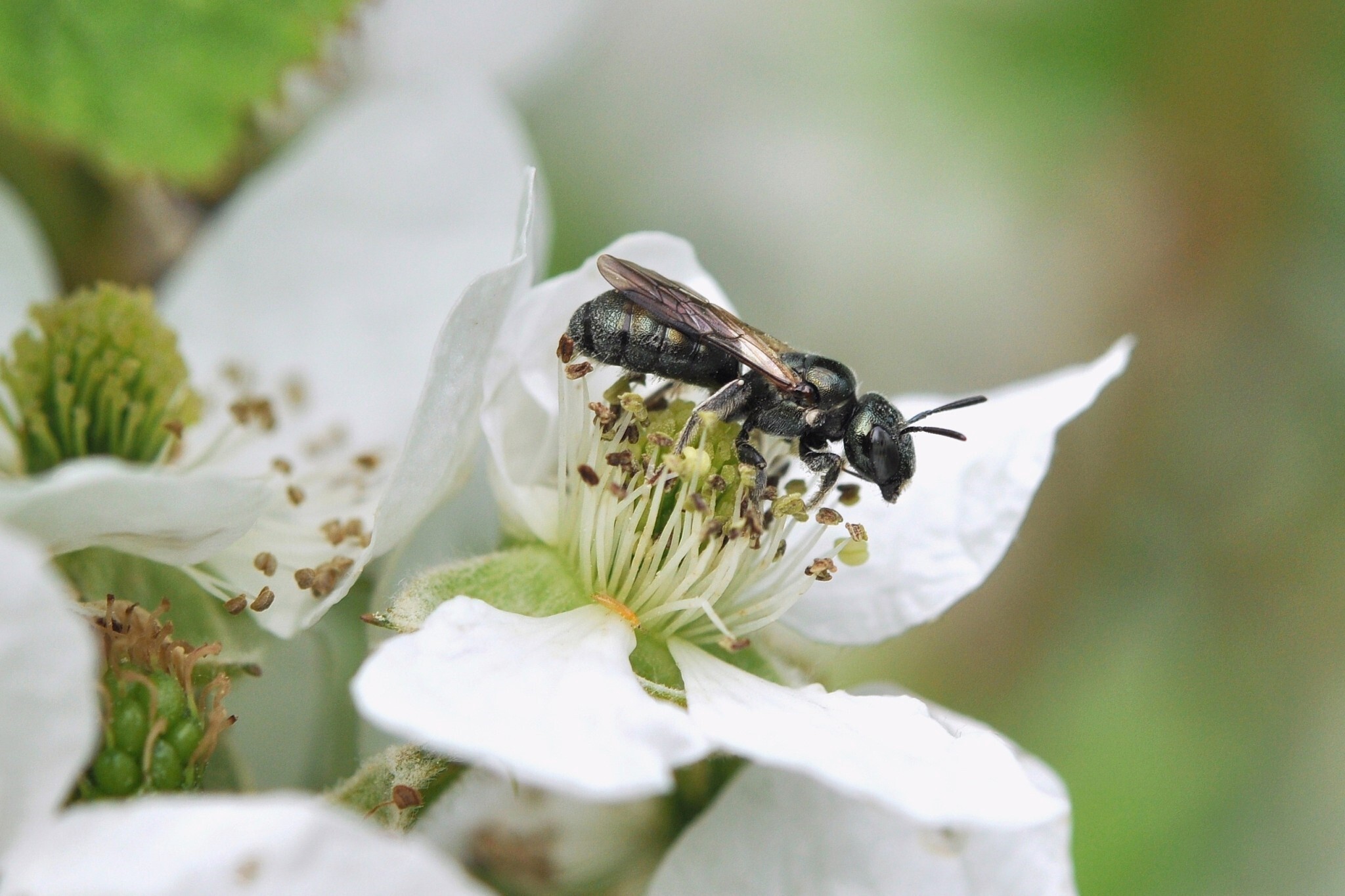
Spurred Ceratina (Ceratina calcarata) © Werner Tueckmantel in iNaturalist, some rights reserved CC-BY-NC
Find “Know Your 5” wild bee guides for more crops in our Resources for Farmers page.
The domesticated Western Honey Bee (Apis melifera) gets credit for most of the agricultural pollination in North America, but in many cases, it’s the wild bee species that are more effective pollinators. And unlike the Honey Bees in the northeast, wild bees do not need human assistance to survive—just a safe place to nest and plenty of flowers to eat from.
By identifying and understanding the natural history of these bees, you can provide the specific habitat that will help to ensure resilient and abundant pollination services and the tasty treats that result. With more than 350 species of bees in Vermont, it’s daunting to understand them all. So let’s start with some important bees for, and supported by, native brambles like raspberries.
Bramble Pollination Overview
Most brambles are moderately self-fertile and insect mediated pollination is important for uniform berry shape and for large, marketable fruit. There are many native brambles visited by a wide variety of bees, most of which are likely also in commercial plantings. Summer and fall bearing raspberries are grown on farms in the northeast, with fall-bearing raspberries blooming much later, and are likely pollinated primarily by long-season generalist bees.
A single bramble plant may be in various stages of flowering for one to three weeks. Bramble flowers have numerous pistils and stamens, with anthers of the stamens releasing pollen from the flower edge inward. Pistil stigmas receive this pollen, with pollen deposition greatly enhanced by bees helping to evenly distribute pollen among stigmas.
How to Support Diverse Pollinators on Your Land
Provide flowers, especially native ones, for as much of the growing season as possible. Also leave a messy area with leaf litter and dead plant stalks, which provide important nesting and overwintering habitat for many bees. Crop management can have significant implications for nesting habitat of several important pollinators that nest and overwinter in bramble stems where the pith was exposed, either by pruning or raspberry cane borers. Be careful and conservative with any pesticide applications—avoid spraying during bloom when possible, and follow an integrated pest and pollinator management plan.
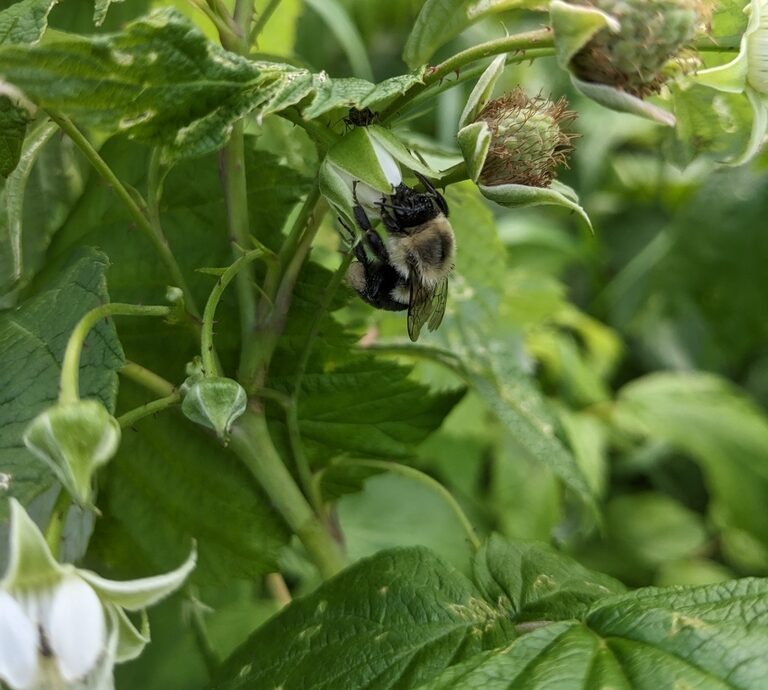
Common Eastern Bumble Bee (Bombus impatiens) © Spencer Hardy
Bumble Bees (genus Bombus)
These large, charismatic bees are great pollinators of most crops. Queens emerge in early spring, with colony size growing through June and July. Workers and males are active through September and are likely important pollinators of fall raspberries. Early blooming flowers (willows, maples, etc) and nesting habitat (hedgerows and woodlots) are important to maximize local populations.
Spurred Ceratina (Ceratina calcarata) © Werner Tueckmantel in iNaturalist, some rights reserved CC-BY-NC
Small Carpenter Bees (genus Ceratina)
Four species of this ubiquitous genus are found in Vermont. They nest and overwinter in pithy plant stems (raspberries, goldenrod, mints, sumac, etc). Active from early April through October, with peak abundance in May and June. Recognized by their slate blue color, swollen abdomen, and usually a small white mark on the face. Visits a number of crops, particularly fond of strawberries and raspberries.
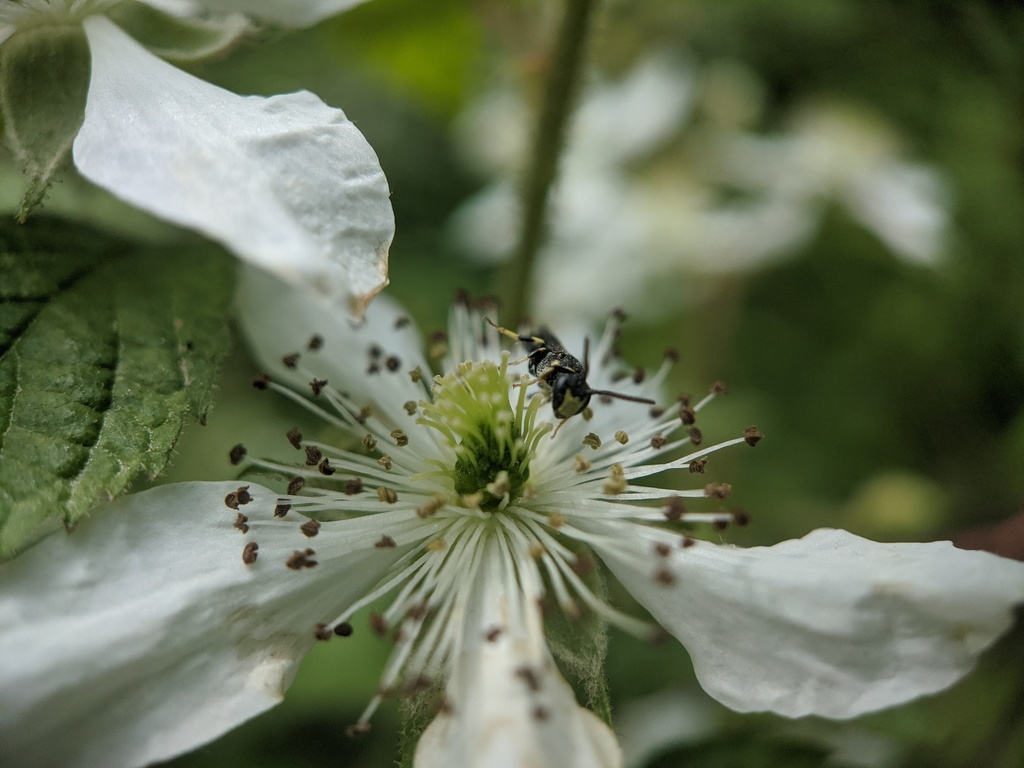
Masked Bee (genus hylaeus) © Spencer Hardy
Masked Bees (genus Hylaeus)
These tiny, wasp-like bees are easy to overlook, but can be abundant on Brambles and other summer flowers. Most are less than a quarter-inch long with yellow marks on the face and legs. They nest in pre-existing cavities, especially hollow plant stems (including in brambles).
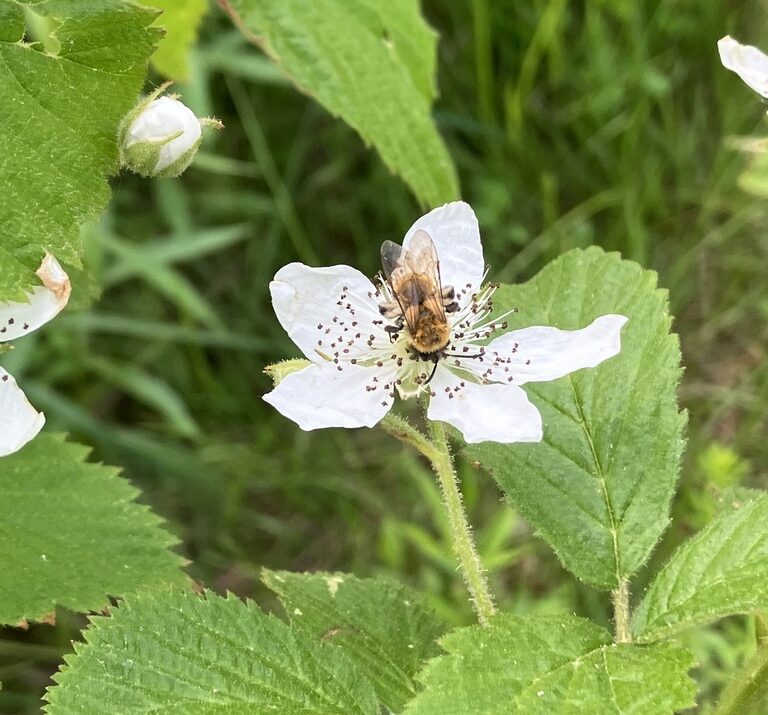
Milwaukee Miner (Andrena milwaukeensis) © Laura Johnson
Milwaukee Miner (Andrena milwaukeensis)
Thirty-three species of Mining Bees have been recorded on bramble flowers in Vermont, with the Milwaukee Miner being one of the most common and distinctive. This species, like many other mining bees, benefit from some forest cover, especially with a flowering understory: hawthorns, mountain maple, and dogwoods all provide resources for the late spring species likely to visit brambles.
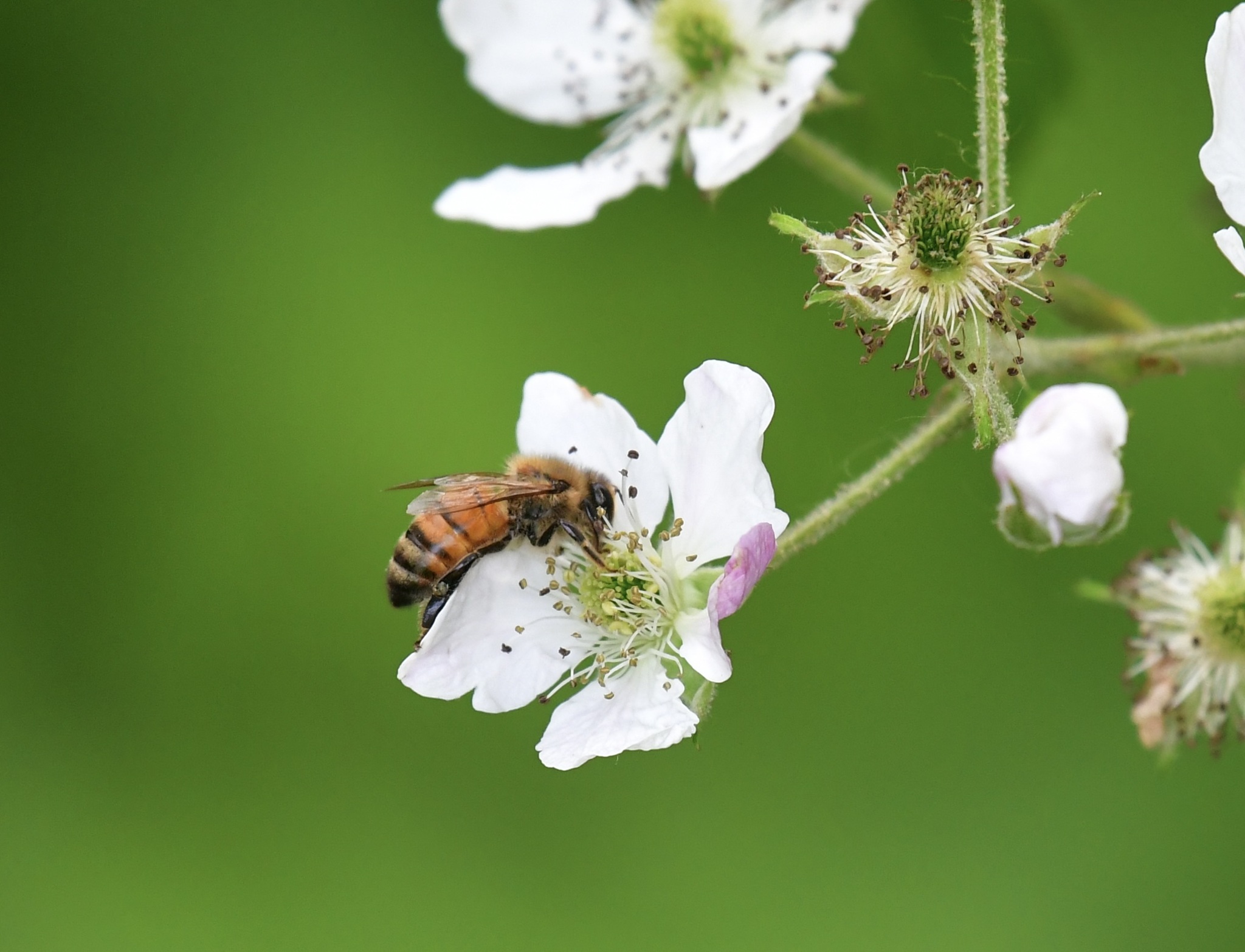
© David Hartree on iNaturalist, some rights reserved CC-BY-NC
Western Honey Bee (Apis mellifera)
Photo courtesy Laura Johnson.
In most landscapes, Honey Bees are likely less important in summer bramble pollination, though may be more important for fall raspberries. Furthermore, fall raspberries may be a valuable late season food source for honey bees and generalist native bees.
A project of the Vermont Pollinator Working Group, with funding from the Gund Institute’s Apis Fund. For more information about bees, email shardy@vtecosudies.org. For questions about pollinator support practices on farms, email Laura.O.Johnson@uvm.edu. All photos courtesy of Spencer Hardy unless otherwise noted.