Know Your 5: Bees That Pollinate Winter Squash
Support Spencer Hardy’s research and other projects like this by making a donation to Vermont Center for Ecostudies! Learn about other ways to support VCE here.
The domesticated Western Honey Bee (Apis melifera) gets credit for most of the agricultural pollination in North America, but in many cases, it’s the wild bee species that are more effective pollinators. And unlike the Honey Bees in the northeast, wild bees do not need human assistance to survive—just a safe place to nest and plenty of flowers to eat from.
By identifying and understanding the natural history of these bees, you can provide the specific habitat that will help to ensure resilient and abundant pollination services and the tasty treats that result. With more than 350 species of bees in Vermont, it’s daunting to understand them all. So let’s start with some important bees for, and supported by, squash blossoms.
Squash Pollination Overview
Insect-mediated pollination is essential for squash fruit set and seed production. Flowers are single sex, presenting as either male or female. Male flowers appear before female flowers and outnumber female flowers. Each plant produces multiple flowers over several days. Blooms open for one day only, beginning pre-dawn and generally closing around noon, never to reopen. Pollen viability is highest during early morning hours, and fruit set requires around 2,000 grains of pollen per stigma. More pollen deposition can improve fruit set and retention.
How to Support Diverse Pollinators on Your Land
Provide flowers, especially native ones, for as much of the growing season as possible. Also leave a messy area with leaf litter and dead plant stalks and stems, which provide important nesting and overwintering habitat for many bees. Use exclusion netting when possible, and be careful and conservative with pesticide applications—avoid spraying during bloom or times of peak pollinator activity when possible, and follow an integrated pest and pollinator management plan.
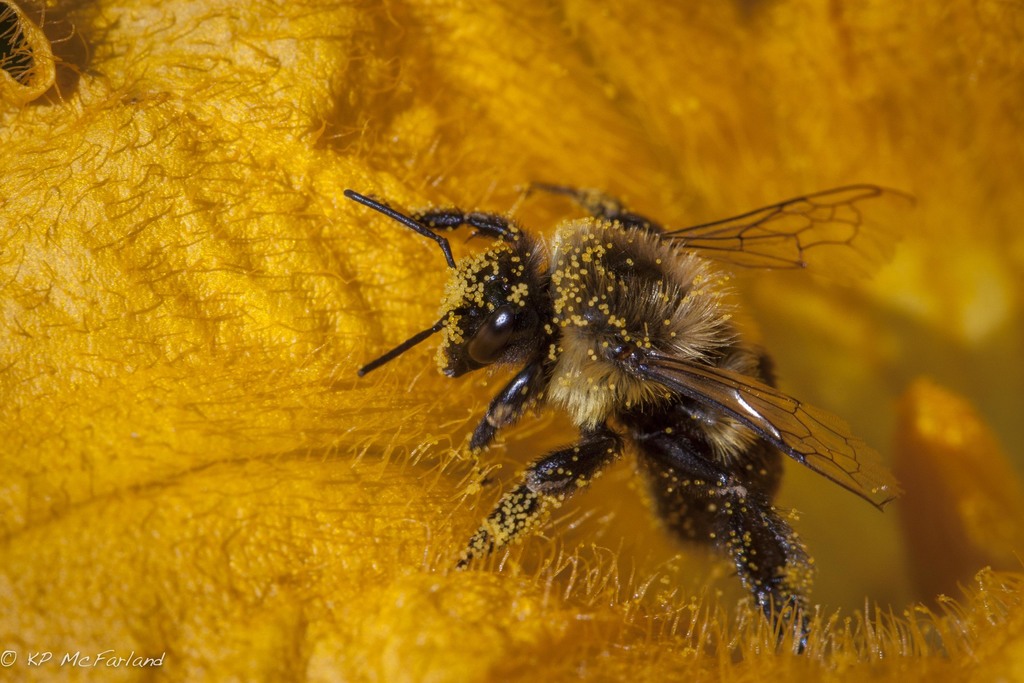
Common Eastern Bumble Bee (Bombus Impatiens) © Kent McFarland
Bumble Bees (genus Bombus)
These large, charismatic bees are great pollinators of many crops. Most squash pollination is done by the workers, especially of the Common Eastern Bumble Bee (Bombus impatiens). Early blooming flowers (willows, maples, etc.) and nesting habitat (hedgerows and woodlots) are important to maximize local populations.
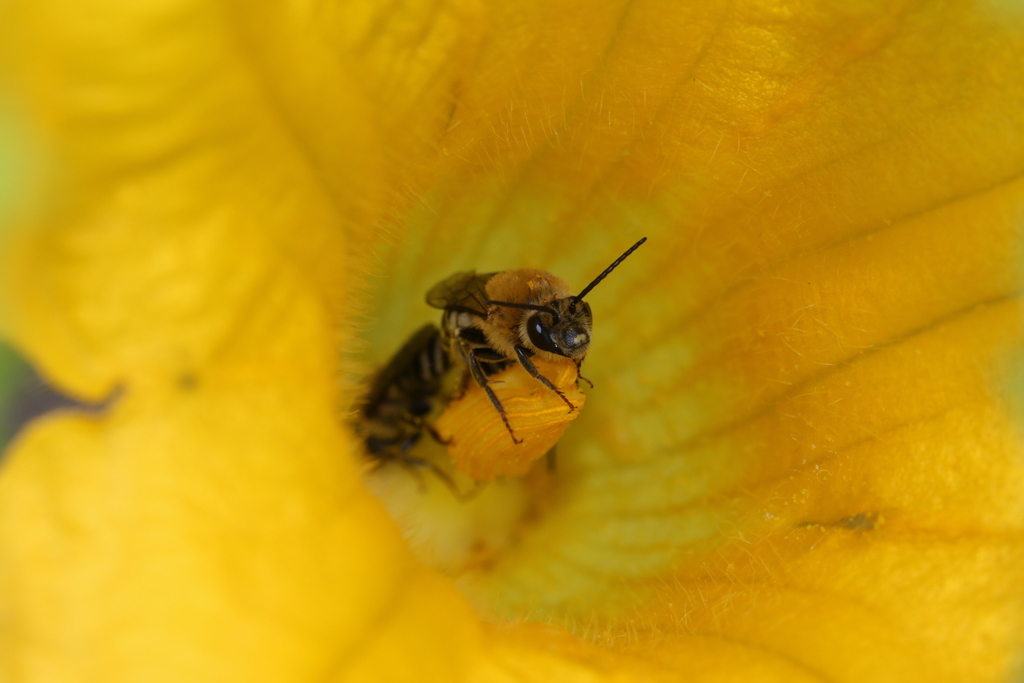
Pruinose Squash Bee (Peponapis pruinosa) © Spencer Hardy
Pruinose Squash Bee (Peponapis pruinosa)
Originally evolved in southwest North America, this species followed human cultivation of cucurbits and is now widespread in the US, including Vermont. Closely associated with winter squash, pumpkins, and zucchini (genus Cucurbita), it does not visit watermelon or cucumbers. It nests in the (perferably sandy) ground near squash fields or gardens.
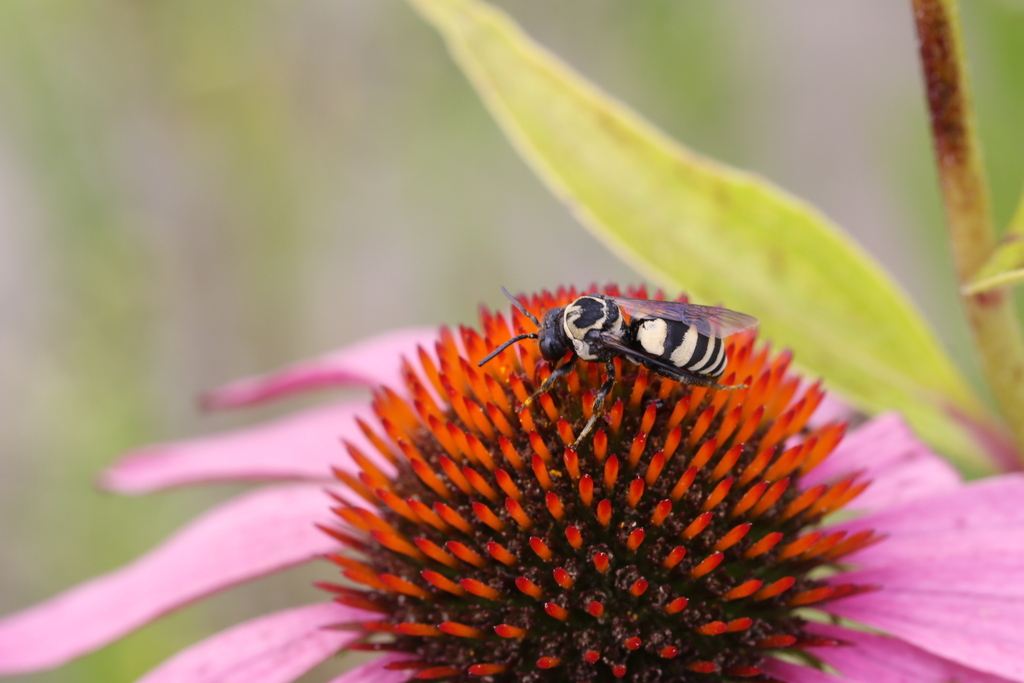
Squash Longhorn-Cuckoo (Triepeolus remigatus) © Spencer Hardy
Squash Longhorn-Cuckoo (Triepeolus remigatus)
This distinctive species is a brood parasite of the Pruinose Squash Bee. The female lays eggs in the nests of the Squash Bee where the larvae feed on stored squash pollen. While not a primary pollinator of squash, it is dependent on the Pruinose Squash Bee for survival and likely an indication of a healthy squash bee population. You may find the Squash Longhorn-Cuckoo nectaring on a number of commercial crops, including cucumbers.
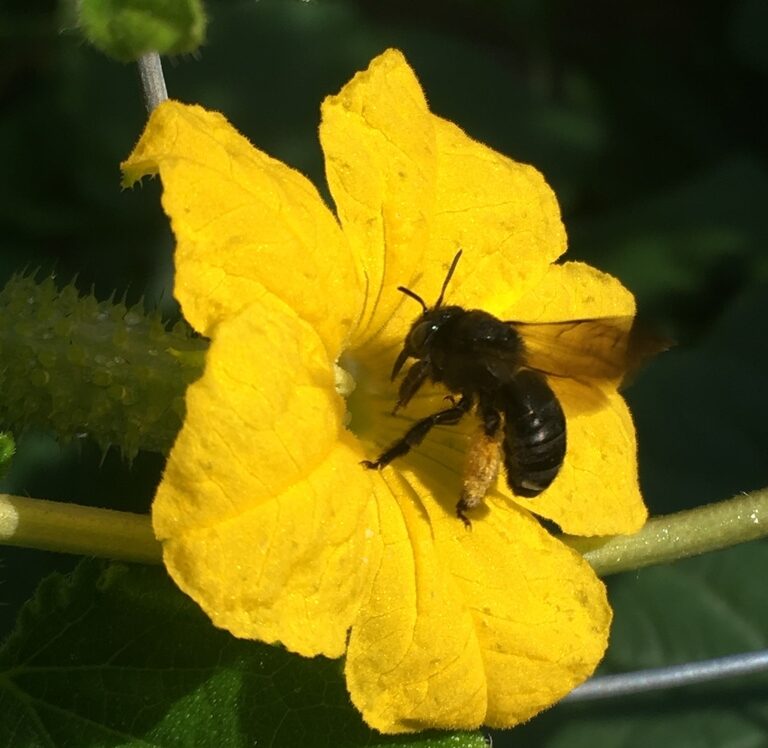
Two-spotted Longhorn (Melissodes bimaculatus) © Spencer Hardy
Two-spotted Longhorn (Melissodes bimaculatus)
All black with two small white marks, the female of this species is quite unique. A midsummer generalist with a fondness for squash, cucumbers, corn, and peas, it is currently limited to the warmer valleys of Vermont, where it nests in the ground, but it’s likely spreading north.
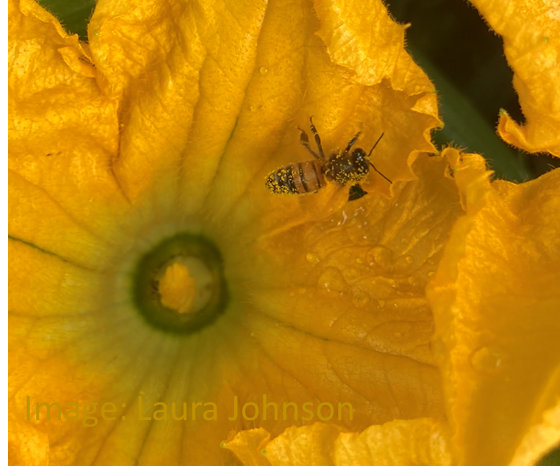
Western Honey Bee (Apis mellifera) © Laura Johnson
Western Honey Bee (Apis mellifera)
Honey bees are less efficient at pollination than bumble bees or squash bees on a per-visit basis, but they are often much more abundant in most agricultural landscapes. In Vermont, they only exist in managed hives, though nearly all of the agricultural land in the state is well within the foraging range of existing hives. Colonies can be rented for pollination of specific crops, including squash. Photo credit Laura Johnson.
A project of the Vermont Pollinator Working Group, with funding from the Gund Institute’s Apis Fund. For more information about bees, email shardy@vtecosudies.org. For questions about pollinator support practices on farms, email Laura.O.Johnson@uvm.edu. All photos courtesy of Spencer Hardy unless otherwise noted.