Know Your 5: Wild Bees That Pollinate Strawberries
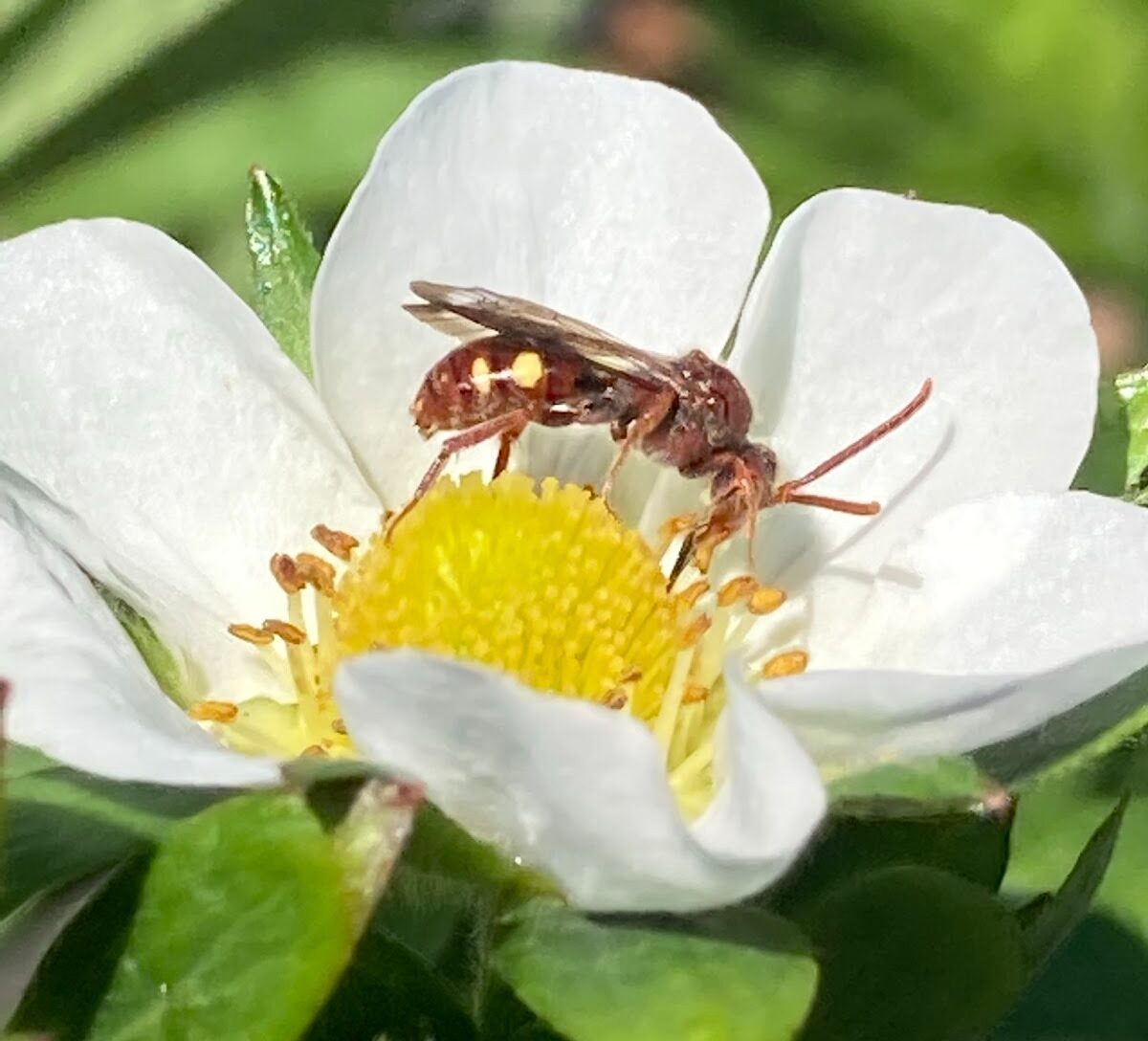
Nomad Cuckoo Bee (genus Nomada) © Spencer Hardy
Support Spencer Hardy’s research and other projects like this by making a donation to Vermont Center for Ecostudies! Learn about other ways to support VCE here.
The domesticated Western Honey Bee (Apis melifera) gets credit for most of the agricultural pollination in North America, but in many cases, it’s the wild bee species that are more effective pollinators. And unlike the Honey Bees in the northeast, wild bees do not need human assistance to survive—just a safe place to nest and plenty of flowers to eat from.
By identifying and understanding the natural history of these bees, you can provide the specific habitat that will help to ensure resilient and abundant pollination services and the tasty treats that result. With more than 350 species of bees in Vermont, it’s daunting to understand them all. So let’s start with some important bees for, and supported by, strawberry blossoms.
A Strawberry Blossom Overview
Wild strawberries are widespread in Vermont, which has resulted in a close association with a number of wild bees. Most commercially-bred strawberries are self-fertile, but insect pollination is important for fruit quality.
Successful pollination should occur within one to four days of bloom; stamens are a deep yellow when pollen is viable. When anthers have begun to dry after a flower opens, pollen bursts under tension and scatters across stigmas. Insect pollinators assist with this pollen dispersal, benefiting the yield and quality of berries.
June-bearing varieties bloom in mid to late spring, slightly after wild species, and are likely visited by many of the same pollinators. Ever-bearing strawberries bloom considerably later in the summer, when a different suite of species is active. Strawberry flowers are also visited by a wide range of non-bee insects, especially beetles and flies, many of which likely contribute to pollination.
How to Support Diverse Pollinators for Your Strawberry Crop
Provide flowers, especially native ones, for as much of the growing season as possible. Also leave a messy area with leaf litter and dead plant stalks, which provide important nesting and overwintering habitat for many bees. Be careful and conservative with any pesticide applications, especially for strawberries, since tarnished plant bug control happens during bloom. Follow an integrated pest and pollinator management plan, and if spraying is necessary, choose options that are less toxic to bees.
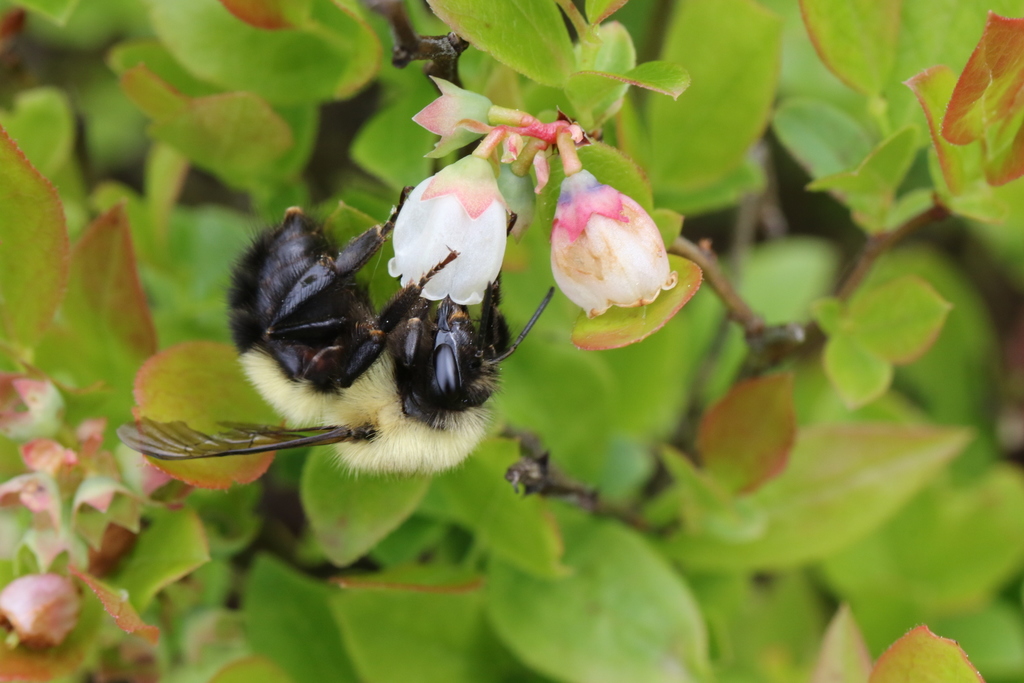
Half-black Bumble Bee (Bombus vagans) © Spencer Hardy
Bumble Bees (genus Bombus)
These large, charismatic bees are great pollinators of most crops. Queens emerge in early spring followed by the smaller workers, which are active from early June through late fall. Early blooming flowers (willows, maples, etc) and nesting habitat (hedgerows and woodlots) are important to maximize local populations. 13 species in Vermont, many of which can be identified in the field with practice.
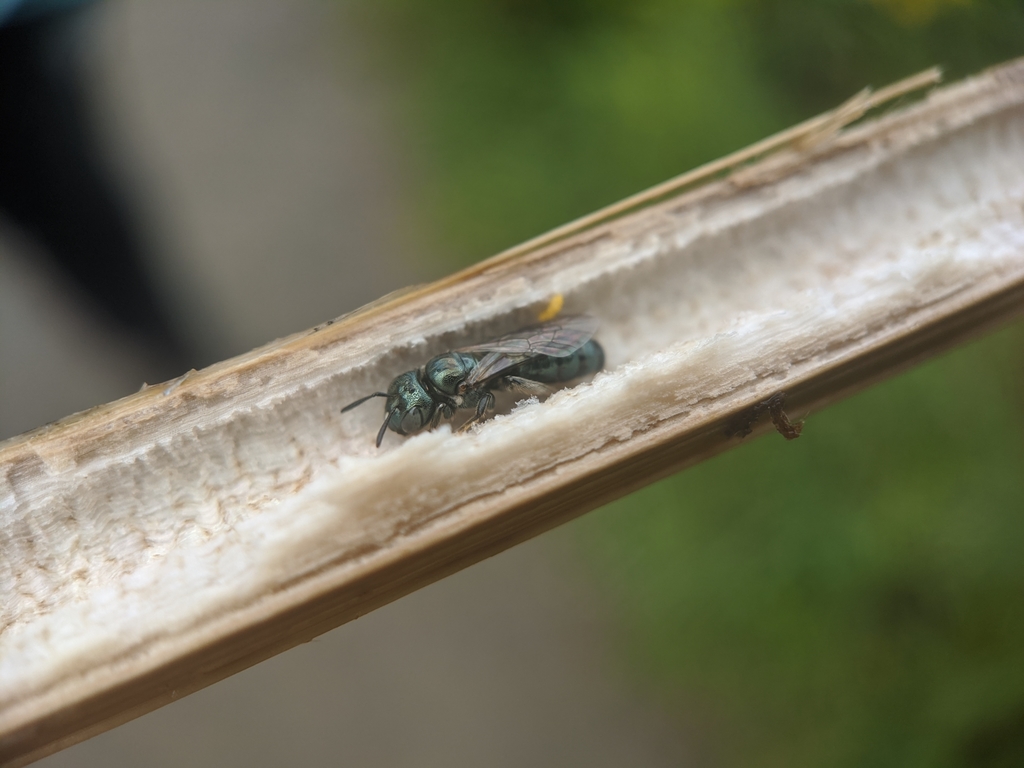
Small Carpenter Bee (genus Ceratina) © Spencer Hardy
Small Carpenter Bees (genus Ceratina)
Four species of this ubiquitous genus are found in Vermont. They nest and overwinter in pithy plant stems (raspberries, goldenrod, mints, sumac, etc). Active from early April through October, with peak abundance in May and June. Recognized by their slate blue color, swollen abdomen, and usually a small white mark on the face. Visits a number of crops, particularly fond of strawberries and raspberries.
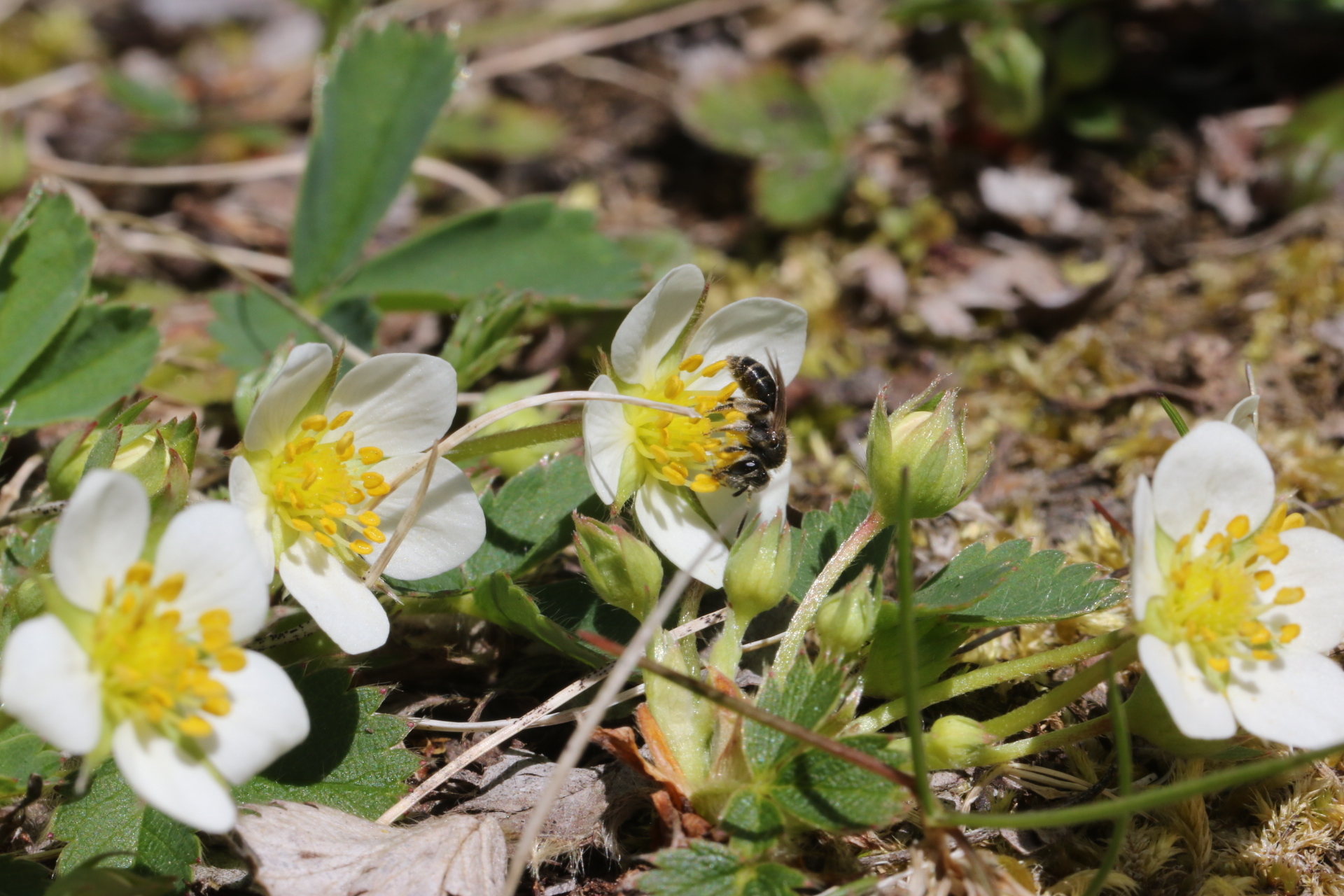
Rose Miner Bee a.k.a. Strawberry Mini-Miner (Andrena melanochroa) © Spencer Hardy
Rose Miner Bee a.k.a. Strawberry Mini-Miner (Andrena melanochroa)
This small (~6mm) species is only found on strawberries and cinquefoils and flies in May and June. This bee nests in the ground, with a preference for sandy, loose soil, and is unlikely to forage more than a few 100 yards from nest sites. Where present, likely a valuable strawberry pollinator. Protect sandy areas with sparse vegetation where you note bee activities (nests of many species resemble ant hills). At least 7 other species of Miners have been recorded visiting strawberries in Vermont.
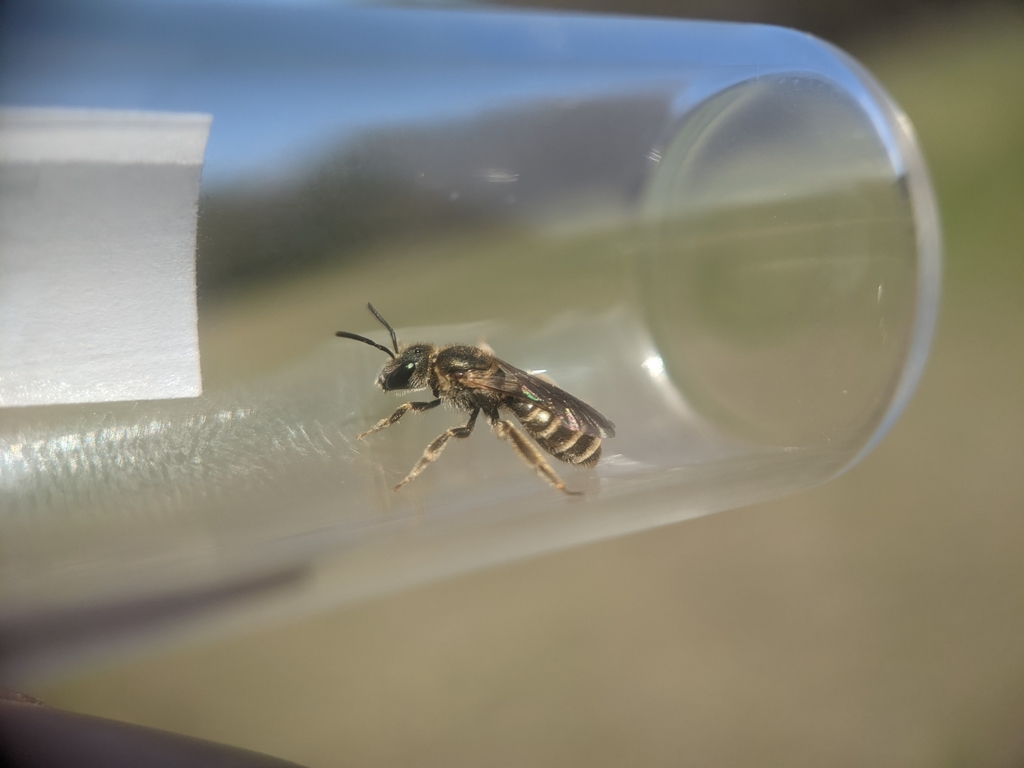
Confusing Furrow Bee (Halictus confusus) © Spencer Hardy
Confusing Furrow Bee (Halictus confusus)
This common generalist is often found on strawberries and other crops. Active from April through October and identified by the shiny body and thick hair bands on the abdomen. Appears to thrive around human disturbance and can be found nesting in farm roads and dirt parking areas.
Nomad Cuckoo Bee (genus Nomada) © Spencer Hardy
Nomad Cuckoo Bees (genus Nomada)
These brightly colored bees are brood parasites of other bees. Most species lay their eggs in the nests of Miners (genus Andrena) where the Nomad larvae develop in place of their hosts. Although they don’t gather pollen, the adults still visit flowers, including strawberries and are potential pollinators. Their presence indicates a healthy population of their host species. Most abundant near sandy soils in May.
A project of the Vermont Pollinator Working Group, with funding from the Gund Institute’s Apis Fund. For more information about bees, email shardy@vtecosudies.org. For questions about pollinator support practices on farms, email Laura.O.Johnson@uvm.edu.