Know Your 5: Wild Bees That Pollinate Tomatillos and Other Ground Cherries
 Support Spencer Hardy’s research and other projects like this by making a donation to Vermont Center for Ecostudies! Learn about other ways to support VCE here.
The domesticated Western Honey Bee (Apis melifera) gets credit for most of the agricultural pollination in North America, but in many cases, it’s the wild bee species that are more effective pollinators. And unlike the Honey Bees in the northeast, wild bees do not need human assistance to survive—just a safe place to nest and plenty of flowers to eat from.
By identifying and understanding the natural history of these bees, you can provide the specific habitat that will help to ensure resilient and abundant pollination services and the tasty treats that result. With more than 350 species of bees in Vermont, it’s daunting to understand them all. So let’s start with some important bees for, and supported by, ground cherry and tomatillo blossoms.
Physalis Pollination Overview
Ground cherries and tomatillos are in the genus Physalis, which also includes at least one native species in Vermont. With five Physalis associated native bees, this genus presents an opportunity to support several rare bees with a commercial crop.
Ground cherries appear to be self-fertile, though with most crops, insect visits increase fruit quality and yield. Tomatillos are self-incompatible at the molecular level, which is called “gametophytic self-incompatibility” (GSI). While blossoms contain both pistils and anthers, cross pollination is needed across individual plants, with at least two plants to provide genetic diversity. This implies insect-mediated pollination is necessary.
How to Support Diverse Pollinators on Your Land
Provide flowers, especially native ones, for as much of the growing season as possible. Also leave a messy area with leaf litter and dead plant stalks, which provide important nesting and overwintering habitat for many bees. Crop management can have significant implications for nesting habitat of several important pollinators that nest and overwinter in bramble stems where the pith was exposed, either by pruning or raspberry cane borers. Be careful and conservative with any pesticide applications—avoid spraying during bloom when possible, and follow an integrated pest and pollinator management plan.
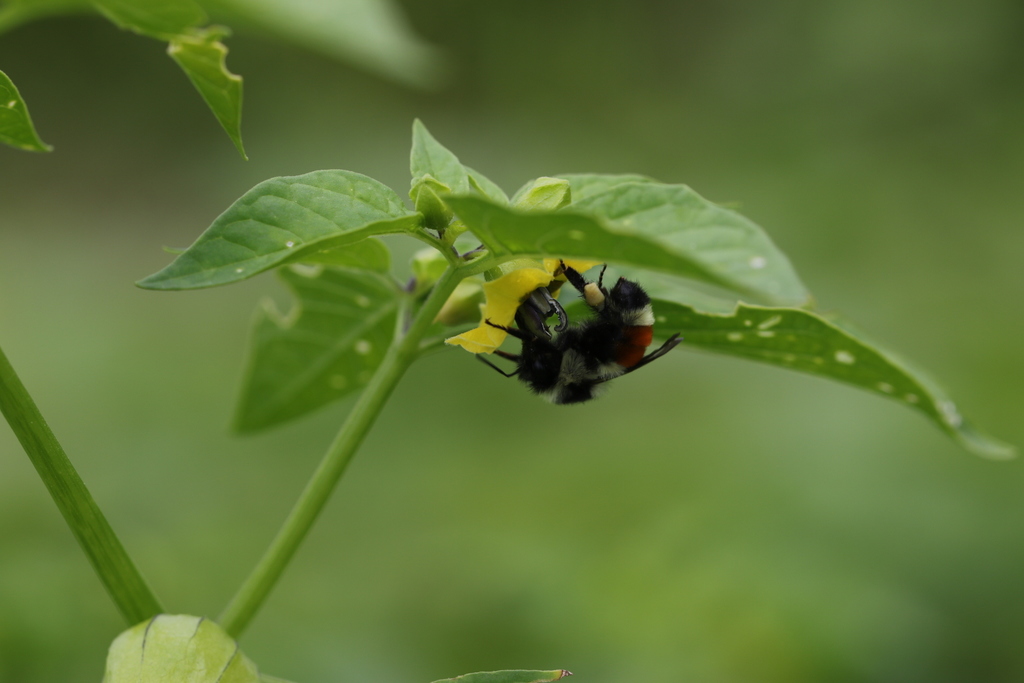
Tricolored Bumble Bee (Bombus ternarius) © Spencer Hardy
Bumble Bees (genus Bombus)
These large, charismatic bees are great pollinators of most crops. Of the more than 12 active bumble bee species in Vermont, the Common Eastern Bumble Bee (Bombus impatiens) is the only one frequently found on Physalis. Early blooming flowers (willows, maples, etc) and nesting habitat (hedgerows and woodlots) are important for maximizing local populations.
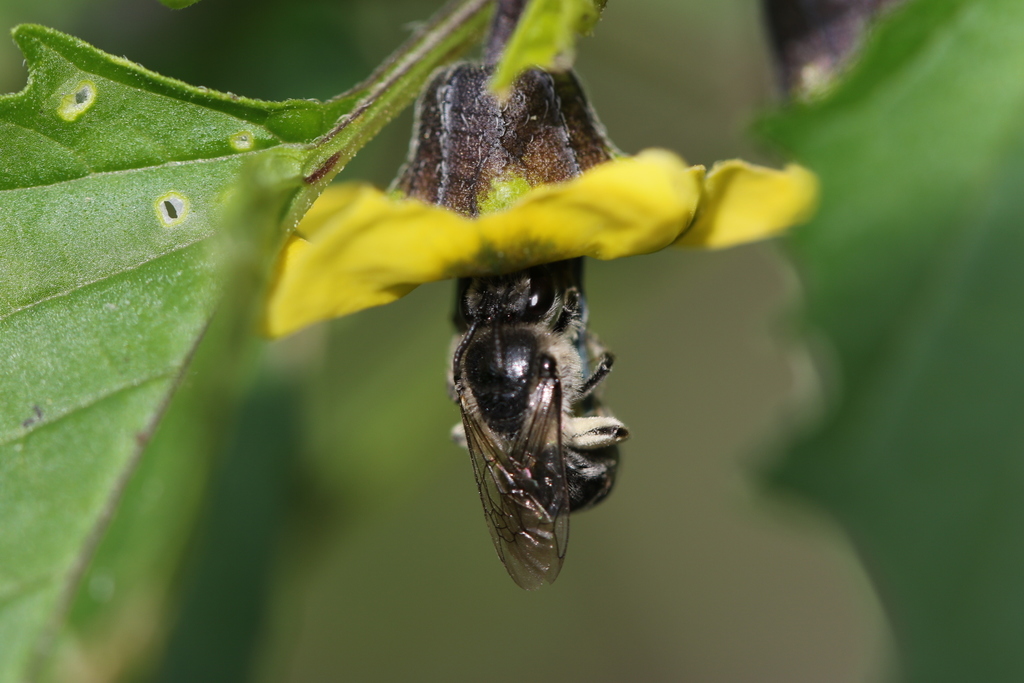
Williston’s Cellophane Bee (Colletes willistoni) © Spencer Hardy
Cellophane Bees (genus Colletes)
Two similar species of cellophane bees appear to be specialists of tomatillos and ground cherries. They have slight differences in leg shape and flight period, but are otherwise indistinguishable. The more common Broad-footed Cellophane Bee (Colletes latitarus) is especially quick to find new plantings of ground cherries or tomatillos. Both nest in the ground.
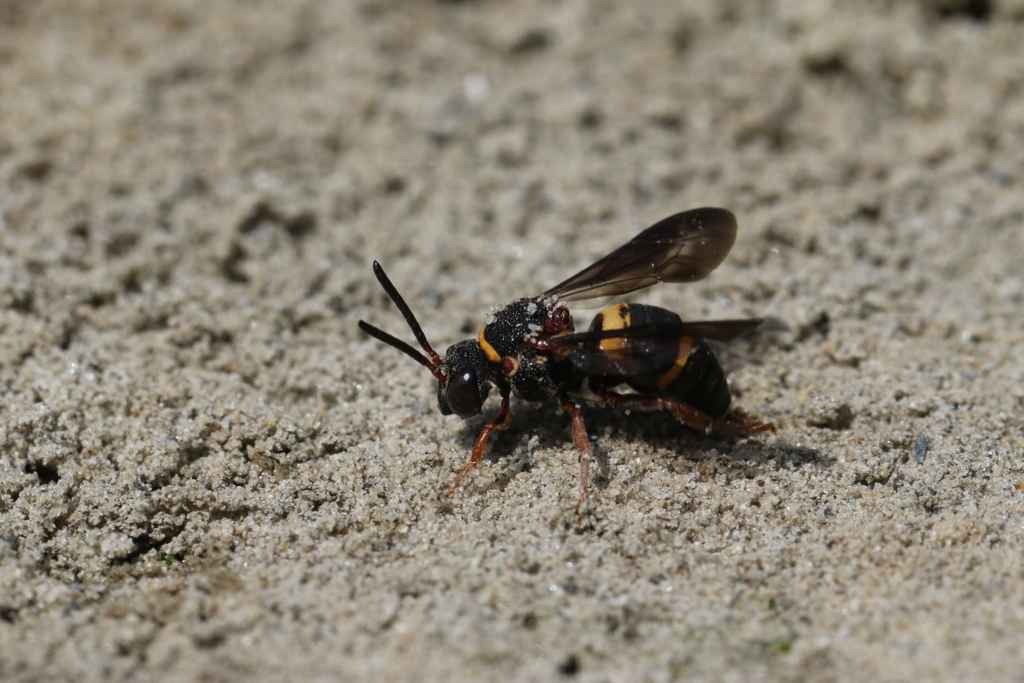
Two-banded Cellophane-cuckoo Bee (Epeolus bifasciatus) © Spencer Hardy
Two-banded Cellophane-cuckoo Bee (Epeolus bifasciatus)
This parasitic bee is quite distinctive, and often more noticeable than its host, the Broad-footed Cellophane Bee, which is a tomatillo and ground cherry specialist. Like other cuckoo bees, this one is a generalist, visiting a number of different flowers, including tomatillo and ground cherries. The presence of this bee indicates its host is nearby, either on cultivated plants or wild ground cherries.
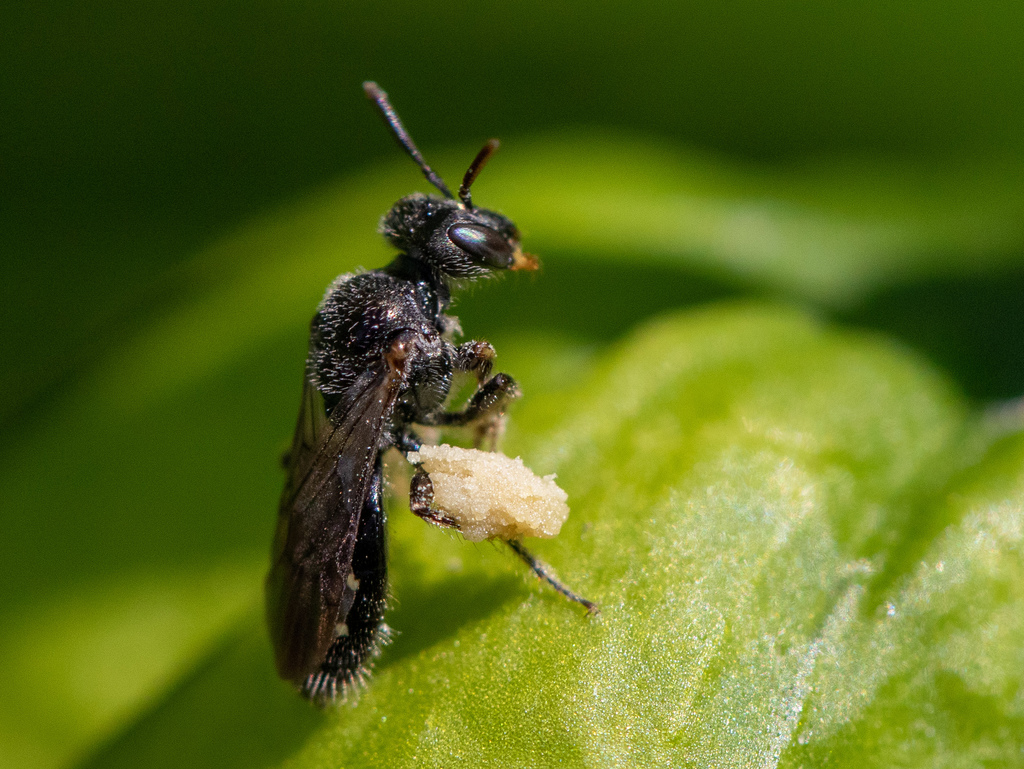
Ground Cherry Fairy Bee (Perdita halictoides) © Spencer Hardy
Ground Cherry Fairy Bee (Perdita halictoides)
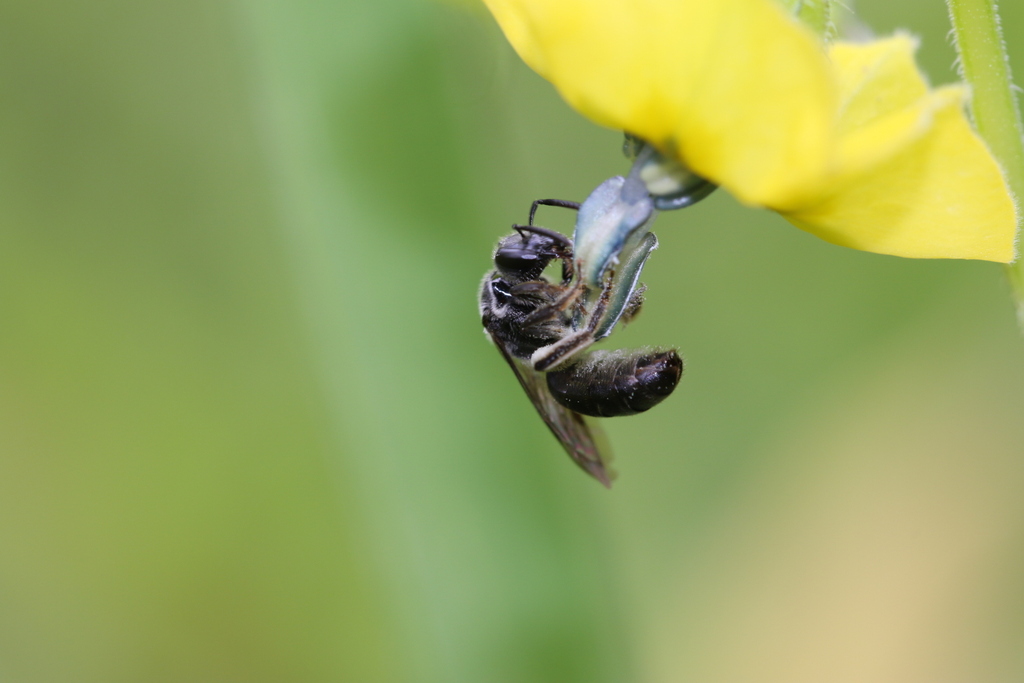
One of the smallest bees in Vermont, at approximately ⅛ inch in length, the Ground Cherry Fairy Bee is easy to overlook and rarely recorded, though known to be abundant at a few sites. Listed as imperiled in Vermont, they only nest in sandy soils and are unlikely to forage more than a few hundred yards from the nest site.
Ground Cherry Sweat Bee (Lasioglossum pectinatum) © Spencer Hardy
Ground Cherry Sweat Bee (Lasioglossum pectinatum)
This is one of the few specialized sweat bees. This ground-nesting species is considered critically imperiled in Vermont, and only known from a few locations, all tomatillo patches. Unlike some of the other specialists, this species has been recorded from June through October, making it potentially valuable for early or late tomatillo production.
A project of the Vermont Pollinator Working Group, with funding from the Gund Institute’s Apis Fund. For more information about bees, email shardy@vtecosudies.org. For questions about pollinator support practices on farms, email Laura.O.Johnson@uvm.edu. All photos courtesy of Spencer Hardy unless otherwise noted.