Know Your 5: Wild Pollinators for Stone Fruit Crops
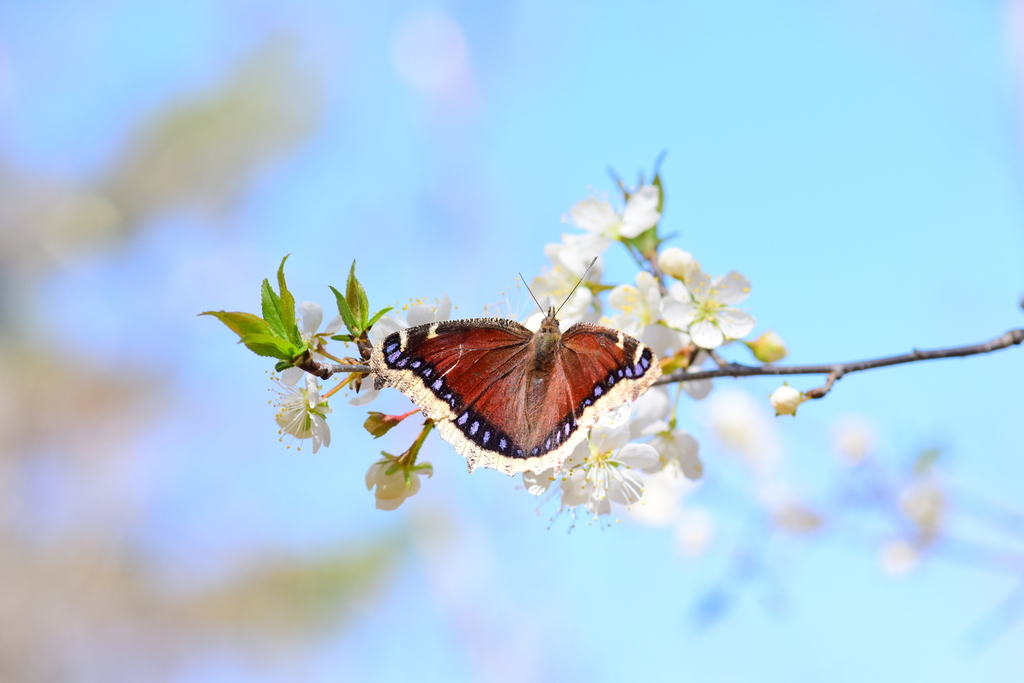
Mourning Cloak (Nymphalis antiopa) © Bernie Paquette
Find “Know Your 5” wild bee guides for more crops in our Resources for Farmers page.
The domesticated Western Honey Bee (Apis melifera) gets credit for most of the agricultural pollination in North America, but in many cases, it’s the wild bee species that are more effective pollinators. And unlike the Honey Bees in the northeast, wild bees do not need human assistance to survive—just a safe place to nest and plenty of flowers to eat from.
By identifying and understanding the natural history of these bees, you can provide the specific habitat that will help to ensure resilient and abundant pollination services and the tasty treats that result. With more than 350 species of bees in Vermont, it’s daunting to understand them all. So let’s start with some important bees for, and supported by, stone fruit blossoms like peaches, cherries, plums, and apricots.
Stone Fruit Pollination Overview
The genus Prunus contains commercial stone fruit, plus a number of native trees and shrubs. Most stone fruit species bloom in early spring, when northeast weather conditions are often cool and unpredictable, so are likely more dependent on wild pollinators that are more tolerant of lower temperatures and windy conditions than Western Honey Bees. Furthermore, the presence of native bees has been shown to increase honey bee movement between trees, which is important for pollination of self-incompatible fruits.
Cross pollination requirements of stone fruits are species- and variety-dependent, so careful attention should be paid when making crop selections. Peaches and tart cherries are self-fertile, receptive to pollen from their own variety, and can be planted in solid blocks of a single variety to achieve fruit, but still need insect mediated movement of pollen. Most commercial plums, apricots, and sweet cherries are not self-compatible and should be interplanted with different varieties of the same species for fruit set.
How to Support Diverse Pollinators on Your Land
Provide flowers, especially native ones, for as much of the growing season as possible. Also leave a messy area with leaf litter and dead plant stalks, which provide important nesting and overwintering habitat for many bees. Be careful and conservative with any pesticide applications—avoid spraying during bloom when possible, and follow an integrated pest and pollinator management plan.
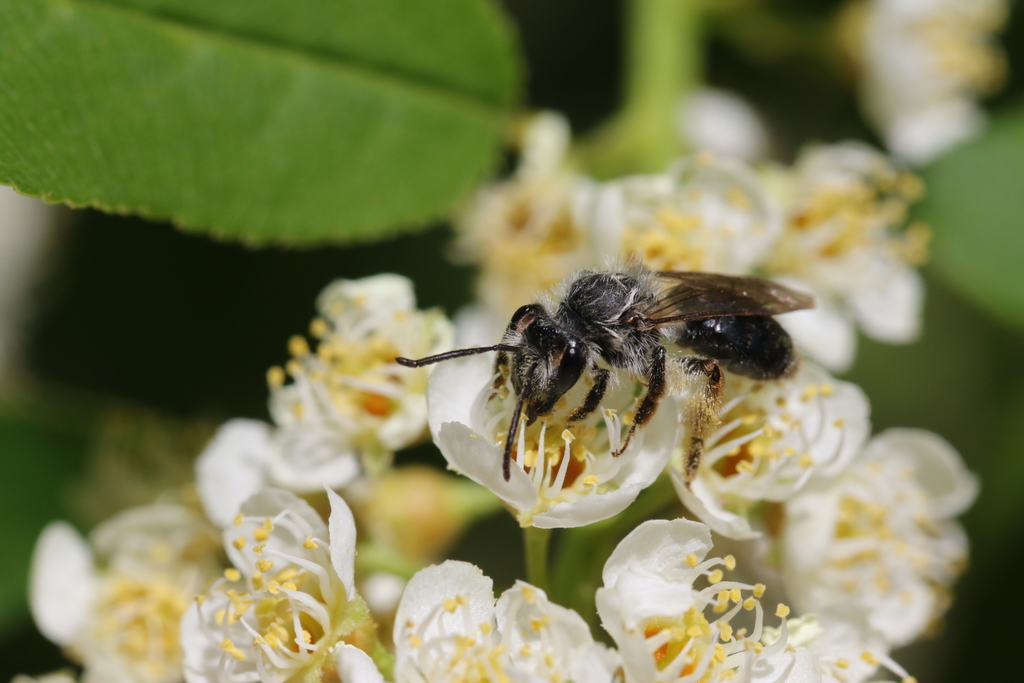
Brown-fovea Miner (andrena rufosignata)
Mining Bees (genus Andrea)
Many different species of Mining Bees have been recorded on plums and cherries, both cultivated and wild. The Cherry Miner (Andrena pruni) is often associated with Prunus and Serviceberries (genus Amelanchier), though is limited to the western valleys of the state. All Mining Bees are ground nesters, and most prefer sparsely-vegetated, sandy soils.
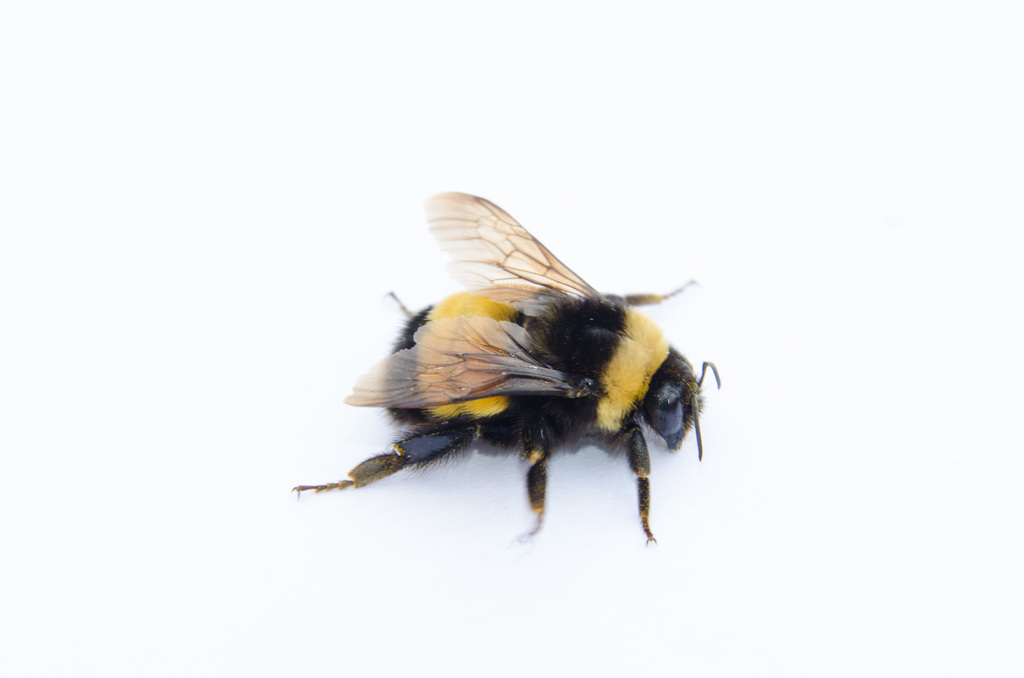
Yellow-banded Bumble Bee (Bombus terricola)
Bumble Bees (genus Bombus)
Several uncommon and rare Bumble Bee species are active earlier and likely play an outsized role in Plum and Apricot pollination compared to the ubiquitous Common Eastern Bumble Bee (Bombus impatiens), which emerges later and may not be active when some stone fruit are blooming. Early blooming flowers (willows, maples, etc) and nesting habitat (hedgerows and woodlots) are important to maximize local populations.
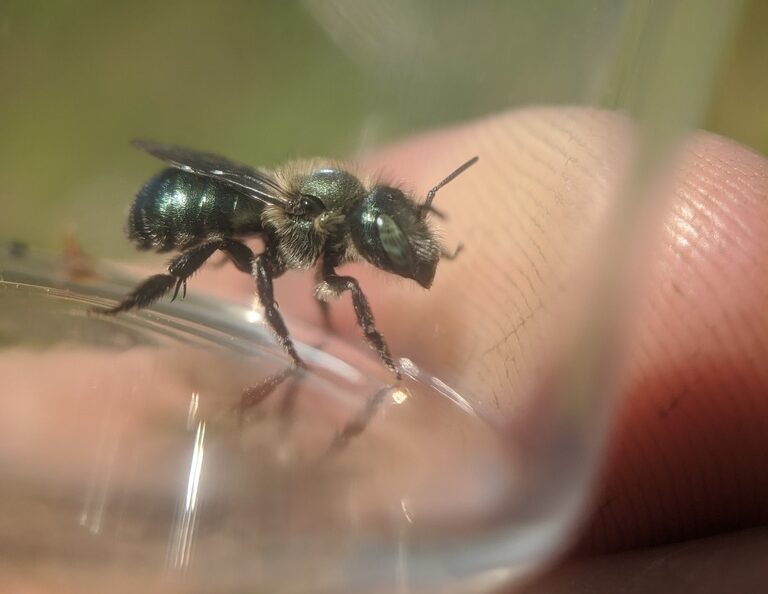
Mason bee (genus osmia)
Mason Bees (genus Osmia)
These shiny blue bees are efficient pollinators of many spring blooming fruits. Several species fly early in the spring, making them important for stone fruit production. The Blue Orchard Bee (Osmia lignaria) is a well known fruit tree pollinator that is active as early as late March. Females can be identified by the pollen (or pollen collecting hairs) underneath the abdomen. Many species nest above ground in pre-existing cavities (including bee hotels).
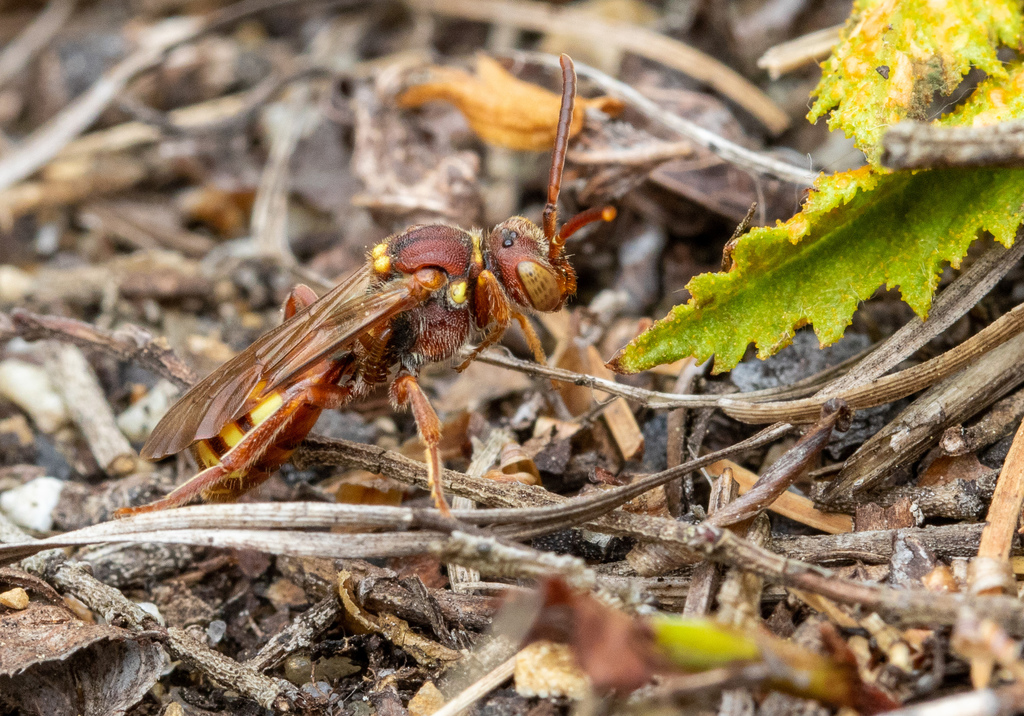
Imbricate Cuckoo Nomad Bee (Nomada imbricata)
Nomad Cuckoo Bees (genus Nomada)
These brightly colored bees are brood parasites of other bees! Most species lay their eggs in the nests of Mining Bees (genus Andrena) where the Nomad larvae develop in place of their hosts. Although they don’t gather pollen, the adults still visit flowers, including stone fruit, and are potential pollinators. Their presence indicates a healthy population of their host species. Most abundant near sandy soils in April and May.
Mourning Cloak (Nymphalis antiopa) © Bernie Paquette
Mourning Cloak (Nymphalis antiopa)
Bees aren’t the only pollinators! The Mourning Cloak is a common butterfly that overwinters as an adult and starts flying on warm days in March. Caterpillars feed on a variety of native plants, including native plums and cherries. Overwintering sites include woodpiles, peeling tree park, and deep leaf litter.
A project of the Vermont Pollinator Working Group, with funding from the Gund Institute’s Apis Fund. For more information about bees, email shardy@vtecosudies.org. For questions about pollinator support practices on farms, email Laura.O.Johnson@uvm.edu. All photos courtesy of Spencer Hardy unless otherwise noted.