Not Just Bees: How to Support All Types of Pollinators in Your Garden
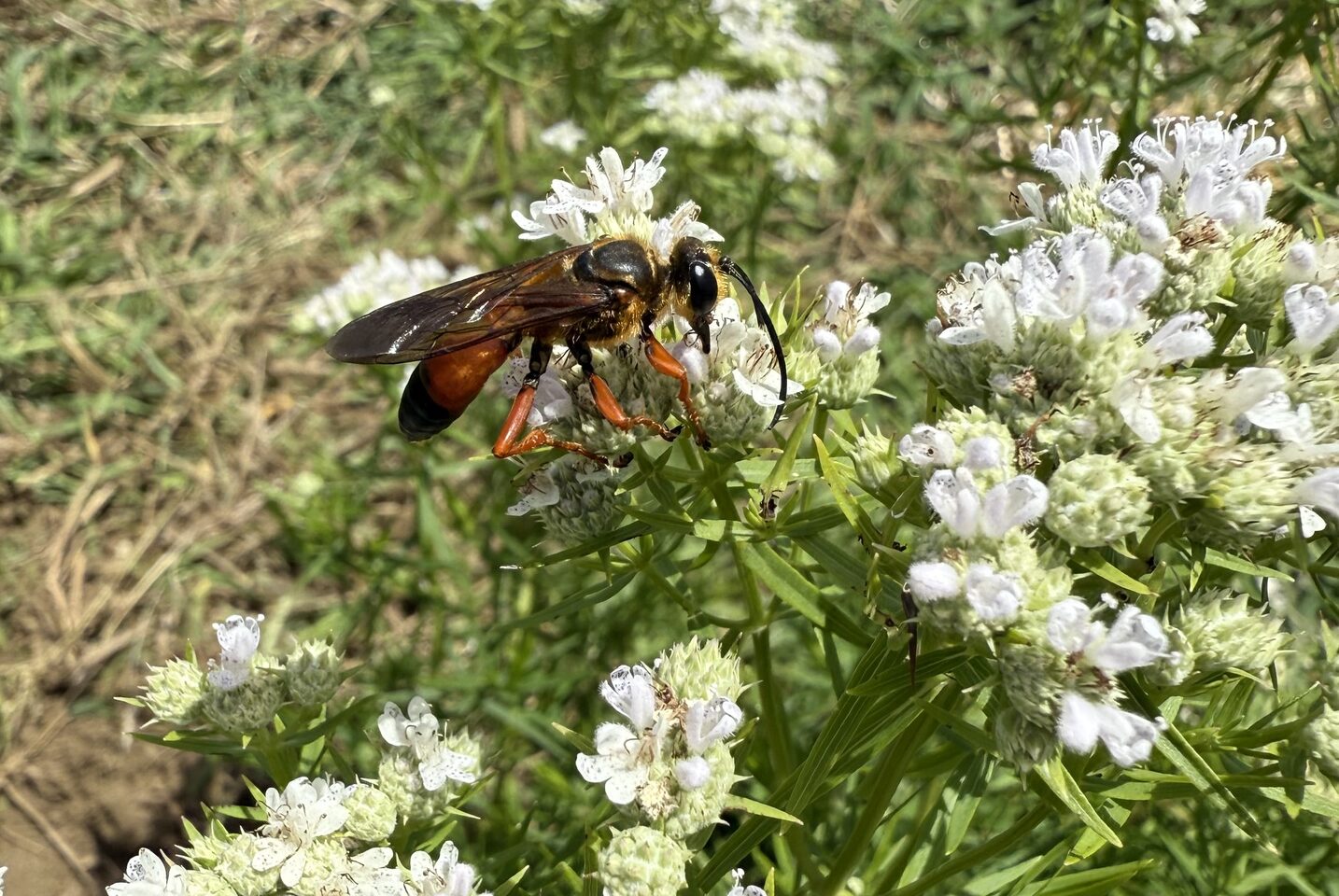
Great Golden Digger Wasp (Sphex ichneumoneus) © Amber Jones
When you think of pollinators, what is the first thing you think of? What would you say if I told you that flies and beetles were also pollinators? How about wasps?
The word pollinator has become synonymous with bees, and while they are some of the top pollinators for food crops and flowers, they are just one of several types of insects responsible for the food and flowers that we and wildlife enjoy.
The definition of a pollinator is simple: They are animals that are responsible for moving pollen from one flower to another. Pollinators in the US and around the world include insects such as bees, flies, wasps, butterflies and moths, beetles, and hummingbirds, though some animals are better at it than others. Some plants are made to attract certain types of insects over others, while some plant pollen is only suited for certain species of bees.
Let’s take a look at some of our native wild pollinating insects, how they operate, and what we might do to help conserve them in our own backyards and communities.
Bees
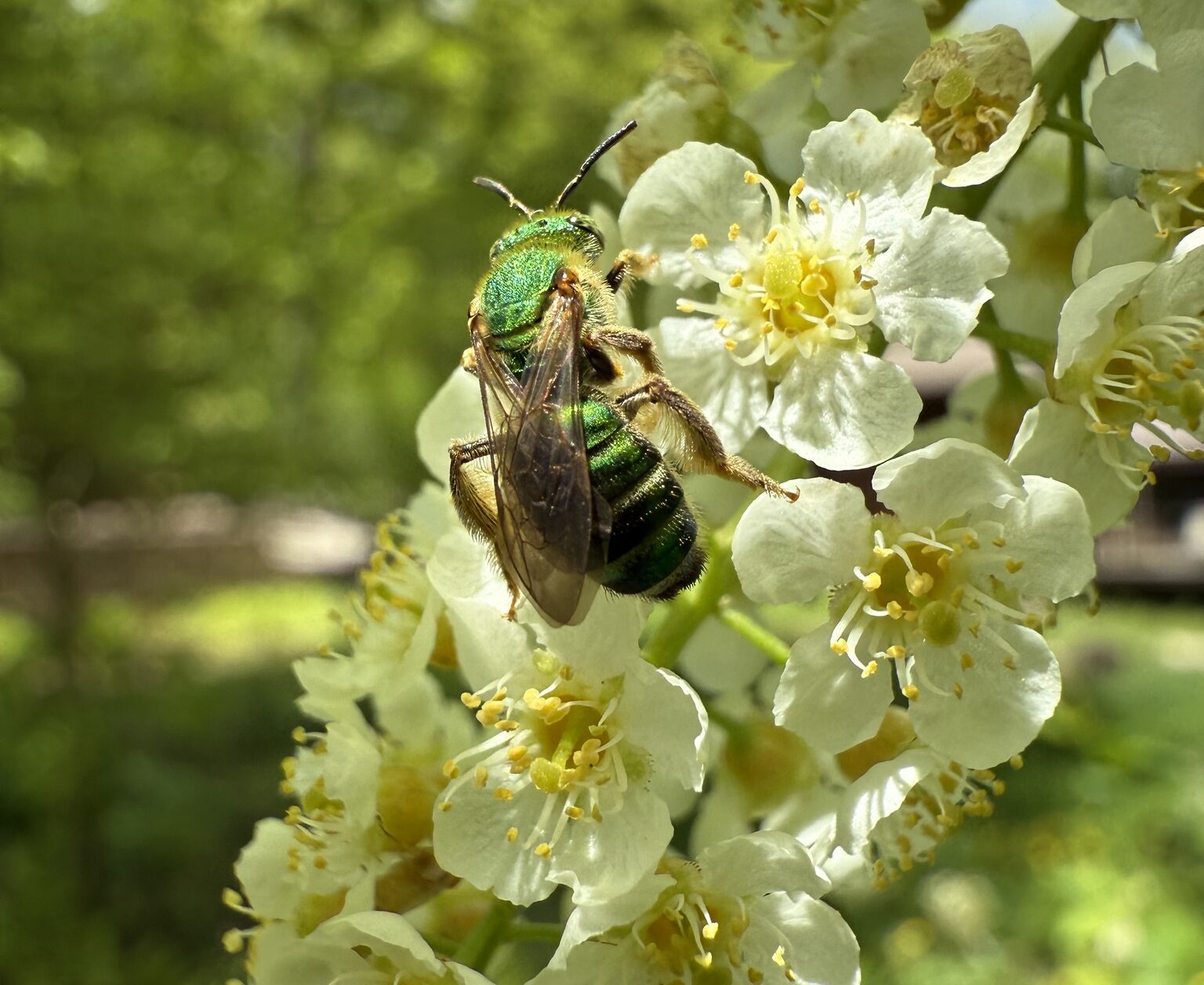
Silky Striped Sweat Bee (Agapostemon sericeus) © Amber Jones
Wild bees are considered our most important pollinators because they intentionally collect and move pollen to provision their nest. They are responsible for pollinating over 150 food crops that we enjoy here in the United States, as well as countless numbers of flower species. Here in Vermont, we have 352 species of bees; approximately 10% of these have been recorded on commercial crop species like maple, apples, and squash. VCE’s bee biologist Spencer Hardy has written about the differences in pollination and behavior by both our native and non-native Western Honey bees.
If you are feeling adventurous this summer, check out The Wild Bee Chase by VCE’s biologist Spencer Hardy, and keep an eye out for bees that need documentation in Vermont.
Flies
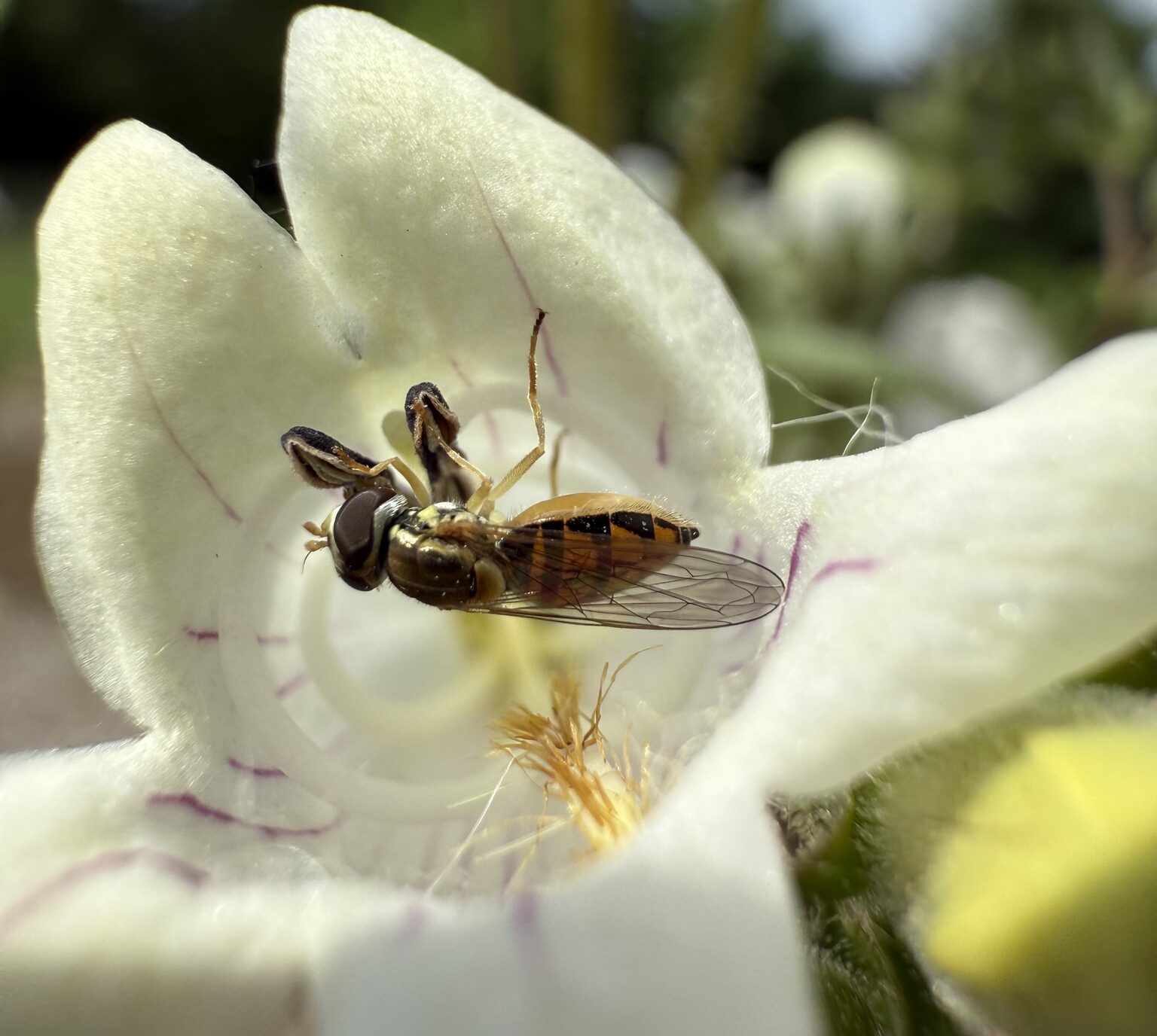
Margined Calligrapher (Toxomerus marginatus) © Amber Jones
Flies are next on the list of important pollinators. Not only are flies known to pollinate nearly 100 different commercial food crops in the US, but the family Syrphidae, also known as Hover or Flower flies, are known to pollinate nearly 75% of the world’s food crop species. Flies are also important for early spring pollination for species like Skunk Cabbage (Symplocarpus foetidus) and Red Trillium (Trillium erectum), as well as high-elevation mountain top pollination, where conditions can be too harsh for most bees.
Flower Flies (Syrphidae) are a large and diverse group that includes many bee mimics. Not only do they provide the benefit of pollination, but their larvae, which live on plants, are important predators of aphids and other soft-bodied arthropods. These accidental pollinators don’t need to collect pollen to feed their offspring, so they aren’t equipped with pollen-collecting hairs like bees, but the bit of hair they do have is enough to catch pollen grains while feeding from flowers.
Next time you are outside, keep an eye out for some of our more common flower flies, such as calligraphers (Toxomerus) and globetails (Sphaerophoria).
Butterflies and Moths
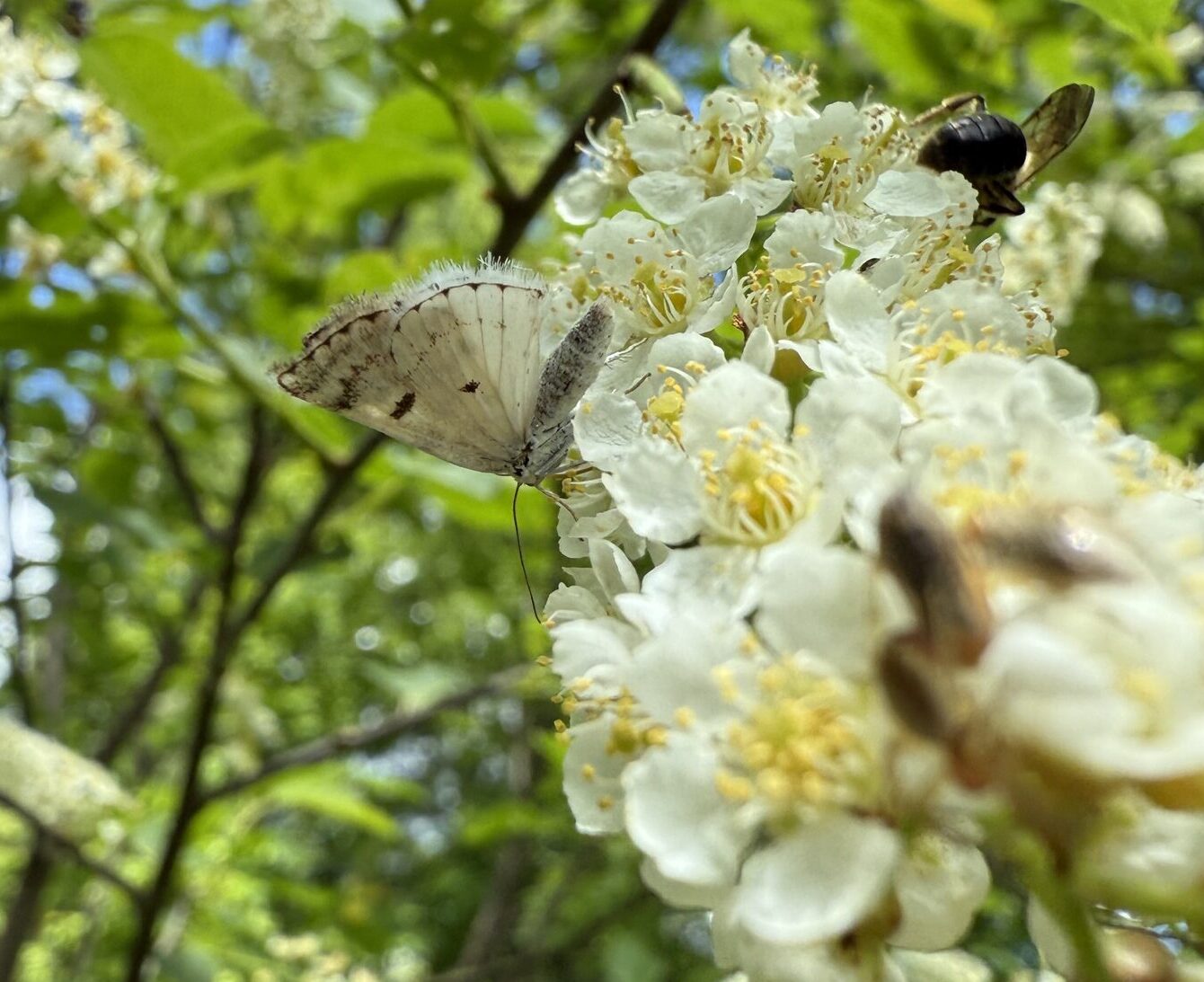
Bluish Spring Moth (Lomographa semiclarata) © Amber Jones
Butterflies are day-flying insects attracted to bright colored flowers, like red and orange, large flowers, or clusters of flowers that provide ample space to land. While they do not have many hairs for transporting pollen, they do contribute to pollination just by nectaring on many plants throughout the day. When looking for butterflies, don’t overlook some of the smaller species that frequent our gardens. Skippers, often confused with moths, are common in Vermont, with 38 documented species in the state.
Lesser-known pollinators are the moths! Though some fly during the day, such as the Clearwing Hummingbird and Snowberry Clearwing, the majority fly at night. Hawk moths, like the White-lined Sphinx (Hyles lineata), are just one of many common night-flying nectaring moths. They are typically attracted to heavily scented pale or white flowers. Next time you are out enjoying a campfire in the evening, find some flowers to see who might be flying in.
Wasps
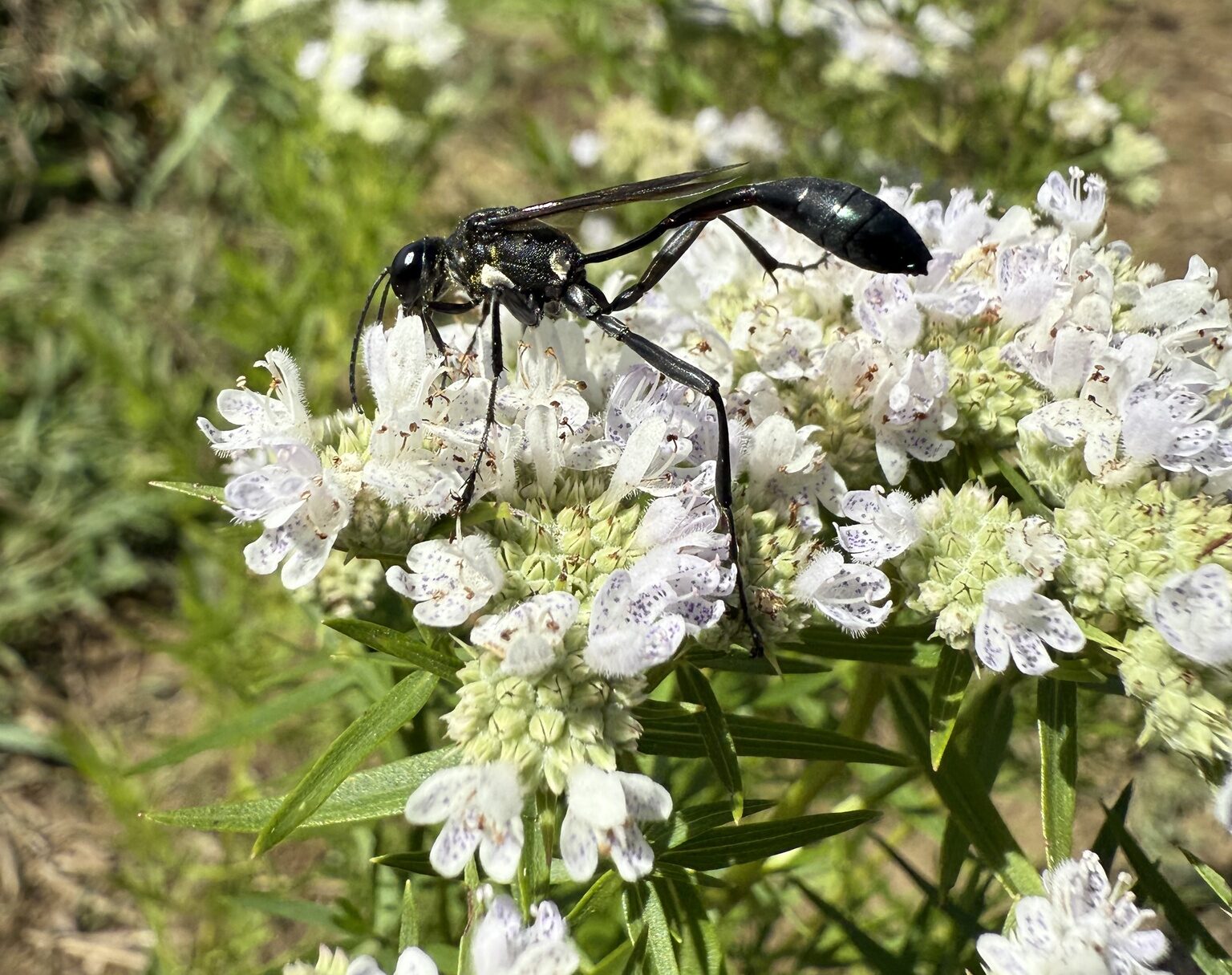
Gold-marked Thread-waisted Wasp (Eremnophila aureonotata) © Amber Jones
Perhaps the most misunderstood of the pollinator world, wasps do double duty! Not only do they pollinate, but they also help to control populations of other insects. If you are one of many who enjoy a vegetable garden but are in a constant battle with cabbage white caterpillars on your broccoli, your best friend might just be a wasp. Wasps of all species collect insects (from caterpillars to spiders) to provision their nests and feed their fast-growing young.
With over 30,000 known species in the world, only 1.5% are social wasps, the wasps people fear being chased around by on the lawn mower after they’ve run over a ground nest. Social wasps can be defensive when near their nests. Solitary wasps tend to be more docile, focused more on nectaring, and going about their business.
Vermont is home to some spectacular wasps. This summer, keep an eye out for some absolute show stoppers: the Goldmarked Thread-waisted Wasp (Eremnophila aureonotata), Great Golden Digger Wasp (Sphex ichneumoneus), and the American Sand Wasp (Bembix americana).
Beetles
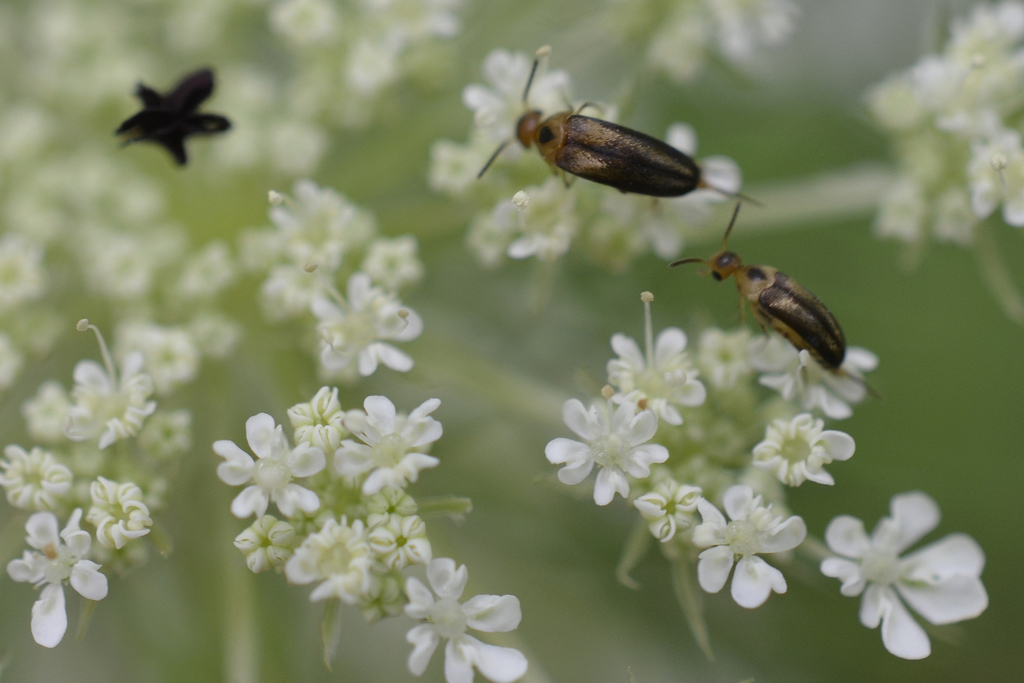
Tumbling Flower Beetles (mordellistena limbalis) © Larry Clarfeld
Believe it or not, beetles can be pollinators too. While scouring flowers for pollen (rather than nectar) to eat, they transport it from flower to flower on their bodies. Take some time to appreciate the diversity of pollinating beetles in your area. Ranging from only a few millimeters to over an inch in size, fireflies (Lampyridae), long-horned beetles (Cerambycidae), checkered beetles (Cleridae), tumbling flower beetles (Mordellidae), and more can all be found throughout the season.
How to Help All the Pollinators
With nearly 60% of Vermont’s bee species listed as vulnerable (S3) or lower, and many of our other pollinators likely in decline, practicing a few simple steps on our own properties or in our communities can help conserve these crucial insects.
- Don’t use pesticides. Whether labeled as “natural” (i.e., essential oils) or conventional (i.e., DEET), and even when targeted for a specific insect, pesticides don’t discriminate. Pesticides can remain in the environment long after their applications, affecting anything that comes in contact with them.
- Remove invasive plants. Invasive plants not only crowd out native plants with which our native species of insects have evolved, but they can also act as “traps” for species like butterflies. For example, Monarchs may think Black Swallowwort, a relative of milkweed, is suitable for laying their eggs, but it is toxic to Monarch larvae.
- Plant or maintain existing native plants, making sure to offer a variety of flower shapes, colors, and types, as well as a variety of flowering times, spread throughout the season. Remember, host plants—which provide shelter and nurseries for pollinators—are important too. Learn to plant for all life stages of insects.
- Provide safe spaces and overwintering habitat—leave a mess! Create layers and structure with leaves, plants, fallen logs, and sticks where insects like bees and butterflies can stay safe for the winter.
- Create soft landings, especially under trees, for overwintering insects, including bees, butterflies, and moths. Burrowing in the hard ground can be difficult or even impossible for some insects, like caterpillars. Providing a soft, uncompacted place to dig into goes a long way in providing support for next year’s pollinators.