Plant These Native Flowers Around Your Farm to Attract Wild Bee Crop Pollination
Bees and other pollinators are crucial to the production of many food crops. Wild bees are responsible for pollinating many Vermont-grown vegetables and fruits, in addition to pollinating wild plants that create resilient landscapes.
Native bees, as well as non-native, domesticated honey bees benefit from a landscape with diverse native flowering plants. Pollinator habitat on farms can take many forms, from planted rows of cut flowers to neglected field margins. All are viable options, and the USDA Natural Resources Conservation Service has programs to assist with several different types of habitat installations.
What to Remember When Selecting Pollinator Plants
With countless cultivated plants available from nurseries and thousands of native plant species growing wild, choosing the best for a given landscape or goal can be daunting. While most any flower is better than asphalt or turf grass, some plants are more valuable than others.
On a farm, there are additional considerations based on the crops being grown, as each crop has a distinct suite of associated pollinators and some non-crop plants can serve as alternate hosts for pests and diseases.
When choosing plants, look for native species that are well suited to local soil and climate conditions. If possible, avoid buying those that have been treated with systemic pesticides, which remain harmful or fatal to bees visiting flowers long after planting. Respectfully asking your plant vendor about pesticide use can help inform your purchases.
In addition to feeding on the flowers, many plants provide nesting habitat for wild bees, either in the stems of pithy plants, like sumac and elderberry (photo above), or in the leaf litter created by dense herbaceous plants and shrubs.
Presented below in order of bloom period from spring to fall, are five plant groups that support pollinators. They are self-spreading, attractive, low-maintenance shrubs and perennials that can be planted or encouraged in non-production space. When grown together, their season-long blooms provide critical food resources throughout the summer for bumble bees and other important native crop pollinators.
Careful consideration has been made to suggest plant groups with minimal potential to host commercially important pests or diseases.
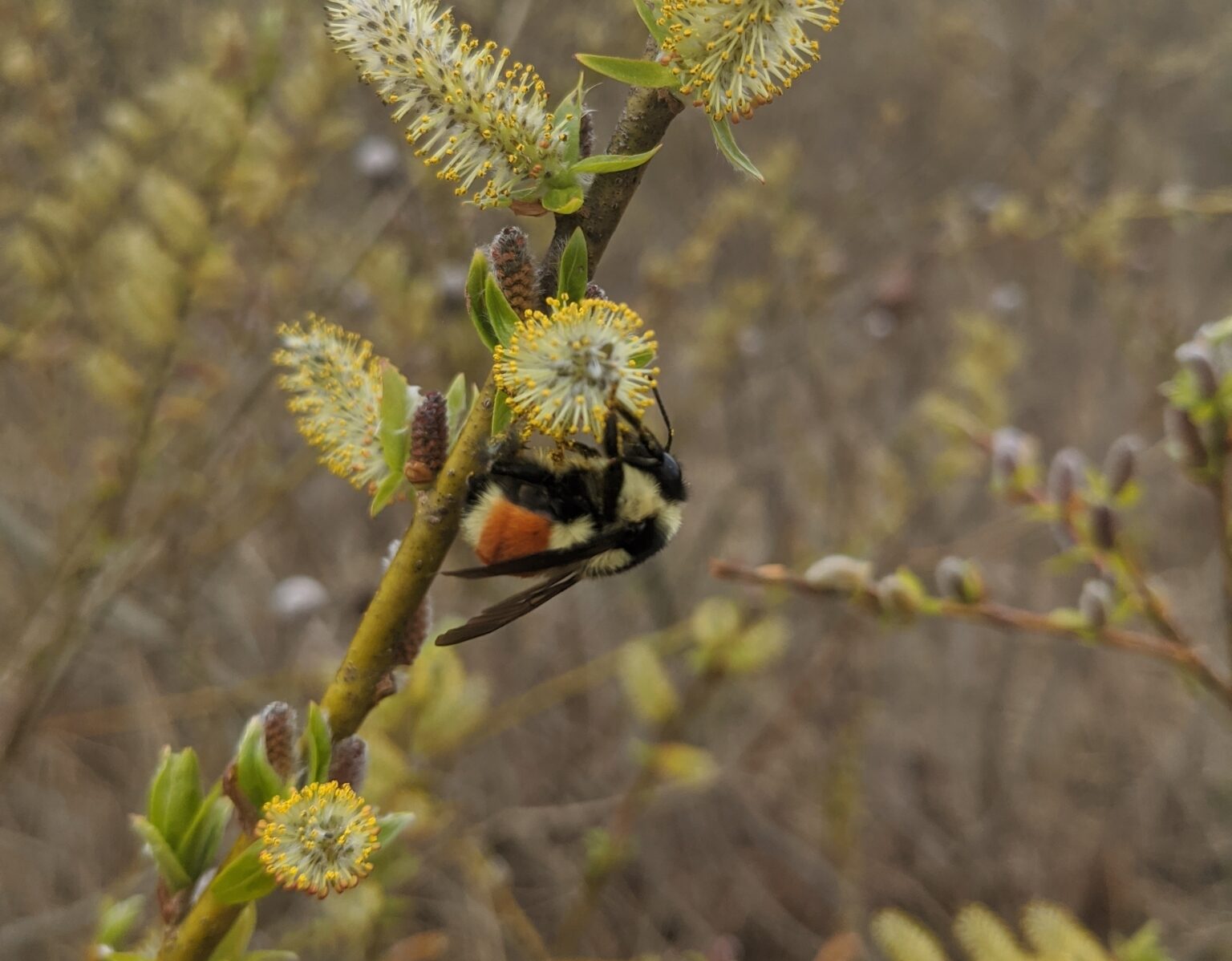
Tricolored Bumble Bee (Bombus ternarius) © Spencer Hardy
Willows (genus Salix)
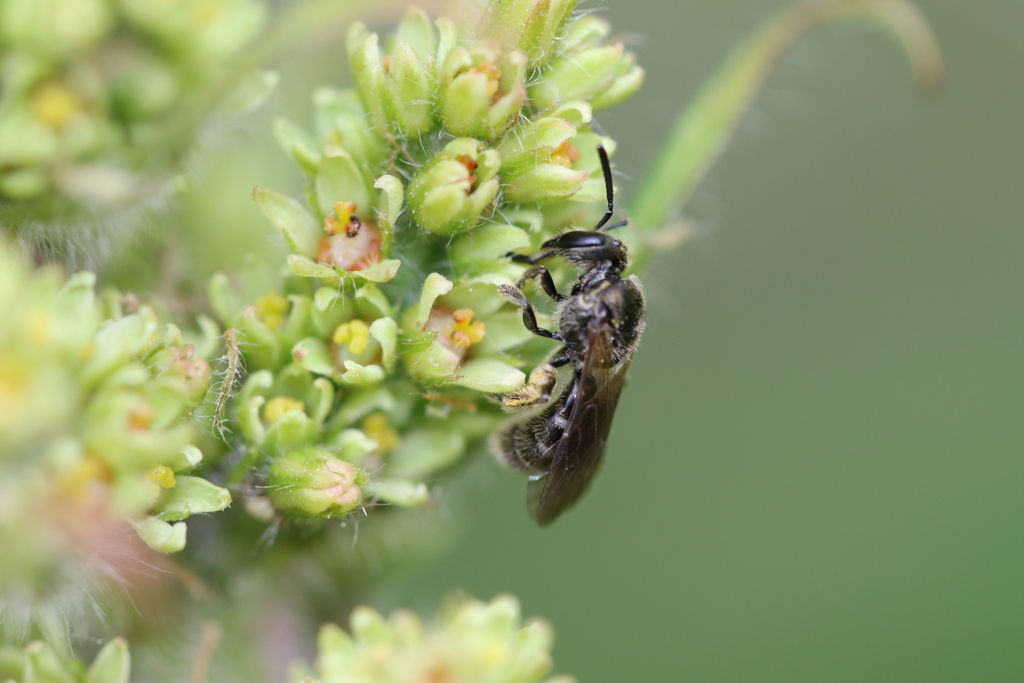
Metalic Sweat Bee (Lasioglossum sp.) © Spencer Hardy
Small shrubs to medium trees depending on the species. Most species prefer moist soils and bloom in early spring, providing one of the first meals for bumble bees, mason bees, mining bees and other valuable crop pollinators. Leaf litter at the base provides nesting habitat. Available from conservation nurseries and some commercial garden centers. Some of the easiest plants to propagate from hardwood cuttings.
Sumac (genus Rhus)
These familiar shrubs are often maligned for rapidly colonizing unmanaged areas. However, the inconspicuous flowers in June and July are abuzz with bees and other pollinators. Furthermore, the pithy stems are among the best for stem nesting bees. They are rarely available commercially, but present on many farms and straight-forward to propagate from seed.
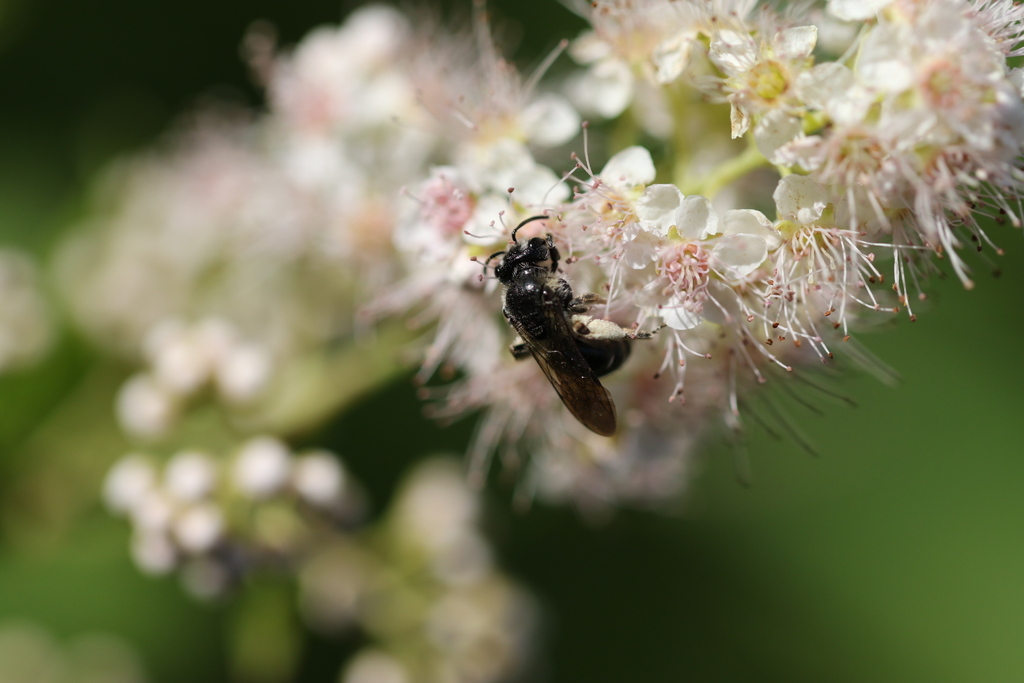
Mining Bee (Andrena sp.) © Spencer Hardy
Meadowsweet (genus Spiraea)
These short shrubs have white spires that fill a dearth of native flowers in July. Its flowers are often swarming with bees and beneficial wasps. Tolerant of a wide variety of soil and moisture conditions, the native species are widespread, but not readily available from most nurseries. They are easy to propagate from seed, hardwood, or softwood cuttings.
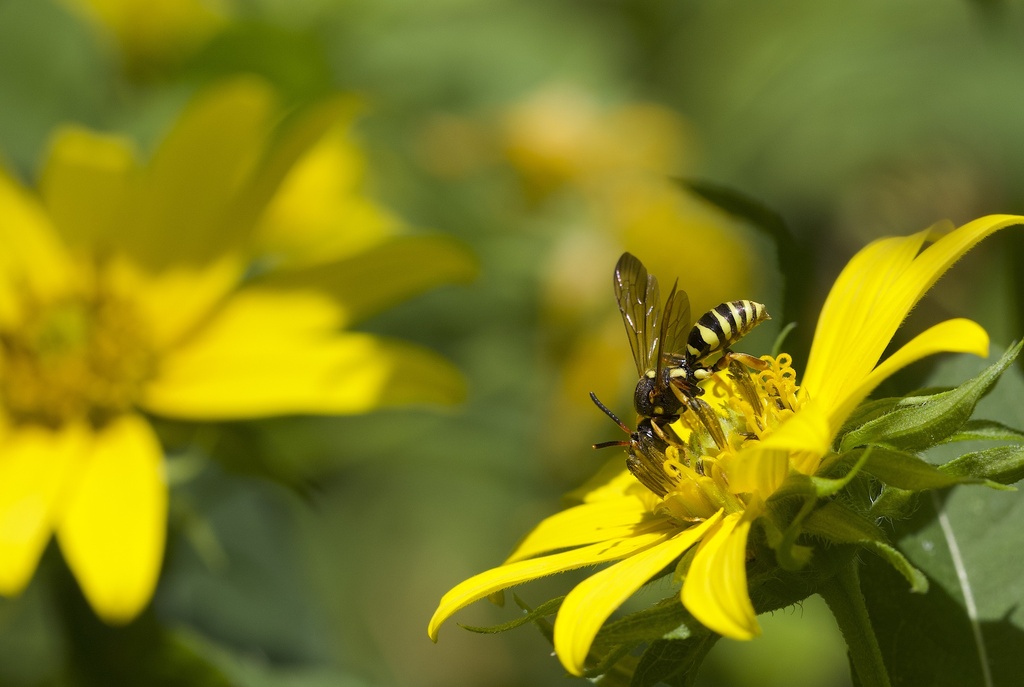
Bound Nomad (Nomada vincta) © Spencer Hardy
Sunflowers (genus Helianthus)
The native species and the common annual sunflower are often visited by bumble bees and other pollinators. Native species are perennial with smaller flowers and often found along forest edges and river banks. Bees will nest in the previous season’s stems if they are left standing or cut back to 3 to 4 feet tall. Native species are available from some nurseries.
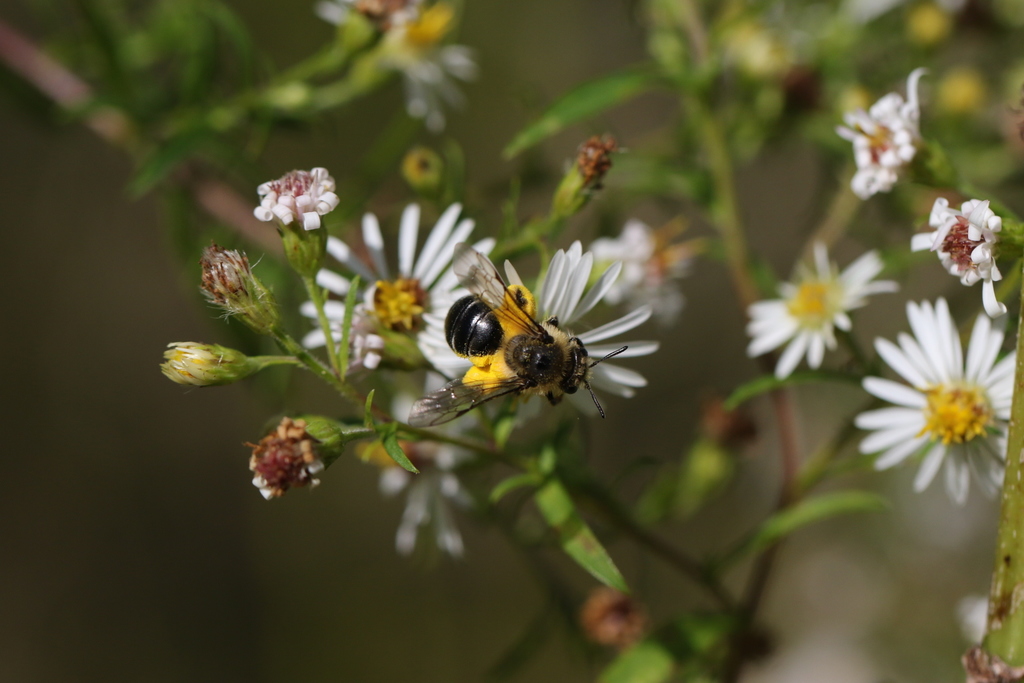
Northern Aster Miner (Andrena asteris) © Spencer Hardy
Goldenrods and Asters (Solidago and Symphyotrichum)
Both genera are fall blooming plants of old fields and among the most attractive pollinator plants for dozens of bees, wasps, and other insects. Some are available commercially and make attractive farmstead plantings. One of the easiest plants to incorporate into a pollinator support plan. Several species will readily colonize fields that are mowed on a two or three year cycle.
A project of the Vermont Pollinator Working Group, with funding from the Gund Institute’s Apis Fund. For more information about bees, email shardy@vtecosudies.org. For questions about pollinator support practices on farms, email Laura.O.Johnson@uvm.edu. All photos courtesy of Spencer Hardy unless otherwise noted.