Vermont Bids Farewell to the Pesticide Paraquat
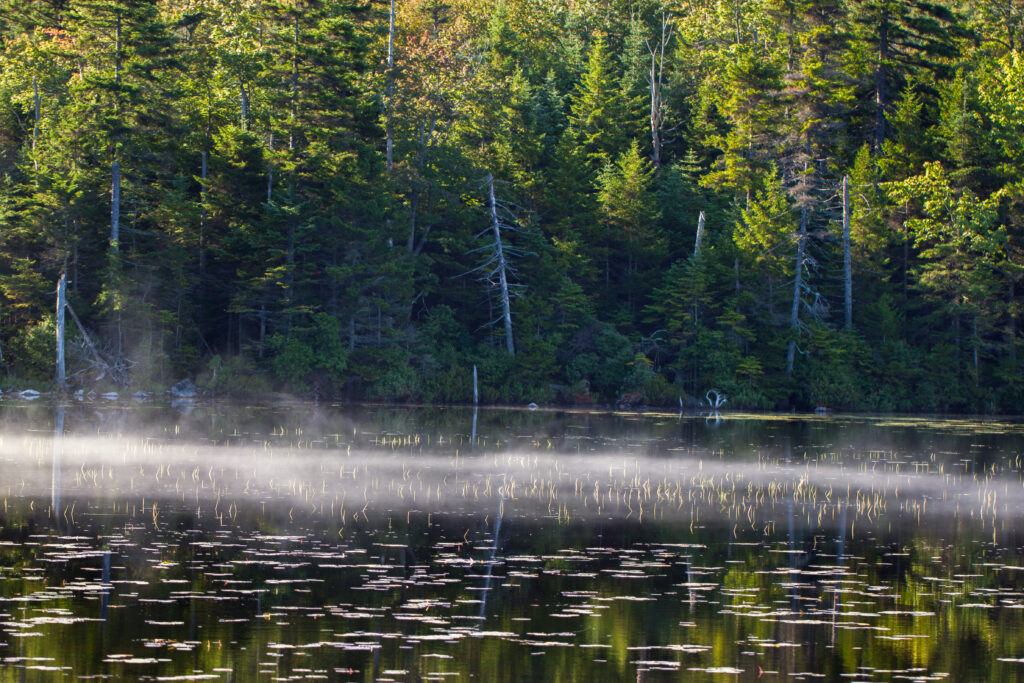
Aquatic ecosystem, and the plants that call them home, are particularly susceptible to paraquat. Photo by Kent McFarland
Support science-to-policy projects like this by making a donation to Vermont Center for Ecostudies! Learn about other ways to support VCE here.
During this year’s legislative session, Vermont lawmakers once again demonstrated why the state ranks among the nation’s leaders in crafting environmental policy: by banning the pesticide paraquat. The bill, signed into law by Gov. Phil Scott back in May, will take full effect in 2030, allowing the handful of Vermont farmers still using the chemical to adopt an alternative.
Despite being occasionally overshadowed by neonics, glyphosate, and dicamba, paraquat isn’t a newcomer to the pesticide market. It was first created as a chemical dye in the 1880s, making it one of the oldest pesticides in the world. For decades, it was also among the most widely used due to its ability to control a wide array of pest plant species. As a bonus, it binds quickly to soil, reducing the risk of humans and animals having immediate, harmful contact with the residue on the ground.
If that sounds almost too good to be true, that’s probably because it is. Concern has mounted for decades about paraquat’s impact on human health. Although the World Health Organization classifies it as a Class II (moderately toxic) pesticide, extensive evidence indicates that paraquat is extremely toxic to humans, with only one to two teaspoons of concentrate considered a fatal dose. Hundreds of thousands of accidental and intentional poisonings have been linked to paraquat since it first became commercially available in 1962.
Paraquat has made headlines in North America in recent years because of its suspected connection to Parkinson’s disease. Though experts and industry professionals still debate the validity of this link, many scientists suspect that paraquat’s ability to trigger oxidative stress—fatal damage to cells following ingestion or contact with skin—is what makes a person more likely to develop Parkinson’s. Currently, thousands of lawsuits seek compensation for paraquat-related Parkinson’s cases, creating enough pressure to cause a prominent global producer to shutter production.
Human health is currently the main concern about paraquat. However, the pesticide isn’t exclusively a human problem. Soil tends to lock the chemical in place, which sounds pretty great—until the soil erodes. In soil, paraquat doesn’t readily break down or lose its potency, and it enters the water cycle with surprising ease. So, as soil erodes into surface water, paraquat can still enter aquatic ecosystems, where it lingers longest in sediments along the bottom.
At this time, scientists are still trying to understand how paraquat persists in the environment and what the long-term effects might be. In terms of biodiversity, aquatic plants are most vulnerable to paraquat, while animal species tend to be more resistant. Some studies indicate that freshwater fish are the most susceptible wildlife group and birds the least. However, without more studies exploring the chronic exposure that many animals experience (as opposed to short-term, high doses), it’s difficult to fully understand how paraquat may affect animals in the wild.
So, why was Vermont the first state in the U.S. to ban paraquat? Surely, with its acute toxicity, suspected links to degenerative disease, and unknown environmental impacts, it should already be banned?
Rep. Esme Cole, who sponsored Vermont’s bill, put it best in an interview with VTDigger back in May: “We’re the first in the nation, but the last in the world.”
While not truly the last in the world, 74 countries already have paraquat bans or restrictions in place, largely due to concerns about poisoning. These include countries that contribute significantly to global agricultural production, such as Brazil, China, and Thailand. And there’s good news: In countries where paraquat is banned, poisonings and associated deaths have declined.
Although Vermont is the first state to ban paraquat, 12 other states have proposed legislation that would ban or restrict its use. There’s some hope on the national level, too. On June 18, Reps. Anna Paulina Luna and Chellie Pingree introduced the bipartisan Paraquat Prevention Act, which would ban the pesticide nationwide.
“Vermont just proved a paraquat ban is possible. Now Congress must make it national. This pesticide is already banned in more than 70 countries and linked to Parkinson’s disease, yet EPA has been reviewing its safety since 2022 without finishing the job,” said Congresswoman Pingree in a press release announcing the bill. “Our bill cancels paraquat’s registration outright. No more reviews, no more waiting, no more excuses.”
The bill is currently working its way through the U.S. House of Representatives. Though it still has a long road ahead, Vermonters can feel proud that our state is continuing to lead the way on environmental protections for wildlife and humans.
Support science-to-policy projects like this by making a donation to Vermont Center for Ecostudies! Learn about other ways to support VCE here.


This is long overdue and great news.