You Don’t Have to Travel to Make a Discovery
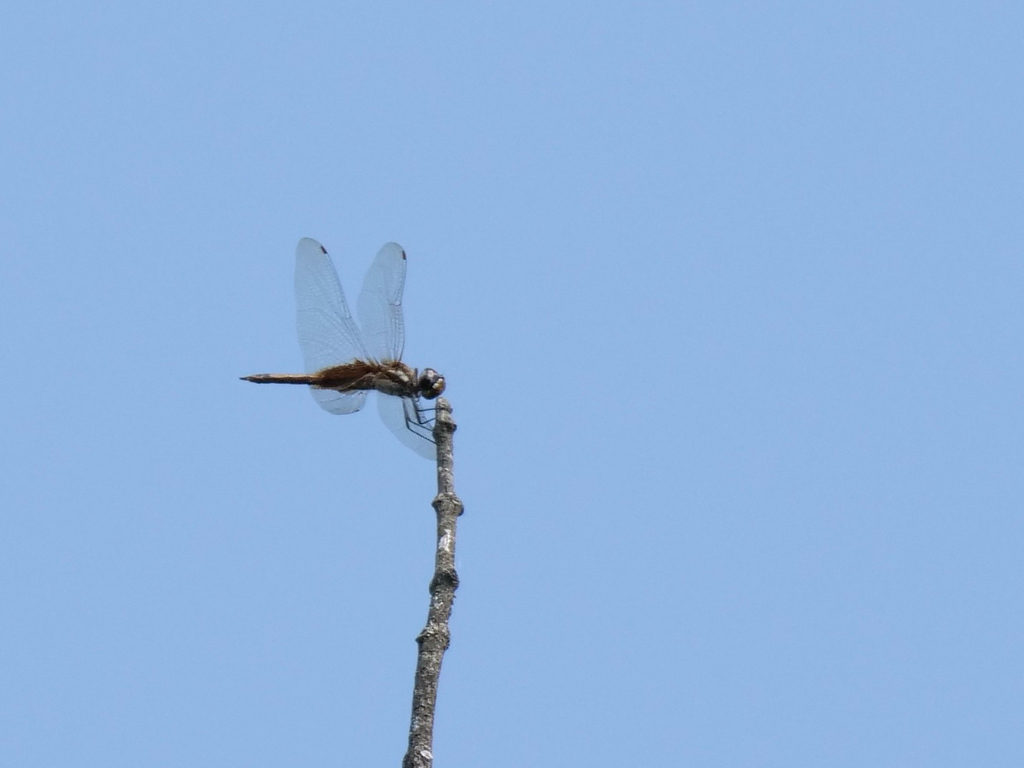
Ben Whittington captured this photo of Striped Saddlebags (Tramea darwini) while running errands, uploaded it to iNaturalist, and found a new dragonfly for Vermont. © Ben Whittington (via iNaturalist, licensed under CC-BY-NC
This story ran in Field Notes, the Vermont Center for Ecostudies’ twice-yearly print magazine. Subscribe to receive the next issue in your mailbox.
On a sunny August afternoon, amateur naturalist Ben Whittington swung by a marsh on his way to run errands. Noticing a dragonfly perched atop a tree, he snapped a few photos from a distance before it flew away. He uploaded them to iNaturalist Vermont and let the computer vision do its work: Striped Saddlebags (Tramea darwini).
This insect is normally found much farther south, but it wasn’t until the next day that the significance sank in; he couldn’t refute the ID using his field guide. He tagged two Vermont experts. What followed was a rapid-fire collaboration between Bryan Pfeiffer, Mike Blust, and, eventually, world authority Dennis Paulson, all poring over the images and arriving at the same conclusion: Vermont had a new dragonfly.
Turns out, we don’t have to travel to some remote, exotic, tropical forest to find something new. Discoveries are among us right here in Vermont.
We aren’t looking hard enough or at all for many groups, like spiders and other invertebrates. We don’t even know all the species that exist, let alone where they are or what they do. The more rare or threatened a species is, the harder we have to work to keep track of it. Species can vanish from our awareness long before they truly disappear. They’re not necessarily extinct—it’s just that no one is looking.
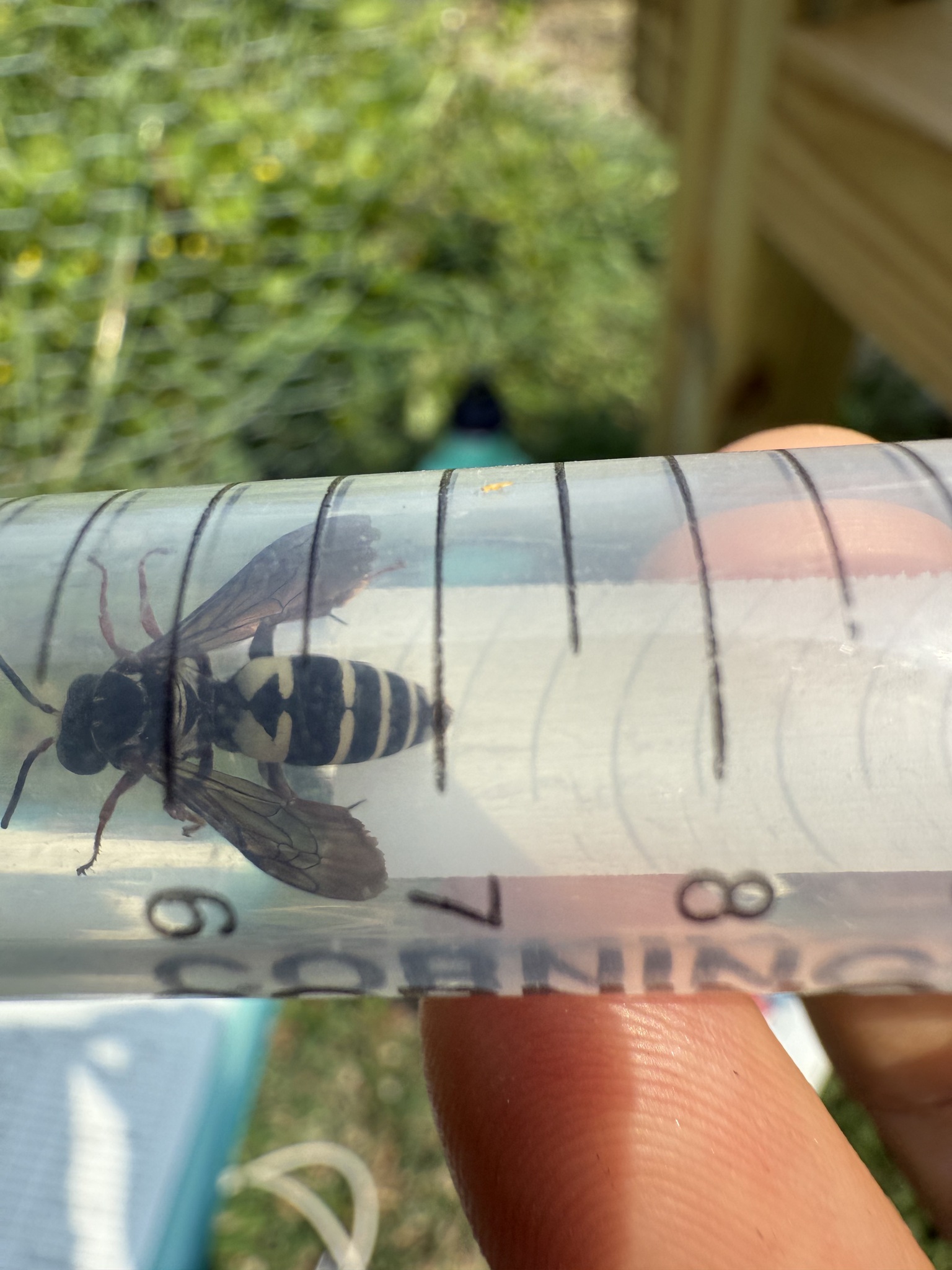
VCE biologist Amber Jones found this Lunate Longhorn-cuckoo Bee (Triepeolus lunatus), the first found in Vermont, during a timed pollinator survey last summer. © Amber Jones
Discovery comes in many forms. Maybe it’s a species completely new to science, never formally described or named. It might be a species known to science but newly found in Vermont. Or perhaps it’s a lost species, one that hasn’t been recorded for a decade or even a century.
This was one of the reasons we created the Vermont Atlas of Life: to allow everyone to join in discovery in their own communities, using crowd-sourced platforms like eBird Vermont, iNaturalist Vermont, and e-Butterfly alongside more scientifically rigorous atlasing and sampling methods.
Over the last 15 years, expert and novice observers alike have delivered.
With the help of thousands of community scientists, we’ve discovered hundreds of new species for Vermont and rediscovered many that were lost. Since the last official checklist of Vermont moth species was published in 1995, more than 370 species have been added, 26 in just the last two years, many of them found by backyard moth watchers posting photographs to iNaturalist. The Vermont Bee Survey recorded 70 new species and found 20 lost ones. In the last five years, observers have added nine new species of grasshoppers, crickets, and katydids.
The celebration of discovery goes on, and we hope you’ll join in. Read more about the most exciting discoveries at val.vtecostudies.org/latest-discoveries.
This story ran in Field Notes, the Vermont Center for Ecostudies’ twice-yearly print magazine. Subscribe to receive the next issue in your mailbox.