Don’t Buy Those Baby Bees
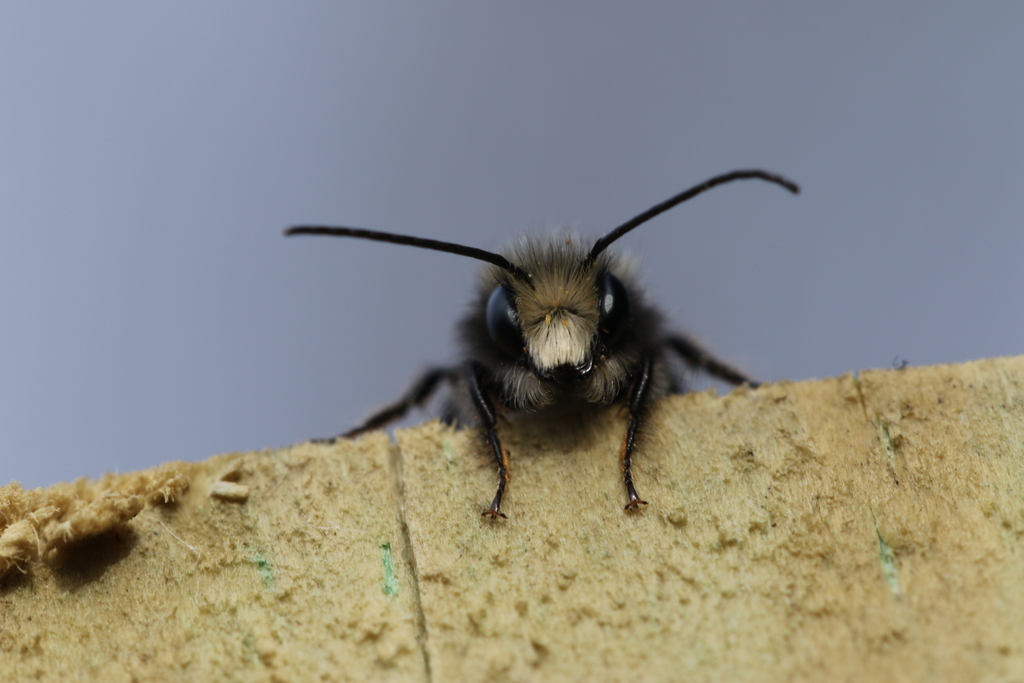
Blue Orchard Bee (Osmia lignaria), a commonly sold native mason bee. © Spencer Hardy
Support Spencer Hardy’s research and other projects like this by making a donation to Vermont Center for Ecostudies! Learn about other ways to support VCE here.
Imagine for a minute a parallel universe where the big national newspapers have stories about disappearing birds and the pending collapse of the human food system because of the loss of their agricultural services. The logical response would be to go online and buy a bunch of baby pigeons, starlings, and parakeets and release them in your backyard, right? Eh, maybe not.
And yet, that is precisely what is happening in the bee world. With a quick internet search, a few clicks, and $25.95 I can have my very own pile of baby bees that, according to the online retailers, “can double or triple your fruit and vegetable yields!” and offer “an impressive 99% pollination rate.”
As a bee biologist, seeing these advertisements can be infuriating. The Vermont Center for Ecostudies’ core mission is uniting people with science, and we love it when people want to help wildlife. We encourage people to replace lead fishing tackle to protect loons, turn off outdoor lights to help moths and migrating birds, and to buy bird-friendly coffee to support our local songbirds that winter in Central and South America. Most of all, we strive for scientifically defensible recommendations, regardless if it happens to be trending on the internet or not.
Sure, wild bees have certainly been shown to increase harvest yields (and quality). But a few bees from the internet aren’t likely to double anyone’s zucchini haul. In fact, there is a chance that box of bees could be a literal gut punch to the wild, native bees that already inhabit your neighborhood.
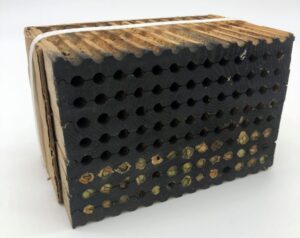
Alfalfa Leafcutter Bee (Megachile Rotundata) cocoons inside a nesting box, offered for shipping by a service that sells bees.
The Dirty Business of Wild Bee Trade
Take the cautionary tale of the Rusty-patched Bumble Bee. It and several closely related species were nearly driven to extinction in the late 1990s, in part because of a gut parasite that was spread through the sale of live bumble bee colonies.
In recent decades, the growing commercial bumble bee industry has made strides to prevent further harm, but is certainly not without some cause for concern. Raising bumble bees for shipment is fairly complicated and thus they are only available from a relatively small number of companies, and sold almost exclusively to commercial farms, especially those with extensive greenhouse production.
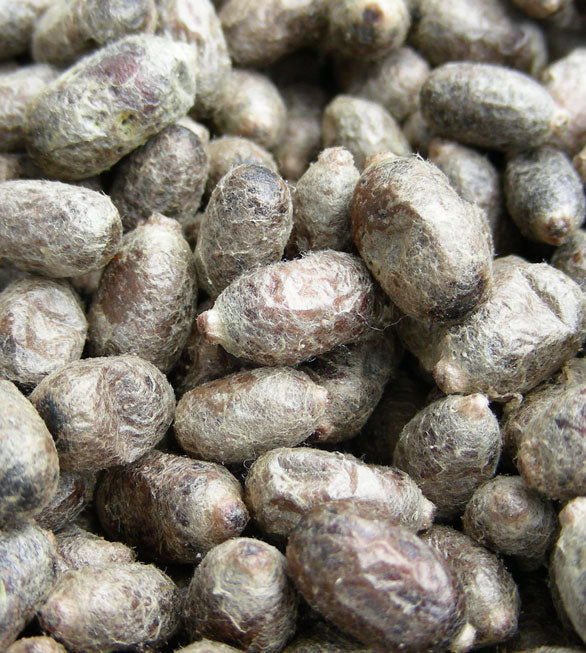
Loose cocoons sold by another online baby bee shop.
Mason bees, on the other hand, are easy to “harvest” from the wild and are sold by dozens of online companies and even some garden centers. And since the interstate movement of bees is explicitly not regulated by USDA, we are left with a patchwork of state level regulations, which can be confusing to interpret and even harder to enforce. In Vermont, for example, the Fish & Wildlife Department regulates the importation and possession of wild animals. But all invertebrates are exempt unless a species is explicitly restricted, and currently no bee species are on the restricted list. Connecticut law explicitly requires a permit for the importation or release of insects, but to the best of my knowledge, no one has applied for a permit despite many companies apparently offering to ship bees there.
Mail-order bees are sold as cocoons, either loose, or in the cavity nest where they were born. And it’s hard to guarantee what’s inside there. A remarkable number of arthropods and fungi love to eat baby bees (or feast on the pollen provisioned by the female bee) and could be unknowingly brought to your yard via USPS. Loose, cleaned cocoons are likely to contain fewer parasites and diseases than whole nests made of straws or bamboo, but even a small risk is hard to justify for a dubious, likely minimal reward.
Furthermore, several companies are selling non-native mason bees (mostly the Horn-faced Mason) and leafcutter bees (the Alfalfa Leafcutter) despite evidence showing these non-native bees are actively displacing our native mason bee species.
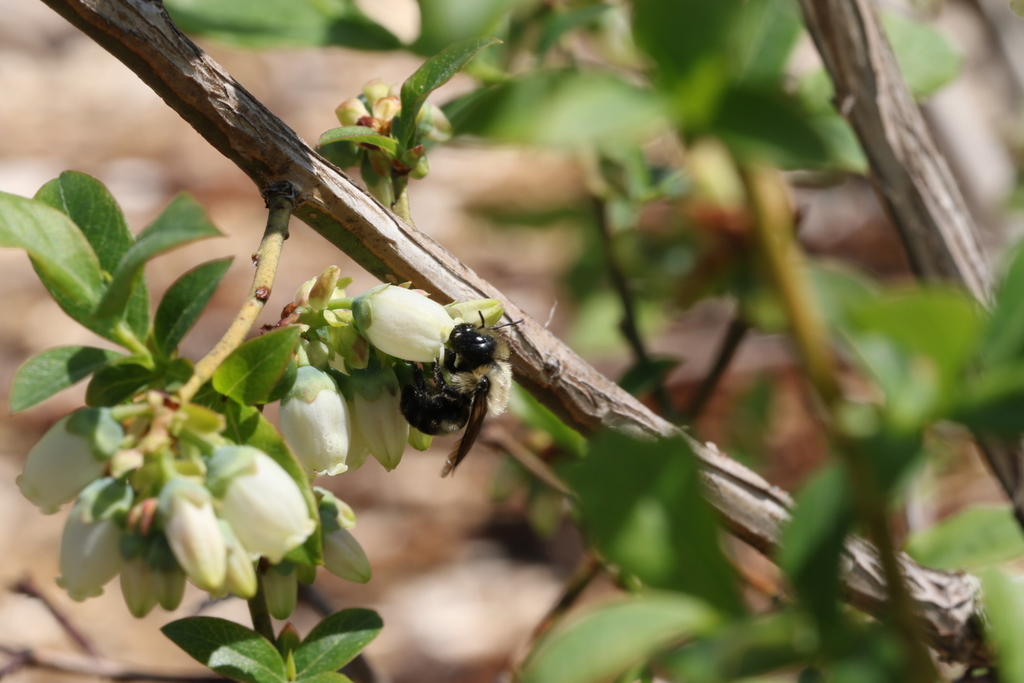
Bufflehead Mason Bee (Osmia bucephala)
The Better Way to Bring Bees to Your Property
So what are we to do if we want better pollination of our apple trees and cucumbers? First, rest assured that there are a lot of wild bees nearby—there are more than 350 species recorded in Vermont alone—and you don’t need to pay shipping. Every state in New England has at least 14 species of mason bees, including Osmia lignaria, the commonly sold native species.
If you don’t already have wild mason bees in your neighborhood, it shouldn’t take much to entice them to colonize it. As with other bees, their needs are simple: food and shelter. All bees eat pollen from flowers, and many of our native plants provide abundant food—and often nesting sites, too. The Vermont Center for Ecostudies has put together a collection of resources to get you started on a bee habitat garden of any size. As for nest sites, mason bees nest in a range of cavities, from beetle cavities to dead sunflower stalks to nail holes—even empty snail shells! (Bee hotels are another story, with more mixed results, which you can read about here.)
Live in the city and don’t have a garden? Bees will happily nest on elevated decks and even in potted plants. (Just make sure to choose systemic-pesticide-free, bee-safe plants from the nursery!)
So this spring, instead of buying bees from the internet, buy some native plants from a local nursery, and watch the bees fly in under their own wing power.
Support Spencer Hardy’s research and other projects like this by making a donation to Vermont Center for Ecostudies! Learn about other ways to support VCE here.


To All: Please consider writing to your VT State representatives and VT F&G to request rules, laws, and legislation explicitly requiring a permit for the importation or release of insects.
We have regulations against importing specific invasive plants. Perhaps this could be a model.
Great post Spencer. I shouldn’t be surprised to learn that you can purchase/import native bees to Vermont. Of course, I knew that was already the case for the importation of non-native bees like Western Honey Bee (Apis mellifera), but Osmia? I wonder how much our ‘instant gratification’ culture plays into these purchases (“I need bees right now–reducing the size of my lawn and planting/growing native plants to attract native bees takes too long!”). Or perhaps, these mail-order bees are purchased by well-meaning folks who are genuinely try to kick-start nature around their home. It immediately brings to mind the parallel with lady beetles–there are countless places online where one can purchase Asian Lady Beetles by the kilo.