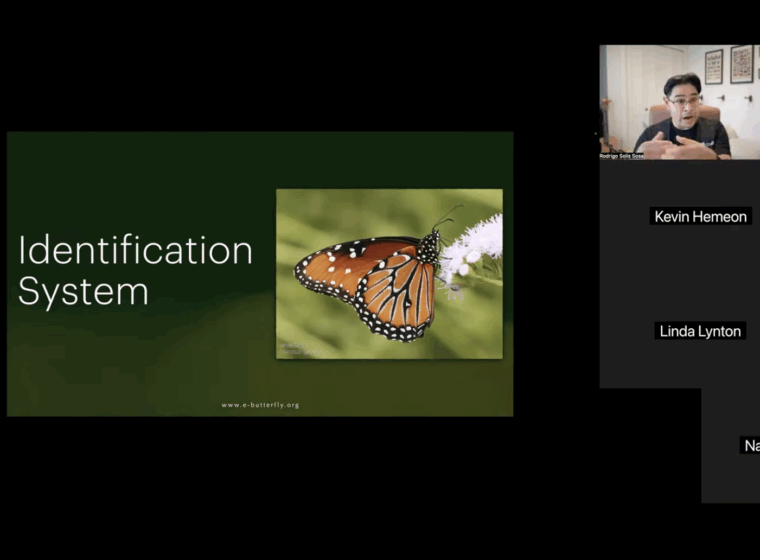
Everyone knows what a butterfly looks like! Whether you help with full surveys or just snap photos of those you happen to see, it’s easy to contribute to the Vermont Butterfly Atlas via eButterfly.
If you have any questions, contact our Community Science Coordinator Dana at dwilliams@vtecostudies.org.
Intro Level Butterflying
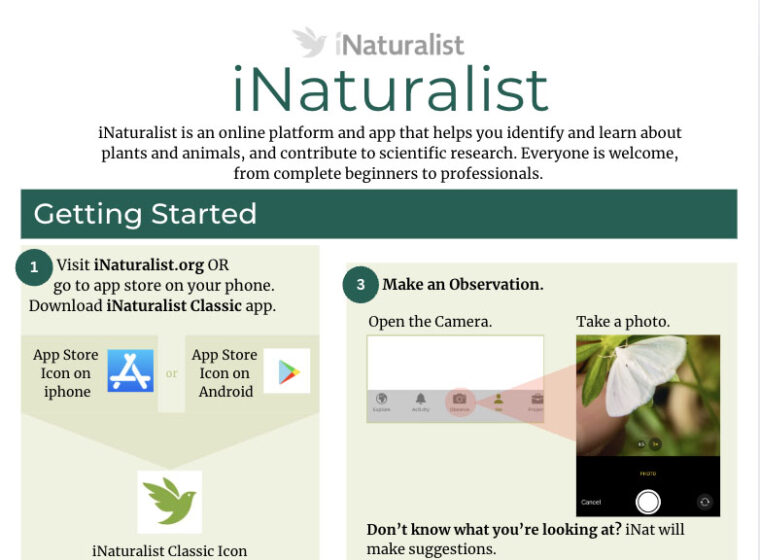
Snap a picture of a butterfly in Vermont and upload it to the iNaturalist phone app or platform. This is called an “incidental observation.” Do this anytime, anywhere: your garden, on a walk, or on your way to the store. Once someone confirms the ID, you’ve officially contributed to science! For more details on how to use iNaturalist, download our quickstart guides below.
Next Level Butterflying
If you’re ready to take your butterflying to the next level, here’s how:
1. Join eButterfly.
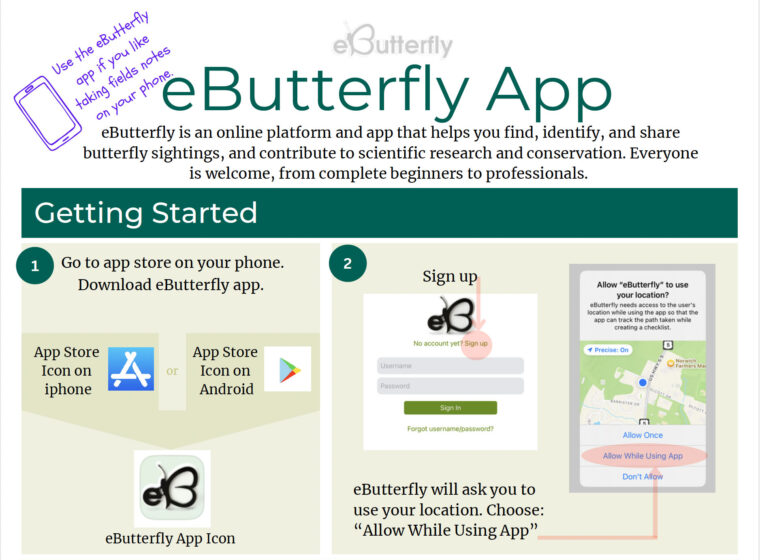
Download the app to your phone, or head to e-butterfly.org. Create an account.
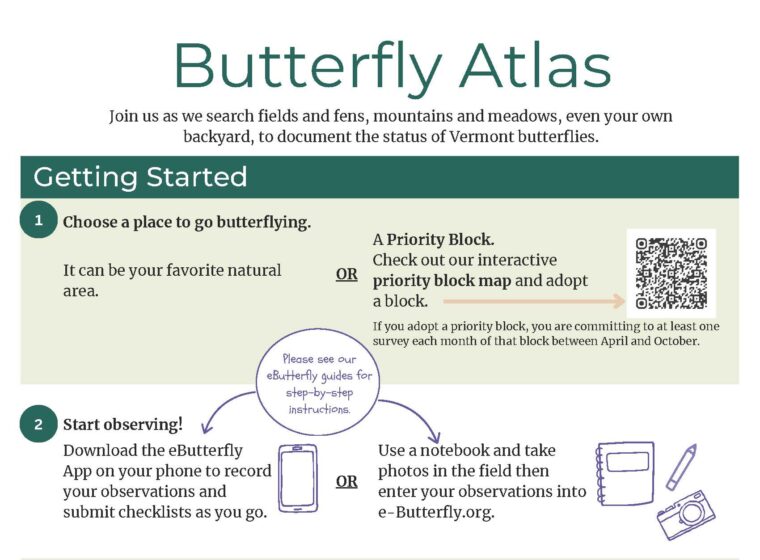
2. Do a practice survey in a nearby green space.
In the app, click Start Checklist and go searching for butterflies! (If you hate phone apps, you can always take out a trusty notebook to record your checklist on paper and enter them later via the eButterfly website.)
When you see a butterfly, take a quick picture with your phone’s photo app or your camera. Try to get closer and take more pictures from multiple angles with wings open and closed. A blurry photo is better than no photo!
3. Get help with your ID.
If you’re not sure what butterfly it is, eButterfly can help you ID it. Open the app, click the butterfly camera icon, choose the camera icon, select Allow Full Access, and choose the best photo to upload. Click Identify, choose the top row answer with the highest confidence percentage. Select Add to Checklist. (It’s okay if you got it wrong, experts will double-check your observations.)
4. Add your observations in the survey.
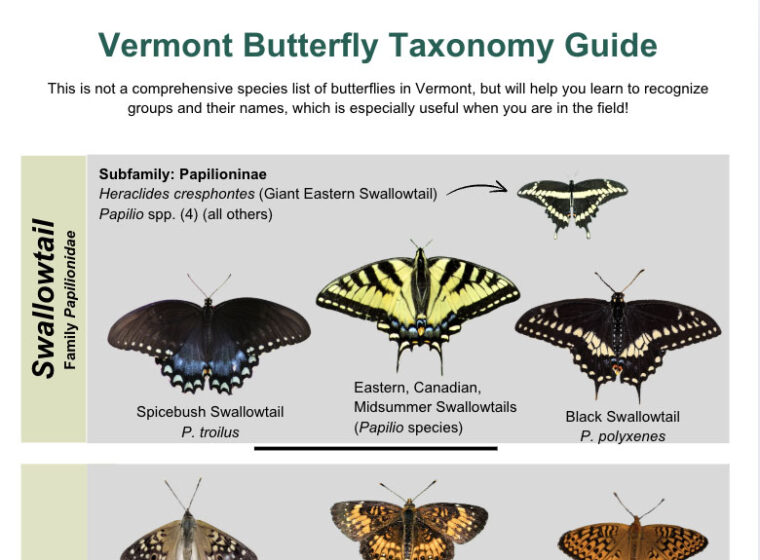
If you don’t get a picture, that’s okay! Type what you saw in the search bar. It can be anything from “butterfly”, to its family (swallowtail), genus (tiger swallowtails), or species (Canadian Tiger Swallowtail).
Click on the appropriate result, put in the number you saw under Count, select Public for Data Usage (Confidential or Sensitive is for endangered butterflies), add in Field Notes like what color it was and what plant it was on, upload any photos, and click Done.
When you’ve finished your survey, click Next.
Choose your type of Survey:
- Traveling: You’re walking or hiking.
- Area Survey: You’re looking around a certain area like a yard or meadow.
- Incidental: You’re not surveying, but see a butterfly when you’re outside.
Double-check Start Time and Date are correct. Enter your Party Size: How many people are in your group? Fill in how long you were surveying under Duration.
Answer the two final questions, and click Finish on the top right.
5. Go blockbusting.
Visit VCE’s Block Mapper to see an unadopted block and and stop by to survey. Explore a new hiking trail, a new conservation area, or add a survey stop to your regularly planned outdoor adventure. Check out Google Maps and AllTrails for local public-access lands inside your block, including town and state land, hiking trails, nature preserves, or old cemeteries. Knock on doors and make a new friend, or ask a farm if you can survey on their property. Then do it again for another block!
Top-Tier Butterflying for Science
We’ve got some geographic areas in Vermont that could really use some regular surveys! If you’re feeling comfortable with your butterflying technique, the next step is:
1. Adopt a priority block.
Visit VCE’s Block Mapper to see where we need surveys and adopt a priority block near you.
2. Go check it out.
Check out Google Maps and AllTrails for local public-access lands inside your block, including town and state land, hiking trails, nature preserves, or old cemeteries. Knock on doors and make a new friend, or ask a farm if you can survey on their property.
3. Get to know your block, and get to know it well.
Visit the block at least once a month for a survey between April and October. You’re aiming for 40 species total by the end of 2027.

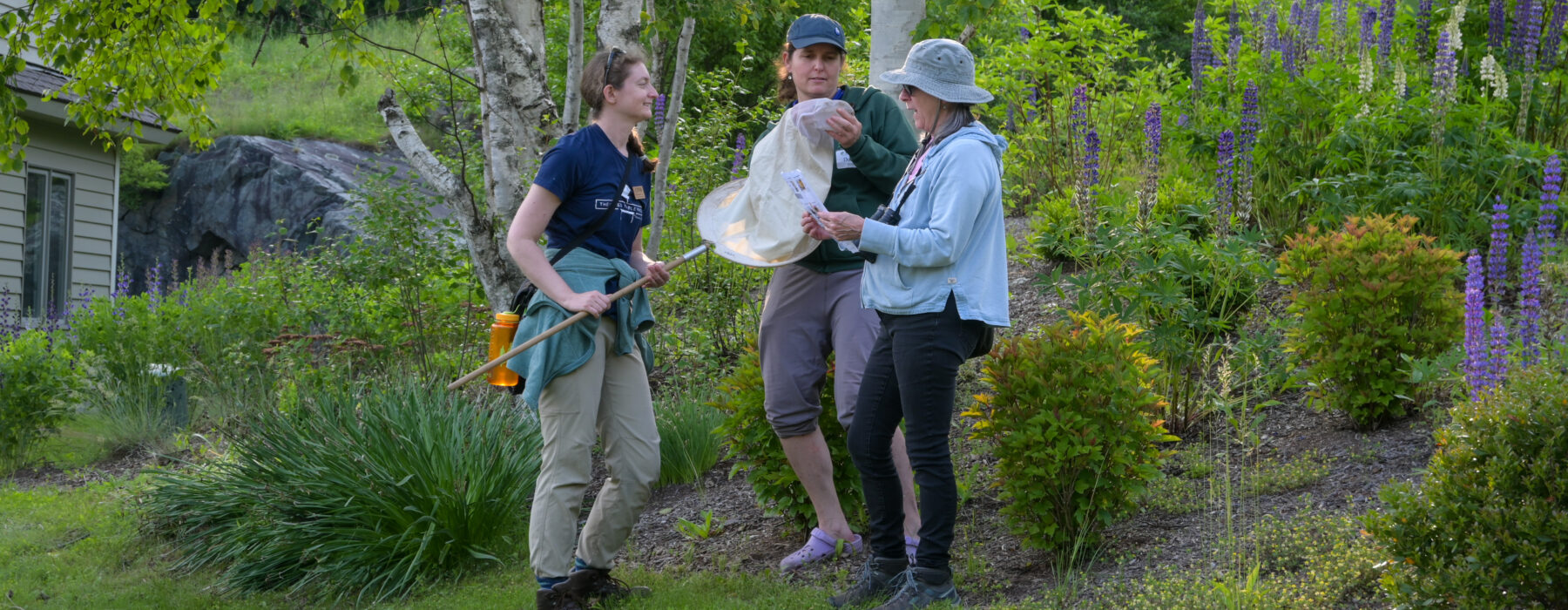
VCE’s leading butterflyer Terri Armata chases a butterfly © Alden Wicker