Building on Success: Opportunities to Enhance Conservation in Vermont

Sunrise from Mount Mansfield © Kent McFarland
Support science-to-policy projects like this by making a donation to Vermont Center for Ecostudies! Learn about other ways to support VCE here.
Through every phase of our science projects, the VCE team is constantly evaluating our approaches and challenging ourselves to do better—to upgrade our methods, deepen our questions, and strengthen our partnerships—so that we can contribute the best available science to conservation decisions.
It’s essential to apply the same curiosity in public policy, too. Only through asking what can be better and answering honestly can we tackle problems and help make Vermont a better place.
We honored Earth Day last month by celebrating some of the policies that make Vermont an environmental leader. Today, we are sharing ideas to further bolster policies that benefit wildlife, their habitats, and the people who live alongside them.
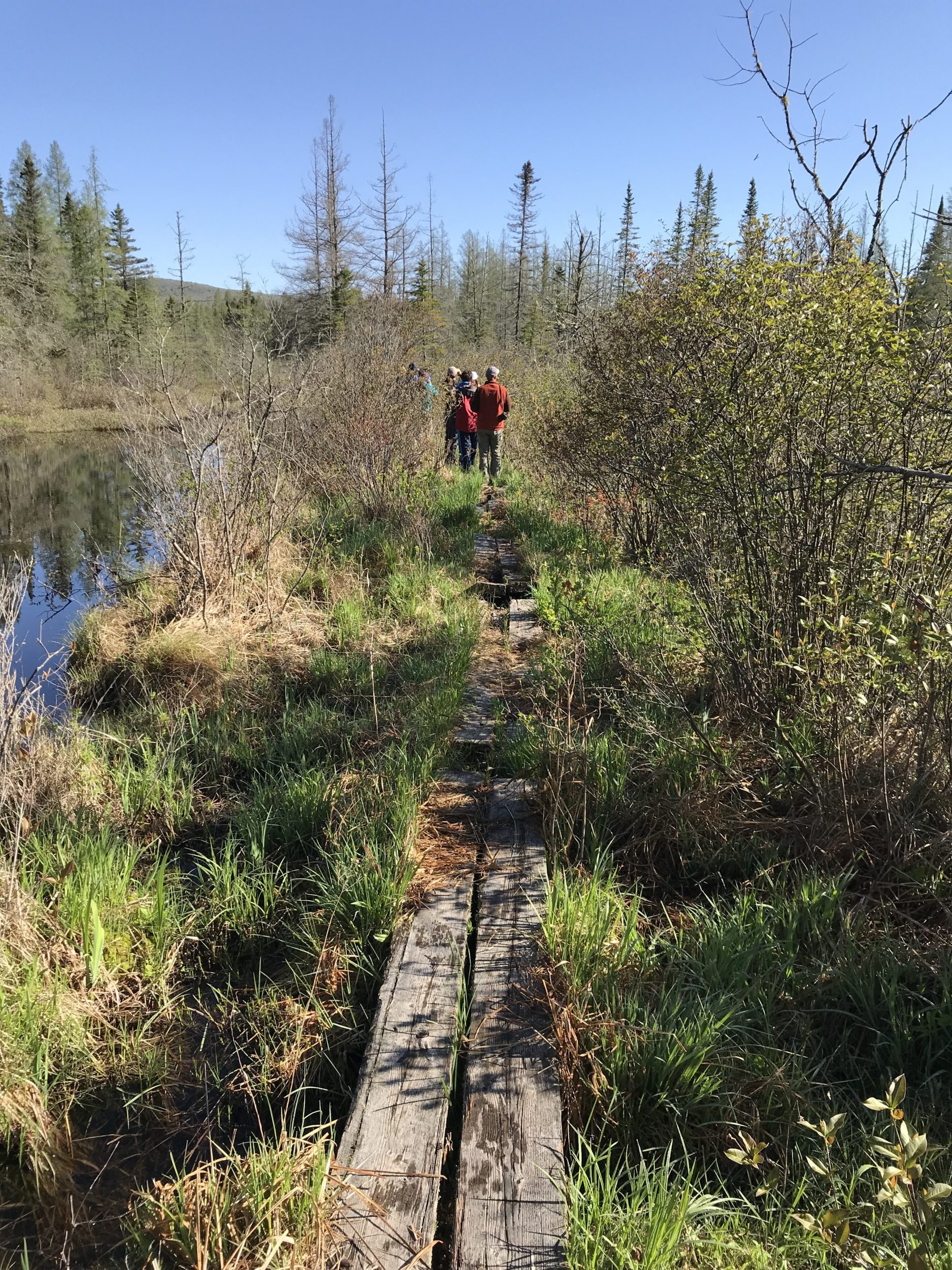
VCE staff venture through Victory Bog in Vermont’s Victory Basin Wildlife Management Area © VCE staff
Provide Strong Funding for State Conservation Programs
Over the past 16 months, the federal government has weakened foundational environmental laws, laid off hundreds of employees responsible for environmental protection, and threatened funding for key programs. The resulting lapses in legal protections and reduction in capacity have shifted responsibility from federal agencies to individual states.
Take the Endangered Species Act, for example. Reinterpreting parts of the law—such as the definition of “harm”—has placed pressure on states’ endangered species laws to provide protection in areas where the federal law no longer applies. Meanwhile, even for conservation and enforcement activities that the law still requires, mass layoffs and unpredictable funding have stunted the ability of federal agencies to carry them out.
Vermont’s conservation professionals aren’t responsible for filling every gap left by the federal government. In many cases, these professionals are reeling from regulatory changes that upend their work and federal funding cuts that sap resources. Nonetheless, it’s important to try to limit the damage these federal actions cause in any feasible way, given the time, money, and human resources available.
In the future, Vermont’s Governor and cabinet members should increase funding for natural resource management and conservation projects to keep pace with the rising complexity and costs of environmental stewardship. These projects include programs administered by the Vermont Fish and Wildlife Department; Department of Forests, Parks, and Recreation; Department of Agriculture, Food, and Markets; and Department of Transportation.
Of course, this isn’t so simple. With more recommended conservation actions than we could ever afford to take on, legislators may have to prioritize programs that most effectively and efficiently support statewide conservation goals. Agency staff and community partners should help guide these decisions, using tools such as the State Wildlife Action Plan and Vermont Conservation Design.
As conservation needs change with shifts in climate, land use, and state priorities, it’s easy to assume that a new program will offer the best solution. However, the simplest solution may be to provide additional funding for existing programs. For example, Vermont’s Current Use program allows landowners to designate parts of their enrolled land as Ecologically Significant Treatment Areas (ESTAs). ESTAs can benefit both vulnerable natural communities and private landowners by allowing landowners to receive a lower tax rate for managing these portions of their property for ecological value. By strengthening the capacity of teams responsible for overseeing ESTAs’ enrollment, the state could further enhance wildlife conservation on private lands.
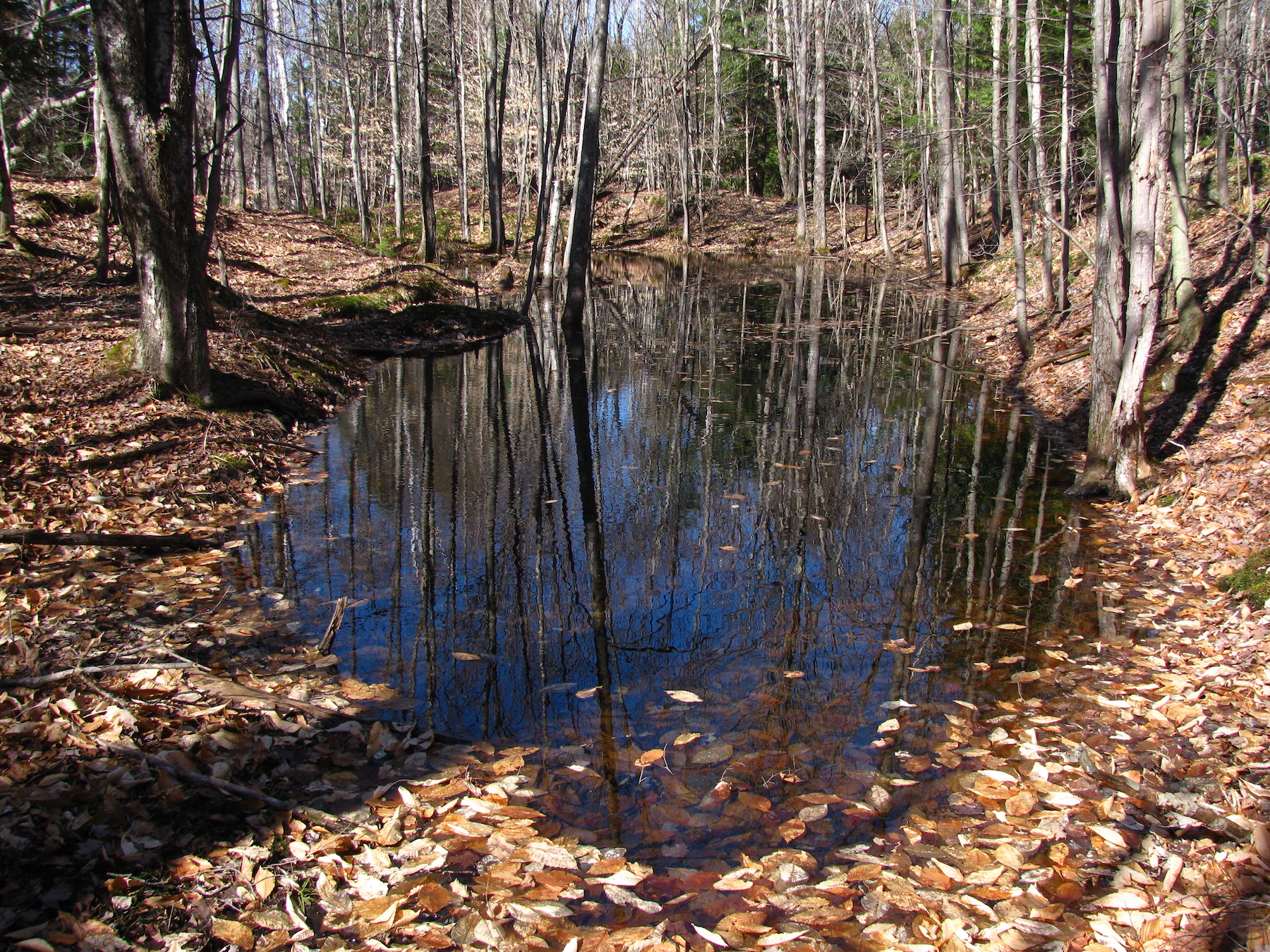
Although they may look like nothing more than a large puddle, vernal pools are essential habitats to many amphibian and invertebrate species. © Steve Faccio
Strengthen Protections for Vernal Pools
As mentioned last month, Vermont’s Wetlands Rules are worth celebrating. However, there’s always room for improvement, especially when it comes to vernal pools. These small, temporary wetlands provide critical habitat and resources for countless cherished woodland species—when they vanish, so do the frogs, salamanders, and invertebrates that rely on them.
Currently, vernal pools are treated as Class II wetlands, meaning certain activities within the pool or the 50-foot buffer zone around it require permitting. Under a rule proposed by the Agency of Natural Resources, this buffer zone may shrink to 25 feet, and the Wetland Rules may apply only to vernal pools included on the Significant Wetlands Inventory Map.
Although there is no scientific consensus on the best minimum buffer size for a vernal pool, the scientists agree that 50 feet is not enough. Amphibians that breed in these pools spend more than 95% of their life in the 400-foot upland “lifezone” surrounding the vernal pool basin. Even when the vernal pool basin is left intact, development of its surrounding habitat can cause local frog, salamander, and other vernal pool populations to disappear. Ultimately, leaving a larger buffer zone reduces the risk of cutting off vernal pools from the species that rely on them.
Regardless of whether the rule is adopted, adding specific regulations for vernal pools will help them stay healthy and able to support vibrant wildlife communities. Massachusetts requires a buffer zone of 100 feet around many vernal pools. Meanwhile, Maine passed a new law in 2025 that strengthens protections for “Significant Vernal Pools,” which are pools that either support key rare species or provide habitat for many recorded vernal pool specialists. Maine’s new law also creates a 100-foot “no disturbance” buffer around pools to minimize the likelihood that a pool could become fully encircled by development. Vermont should consider similar changes to make sure our state’s pools remain viable habitats.
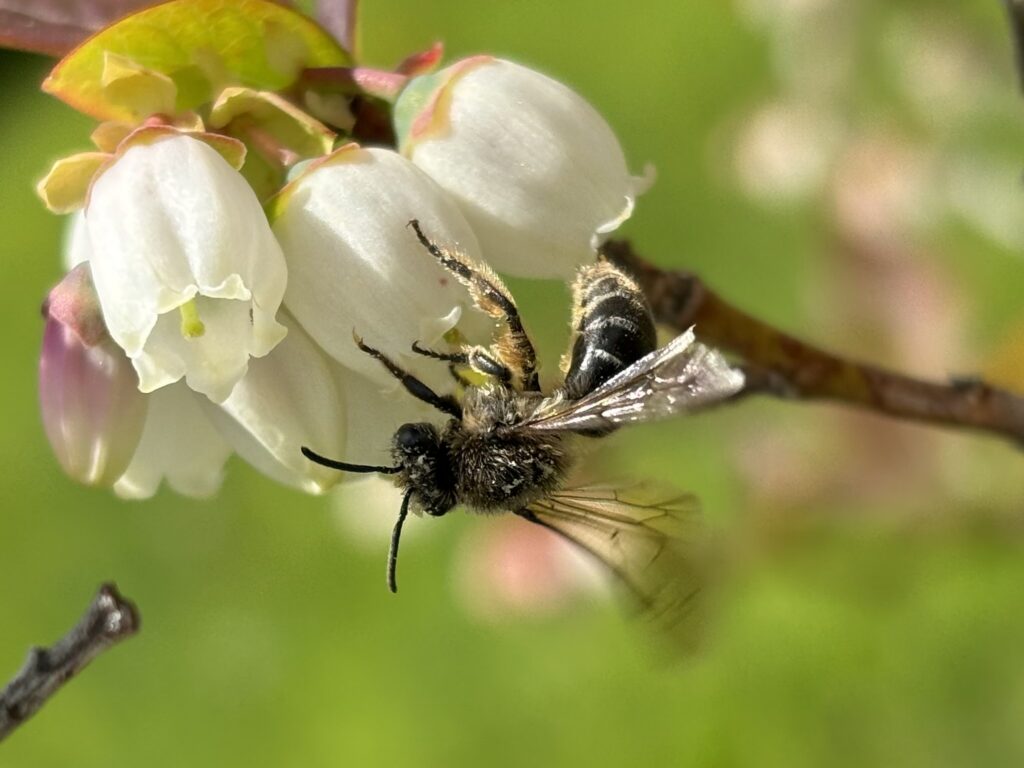
A cellophane bee visits a blueberry flower © Spencer Hardy
Continue Protecting Vermont’s Pollinators
Vermonters are pretty passionate about their pollinators. From legal frameworks that direct beneficial activities statewide (such as Act 182, Vermont’s neonicotinoid-coated seed restriction law) to community programs that promote stewardship, education, and stakeholder participation, there are abundant options for policymakers and community members alike to support pollinators.
One way to enhance these existing opportunities is to promote the use of native plants in green spaces. Currently, Vermont’s plant-related laws appear to focus primarily on limiting the spread of invasive species and protecting rare plants—both crucial to supporting pollinators. However, North Carolina offers a few interesting examples of legislation promoting native plants. In recent years, the state passed several laws that require the use of native plants in landscaping projects along highways, in state parks, and at historic sites. Vermont legislators could consider pursuing similar legislation that encourages the use of native plants on state-owned lands.
Pollinators aren’t the only invertebrates that need conservation support. Vermont’s draft State Wildlife Action Plan highlights a need to better assess the state’s arthropods (such as other insects and spiders) and molluscs (mussels and clams). Policymakers and wildlife professionals can address this need by directing funding and pursuing conservation plans that prioritize expanding knowledge of Vermont’s invertebrate species and the threats they face.
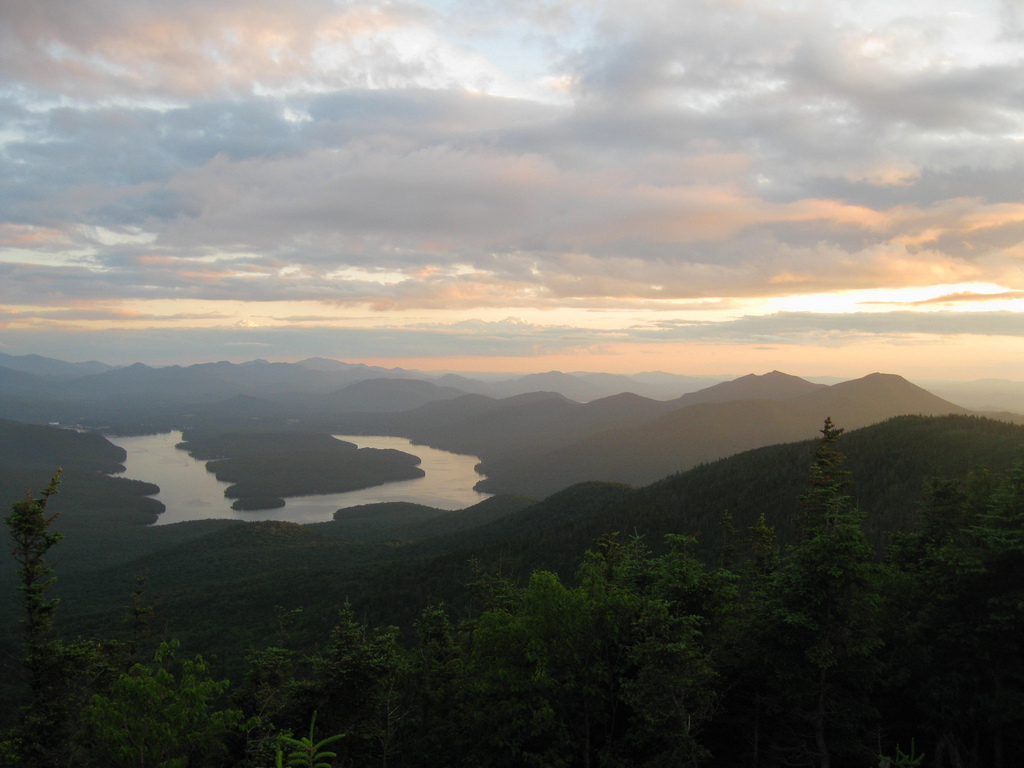
View from Whiteface Mountain in the Adirondacks © VCE archive
Identify Additional Opportunities to Collaborate with Our Neighbors
Vermont and its northeastern neighbors form a swath of habitat vital to many species that call this region home. By continuing to collaborate with the other northeastern states and Quebec, Vermont can implement initiatives that will benefit both wildlife and human communities throughout the region. Act 182 provides an excellent example of how, when we coordinate our efforts with neighboring states (in this case, following New York’s lead), the state can achieve policy goals that create regulatory certainty for businesses and communities that cross state lines. As the state continues to explore options, such as the “30×30 bill,” Act 59, to reduce fragmentation and promote the natural movement of species across our landscape, we may have a greater impact when coordinating with other states in our region.
These opportunities for improvement in no way invalidate all of the state’s successes. This reminder is important during a time when environmental protection feels particularly fragile. Instead, these opportunities can serve as guideposts for those passionate about Vermont’s natural world, and keep Vermont as an inspirational leader to other states and their citizens and leaders.
Support science-to-policy projects like this by making a donation to Vermont Center for Ecostudies! Learn about other ways to support VCE here.