This Earth Day, Celebrate Everything Vermont Is Doing Right
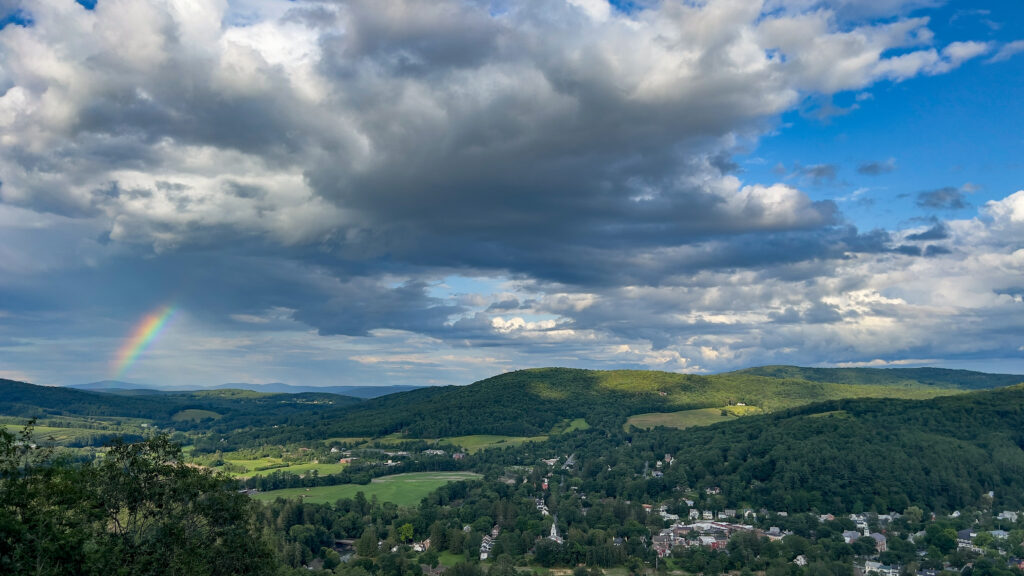
© Kent McFarland
The first Earth Day was as much a call to action as it was a celebration.
The 1962 book Silent Spring by Rachel Carson had drawn attention to the pesticides polluting the land, water, and air. In 1969, Cleveland’s Cuyahoga River—not for the first time—burst into flames. The Bald Eagle had all but disappeared from the landscape as their DDT-weakened egg shells shattered. By 1970, panic about the state of the natural world and its consequences for human health was blooming within U.S. communities.
Inspired by the student anti-war movement, Earth Day drew over 20 million people (at the time, 10% of the country’s population) to demonstrations. The event united groups from across the environmental movement and sparked bipartisan support.
The months and years following that first Earth Day brought the formation of the Environmental Protection Agency and several laws, such as the National Environmental Policy Act and the Clean Air Act, that are now foundational to protecting the natural world and the species that call it home. More importantly for the average American, these laws gave us clear air and water and made Bald Eagles a common sight again.
Unfortunately, many of these laws have faced challenges in recent years, shifting greater responsibility for protecting wildlife and natural resources to individual states. But here in Vermont, we have it pretty good—the Green Mountain State consistently ranks among the top states with robust environmental policies. As federal laws have eroded, many of the initiatives listed below have provided (and will continue to provide) regulatory certainty for Vermonters by backstopping the loss of federal protections, such as the rollback of endangered species protections and changes to how the Clean Water Act is applied to wetlands.
So, this Earth Day, let’s celebrate some of the policies and programs that make Vermont an environmental leader—and a beautiful place to live.
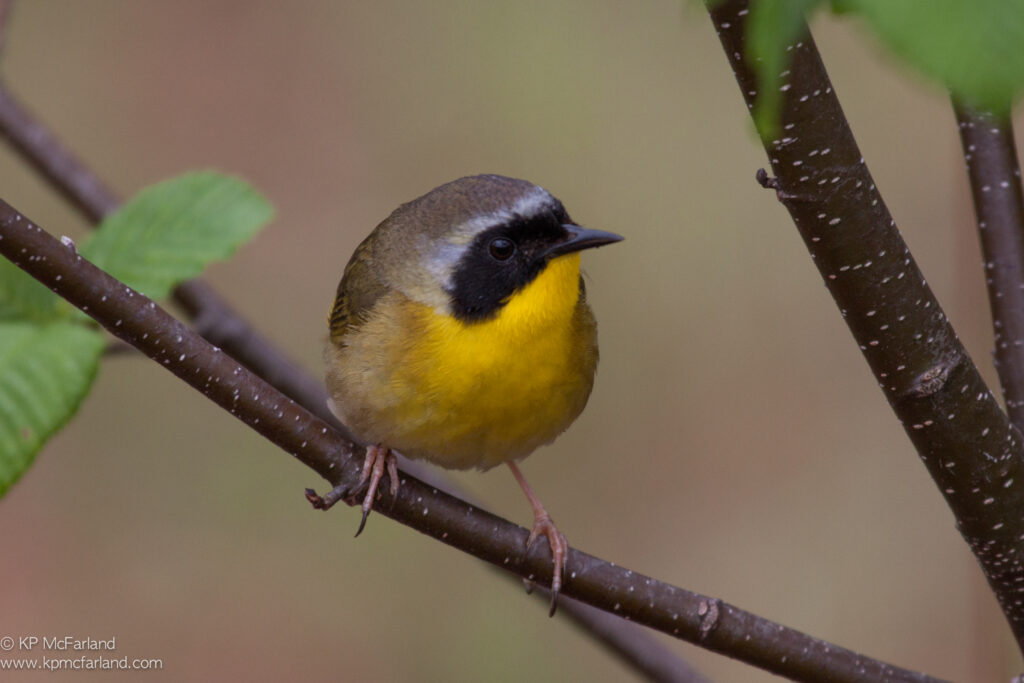
Act 172 protects bird species, like this Common Yellowthroat. © Kent McFarland
Act 172 – Restoring protections removed from the Migratory Bird Treaty Act
It’s easy to take Vermont’s bird species diversity for granted, but our small state—particularly the Atlantic Northern Forest—boasts some of the highest breeding bird diversity in the U.S.
A lot of high-quality habitat isn’t the only reason why Vermont continues to be a great place for birds. Since 2020, Vermont law has filled a critical gap left by recent changes to the U.S. Migratory Bird Treaty Act. Vermont’s Act 172 penalizes the accidental but foreseeable death of or harm to migratory birds. (In contrast, the federal law only prohibits intentional harm, thanks to Trump administration reinterpretations.) This accidental harm, legally known as “incidental takes,” refers to bird deaths caused by everything from open waste pits and oil spills to pesticide contamination and mining.
Although penalizing incidental takes may seem logical, ambiguity in federal law has sparked debate over whether accidental harm is prohibited. Clarifying this point in state law was a major milestone, protecting some of the state’s most vulnerable bird species and encouraging industry and businesses to adopt bird-safe practices such as covering waste pits and siting renewable energy projects in areas less likely to impact birds.
Where VCE research fits in: Several VCE research programs monitor how migratory bird populations are faring in Vermont. These projects include Mountain Birdwatch and the Forest Bird Monitoring Program.
10 App. V.S.A. § 10 – Vermont Threatened and Endangered Species Rule
Vermont has its own endangered species law, which has supported the recovery of iconic species like the Common Loon. Our state law ensures that species at risk within Vermont’s borders receive essential protections that presidential administrations have removed from federal jurisdiction. For example, Vermont’s state law explicitly includes habitat modification in the definition of harm. (You can read more about this issue in a previous blog post.) That’s a no-brainer, given that habitat destruction and degradation is one of the leading causes of biodiversity decline.
How VCE research fits in: Over the years, VCE data have helped state officials decide when to list and delist several species, including the Eastern Meadowlark (currently listed) and Common Loon (delisted in 2005).

The Pollinator Protection Act will help reduce the exposure of pollinators, like this Ground-cherry Fairy Bee, to neonicotinoids. © Spencer Hardy
Act 182 – Pollinator Protection Act
Pollinators, such as bees and butterflies, are an evergreen favorite among nature enthusiasts, and for good reason. Not only are many delightful to look at, but they also make much of our modern world possible, thanks to their crucial role in plant growth. Most Vermonters know that healthy pollinator populations are essential for productive farms.
Enacted in 2024, the Pollinator Protection Act made Vermont the second state (behind New York) to significantly restrict the sale of neonicotinoid-coated seeds. Pollinators may not be neonics’ intended targets; however, these neurotoxic pesticides indiscriminately affect all insects that feed on treated plant matter and can cause a range of life-altering symptoms that can result in death. On a broader scale, studies have shown declines in bee and other pollinator populations in regions with extensive use of neonicotinoids.
Though Vermont’s law still has several steps to pass through before implementation in 2028, the treated seed restriction offers a positive sign for protecting the long-term health of the state’s pollinators.
How VCE research fits in: VCE’s State of Vermont Wild Bees Report was cited under the “Findings” section of this law and contributed to state officials’ understanding and appreciation of Vermont’s bee populations.
Act 59 – Community Resilience and Biodiversity Protection Act
The global Thirty-by-thirty (30 x 30) movement proposes conserving 30% of Earth’s land and water by 2030 to slow biodiversity loss and enhance climate change mitigation. A majority of the international community adopted 30 x 30 at the 15th Conference of Parties to the UN Convention on Biological Diversity (COP15) in 2022; however, the U.S. is one of a handful of countries that don’t participate in the Convention on Biological Diversity and therefore has not signed on to the framework.
In the absence of federal leadership, Vermont is one of at least 10 states that have adopted their own 30 x 30 conservation goals. Our Act 59 directs the state to conserve 30% of land for wildlife by 2030 and 50% by 2050, with Vermont Conservation Design serving as a blueprint for conservation priorities.
According to the Vermont Conservation Plan Framework Report draft, 27% (or 1.6 million acres) is already permanently conserved through a combination of public ownership and easements on private lands. Although Vermont still has a ways to go before reaching its 2050 goal, our strong history of land stewardship and conservation suggests what can be accomplished through hard work and community support.
How VCE research fits in: VCE’s Vermont Atlas of Life monitors biodiversity across the state, helping to identify new species and explore trends in wildlife populations. Using data gathered by VAL, VCE scientists are collaborating with the Vermont Fish & Wildlife Department to explore how well Vermont Conservation Design supports biodiversity at the species and community levels now and into the future.
Act 250 has helped preserve much of Vermont’s natural landscape. © Kent McFarland
Act 250 – State Land Use and Development Plans
Driving around Vermont, you are witnessing Act 250 in action, perhaps without realizing it. Thanks to this key land use law, Vermont has maintained much of its natural landscape and reduced the incursion of large developments and subdivisions that characterize many of our neighboring states.
The act is administered and enforced by the Land Use Review Board, supported by nine District Environmental Commissions that review permit applications for proposed projects. During the review process, the Commissions examine a project’s effects on many factors that influence the health of Vermont’s natural world, including wildlife habitat, agricultural lands, and forest soils.
However, as the demand for housing has increased in Vermont, advocates, professionals, and community members have pushed for changes in Act 250. In 2024, the state legislature passed Act 181 to update the planning framework for Vermont’s land use, integrate smart-growth principles, and create more housing options while protecting the environment.
Using a tiered approach, the act aims to reduce barriers for projects that meet urgent community needs in already developed areas, while simultaneously reducing development impacts on critical natural resources and working forests and farmlands. Although Act 181 is still in the planning, implementation, and refinement phase, if executed successfully, it will help address the state’s housing crisis while maintaining the forests and farmlands that draw people to our state.
How VCE research fits in: Due to their expertise in wildlife populations and the effects of fragmentation on natural communities, VCE staff participate in several working groups related to Act 181 implementation. VCE research programs also make much of their data available for land-use managers to make decisions that account for species’ needs.
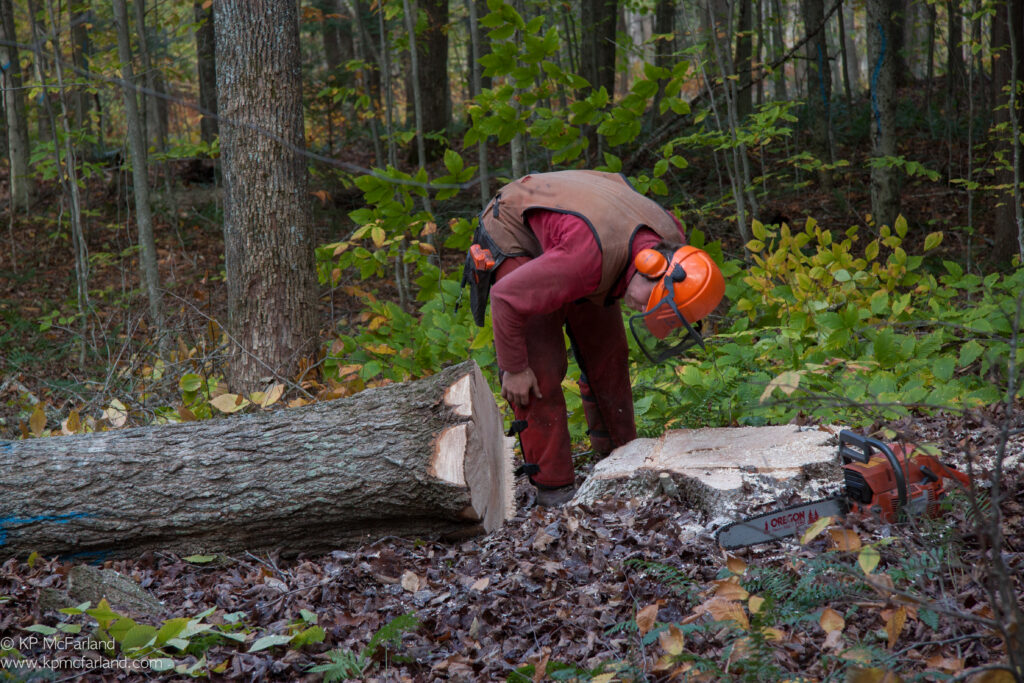
Vermont’s Use Value Appraisal Program incentivizes landowners to keep portions of their property in active agricultural or forestry management. © Kent McFarland
Vermont Use Value Appraisal Program
Conservation takes everyone. Vermont’s Use Value Appraisal Program allows landowners to play a critical role in wildlife and habitat conservation by incentivizing the management of undeveloped working lands.
The program taxes landowners at a lower rate than their land’s fair market value, as long as they keep it under active agricultural or forestry management. Through this program, broad swaths of forest and farmland have remained free from residential or commercial development and provided habitat for species that thrive in managed landscapes. Currently, over 2.5 million acres of land are enrolled, including sustainably managed forests, sugarbushes, and farms, accounting for one-third of Vermont’s land area.
How VCE research fits in: Several VCE programs, including our New England Grasslands Ambassador Program and Native Plant Ecotype Experiment, aim to help landowners and managers better manage their properties for wildlife. Data from our Vermont Atlas of Life program is also available online for those who wish to learn more about the species in their area.
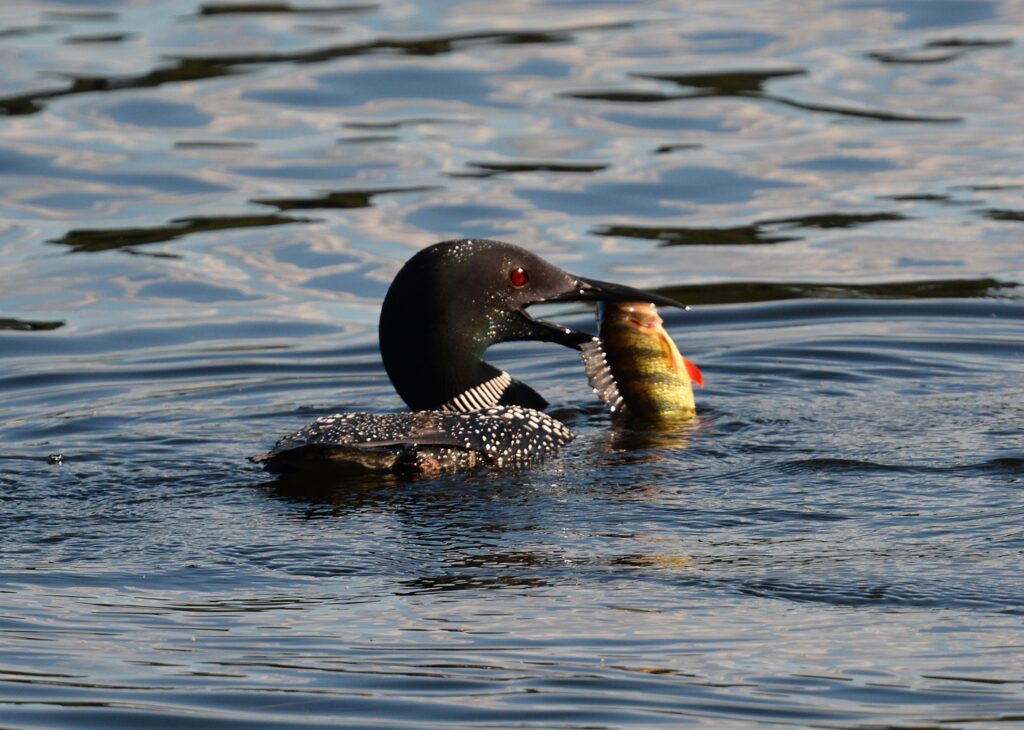
Maintaining healthy shorelines helps to support the wildlife that call Vermont’s lakes and ponds home © Anastasia Zinkerman
Vermont Shoreland Protection Act
Building a house along a stunning Vermont lake or pond is a dream for many nature lovers. However, lakeside development is often at odds with protecting the health of aquatic species and their habitats. For example, Common Loons nest just above the waterline, making them vulnerable to shoreline changes. Structures and activities that increase erosion or stormwater runoff also affect their ability to find and catch food.
The Vermont Shoreland Protection Act helps balance development with healthy lakes by regulating projects within 250 feet of shorelines of water bodies that are 10 acres or larger. By maintaining natural vegetation on steep slopes, limiting hard surfaces, and requiring setbacks for new dwellings, the law minimizes erosion and runoff that can pollute aquatic habitats and make them unfit for wildlife.
Ultimately, by regulating development activities along Vermont’s shorelines, this law ensures that both the state’s human and wildlife residents can enjoy its lakes and ponds.
How VCE research fits in: VCE’s Vermont Loon Conservation Project monitors the loons on the state’s lakes and ponds and frequently provides resources to help waterfront communities co-exist with their loons. These resources include guidance for lakeshore landowners on how to best support the loon habitat adjacent to their properties.
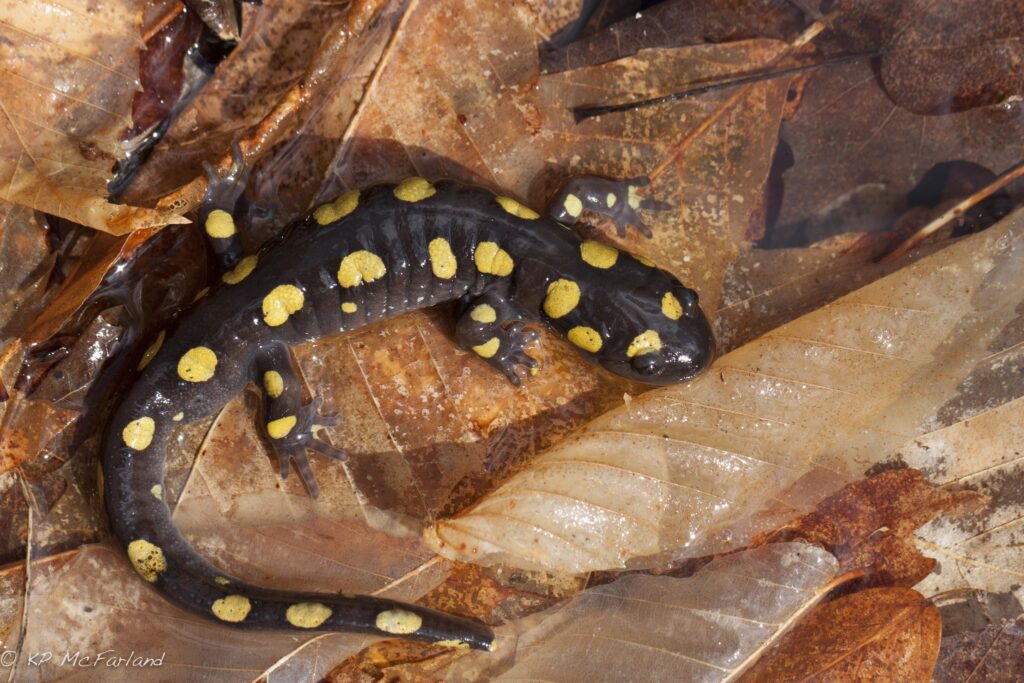
Safeguarding vernal pools helps protect species whose lifecycle depends on them, like this Spotted Salamander. © Kent McFarland
Wetland Rules
Many Vermonters know the joy of hearing the spring’s first Wood Frogs quack from a vernal pool. Some may be lucky enough to stumble upon one of these watery nurseries while out for a walk. Though they may seem nothing like reedy marshes or sphagnum-filled bogs, vernal pools are also a type of wetland that are protected under Vermont’s Wetland Rules. The Wetland Rules apply to “significant wetlands” that meet certain criteria for ecological value and aim for “no net loss of wetlands and their functions.” Those functions include providing habitat to wildlife and regulating the water table.
These rules have become especially important in recent years due to inconsistencies in how the federal Clean Water Act is applied to wetlands. As of 2025, only wetlands inseparable from a navigable body of water receive Clean Water Act protections, leaving countless acres open to development and dredging with minimal federal oversight.
As one of the world’s fastest declining habitats, wetlands require strong protection. Vermont’s Wetland Rules are particularly beneficial to vernal pools because of how easily they can be overlooked during routine surveys, and therefore are more likely to be left off of maps. Under the Wetland Rules, unmapped wetlands can still receive the same protections as mapped ones, meaning vernal pools are protected regardless of whether they are mapped.
How VCE research fits in: VCE’s Vernal Pool Atlas and Vernal Pool Monitoring Program help identify and monitor vernal pools across the state.
This list isn’t exhaustive, and Vermont certainly isn’t perfect! However, it’s clear that Vermonters are committed to keeping our mountainous state green and filled with the sights and sounds of birds, butterflies, frogs, and so much more. Even when everything at the federal level seems so uncertain, we can celebrate our success and hopefully inspire other communities of all sizes to tackle their own challenges to protect their unique wildlife and landscapes into the future.