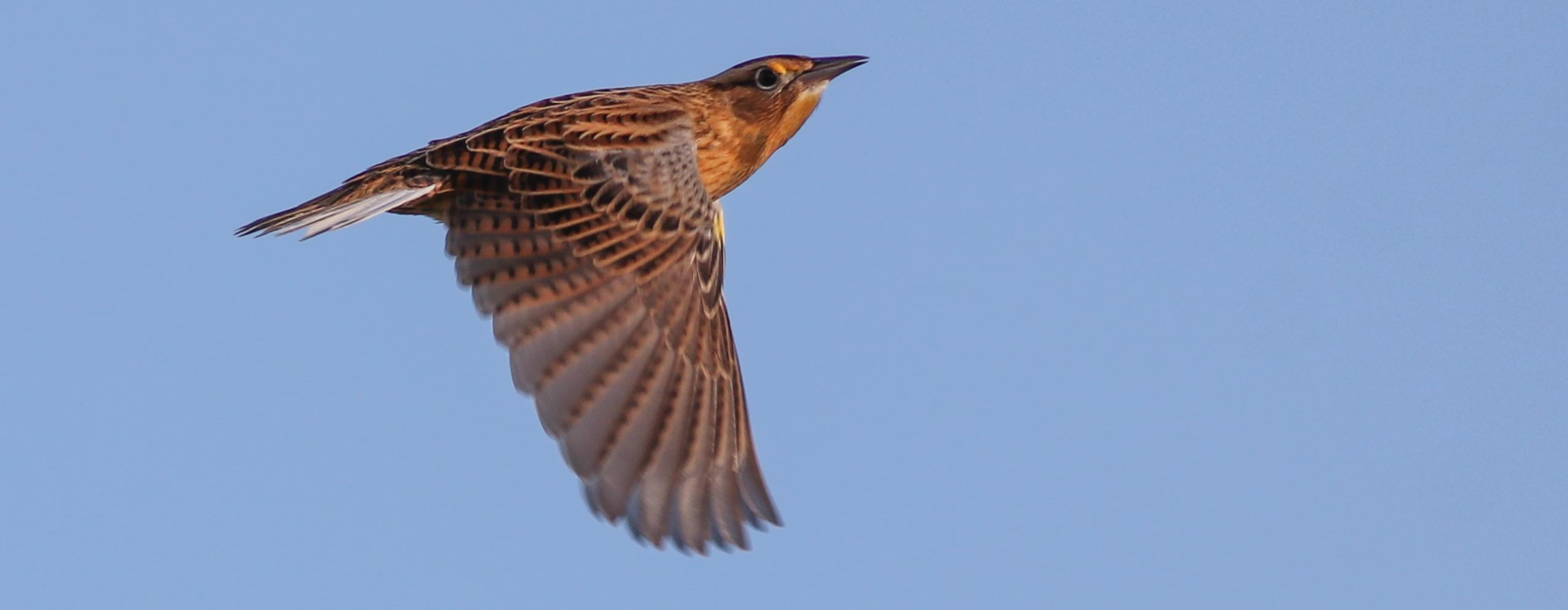
The Eastern Meadowlark, a large member of the blackbird family, is a favorite among birders, known for its bright yellow breast and gentle, whistled song. VCE is leading the charge to keep this beloved songbird on the Vermont landscape through outreach, monitoring, and community-sourced data.
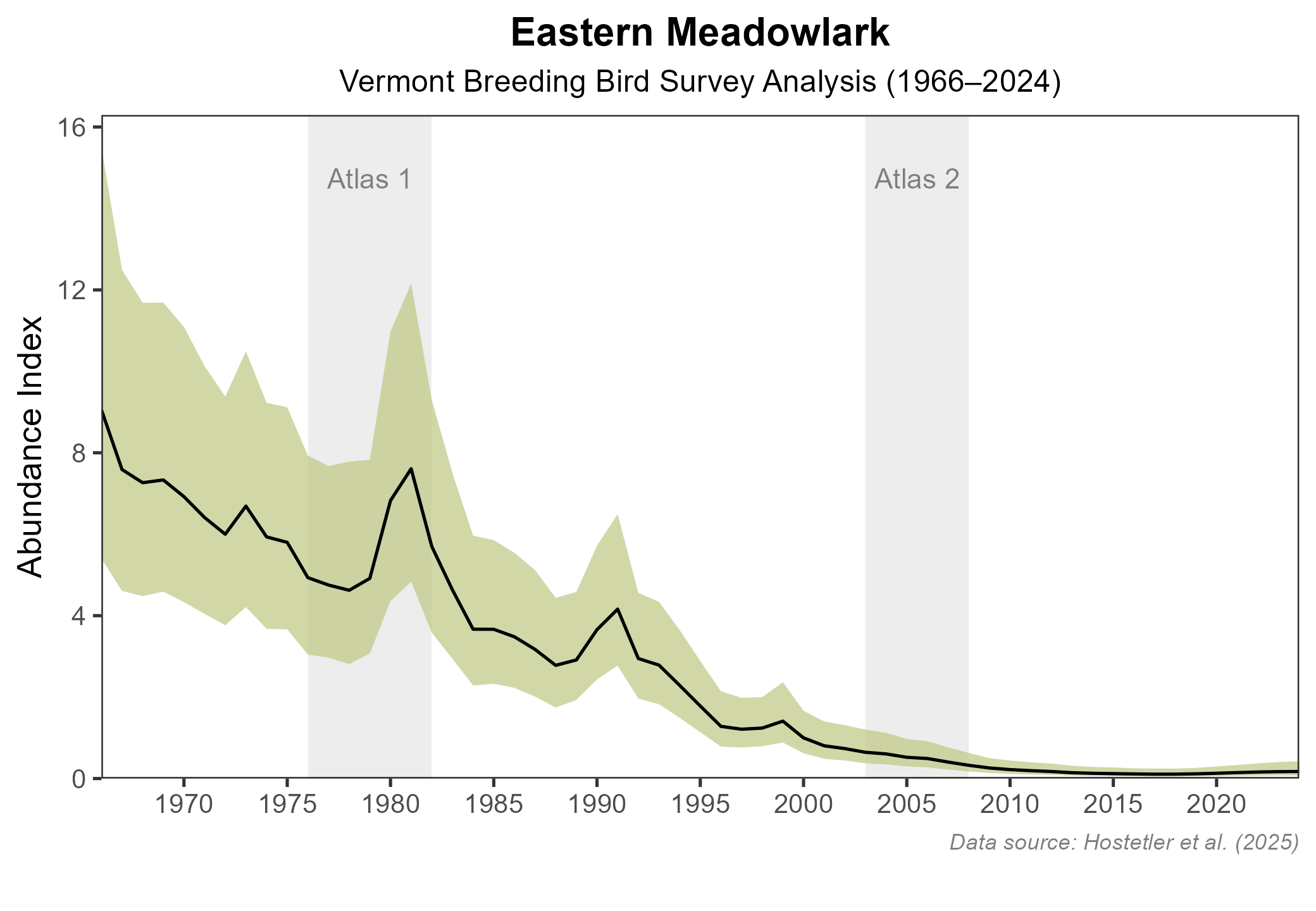
Unfortunately, Meadowlarks have become much harder to find, with populations in the New England and Mid-Atlantic regions declining by more than 95% over the past 50 years, largely due to human-caused threats. Over the past several decades, its range has shifted, with the Champlain Valley now holding a much larger share of the remaining population. These changes are a visible sign of the pressures facing the species, and highlights the vulnerability of grassland habitats.
By tracking meadowlarks’ current whereabouts and changes in population, conservation efforts can focus on restoring and protecting landscapes that allow this iconic bird to thrive. Understanding these patterns is not just about counting birds, it’s about assuring future generations can experience the songs and sights of the Eastern Meadowlark across Vermont.