Summer evening
© Kent McFarland
There is a lot for the keen listener to explore this month: the air is filled with the sounds of chirping, calling, and singing birds and buzzing insects. But there are silent wonders too, gathering under our porch lights and on our windows each night: Rosy Maple Moths. Hot pink and electric yellow, they'll bring an unexpected splash of color to your night and a smile to your face.
By Anna Peel
For those seeking a high-elevation June hike on Mount Mansfield, the home of Stowe Mountain Resort, a vibrant landscape full of buzzing activity awaits.
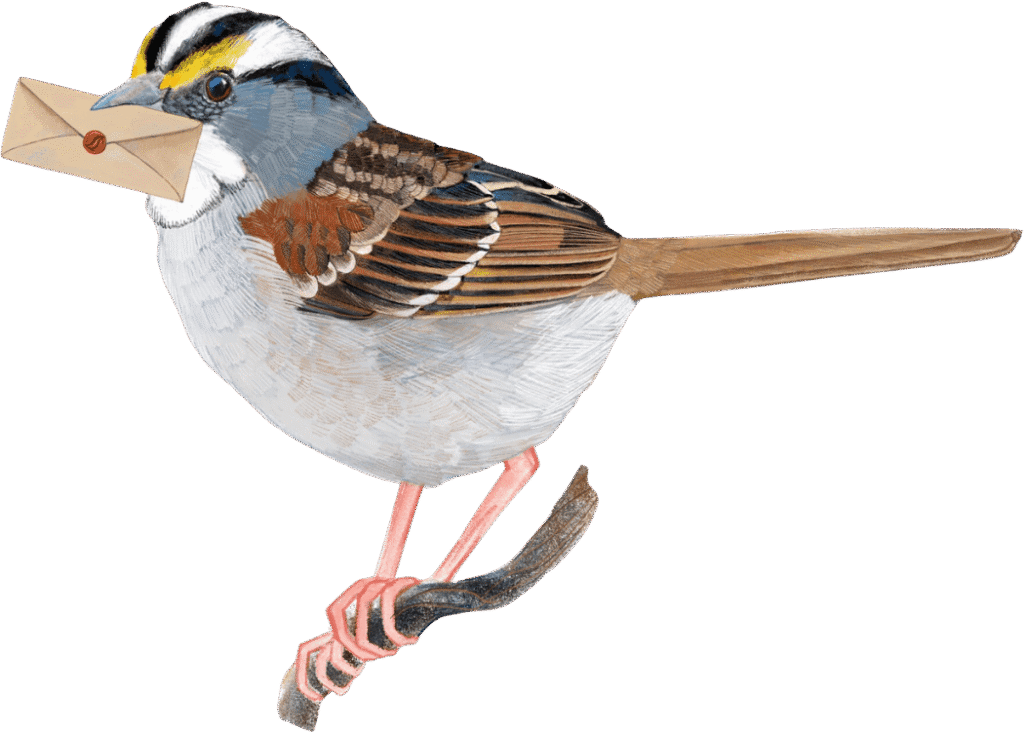
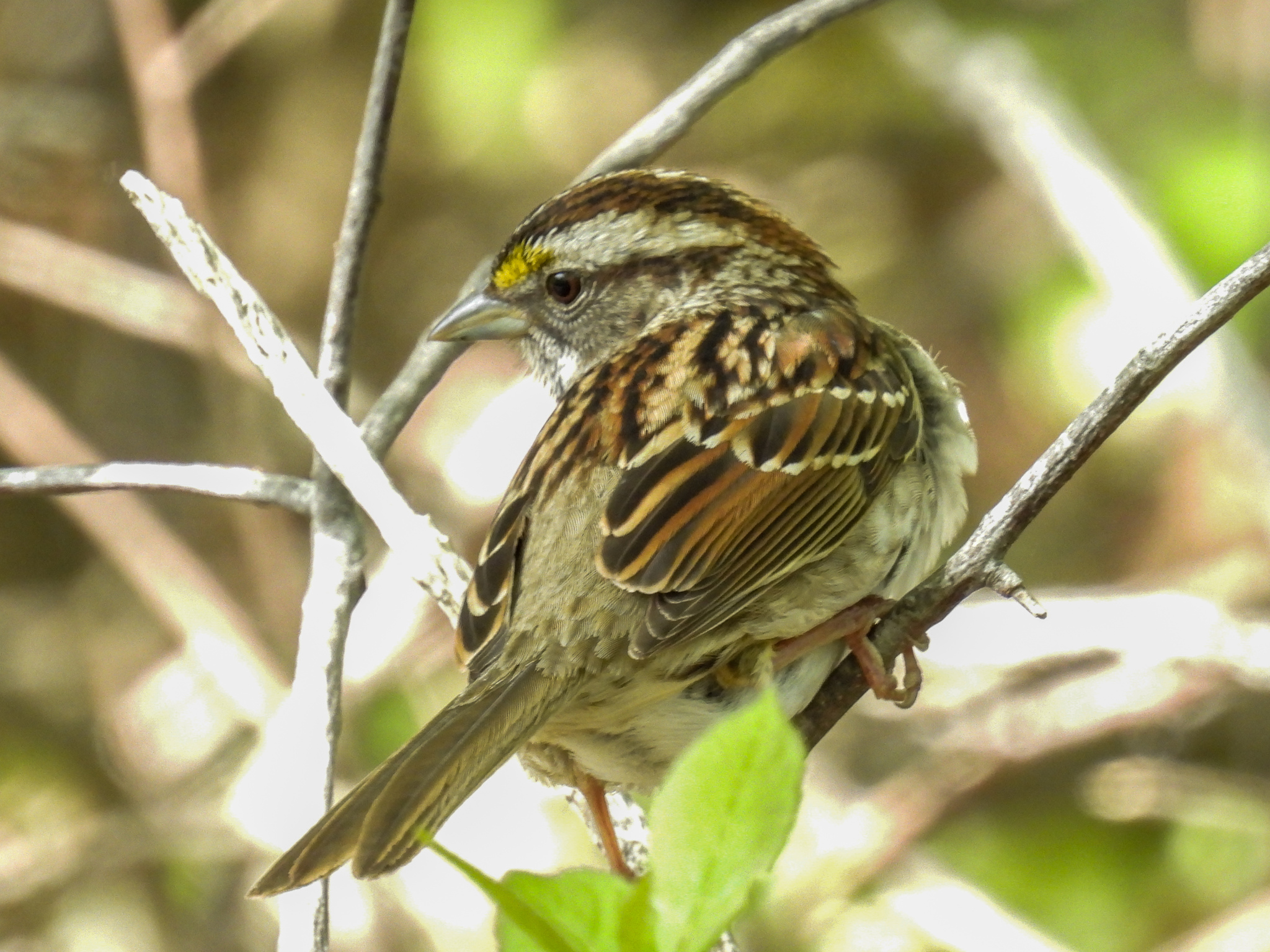
Lucky visitors might catch a glimpse of a White-throated Sparrow kicking through fallen needles alongside the trail, or spot a Common Raven circling above the rock of the Nose, where a pair has regularly made their nest in years past. However, the real bounty of Mansfield unfurls itself only for those who know how to listen.
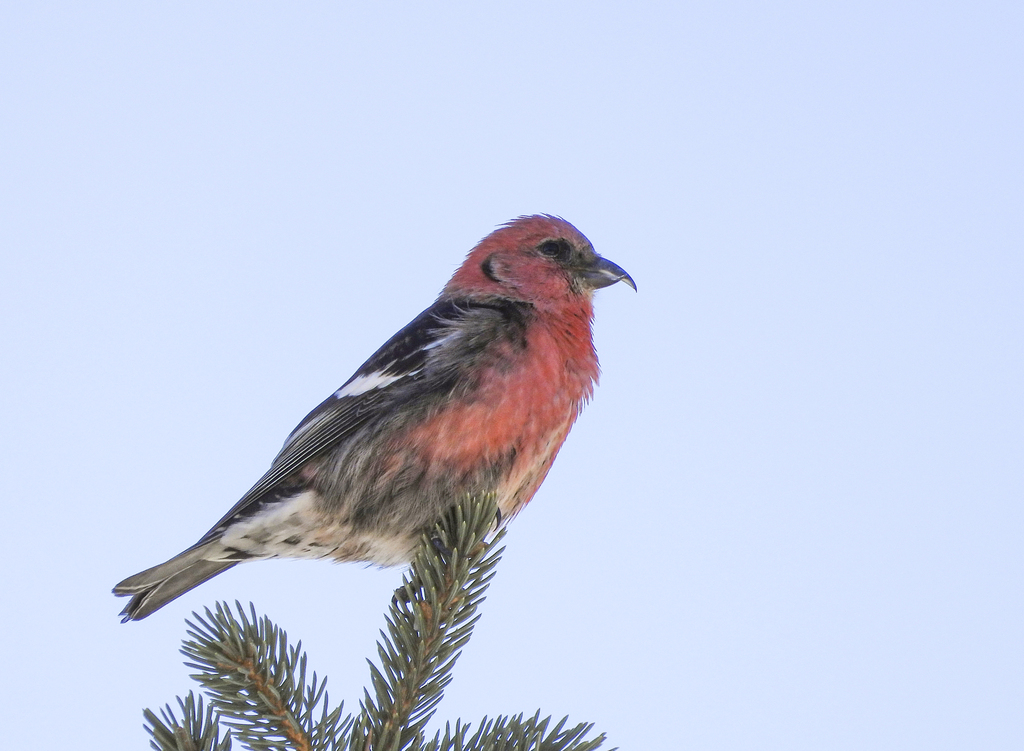
Stepping out of your car in the parking lot at the top of the toll road at just the right moment, you might be greeted by the cascading song of a Winter Wren echoing from the rock face of the Nose, or the emphatic seesawing of the lone Ruby-Crowned Kinglet that likes to stake his claim near the entrance to the parking lot. You might also hear the bouncy che-lek of a Yellow-bellied Flycatcher, and the steady, sweet alternating notes of a Yellow-rumped Warbler’s song. Walking in the sweet-smelling shade beneath taller conifers along the Long Trail or the Sunset Ridge Trail, you could be lucky enough to hear the chirruping sound of a rare flock of White-Winged or Red Crossbills foraging for spruce cones above your head.
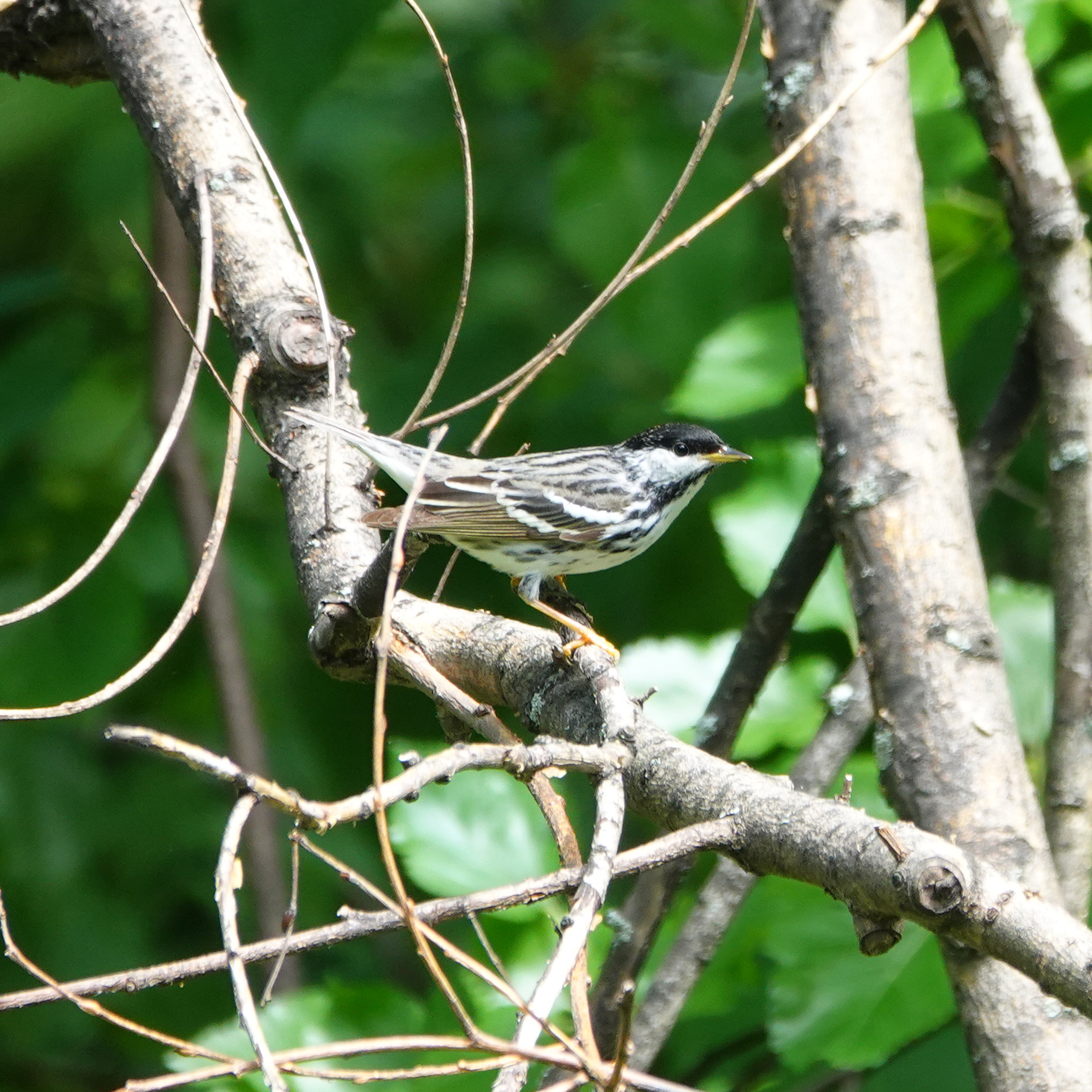
Blackpoll Warblers are another of Mansfield’s elusive denizens; their swelling, whispery trills are tantalizingly ever present, but getting close enough to have them in your binocular sights is another question entirely. So too the Bicknell’s Thrush, whose metallic fluting song fills the air in the wee hours of the ridgeline morning, seeming to come from every direction at once, with not a thrush in sight to pinpoint the origin of their haunting refrain. For daytime rather than dawntime visitors, the Bicknell’s is most likely to be heard by its single-syllable, downward veer call, echoing plaintively over the krummholz.
The song of the Swainson’s Thrush also carries over the mountain in the early hours, in a spiraling upwards rush of music. This is another benefit to a pair of keen ears; although the Swainson’s Thrush and the Bicknell’s Thrush are distinguished from each other visually by the lighter ring of feathering around the Swainson’s Thrush eye, this feature is difficult to see clearly unless the bird is exceptionally close. To a listener, however, the music these two birds make couldn’t be more different.
One bird that will hopefully be a little easier to find than the Bicknell’s Thrush this June is the Pine Siskin. 2026 is an irruption year for the species, which means that hundreds of these tiny striped beauties will be filling the air across the mountain with their wheezy chattering. They move in groups and are rarely at rest, rustling through the tips of a tree’s branches, clinging upside down to peck at tasty tidbits, or taking flight as a flock.
Just like the Pine Siskins, the Mansfield banding team will be hard to miss—we’ll be camped out in our usual corner of the visitor center parking lot, laden with bird bags and scribbling down data. If you see us, please come say hello! We’d love to show you what we do, and perhaps provide that long-sought closer look at one of Mansfield’s cryptic mountain singers.
Listen to the bird song on Mount Mansfield:
By Kent McFarland
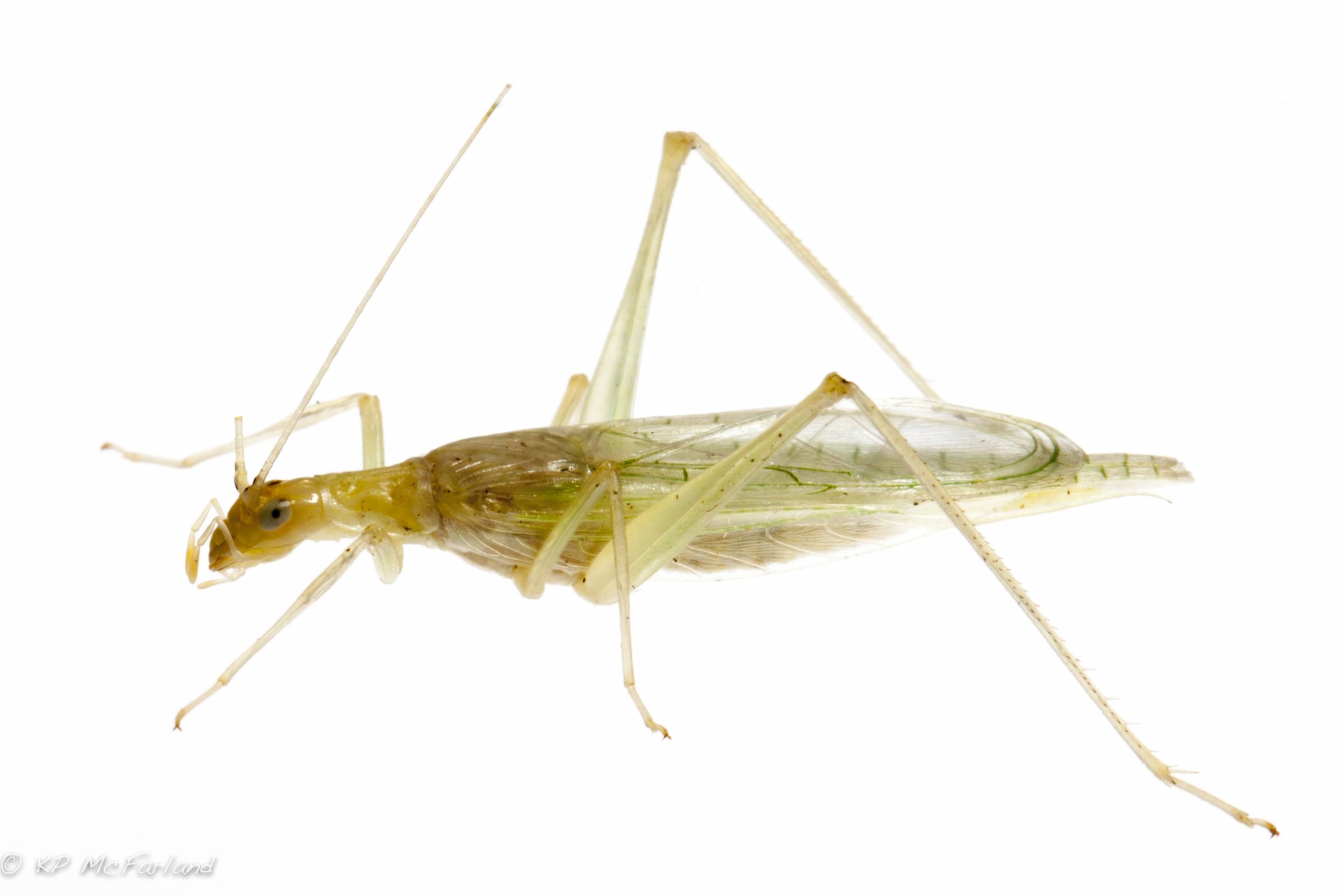
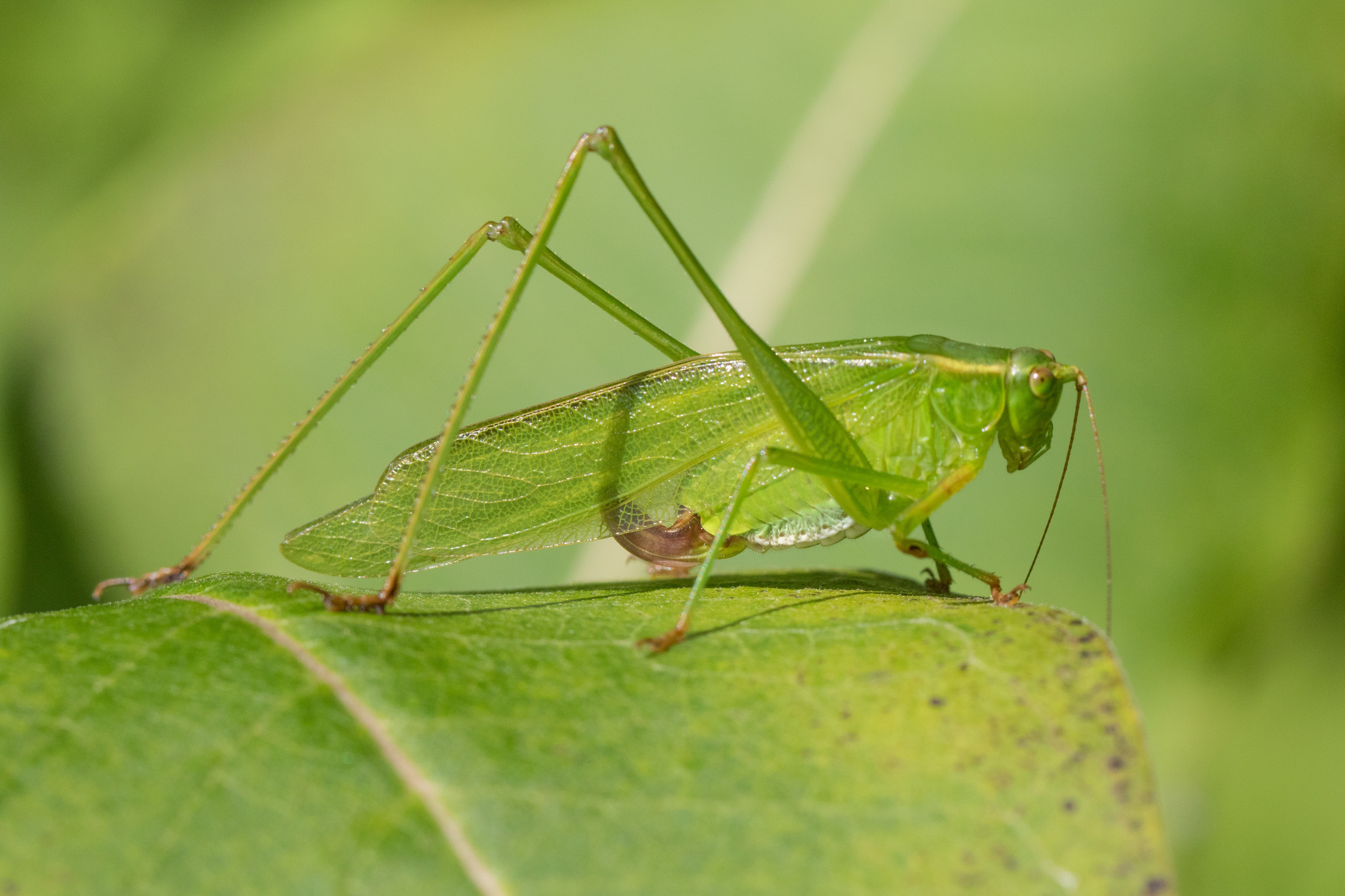
On a warm, summer evening, the air vibrates with a chorus of chirps and trills. Crickets and katydids are some of the musicians responsible, and they’re found on every continent except Antarctica. In Vermont, there are now 22 species of crickets and 24 katydid species known. They’re part of a larger group of 90 species in the state belonging to the order Orthoptera, which also includes grasshoppers.
To produce their familiar songs, katydids and crickets use a technique called stridulation. Their front wings feature a file, a ridge that looks a bit like the teeth of a comb, and a scraper, a sharp edge on the opposite wing. They elevate their front wings and draw them back and forth across each other, the scraper catching along the file. This action vibrates thin membranes on the wings, and that vibration is the sound that fills the summer air.
Here’s where it gets strange. They don’t have ears on the sides of their heads like we do — they have them on their front legs. Just below the knee, a tiny oval structure called a tympanum, a thin membrane that vibrates in response to sound waves, much like our own eardrum. They’re essentially listening with their shins.
Building an Atlas
When you find them, you can record their songs or snap photos with the iNaturalist app on your smartphone and upload them to our iNaturalist Vermont project to be included in the Vermont Orthoptera Atlas, which has now amassed nearly 5,750 records of grasshopper, cricket, and katydid species. Of the 90 species documented in Vermont, three of them are now considered to be of conservation concern, and six are introduced species.
Although Vermont has not benefited from a formal statewide survey of Orthoptera, during the 1960s Ross and Joyce Bell at the University of Vermont began a natural history survey to document the invertebrate fauna of Vermont. Through this work they built the UVM Zadock Thompson Zoological Collections into an important resource for science and conservation. They inspired us here at VCE to launch the Vermont Atlas of Life, where we’ve helped to digitize, publish, and archive some of their amazing work, including their hand-drawn Vermont Orthoptera dot maps, which are the original basis for this atlas.
Their surveys, spanning a period from around 1960 to the early 2000s, comprised nearly 1,300 records assembled as hand-drawn dot maps for each species. Each time they, or their students, found a new record for a species, they added a dot on a map in the area of the town for which it was located. Year after year, collection after collection, they slowly built the first faunal checklist and range maps for the state. By 1999, they had recorded 72 species.
Each year we expand the atlas by adding data submitted through iNaturalist Vermont and museum collections that are increasingly digital. It takes an entire village to build an atlas like this—students, field biologists, museums, taxonomic experts, and volunteer naturalists. Thanks to observations from people like you, we’ve discovered nine new species for Vermont in the last five years!
By Desirée Narango
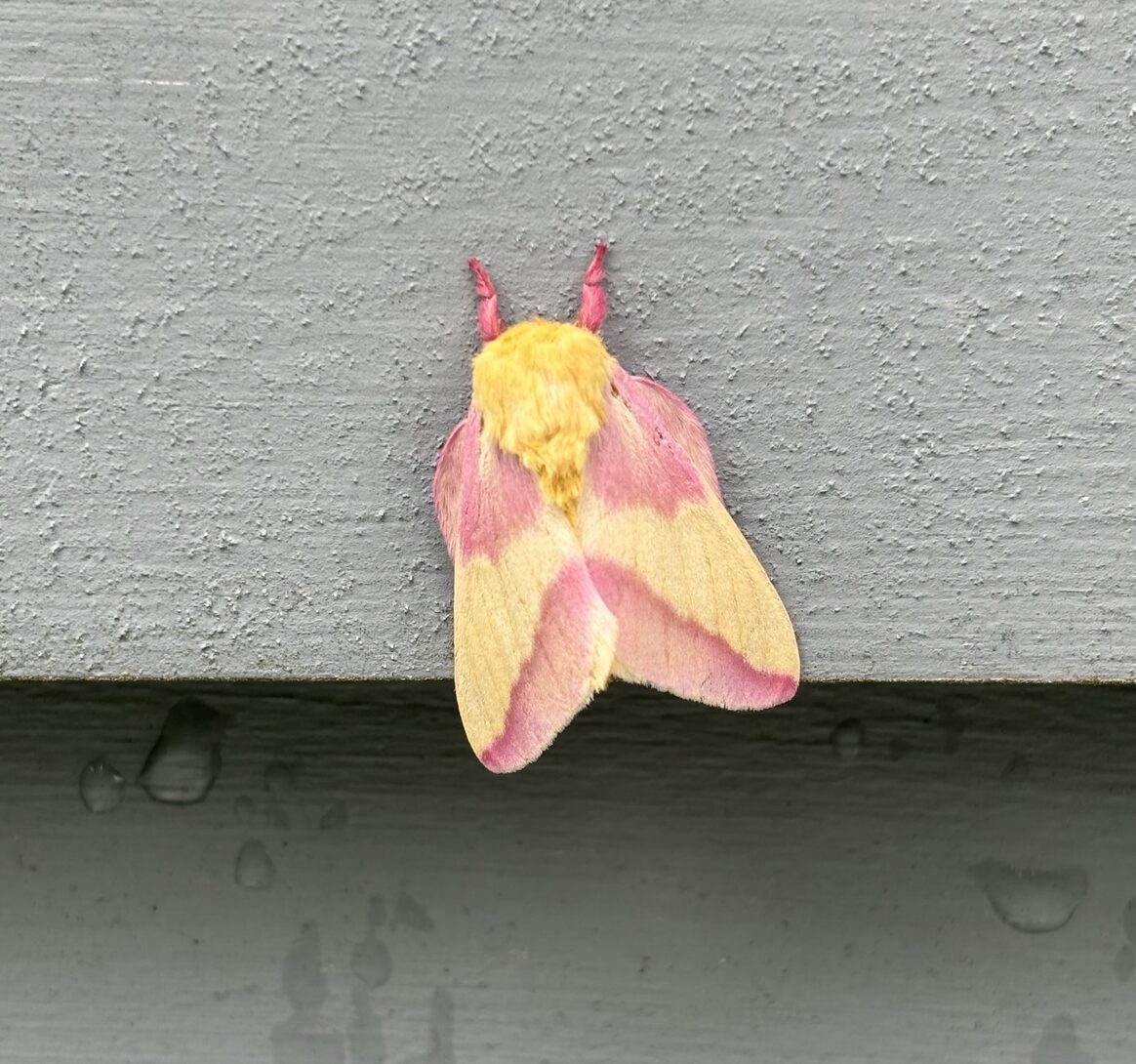
When you think of moths, what colors come to mind? Gray? Brown? What about hot pink and electric yellow?
This June, your porch light may come alive with the disco-party colors of a charismatic nocturnal visitor that epitomizes the word ‘cute’: the Rosy Maple Moth (Dryocampa rubicunda). June marks the peak flight of adult Rosy Maples, which come out to find a mate and lay eggs in late June.
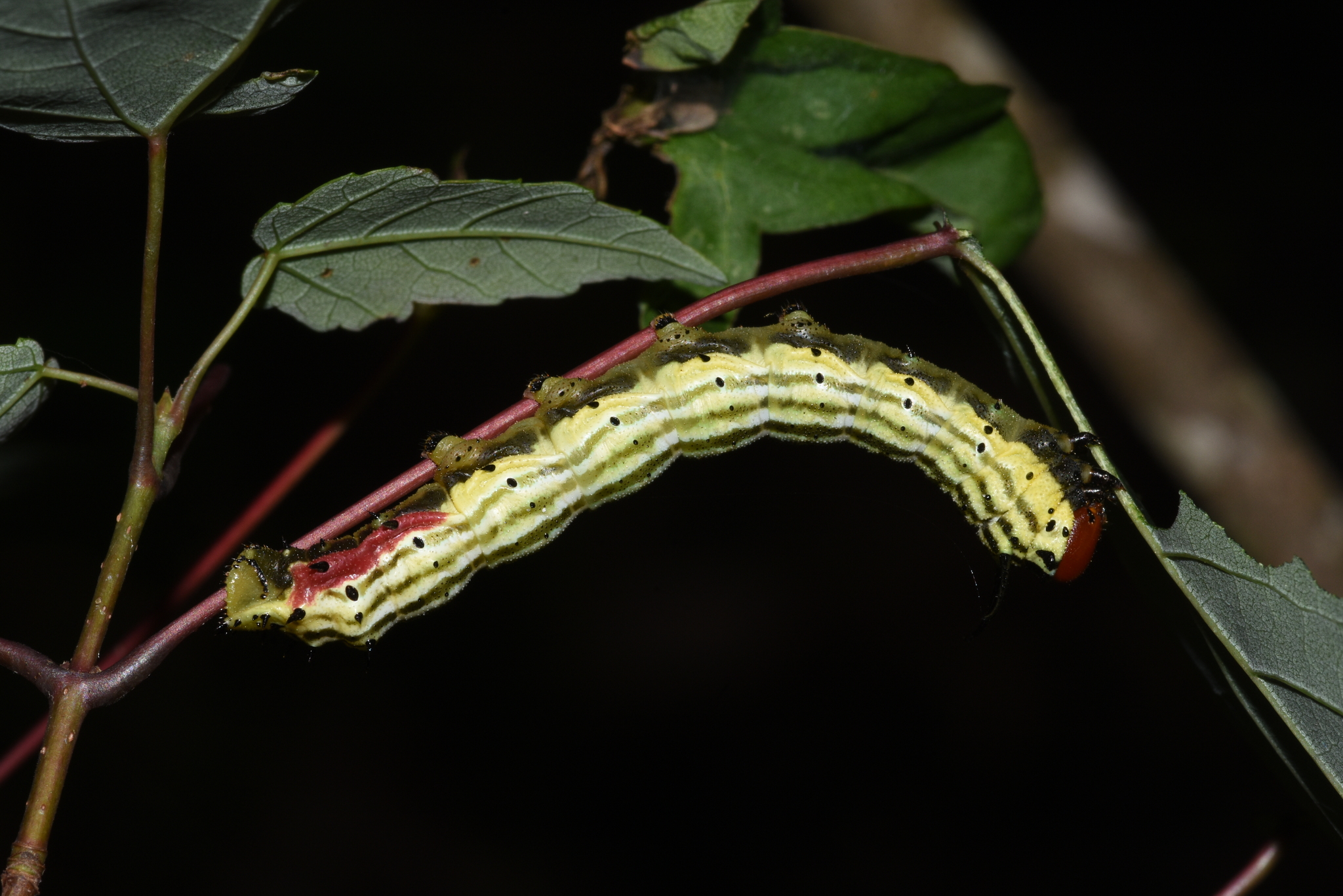
Rosy Maple Moths are also called Green-striped Mapleworms due to their equally adorable caterpillar stage. These caterpillars feed almost exclusively on maple trees, making them what entomologists call a ‘specialist’ insect: dependent on just a small number of host plants to complete its life cycle.
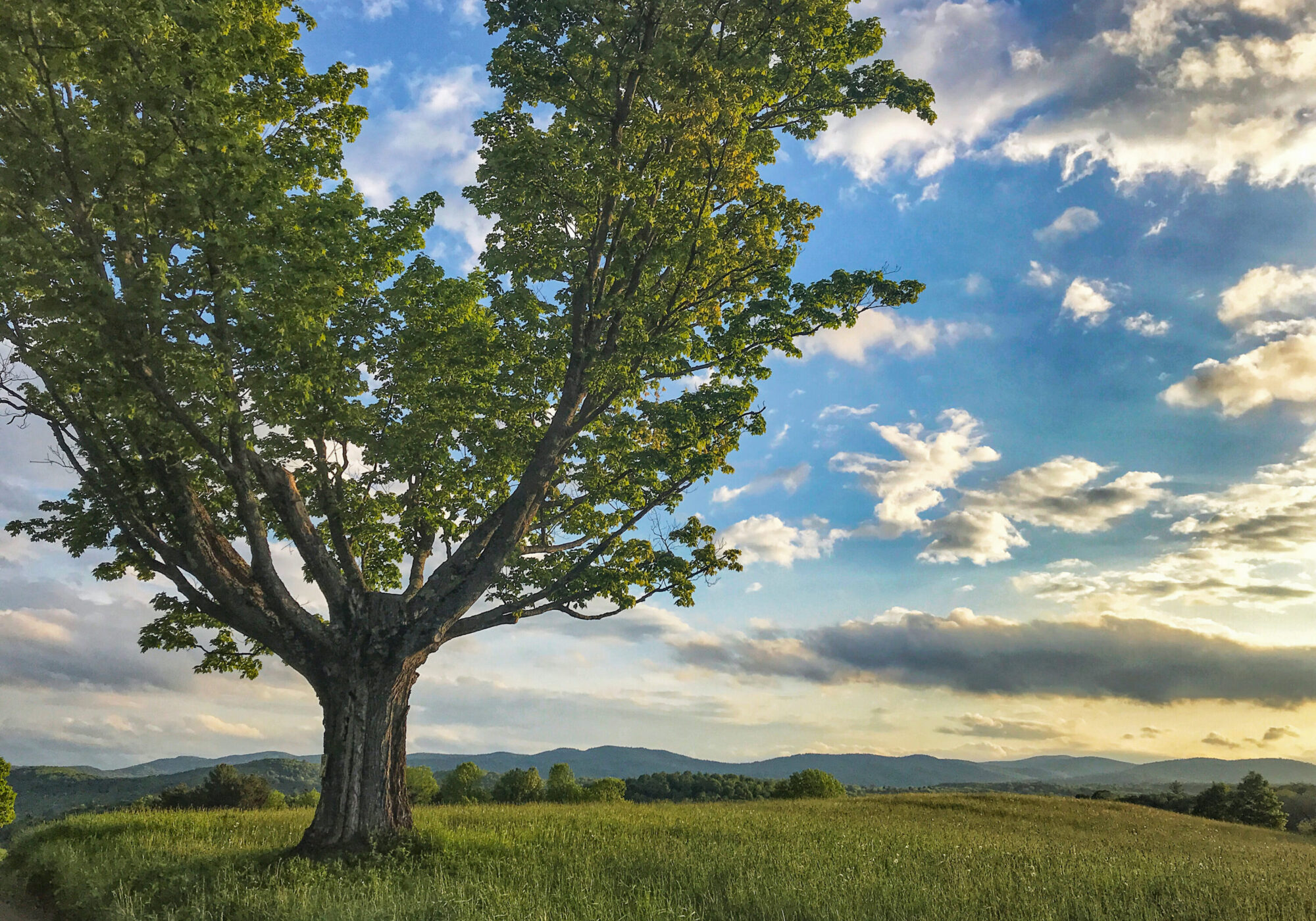
Vermont is home to seven species of native maple trees, and numerous introduced non-native species. Yet, despite the availability of a diverse menu, these caterpillars tend to favor the sweetest members of the Acer genus, Sugar Maple (A. saccharum) and Red Maple (A. rubrum). So those local sugarbushes not only yield syrup for your pancakes, they also support a vast amount of native wildlife. Despite being very closely related to our native maples, non-native maples like Norway Maple (A. platanoides) and Japanese Maple (A. japonicum) are subpar cuisine and tend to be avoided by most insects that specialize on maples.
Adult Rosy Maple Moths do not feed, meaning the entirety of their life cycle depends on the availability of maple trees. Don’t worry though—tree herbivory from Rosy Maple caterpillars is usually minor, especially in New England where this species has only one brood a year. Trees bounce back in no time, suffering no lasting damage from briefly hosting this insect.
You may never even notice if your backyard maple tree is hosting mapleworms. But if you do find caterpillars, consider sharing your observation with us on our iNaturalist Caterpillar and Sawfly Host Plant Project. Your observations will help illuminate patterns of host plant selection by butterflies and moths across the region.
Rosy Maple Moths can be found in most deciduous and mixed forests across Vermont, even in residential neighborhoods. And there are a variety of ways to help support moth populations.
Happy mothing!