Good News: More Loons Now Protected from Wakeboat Waves
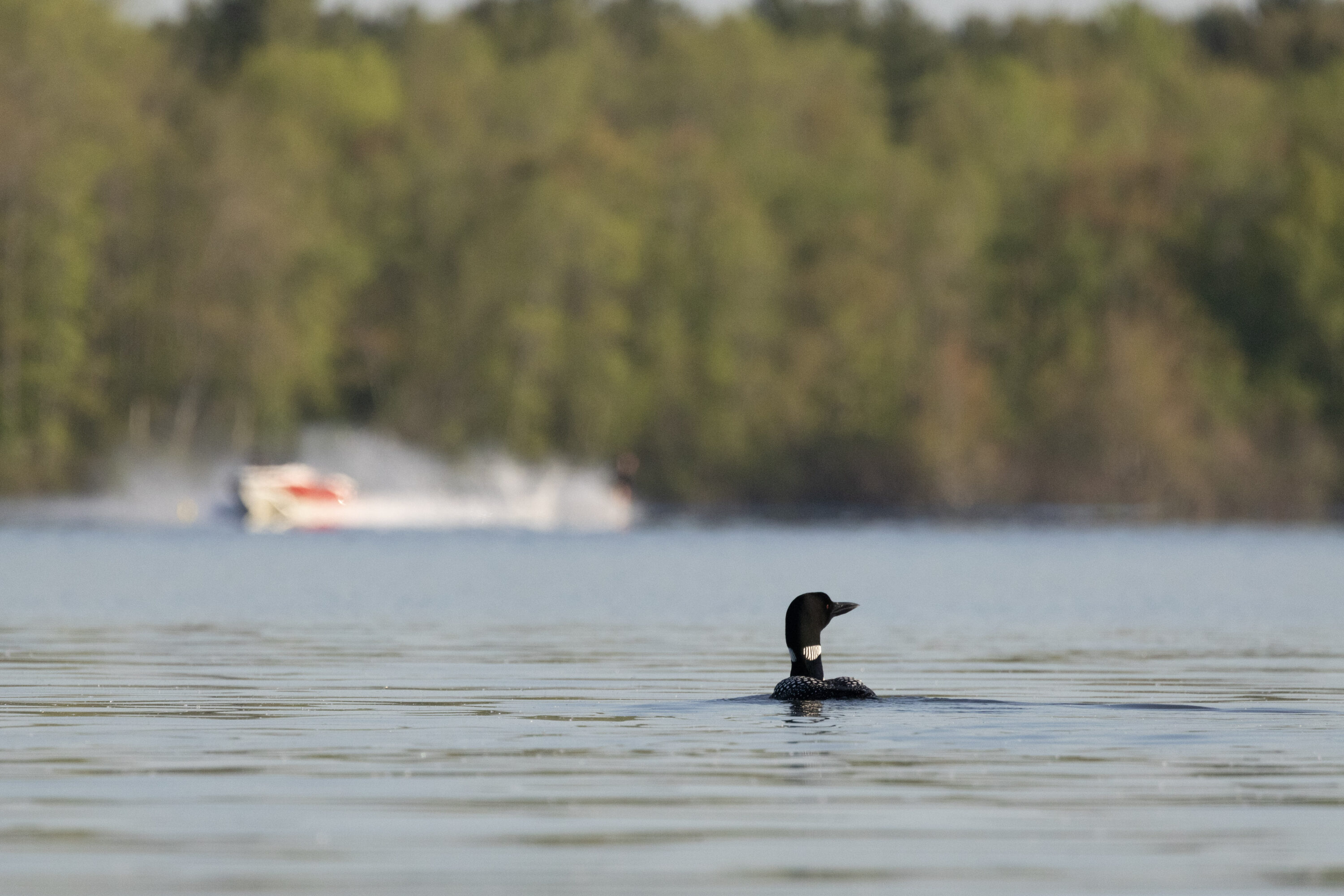
Loon on Lake Iroquois © Lisa Angstman
This story ran in Loon Caller, the Vermont Center for Ecostudies’ annual loon publication. Support Vermont loons today—mark down that your gift is for the Vermont Loon Conservation Project.
The wait is over.
Nearly a year and a half ago, 11 lakeshore communities submitted petitions asking Vermont’s Agency of Natural Resources to prohibit wakeboats on their lakes. After hearing from hundreds of Vermonters, the agency decided to address communities’ concerns by proposing stricter rules on how and where wakeboats can operate. As of last week, those more restrictive guidelines have taken effect.
Loon-specific language in the new rule is in no doubt thanks to VCE’s loon biologist Eric, who submitted three comment letters throughout the decision-making process. Gratitude also goes to the state’s lakeside communities, who advocated for the interests of the cherished loons that call their waters home.
The revised rule increases the required area for wakeboats to operate from 50 contiguous acres to 100 contiguous acres. Under this new rule, Vermont’s list of lakes that allow wakeboats—specialized motorboats designed to produce large waves for water sports like wakesurfing—shrinks to just 18 out of roughly 800 lakes.

Even on those remaining 18 lakes, kayakers and fishermen aren’t the only ones who may now face a lower risk of being swamped by wakeboats’ enormous waves. A new section of the rule specifically prohibits wakeboats from getting within 500 feet of an active loon nest.
Loon nests built on shorelines and islands in marshy vegetation often lie two to eight inches above the water. A wakeboat operating within 200 feet of shore could produce a wave 10 inches tall, which would easily flood a nest and potentially harm chicks or eggs. The 500-foot buffer doesn’t eliminate all risk to loons, since wakeboats adhering to the buffer can still produce a 5-to-6-inch wave at the shore. However, specifying a buffer in the rule is a positive step forward.
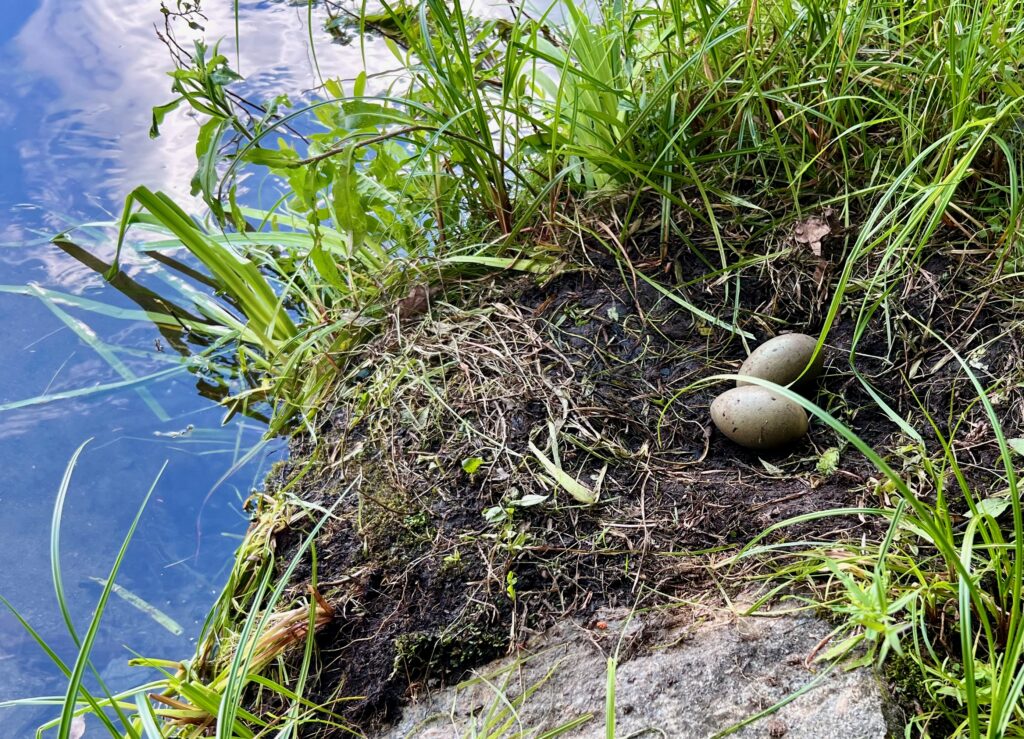
A loon nest sits only about 7 inches above the waterline on Shadow Lake. © Christine Cano
The state’s Common Loons are currently thriving, but they still face numerous threats from pathogens, lead tackle and monofilament, and even lawfully-operating traditional motorboats. The direct protection outlined in the rule change will hopefully remind wakeboaters to be mindful of nesting loons, and loon enthusiasts have an essential role to play in educating all water recreationists about safely sharing Vermont’s lakes with loons and other wildlife
Curious about how you can contribute to Common Loon conservation in Vermont from your kayak or from the shore? Explore VCE’s Vermont Loon Conservation Project and other ways to keep loons safe.


It has been a long time coming, but it is great to see the common sense, data-driven, evidence-based work of Eric Hanson and Vermont Center for Ecostudies support of the DEC’s amended Wakeport rule become enacted this past June 11. While it certainly does not solve all of the adversity faced by loons in our state. It’s definitely a step in the right direction. Congratulations to both Eric and Emily Anderson.
Dozens of Vermont lakes owe thanks to Responsible Wakes for Vermont Lakes and their partners and volunteers for reducing the threat of wave sports in shoreline erosion and loon nest erosion.
Great update Emily! Thanks for sharing! And thanks, and gratitude to Eric and Eloise for all their assistance in growing Vermont’s loon population.