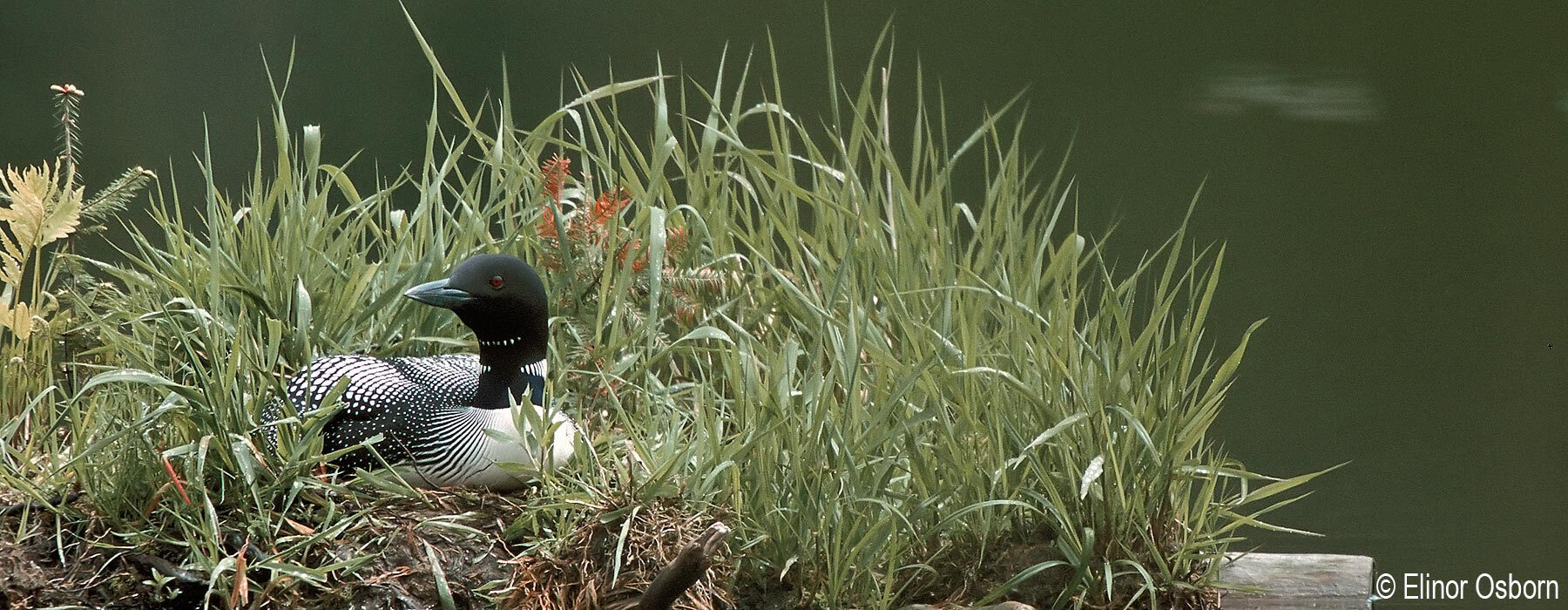
Four decades ago, Vermont had only seven pairs of Common Loons left in the state. Now 115 nesting pairs call our lakes and ponds home, and the number continues to increase. This conservation triumph is the result of many organizations and people—including regular folks like you—working together.
Our chief partner in loon recovery and conservation is the Vermont Fish and Wildlife Department. Together, and with help from a corps of dedicated volunteers, we’re securing a future for Common Loons in the state. Our strategy features:
Monitoring
VCE recruits and trains volunteers who watch loons and provide essential information on their distribution, abundance, nesting success, and chick survival. This monitoring is called LoonCount and LoonMonitor.
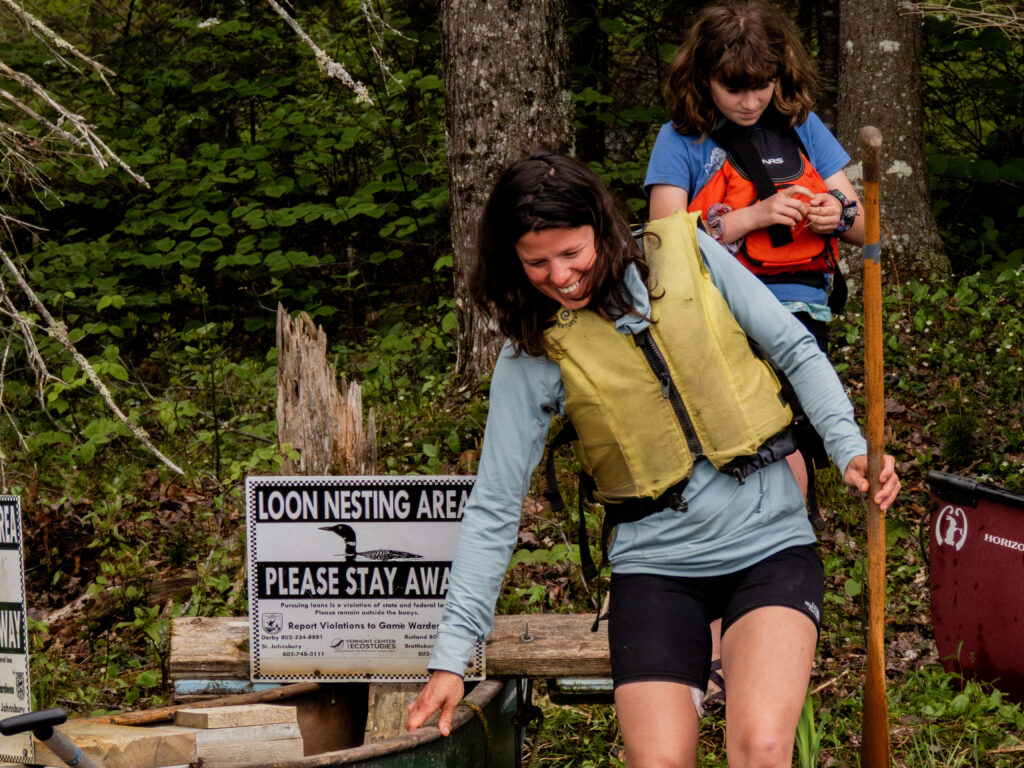
Loon biologist Eloise Girard placing loon signs on a pond with help from a volunteer. © Fiona MacLean
Management
We work with lakeside landowners and lake visitors on practical protections for Common Loons. We place floating signs to advise boaters to stay clear of loon nests, work with hydroelectric dam operators to stabilize reservoir levels during loon nesting season, and—on waters where levels do fluctuate—build nesting rafts to mimic islands and help loons succeed. Learn how live alongside loons.
Public Outreach
Informed lake users are vital to the long-term conservation of Vermont’s loons. VCE’s outreach strategy of free public presentations, media interviews, fact sheets, and other publications ensures that people enjoy loons from a proper distance while fishing, boating, and swimming. Please fill out our Speaker Request Form to have a loon biologist speak at your event or lead an outing.
Do you need help with a distressed loon? Learn what to do here.