LoonWeb Is Ready for Your Lake Adventures
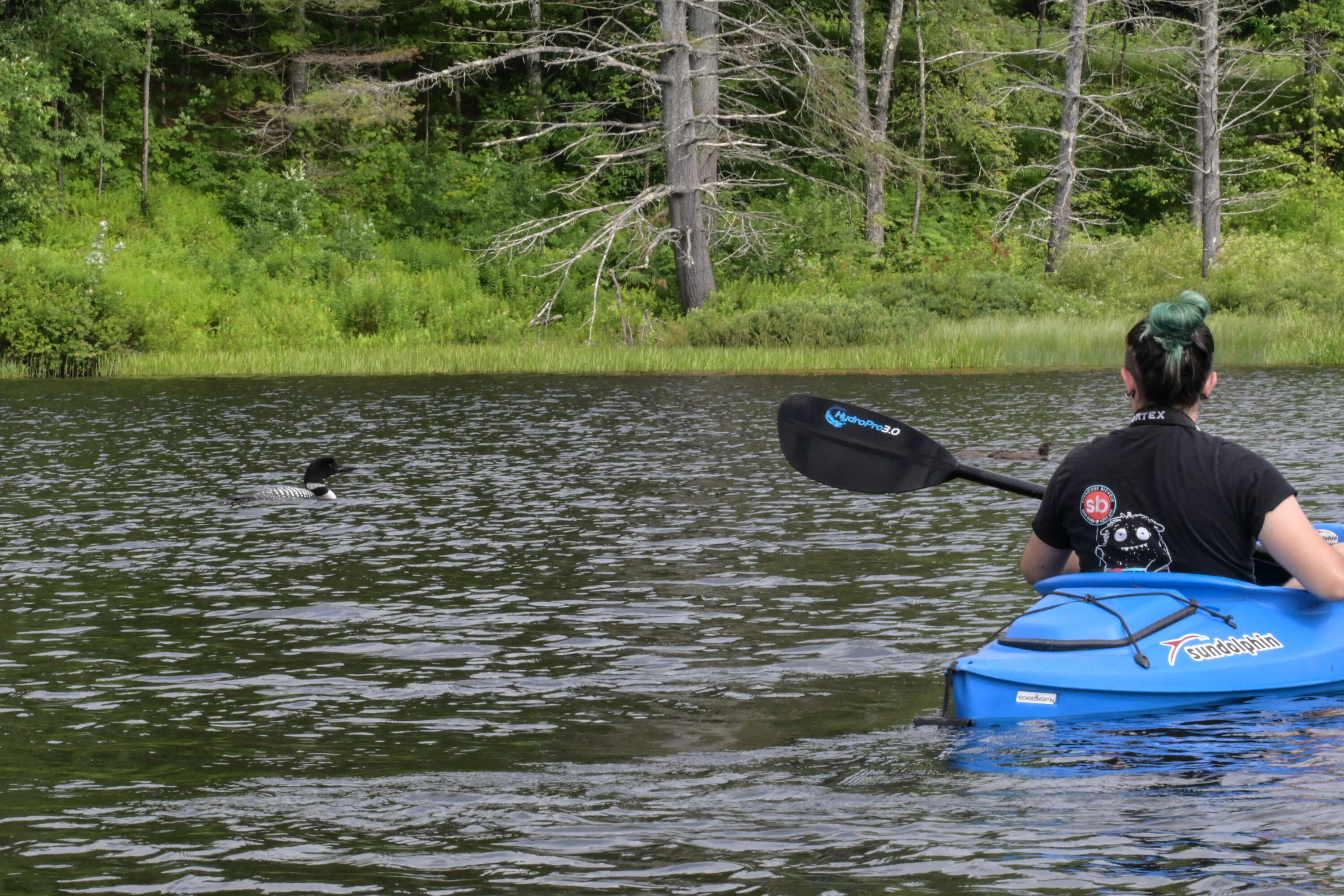
2025 VCE summer intern Sammi Rizzo observes a loon in southern Vermont © Alden Wicker
Learn how to use LoonWeb at one of our trainings, by watching our videos, or downloading our cheat sheets. They’re all at vtecostudies.com/howtoloon.
On a hot day in September, I wrestled my kayak off my car and into the water at the Lake Morey boat launch.
Even from shoreline, I could see the silhouette of a Common Loon bobbing in the middle of the lake. After slipping the kayak into the water, I pulled out my phone and started up LoonWeb, VCE’s prototype loon surveying app. The app detected that I was at Lake Morey and filled in boxes for the current date and time. I clicked on the GPS tracker, clicked ‘start survey’ and it was time to start paddling.
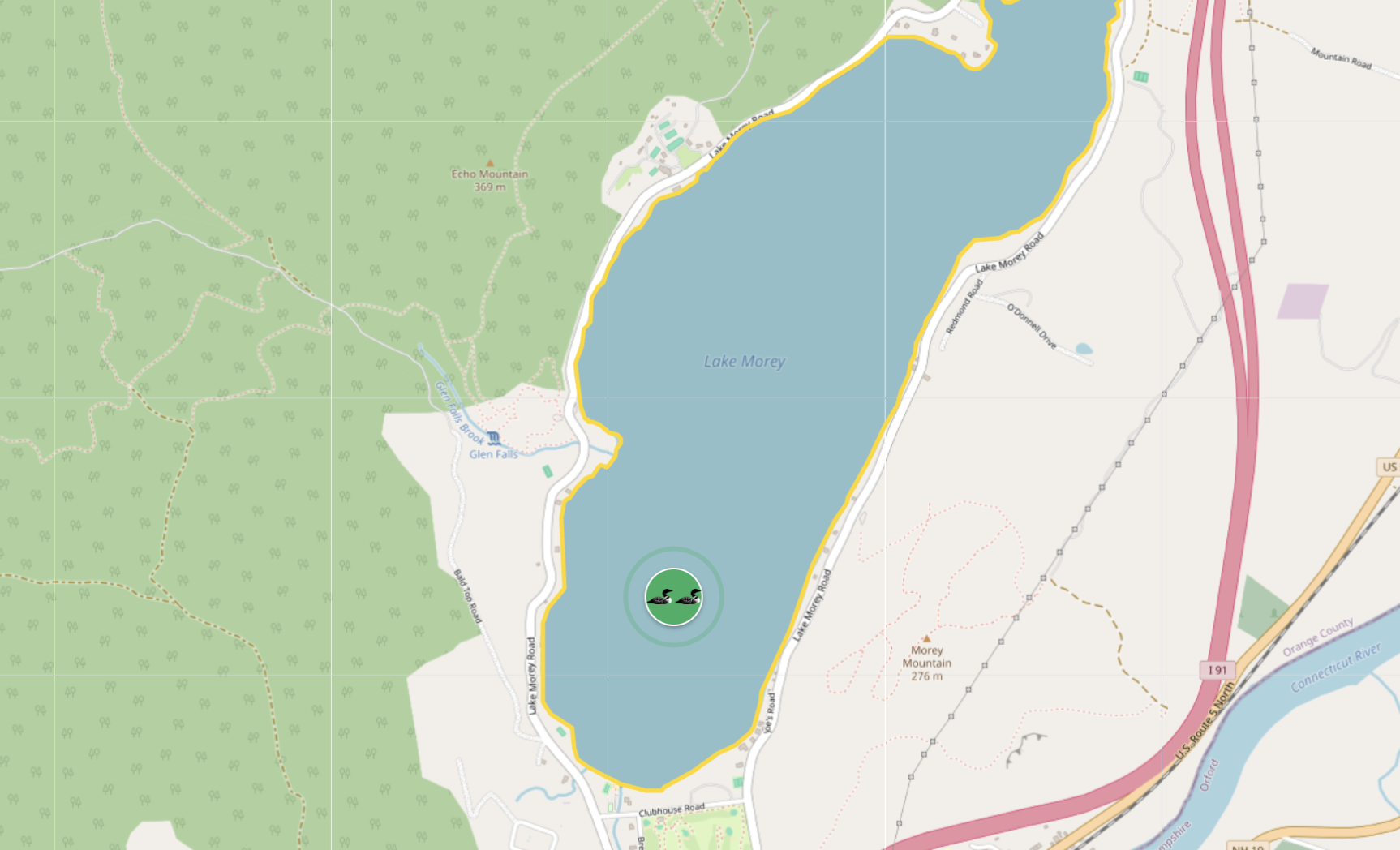
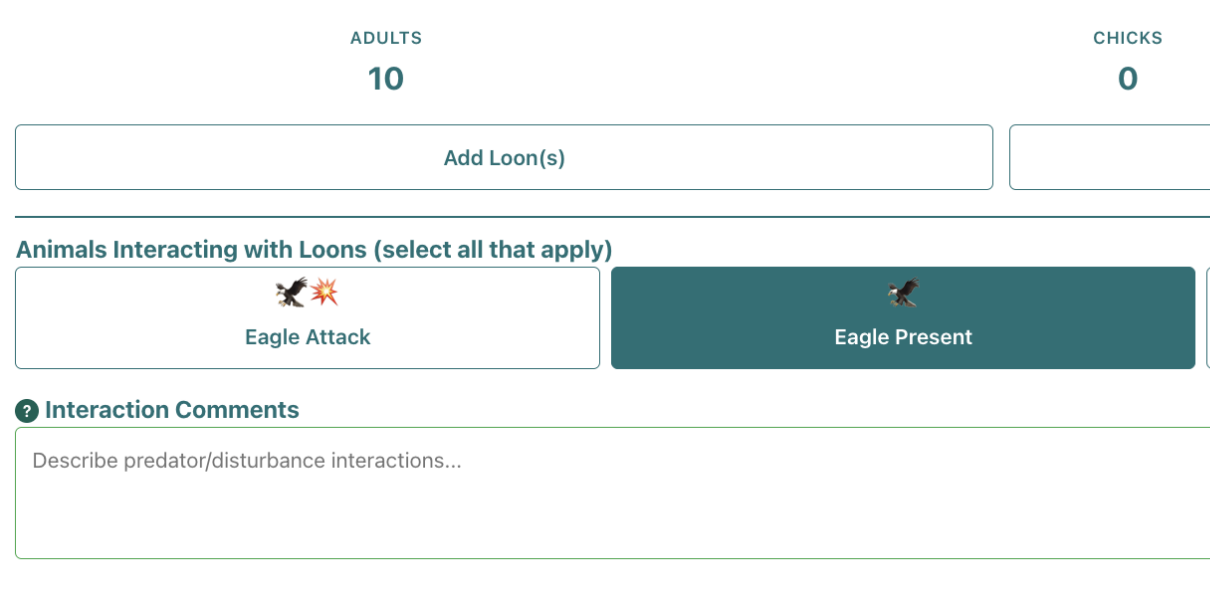
September is the beginning of the loon migration season, when loons lose the territorial urges that keep them in pairs and instead bunch up in groups on larger lakes with abundant fish. My first group of loons appeared just off of the public beach. I pulled out my binoculars to try to separate out one loon from another while they dove and bobbed in the waves. After a few minutes, I counted ten adults. I pulled out my phone, clicked the Add Loons button, and dropped a pin on the lake where I saw them.
Halfway around the lake, I stopped to watch the distinctive white head and brown feathers of a Bald Eagle soaring overhead. While Bald Eagles rarely take adult loons, they do take loon chicks. Since it is rare to record an eagle during an attack, we keep track of their presence on the lake, which can cause stress to the parents or explain a later chick loss. In the app, I navigated to the Predators survey tab and clicked the Eagle Present button.
As I paddled into the cove at the north end of the lake, there were no loons, but the marshy habitat would have been the perfect place for a nest. If I had seen one, there is a place in the app for that too. Under the Add Nest button, I could drop a pin with the nest location, what substrate the nest was built on (Marsh), and add in more information about the loons’ breeding stage such as whether they looked like they were incubating eggs.
As I entered my final mile stretch of lake, I spotted two adults diving together. They were likely the Lake Morey pair, keeping a watchful eye on their chicks, who were now gangly teenagers in their awkward, scraggly, half-chick-down, half-subadult feathers, diving on their own in the middle of the lake. I added the four of them with the Add Loons button and then marked in the Pair Behavior tab that the adult pair were Calm. By the time I made it back to the boat launch, I had 14 adult loons, three chicks, and a complete lake survey to upload.
I was out on the lake for around two hours, but this survey was the culmination of hundreds of hours of work from VCE’s software development team. This survey was part of LoonWeb, the first-of-its-kind, fully customized platform for volunteer-based loon studies. While the mobile survey app that I used isn’t quite ready for the public, we are excited to introduce the computer version of LoonWeb to our volunteers—and you!
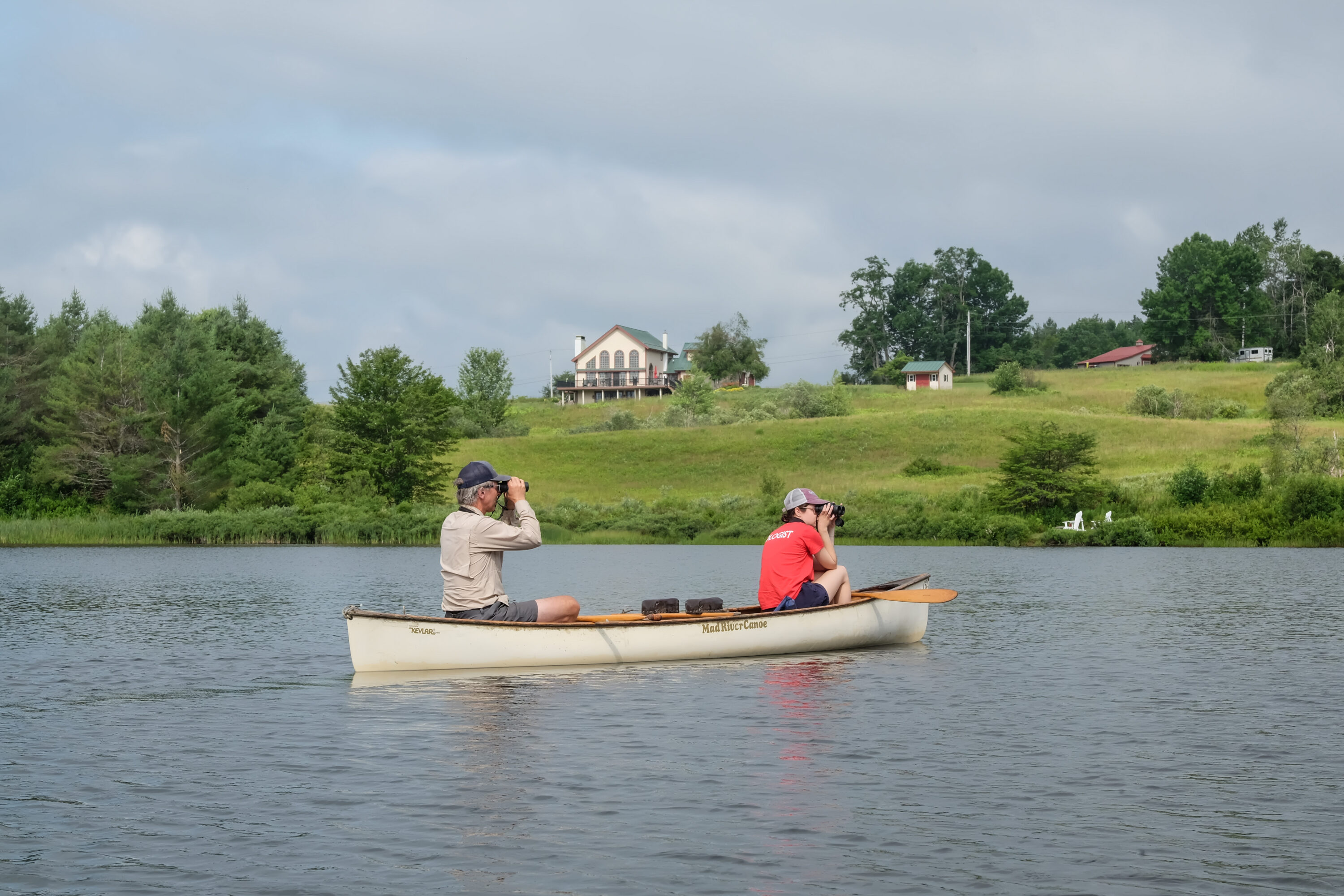
Loon Biologist Eric Hanson and 2025 summer VCE intern Isabella Soddu look for loons © Alden Wicker
Why We Need LoonWeb
The Vermont Loon Conservation Project is run by our two seasonal loon biologists Eric Hanson and Eloise Girard, as well as our over 350 enthusiastic loon volunteers. While most people know Eric and Eloise from their ability to appear anywhere in the state when someone mentions loons, they actually spend a significant portion of their time dealing with administrative tasks—tracking which of their 245 lakes are currently covered by volunteers, transcribing data into excel spreadsheets, and spending countless hours calculating out where their attention is most needed: on lakes with nesting loons and chicks.
In total, Eric spends up to two days every week tied to his desk instead of out with loons and our volunteers. Volunteers who want to know what’s happening with Vermont’s loon population or on their lake have to wait for Eric’s annual report or email him to request information. We’ve heard this struggle with administrative work echoed at the Northeast Loon Study Working Group Conference by other regional loon organizations, who handle far more lakes and volunteers than we do, and feel these effects even more acutely.
Our software process started with identifying stakeholders (Eric and Eloise) and people who would be using the platform (our volunteers) and reaching out to them to better understand their wants, needs, and desires for the project and the platform. With their help, we came up with a list of what features LoonWeb needed to be successful and a design that was simple to use. Then, Jason Loomis, VCE’s software developer extraordinaire, built the first functional prototype. Our volunteer beta testers spent countless hours helping us root out bugs in the system and making helpful suggestions to get the system ready for launch.
We released the data explorer and sign-up in LoonWeb (its homepage) in May 2025 as an optional pilot program. We expected around 30% of our volunteers to opt into the system, but were astounded when 87% of our LoonCount volunteers joined us on the platform.
What Can LoonWeb Do?
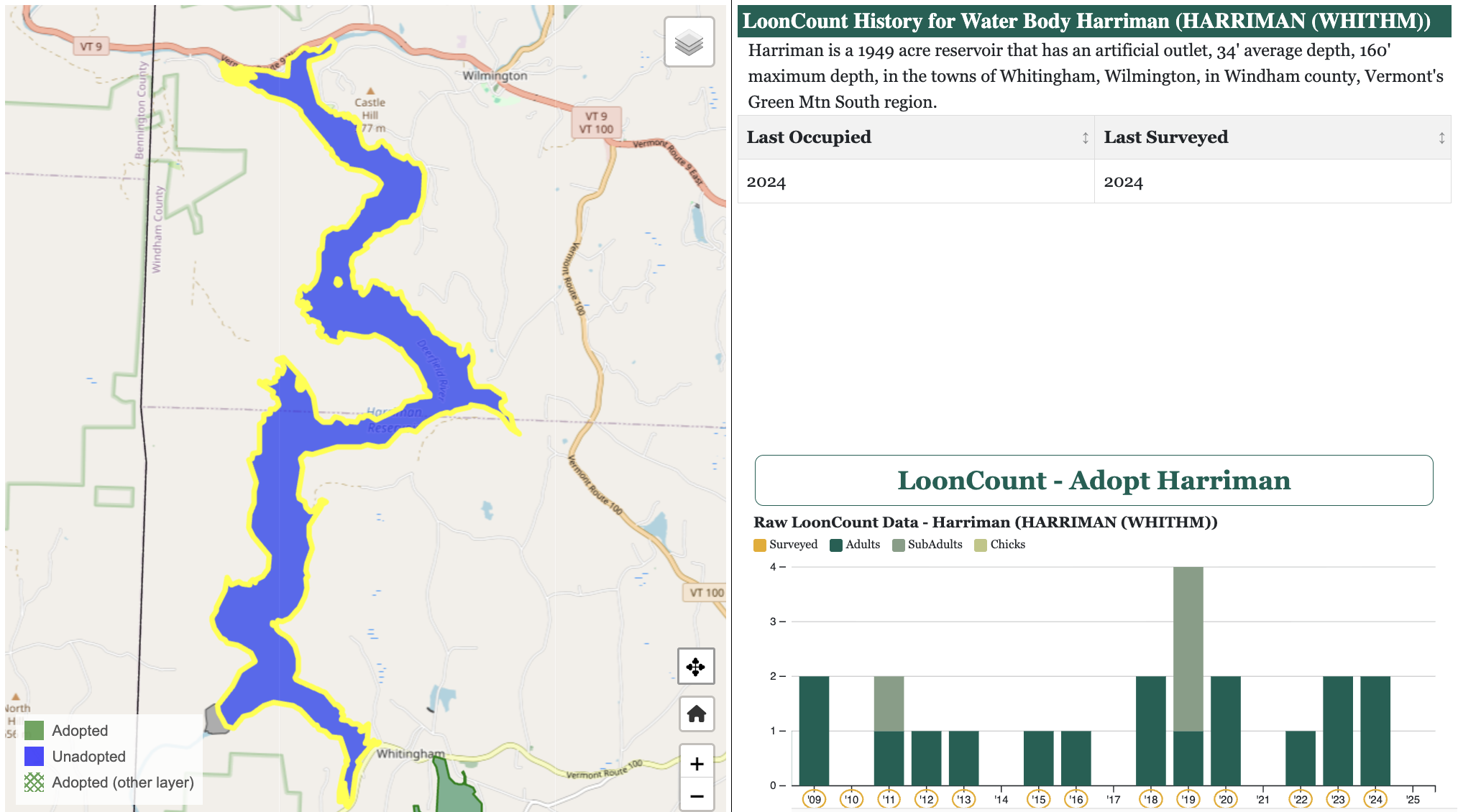
Aside from entering surveys, LoonWeb also serves as a data explorer and self-service tool to track volunteers’ lake adoptions. If I plan a trip to Southern Vermont along Route 9, I can type in Harriman Reservoir and look at the graph in the lower right to check how many loons were there in 2024, the last time it was surveyed: two adults. The lake is blue on the map, which means no one has adopted the lake to survey on the annual LoonCount. I could volunteer by clicking the adopt button on the right and head down there on July 18th to count loons.
While LoonWeb helps make things more transparent for our volunteers, it’s the administrative backend that makes a big impact for our biologists. Instead of manually tracking volunteers in a spreadsheet, Eric and Eloise can click through to the Users table, where they can quickly search for who is assigned to which lake and find where our volunteer coverage is and isn’t. This allows Eric and Eloise to recruit new local volunteers or determine where to send staff to fill in the gaps.
One of the biggest administrative tasks that Eric and Eloise face every year is collecting the loon surveys people send in by email, eBird, paper data sheet and phone message and transcribing them into the data columns of their datasheet. This year, we are releasing the survey portion of LoonWeb, which I tested out at Lake Morey. This app guides volunteers through what data to collect and lets them enter their data on their computer. (Mobile phone is still in beta testing.) Unlike eBird or iNaturalist, we don’t have a big staff or deep pockets, so the system is not perfect. However, we’ve been excited to hear from volunteers on how much fun they have had testing the survey.
Now Eric and Eloise can search through surveys that have been submitted by users. This gives them more time to analyze the data, and make better conservation strategies for our Vermont loons. Maine Audubon was so excited when we first showed them LoonWeb last year that they immediately signed up, and we’re releasing a pilot Maine LoonWeb project in June.
Everyone wishes they had more time for loons. With LoonWeb, we think we will deliver just that.
Learn how to use LoonWeb at one of our trainings, by watching our videos, or downloading our cheat sheets. They’re all at vtecostudies.com/howtoloon.
We would like to acknowledge the generous support for this project from the US Fish and Wildlife Service on behalf of the Bouchard Barge 120 Buzzards Bay Oil Spill Trustees and the Davis Conservation Foundation. You can support this work here.