Loon Love and Loss on Lake Iroquois
By Lisa Angstman, loon volunteer, as told to Alden Wicker, Director of Communications
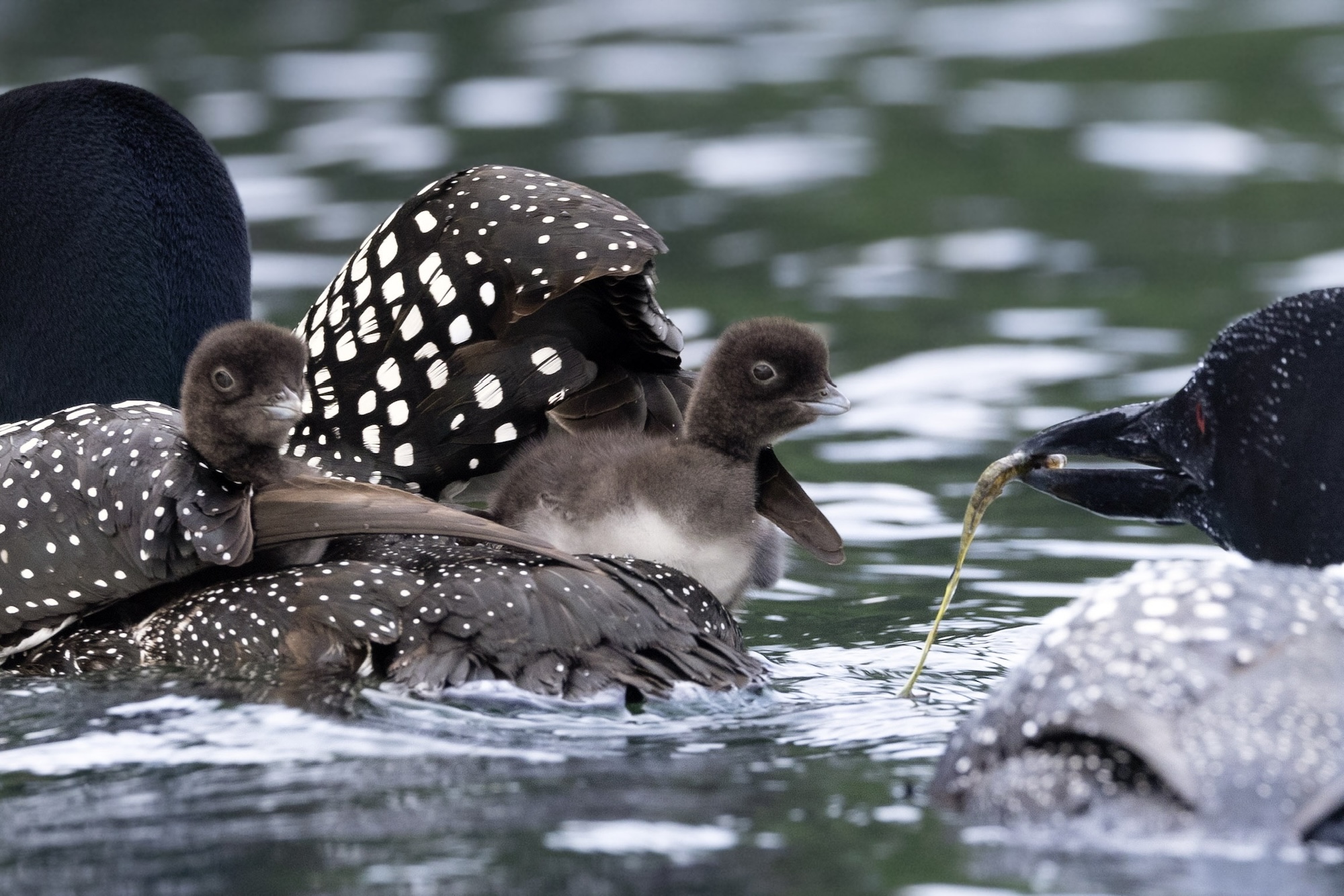
Loon chicks and their parents on Lake Iroquois by Lisa Angstman
This story ran in the 2026 Loon Caller, the Vermont Center for Ecostudies’ annual loon publication. Support Vermont loons today—select Vermont Loon Conservation Project for your online gift, or make your check out to The Vermont Center for Ecostudies with VLCP in the memo.
As a volunteer for the Vermont Loon Conservation Project, I’ve developed an interest that has bloomed into a mission to steward and study the loons of Lake Iroquois. I’m now fully dedicated to safeguarding their habitat while chronicling their story through observation and photography.
I was born in Boston but grew up in Appleton, Wisconsin. Wisconsin is home to many loons, but my childhood home was south of their breeding range, so they remained a distant mystery. I spotted them only during migration stopovers on Lake Winnebago and heard their haunting calls during family camping trips farther north.
In 1985, I moved to Vermont for graduate studies and stayed to raise four children in Williston Village. I didn’t encounter any loons on our local Lake Iroquois. At the time, there were fewer than 10 loon pairs in the state, and they were listed as endangered two years later. My interest in loons was sparked when my oldest son chose the Common Loon as the subject for a kindergarten project. We read Tom Klein’s Loon Magic for Kids and took a family trip to Squam Lake in New Hampshire, inspired by one of our favorite movies, On Golden Pond, which features loons prominently and was filmed there.
In 2016, a pair finally formed on Lake Iroquois. I was captivated by their behaviors and emotions; their language of diverse vocalizations and dances; and their goofy antics, like foot waggles, boisterous bathing, and running on water to take off.
However, the pair was not able to build a nest until local volunteer Jack Linn helped VCE Loon Biologist Eric Hanson deploy a nesting raft in 2019. I witnessed blissful success as they hatched two chicks per season from 2019 to 2023, losing only one (in 2022). I now help Jack deploy the rafts, along with his grandson and my youngest son.
Right before the pandemic, I lost my mom. That’s when I started going out every sunrise on my kayak to monitor the loons. I got into wildlife photography. Volunteering was part of my healing—it somehow mirrored my mother’s quiet nurturing spirit and love for environmental justice. It’s heartwarming to witness people from all walks of life and different ages both interested and invested in these beautiful creatures on our lake and other places in Vermont—to see how everyone around the lake comes together to keep each other abreast of what’s happening with this little loon family.
I’m also taken by the philopatry of loons. Derived from the Greek phil (to love) and patr (home), it’s a word I learned from James Paruk’s excellent book, Loon Lessons. After two to three years on the ocean, loons return to within a 40-mile radius of their natal lake. It makes me wonder if one of “our” loon chicks from Iroquois is part of the pair that recently hatched the first recorded chick on nearby Colchester Pond!
Everything was rosy until 2024, when a Ring-billed Gull killed the chicks while the parents were dealing with an intruder loon. They renested with two eggs, but I witnessed a loon swimming away with pieces of a cracked egg. The second egg was abandoned after a nearly complete incubation period.
In late winter 2025, I traveled to Lake Jocassee in South Carolina to participate in Dr. Paruk’s research project on the spring migration of loons, affectionately known as “Loon Camp.” Surrounded by the Appalachian Mountains, Lake Jocassee is one of a few freshwater migration spots for wintering loons, as well as a stopover respite for loons returning north from the Gulf of Mexico. A small group of community scientists gather annually to observe and record loon migration behaviors and patterns. One morning at first light, I watched hundreds of loons take flight.
Between the last sunrise of Loon Camp and the first sunrise of my return to Vermont, I lost one of my dearest friends. I entered the 2025 season again seeking solace on the lake, feeling grateful that I had been able to bring my friend to see the loons the previous summer.
As it turned out, the 2025 season was anything but tranquil. We put a goose guard on top of the loon nest raft, but the geese found the raft first, pulled the metal mesh off, and laid three eggs. Eventually, the loons scared the geese away, but laid only one egg. An adult and a juvenile Bald Eagle, which love to prey on loon chicks, were around during most sunrises. Another loon visited daily to harass the would-be parents. And yet, the pair successfully hatched a perfect and adorable chick!
I got to spend one sunrise with the new family. The following day, for the second time, a Ring-billed Gull killed the chick while the parents were engaged in a territorial dispute with the intruder loon. The loon pair demonstrated their grief with haunting wails all night long. But their bond seemed closer than ever—they were never separated. And it was a master class in resilience. They immediately set to renesting, laying a second clutch with one egg. Unfortunately, the pair was often distracted during the incubation of this egg as they dealt with the persistent interloper, and it didn’t hatch.
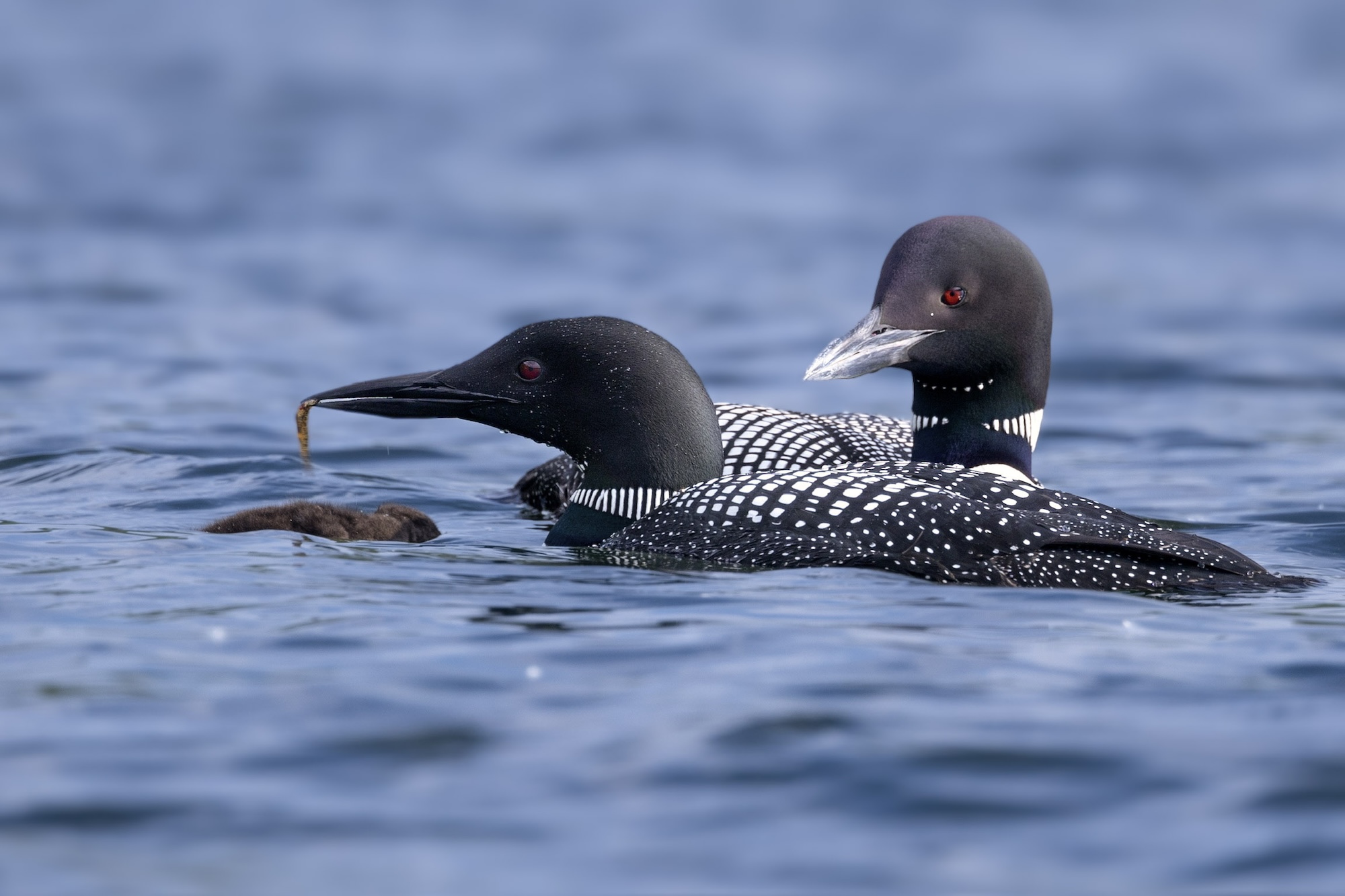
Grieving loon parents swimming with their deceased chick, trying to offer small minnows by Lisa Angstman
The whole community of loon lovers around Lake Iroquois grieved together. It was at once heavy and healing. Intellectually, I know that this loon couple is “successful” because the overall chick survival rate remains above 69%. But it’s difficult to reconcile the head and the heart, to navigate the delicate bridge between statistical success and emotional loss.
Yet lake life goes on. I’m a grandma now, and I’m so excited to introduce wildlife to my grandkids. Somehow, we’re all in this together, both human and animal. Nature—and life—can be harsh and unfair. It’s also miraculous. Observing the loons reminds me again and again of the fierce, beautiful responsibility we have toward the natural world.