New Mission for Bumble Bee Watchers in the Northeast!
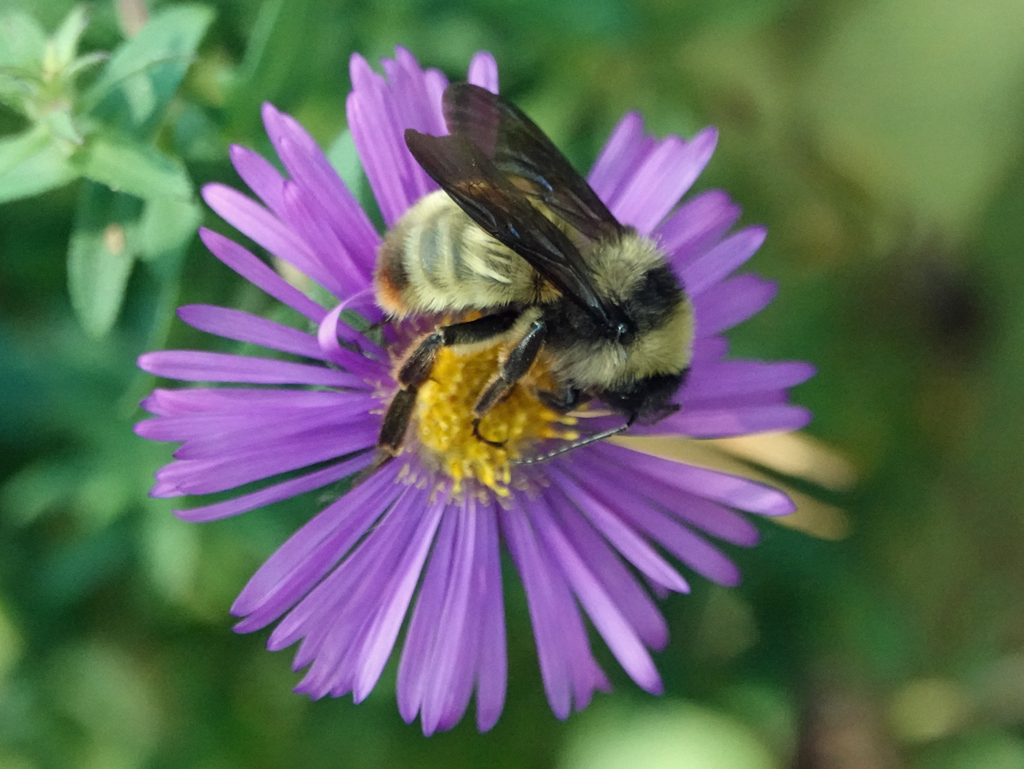
Bombus pensylvanicus visiting Symphyotrichum novae-angliae, photo by @patsuttonwildlifegarden (via iNaturalist, CC-BY-NC)
Recent research shows that bumble bees in the United States are composed of both winners and losers: some species are doing really well, while others are declining rapidly. There are several species of vulnerable bumble bees that are species of high conservation concern in Vermont and the Northeast region, including New England, New York, Pennsylvania, and New Jersey.
Although they are noted to be in steep decline, many volunteers have observed that these vulnerable bee species often visit plants in cultivated spaces such as backyards and gardens. Are these habitats providing key habitat sanctuaries for the species? VCE scientists are eager to answer this question with the help of community scientists like you and your observations across the region.
Fortunately, the Pollinator Interactions on Plants team recently received some generous funding to dig deeper into the flower visitation of several species of vulnerable bumble bees. These data will be combined with regional-wide analyses to examine where these vulnerable species are seen, where they persist, and what flowers they prefer to visit.
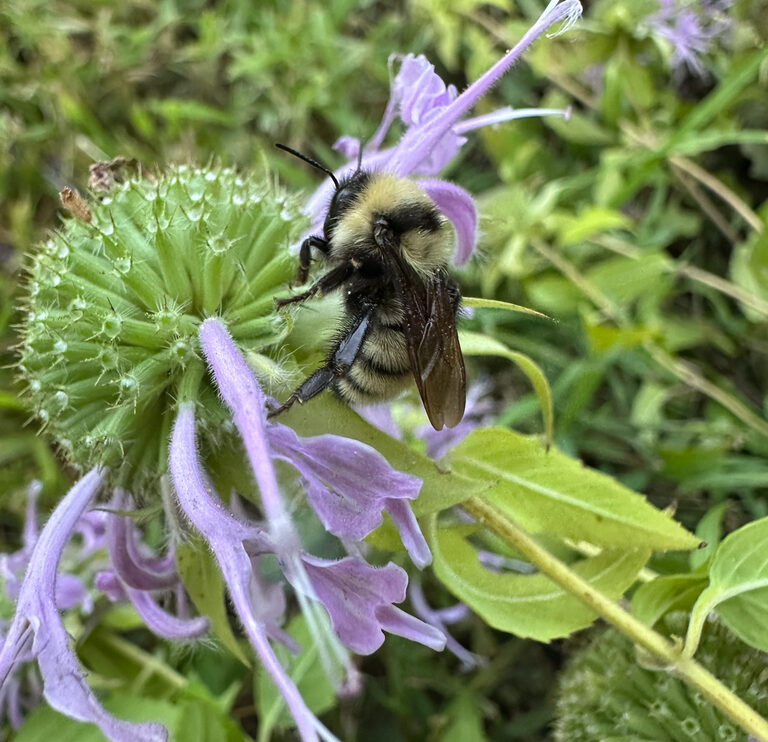
Bombus fervidus visiting Monarda fisulosa, photo by @jolafem
The Bumbles We’re Looking For
We’d like to encourage you to keep a special eye out for these bumble bees during key periods when queens are flying and when workers are out, and upload your observations to the PIP project on iNaturalist. (Here’s how to get started on iNaturalist, and join the PIP project.)
Here are the three species we’re looking for more data on across the entire Northeast (from Southern Pennsylvania to Northern Maine):
- Bombus terricola – Yellow-banded Bumble Bee (northern PA, NY, New England)
- Bombus fervidus– Golden Northern Bumble Bee (whole region)
- Bombus pensylvanicus – American Bumble Bee (southern NJ, and southern PA)
To get a better idea when these species might be seen in your area, click the species page above, then search by your state, and take a look at the seasonality chart. For example, you can see that in Vermont, queens are first seen in late April and May and workers peak in July.
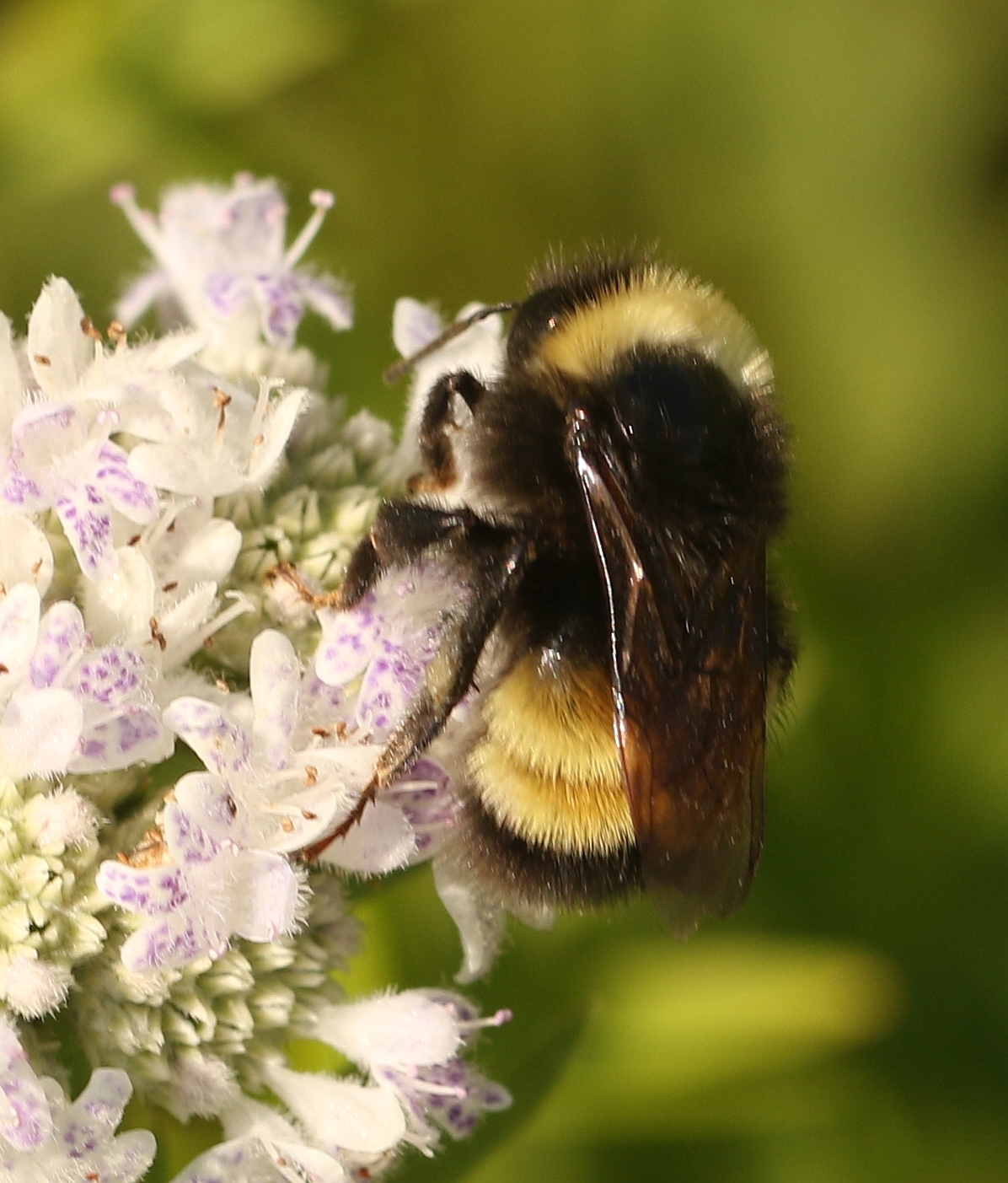
Bombus terricola visiting Pycnanthemum, photo by @farmscape_ecology
Although these are our focal species, all photos of bumble bees are useful and can be added to our datasets. Most bumble bees can be identified with a few good shots from different angles. For more info about ID’ing bumble bees, check out this guide by VCE staff biologists here.
All observations are useful observations, but if you find the bumbles visiting a flower, even better! Definitely annotate with the interaction->visited flower of field. You can also link plant and pollinator observations by uploading the plant photo as a separate observation and using the reference URL field.
Help Us by Joining iNaturalist and Adding to PIP!
Pollinator Interactions on Plants (PIP) is an engagement and data synthesis effort by VCE scientists to collect, clean, and analyze the largest dataset of plant-pollinator interactions in the Northeast. To contribute your observations to the project, you can visit our iNaturalist project page and click join.
If you already have insect-plant interaction observations in your iNaturalist account, and you want to add them to our project, use these steps to batch add them.


Hello Desiree,
I am working with a group of individuals with disabilities, putting together some simplified programs for them to participate in. One of our locations is Sunrise Farm in Enfield NH, they have fields and gardens, and I think this would be a good location for them to participate in your bee program. Any advice on a simple format for them to follow step by step instructions would be great. Navigating Apps is not a easy thing for people with cognitive issues, and visual impairments.
Hi Christine,
Thank you for your message. If you email me at dnarango [at] vteostudies.org we can discuss some possibilities.
Cheers,
Desiree