Nothing to Fear and Everything to Learn From Bees in the Garden
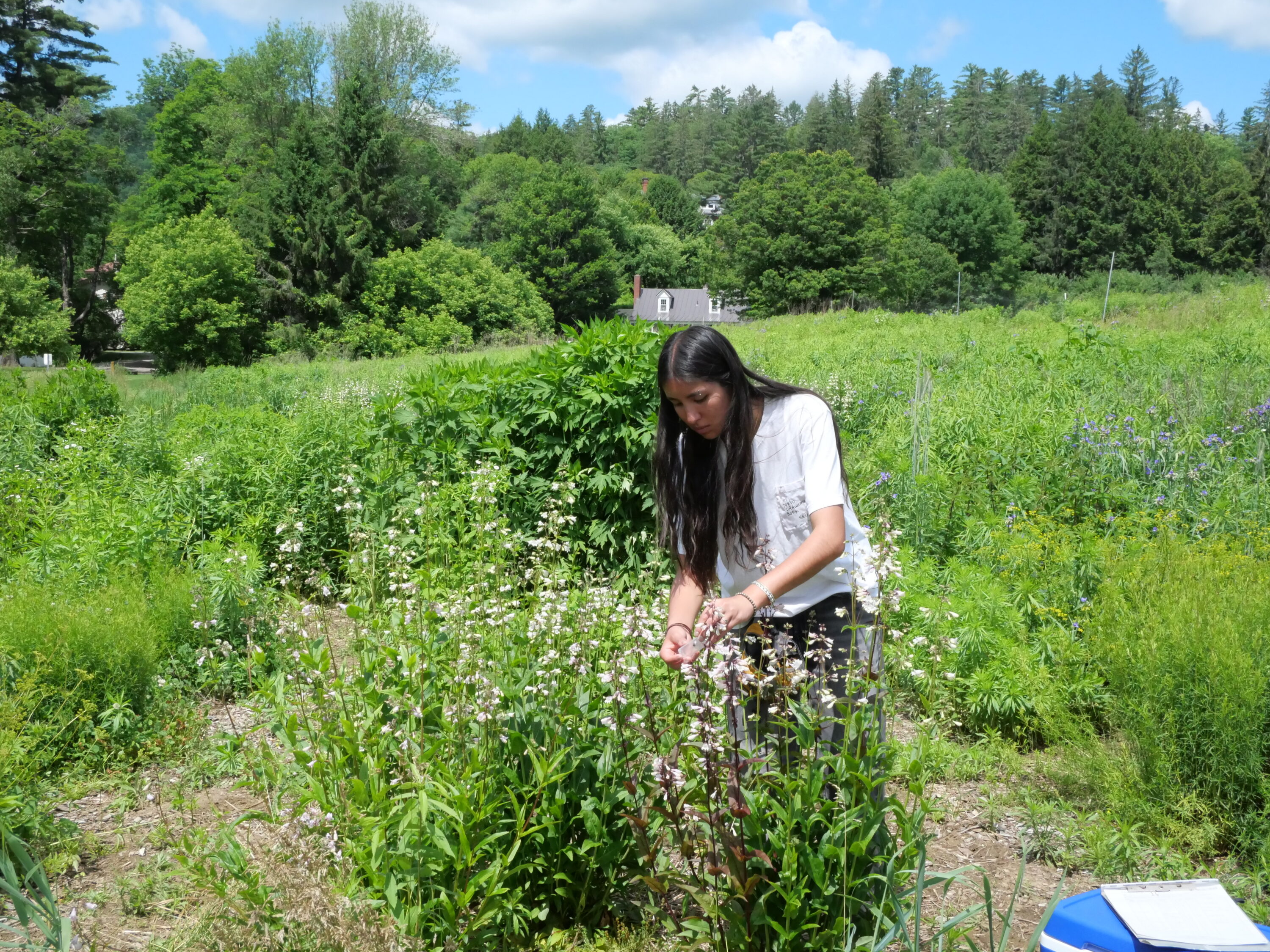
© Liv Kacar
Nia Suresh, shown here working in an experimental garden, was a 2026 VCE summer intern under VCE conservation biologist Desirée Narango.
Before coming to VCE, I had never worked with pollinators. In fact, I had a long harbored fear of bees stemming from a sting endured in middle school. There’s photo evidence of me sitting in the backseat, an ice pack around my arm as I ate consolation watermelon with puffy eyes.
My first day at one of the experimental gardens, my coworker took me through the protocol and I got to work collecting bees. Tentative at first, I started to realize that there was nothing to fear—the bees were so busy with work of their own. The large and fuzzy bees I recognized most easily. They often carried small balls of pollen on their hind legs, the weight of their bounty dragging behind them as they flew from one flower to another.
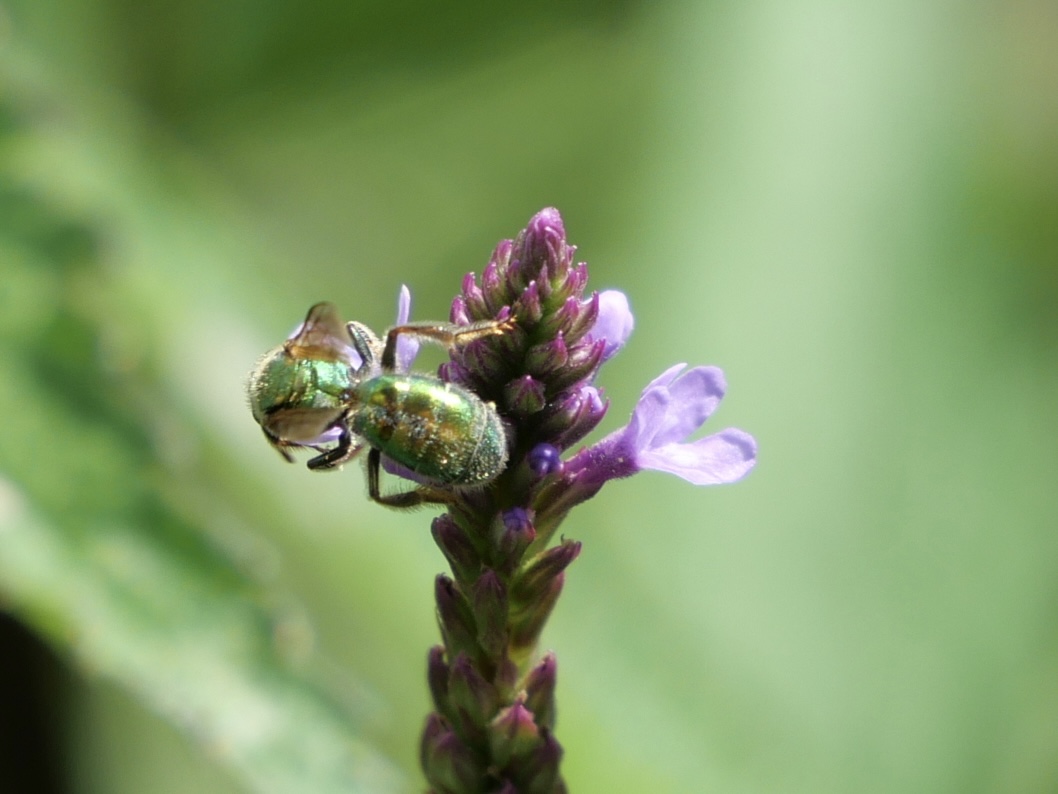
Sweat bee (family halictidae) on Blue Vervain (Verbana hastata) © Nia Suresh
What caught my eye, however, were the shimmering, green metallic bees. Unlike the large bees which I could collect with ease, these sweat bees easily out-maneuvered me. They seemed more tricky, taunting me with their glimmer as if they knew I was there. As I grew comfortable in their environment, I became more determined. When I finally caught a green sweat bee from the Augochlorini group, I sat down with the tube, rotating it endlessly. Glimpses of purple and copper emerged from its teal body. Unlike the large Bombus bees, its hind legs were coated in dustings of yellow pollen that clung to dense hairs. Not only did bees vary physically, they also had different methods of pollination and behavior.
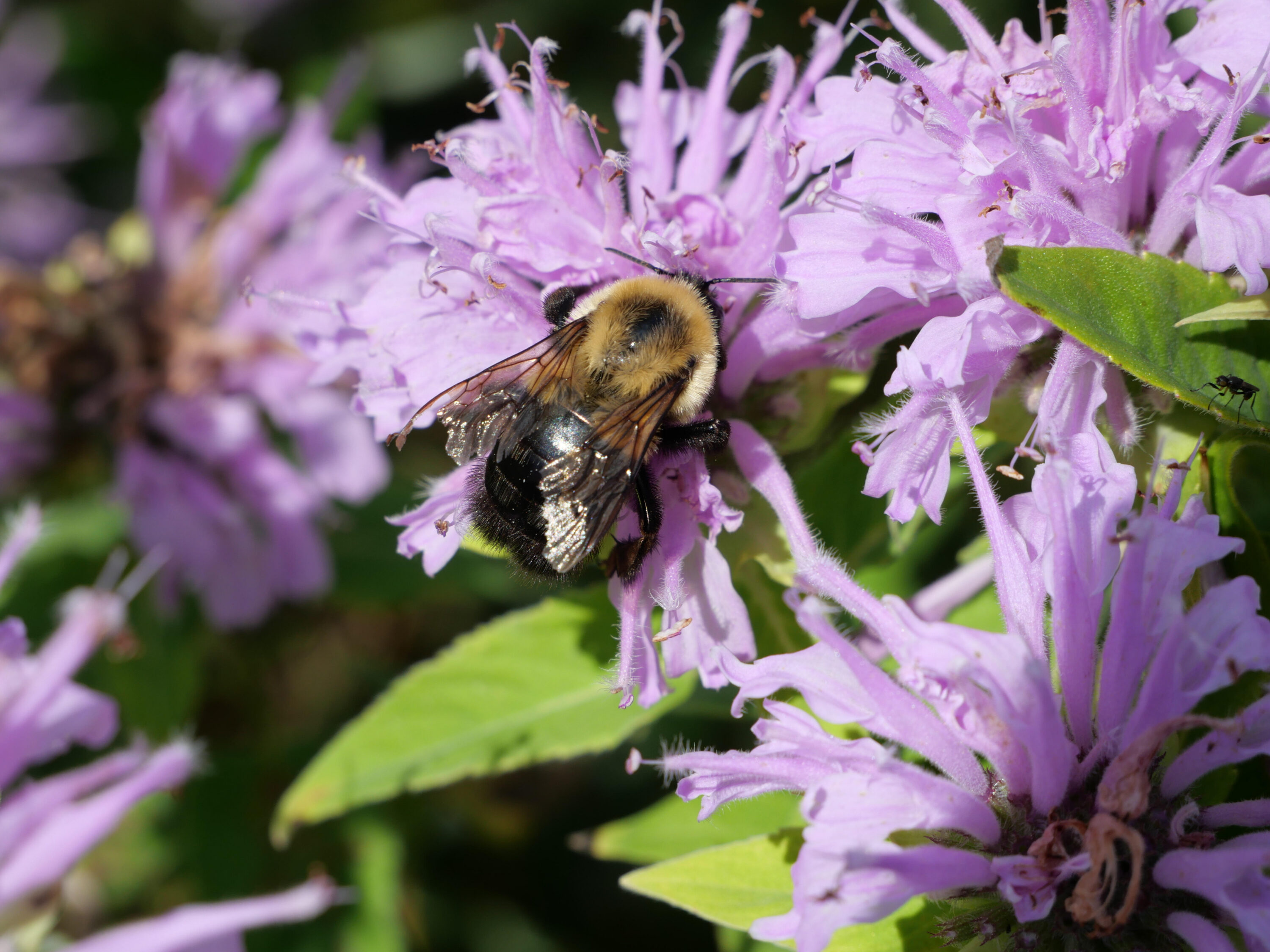
Common Eastern Bumble Bee (Bombus impatiens) on Wild Bergamot (Monarda fistulosa) aka Bee Balm © Nia Suresh
As I pinned bees and learned how to identify species, I became so absorbed in their microscopic world that I didn’t realize time was passing. I kept the book guide in my lap and carefully examined the number of antennae segments, the hind legs, the hairs, the veins of the wings, and the shape and color of the body. These are the small microscopic features that VCE scientists use to identify the 352 different species in Vermont.
This was my introduction to bees and the vast diversity of species. Not long ago, I had only known about honey bees and Bumble bee (Bombus) species, and even then, I didn’t know there were multiple species of Bombus featuring different stripe colors and patterns on their abdomens.
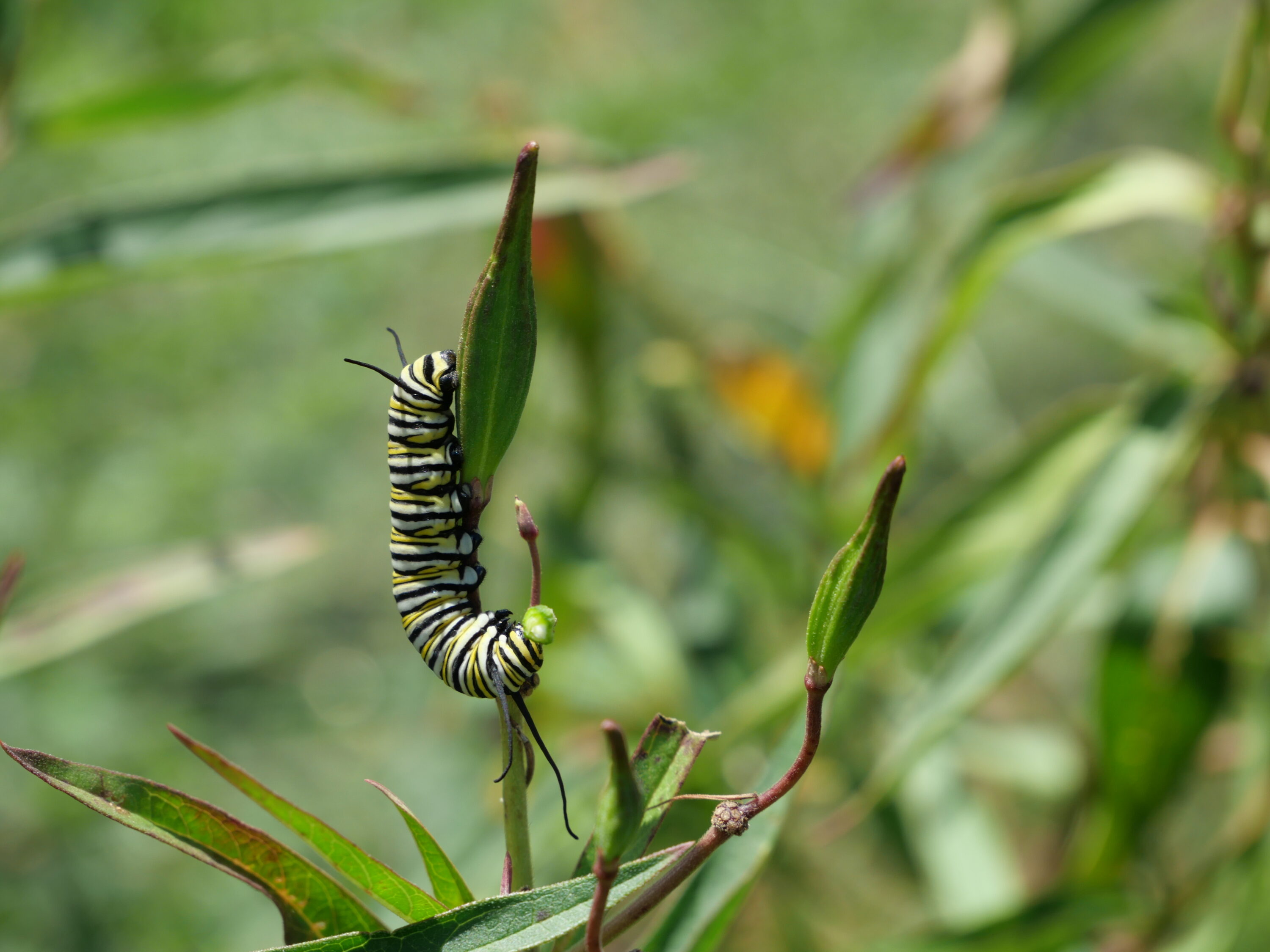
Monarch caterpillar (Danaus plexippus) on Swamp Milkweed (Asclepias incarnata) © Nia Suresh
During my last week at VCE, my coworker and I surveyed pollinators at the Hartland Library. As I crouched over the Mountain Mint (Pycnanthemum tenufolium), I noticed what I could only describe as a wimpy bee. At first glance, I recorded it as an Anthidium, but its disposition was curious. Anthidium bees were typically more sneaky. When we brought the bee back to the lab, we spent hours studying it under the microscope. Anthidium oblongatum usually have interrupted yellow stripes across their abdomen; however, this bee had minimal yellow markings that mostly appeared on the bottom segments of its abdomen. I wanted it to be a Pseudoanthidium, but there was a higher chance that it was an abnormally dark A. oblongatum. We were stumped, and there was not enough information about species of Pseudoanthidium for us to make a definitive decision. (VCE scientists will consult with bee taxonomists to determine what species it is.)
Although it might seem frustrating, the challenge was exciting. There is still so much to discover about bee species and so much variation even within a species that can make identification tricky. I’ve gotten to a point now where I can recognize a bee almost instinctively because its face is familiar, and I find myself noticing bees more and more in my daily life. Once I got to know them, I couldn’t help it. It feels like I’ve been let in on a secret world that I had been missing out on.