VCE’s Newest Project: Finding Out Where the Rusty Blackbirds Have Gone
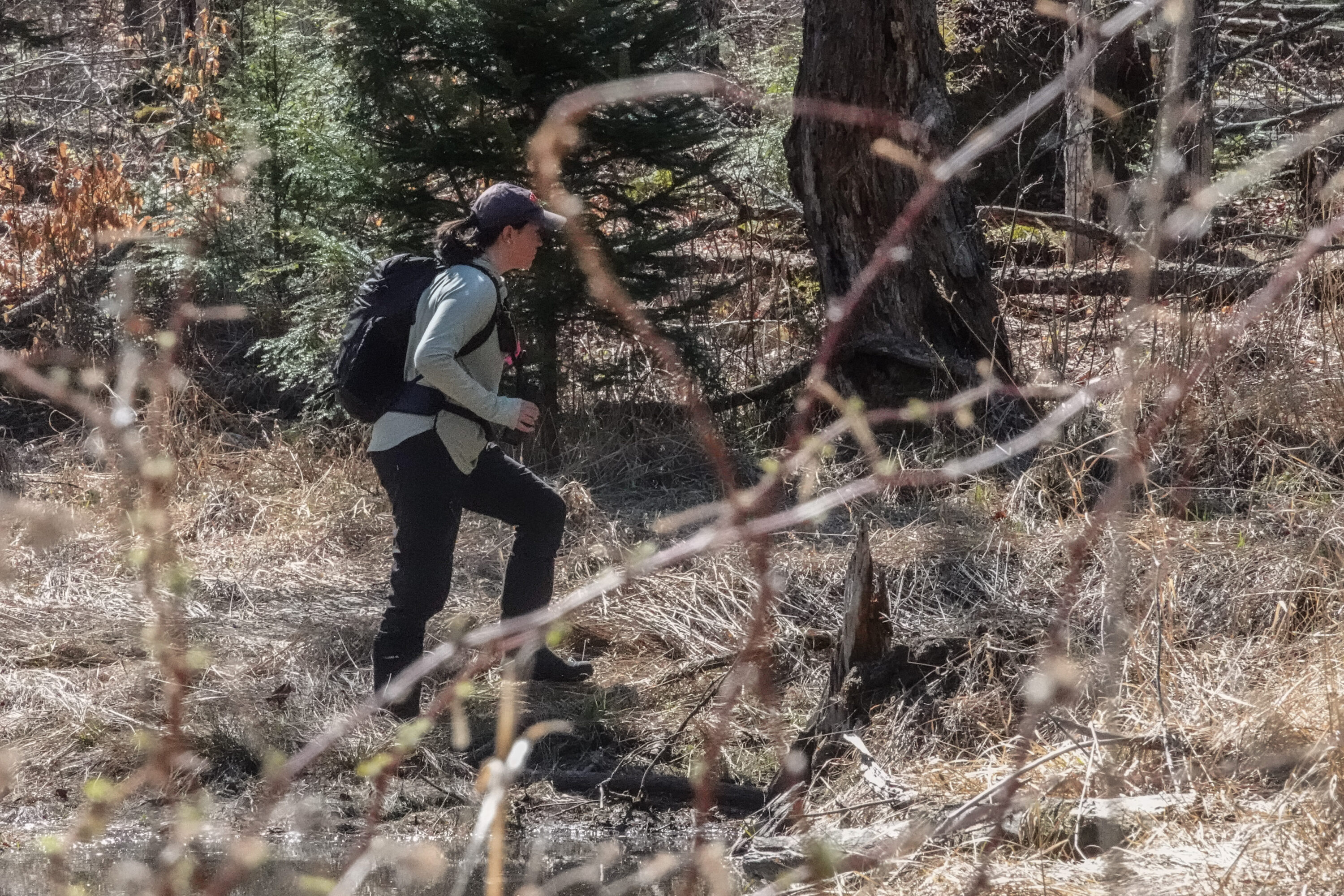
Jackie Quinones searches for a Rusty Blackbird © Mike Hallworth
Jackie Quinones is a seasonal avian migration ecology technician. Piloting a new VCE project, she searches for and tags Rusty Blackbirds in Vermont’s Northeast Kingdom. She also assists bird banding operations on Mount Mansfield, with a special focus on relocating and capturing previously tagged Bicknell’s Thrush and Blackpoll Warblers.
The sphagnum moss muffles the sound of my footsteps as I creep out of the dense spruce forest. I take in my surroundings: wood chips encircling half-gnawed trees, and the sound of water trickling its way through the beavers’ impressive dams, which have blocked the small streams and created pools of water. This area might do.
I pause, trying to tune out the noisy Northern Waterthrush and Common Yellowthroats. A familiar screech fills my ears, and I smile. Yes, this area will do. I ensure my phone is safely zipped in my pocket, take a deep breath, and begin to hop hummock to hummock, summoning my years of dance lessons to avoid falling into the water while trying to locate the sound.
The screech in question belongs to one of the fastest declining songbirds in North America: the Rusty Blackbird (Euphagus carolinus). They’re a medium-sized songbird that breeds in boreal bogs—like this one in Vermont’s Northeast Kingdom—and the subject of one of Vermont Center for Ecostudies’ newest research projects.
The ‘rusty’ in its name actually refers to how the bird looks before its rusty-tipped feathers—a characteristic identifying mark during the non-breeding season—have worn down. By the time the birds travel to Vermont to breed, the tips of their feathers have worn away. During the breeding season, one can identify males by their uniform glossy black plumage and females by their uniform dull brown plumage. They have a slender bill and pale eyes, and their shorter tail and behavior differentiate them from the abundant Common Grackle.
Male Rusty Blackbird. Photo taken by Cole Parks
Female Rusty Blackbird carrying an insect. Photo taken by Brandon Collins
Despite experiencing population declines of up to 90% across the United States and Canada and being listed as endangered in Vermont , much remains unknown about this elusive, unassuming bird. Vermont Center for Ecostudies joins the several organizations collaborating to learn more about them and their conservation concerns.
VCE data scientist Mike Hallworth and I combed through historical data and the Rusty Blackbird surveys conducted by VCE over a decade ago to determine where best to devote our time within the Northeast Kingdom for the project’s inaugural season.
I surveyed as many potential breeding habitats as I could find, with some much appreciated help from VCE staff Desirée Narango and Anna Peel, as well as Vermont Nongame Bird Biologist Jill Killborn. As I navigated old logging roads and shimmied across beaver dams (falling… a lot) Vermont’s Rusty Blackbird breeding habitat became less of a mystery.
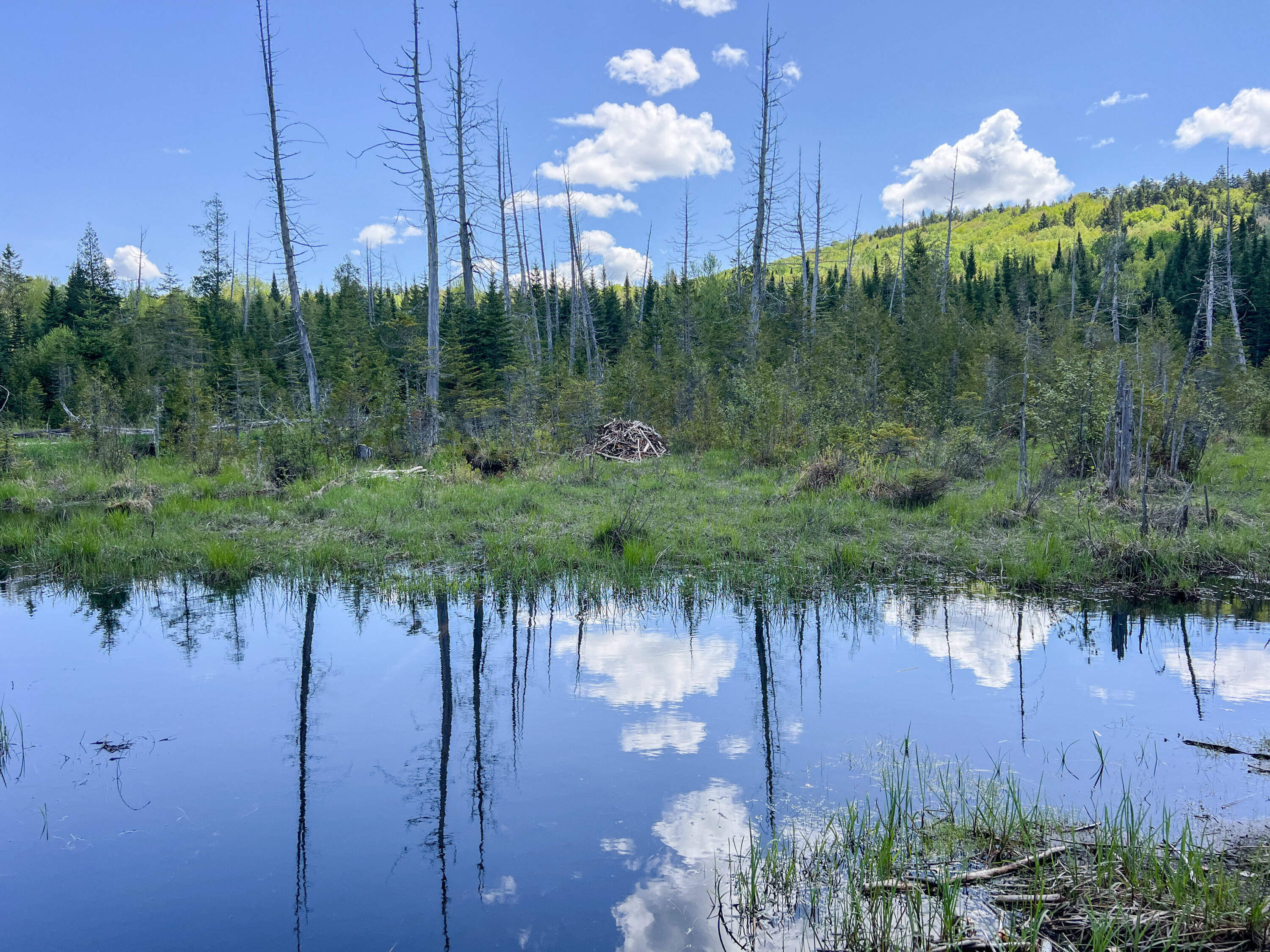
Rusty Blackbirds like breeding in or near wooded wetlands and bogs. Can you spot the beaver lodge? © Jackie Quinones
Once we found breeding rusties, the fun一and tricky一part of the project started: catching them! Breeding birds sing to establish territories for their nests. In order to catch them, biologists set up mist nets, harmless and invisible nets around 9 meters long and 2.5 meters high, within their territory and blast their song on a speaker. In response, the male aggressively seeks out the source of the song in order to defend its territory, and (hopefully) flies into the net.
Blackbirds, as it turns out, are frustratingly intelligent. Whether they veered around the net or caught on to our playback, it was a battle of wits to get these birds to fall for the trap. It may have been easier to find their secretive nests than to capture the birds themselves! However, with some patience, we managed to catch at least one individual from nearly all the breeding territories we found.
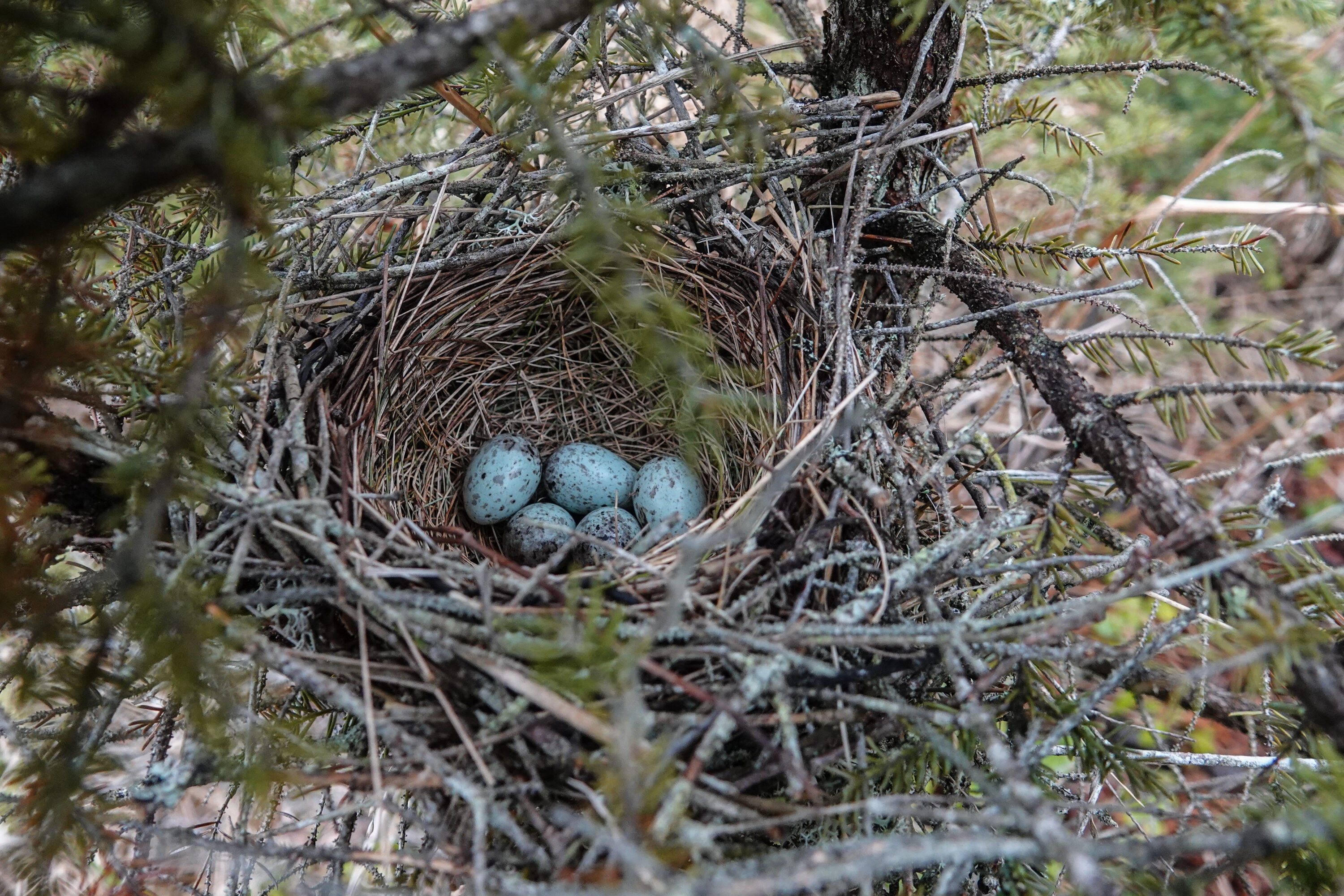
Rusty Blackbird nest with five eggs © Mike Hallworth
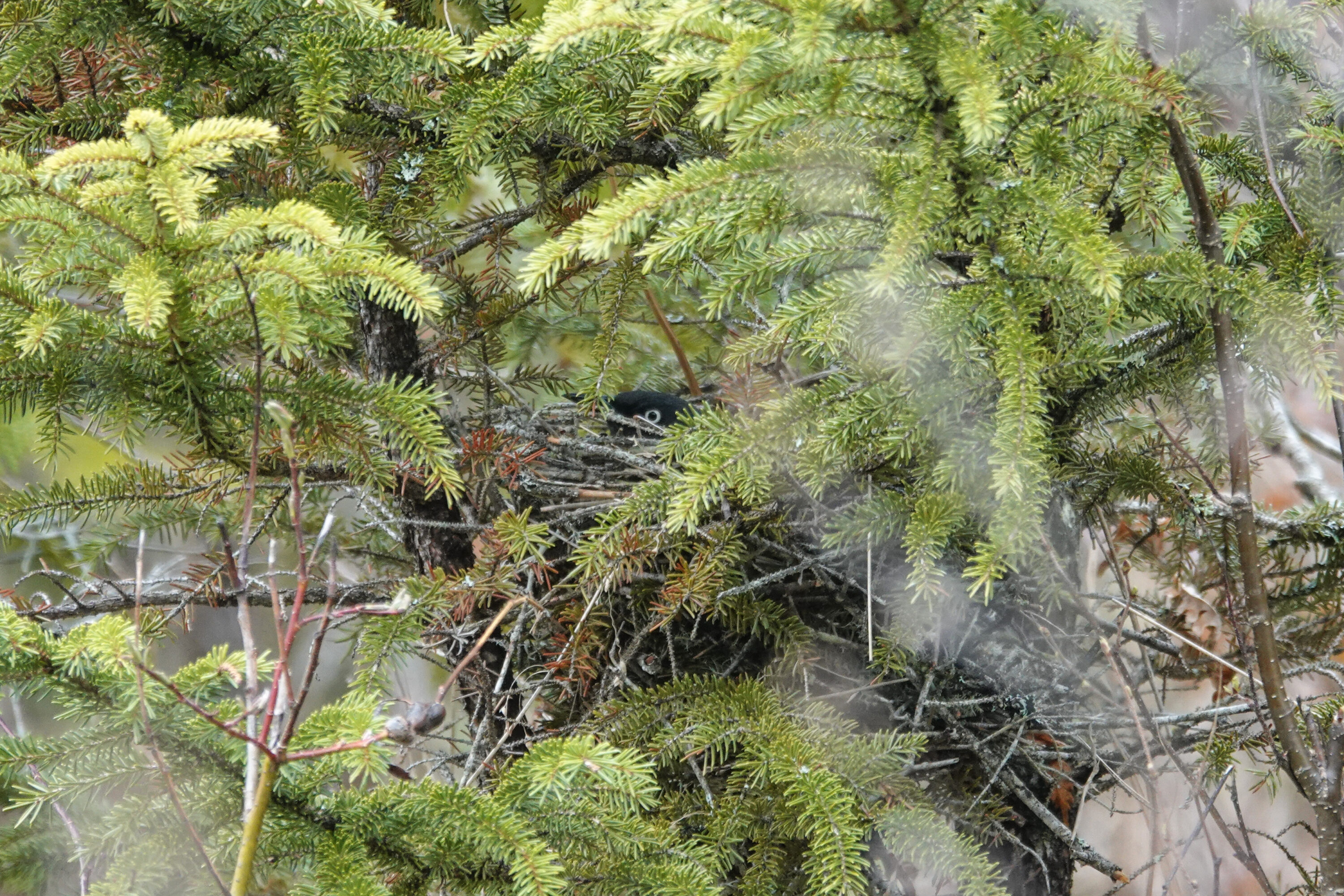
A female Rusty Blackbird on the nest © Mike Hallworth
Once in hand, we take measurements of the bird and put an aluminum USGS band containing a unique nine-digit code on its leg一all while avoiding the urge to swat the relentless black flies. If any of these birds are captured elsewhere, they will be traceable back to the Northeast Kingdom. To help identify previously captured individuals in the field with binoculars, we also apply a unique color band combination to their legs. Now this bird can be recognized in its breeding area without needing to be recaptured.
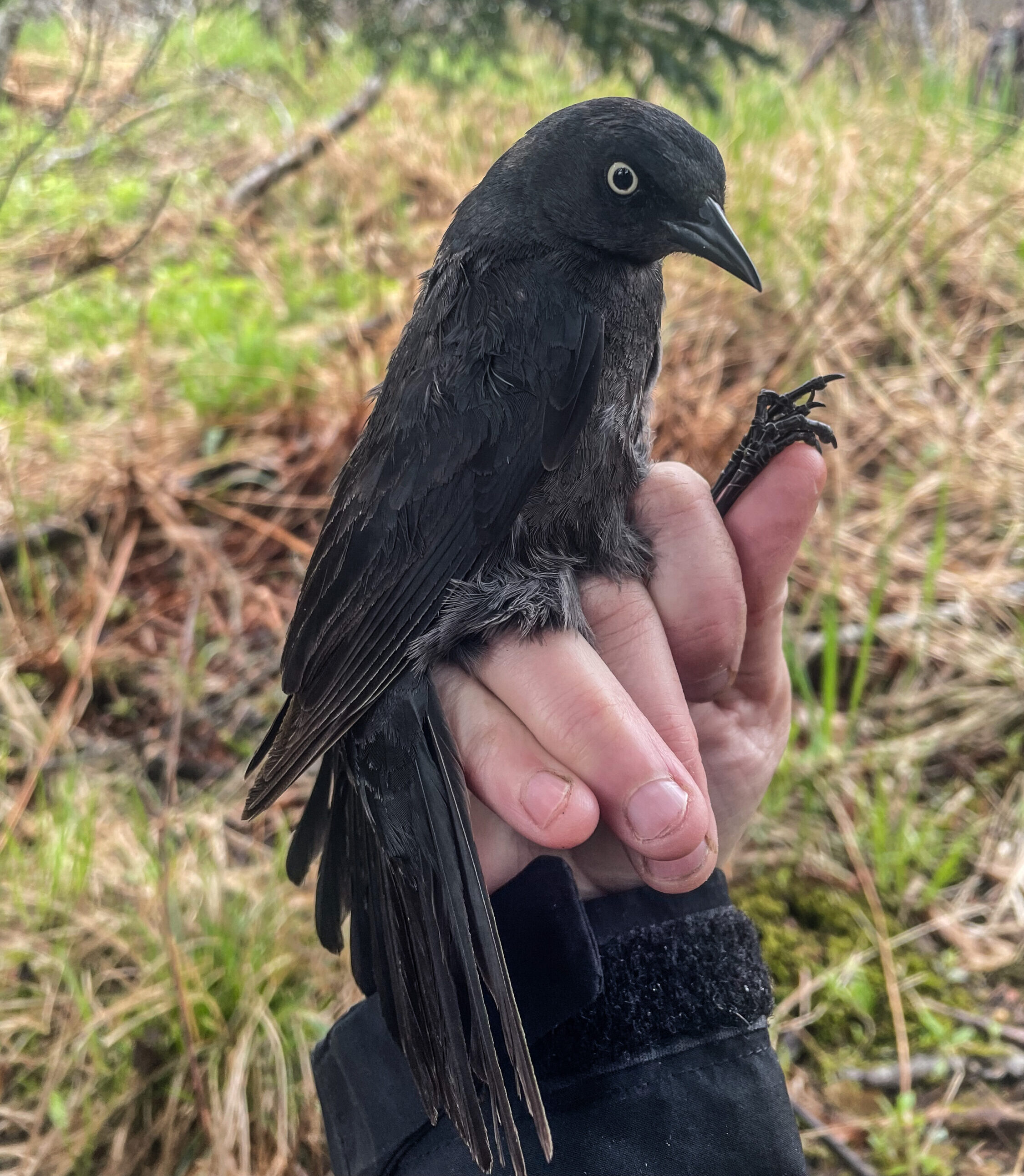
Breeding female that was previously banded as a nestling in New Hampshire. © Desirée Narango
We were delighted to find that one of the breeding individuals we caught was already banded! While this is Vermont’s first year monitoring breeding Rusty Blackbirds, New Hampshire Audubon has studied their population for more than 15 years. The first Rusty Blackbird we captured this season was a female that hatched last year, in 2025, that had been banded as a nestling by New Hampshire Audubon’s team. We’re more than happy to welcome her into Vermont!
In the hopes to find out why these birds are declining, we fitted six male Rusty Blackbirds with tiny tracking devices called nanotags. Affectionately called ‘backpacks,’ they yield insight on birds’ movement patterns, helping us determine when and where they are traveling.
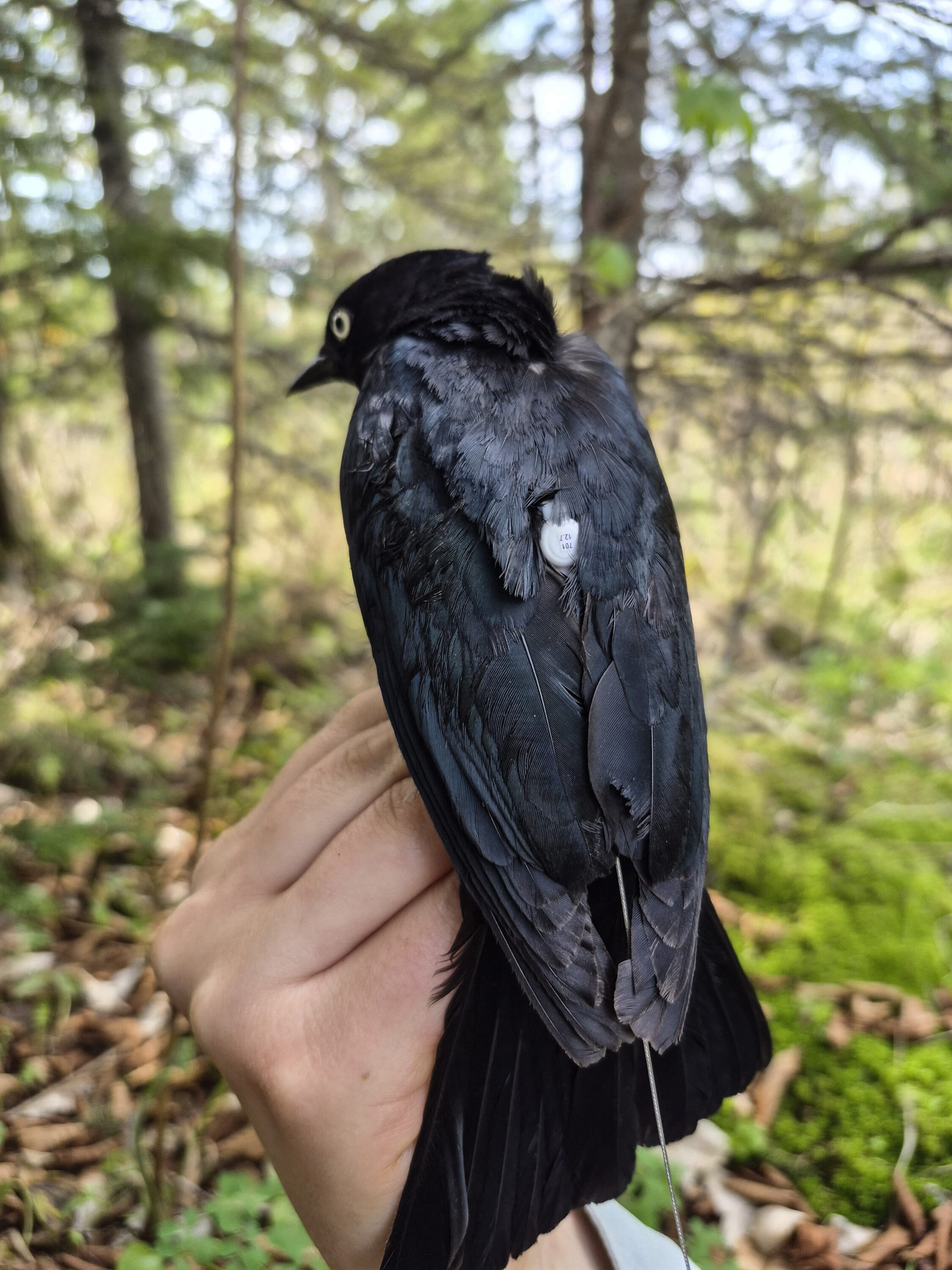
Male Rusty Blackbird fitted with a nanotag. © Anna Peel
Prior to fall migration, we can track individuals in the field using a portable receiver and antennae. Doing this, we can start asking questions like: Is their breeding habitat different from their post-breeding habitat? Do families stick together or do they separate after nesting?
During migration, the birds’ tags can be detected by Motus towers, special radio-receiving stations, along the way to their wintering areas. Depending on the year, their wintering areas can be as close as Connecticut and as far as South Carolina. From this data, we can start to understand the risks the birds face and where and when individuals are dying within the annual cycle.
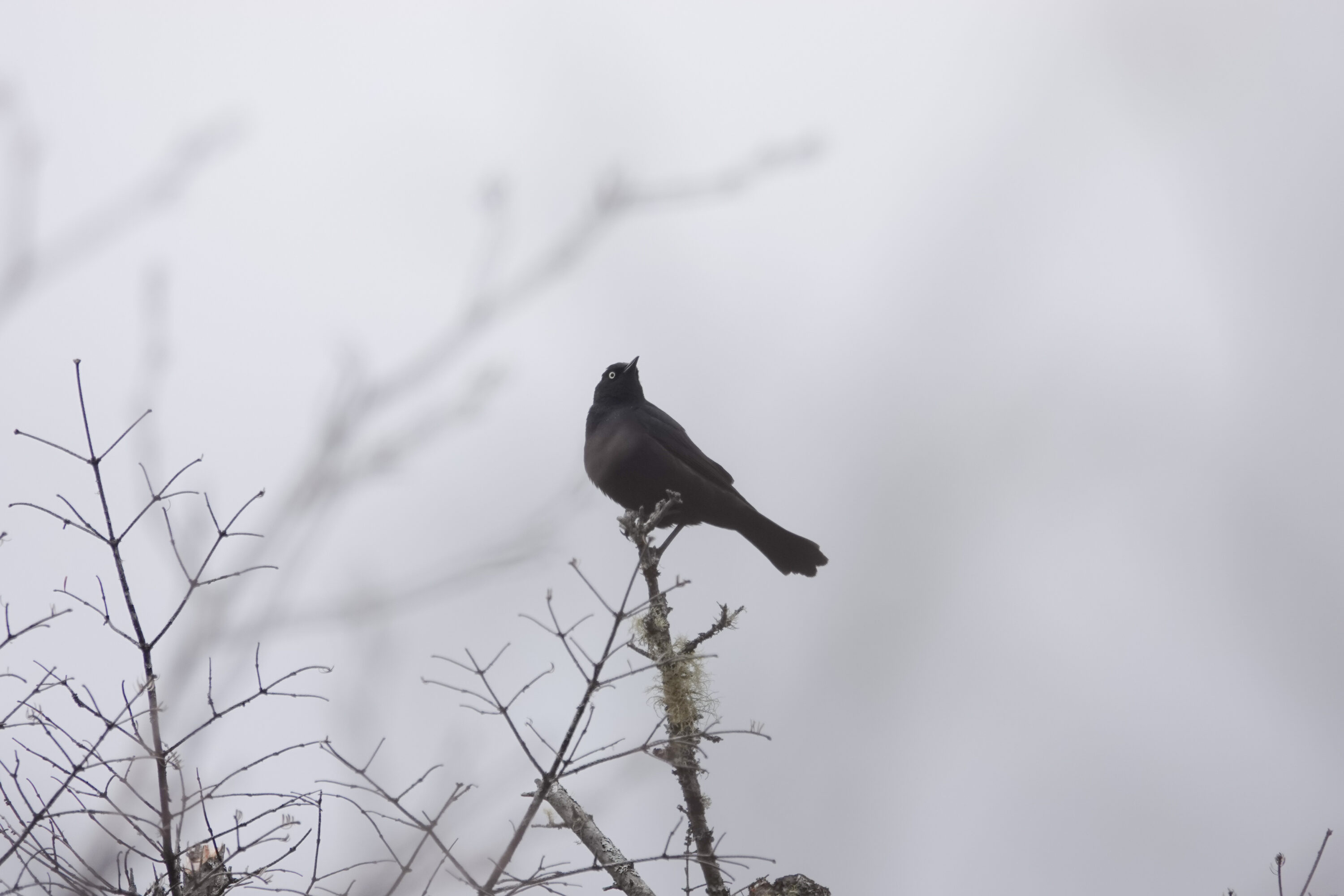
Male Rusty Blackbird keeping a keen eye on the female as she builds a few meters below © Mike Hallworth
While there are still many questions to be answered about Vermont’s breeding Rusty Blackbirds, it’s safe to say this pilot field season was successful. We are eagerly awaiting to discover where the tagged birds travel to once migration starts.
To support future Rusty Blackbird research and other science projects at VCE, consider making a donation. We’re immensely grateful for any and all support.