When the Prize Flies Away
By Jill DeVito, Seasonal Butterfly Atlas Technician
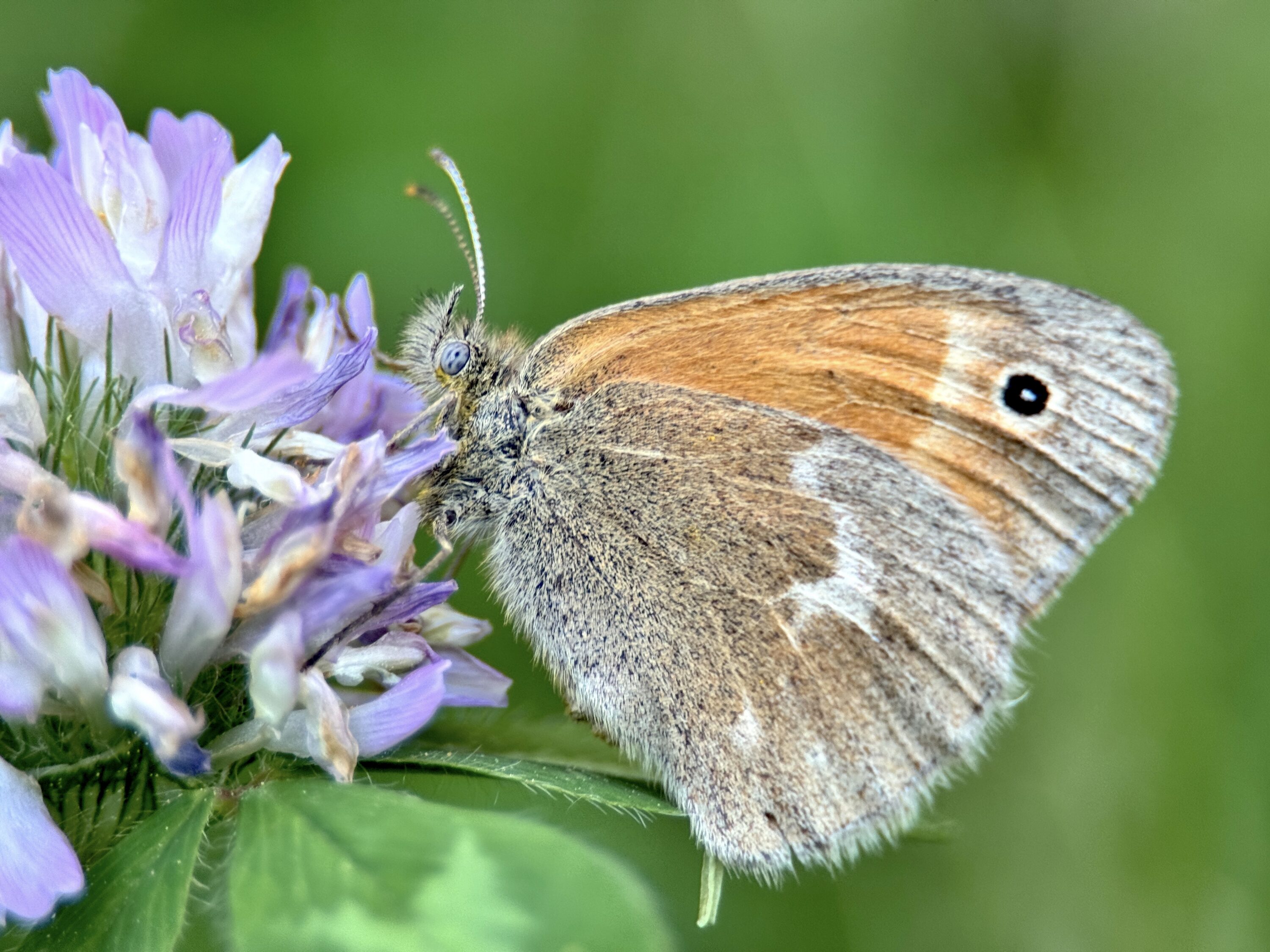
Common Ringlet (Coenonympha california) © Jill DeVito
The Second Vermont Butterfly Atlas is a rare opportunity for us to understand how butterfly populations have changed, and prescribe conservation actions to keep common species common, and reverse the trends for those in trouble. Please consider making a gift to the Vermont Center for Ecostudies before the end of this year to support butterfly research and other projects like this. Every contribution, no matter the size, makes an impact.
I learned of the Second Vermont Butterfly Atlas at a VCE community science workshop in 2024. It was butterfly weather (warm and sunny), and we romped through waist-high vegetation in search of midsummer butterflies. To my amazement, we found 17 species in a few hours. I also learned a new trick: how to get a good look at a butterfly by capturing it in a net and holding it in a clear container for a brief photo session.
The VBA2, as we call it, is a five-year survey to document how butterfly diversity and distributions may have changed since the first Vermont Butterfly Atlas 20 years ago. This past winter, I found out that VCE was hiring a full-time seasonal technician to help supplement the volunteer data-collection effort. As an ecologist and nature nerd, I imagined spending my whole summer in the field—on a monthslong easter egg hunt during which the brightly colored treasures try to fly away—and decided to throw my hat in the ring. I knew I had a lot to learn about butterflies, but that would be part of the fun. After hearing I had made the team, I decorated my fridge with a hundred illustrations of butterfly species I might encounter in the state.
In the months that have passed since my first day in May, I’ve gotten to know the insects on their own terms. I’ve swung my net at thousands of butterflies in the fields and flowers and forests of Vermont—from village centers to wetlands and mountaintops. Sometimes I head out alone, but more often I’m with my new friends on the VCE butterfly team or with community science volunteers.
I’ve graduated from being able to only tell a fritillary (tribe Argynnini) from a swallowtail (subfamily Papilioninae) to recognizing the field marks that set each fritillary species apart from the others. I can now distinguish among a dozen closely related and highly variable skippers (family Hesperiidae). I’ve taken thousands of butterfly photos with a macro lens attached to my smartphone—my favorite part of the job. I’ve entered more than a hundred checklists into eButterfly, so that atlas managers (and anyone else) can utilize the data our team has collected in the field.
Most importantly, I’ve discovered that looking for butterflies is not only more challenging but also much more exciting than looking at butterflies when they happen to cross my path. All butterflies are elusive, but there are many species you’ll simply never notice until you really spend the time looking for them.
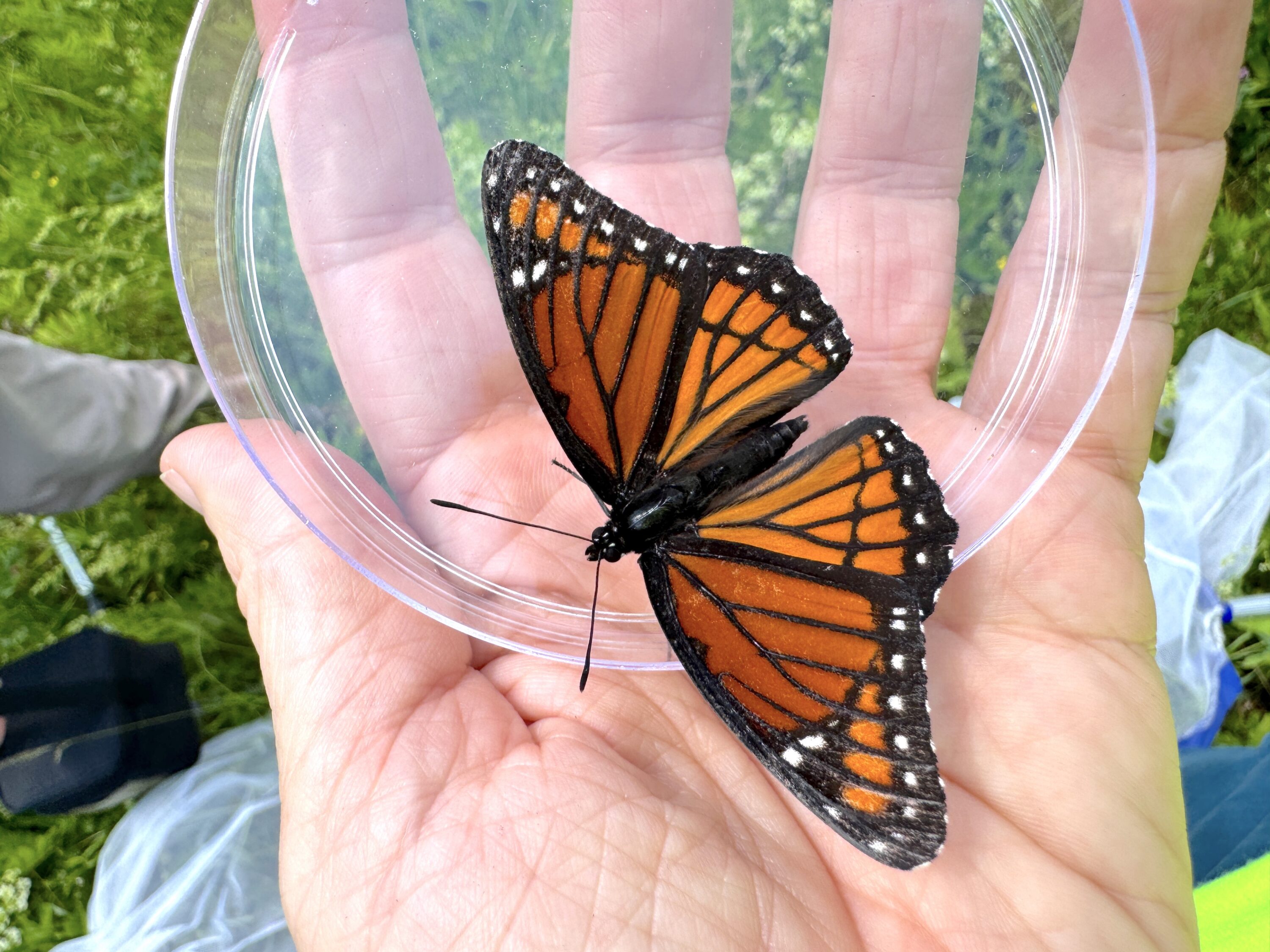
Viceroy (Limenitis archippus) © Jill DeVito


Hello, I have about 12 painted lady chrysalis we are watching at Spruce House. I am wondering if you would like to help us release them. We are a community science program, Wild & Able for people with disabilities bringing accessibility and inclusion to everyone.