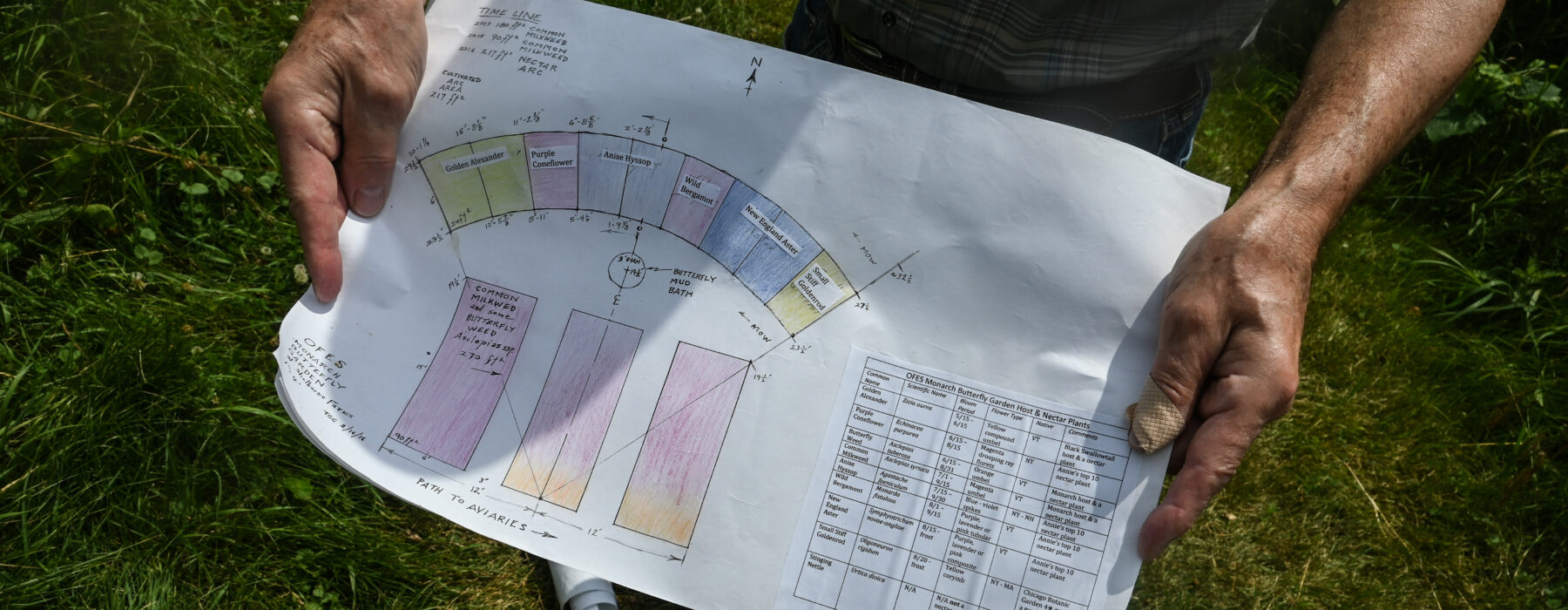
- Plant a pollinator garden. Replace a section of your lawn with some native plants—here and here are lists of pollinator-friendly native plant species for the Northeast. If you’re feeling more ambitious, visit the Xerces Society website to learn how to establish a pollinator meadow! You can also support native “specialist bees” (bees that rely on a single host-plant species, genus, or family)—check out Cornell University’s Creating a Pollinator Garden for Native Specialist Bees for all the info you need to create specialist habitat in your yard.
- Avoid pesticides. More than one billion pounds of pesticides are applied in the U. S. each year. The widely used insecticides called neonicotinoids or “neonics” are especially lethal to birds and the insects they consume, but even pesticides marketed as “bee-friendly” or “green” can harm beneficial insects. Contact our biologist Desirée Narango to learn more about the latest research on pesticides and pollinators, or Jason Hill to learn about tick spraying’s effect on other insects.
- Participate in community science projects, Help VCE document the status of poorly-understood pollinators through our Vermont Wild Bee Survey and eButterfly. Record your observations of pollinating insects (and others) on the Vermont Atlas of Life iNaturalist. Get involved with the Xerces Society, and learn about their Pollinator Conservation Resource Center.
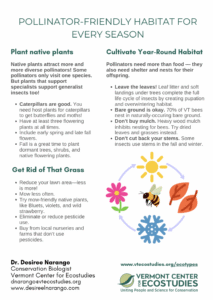
PDF: Pollinator-Friendly Habitat for Every Season
PDF: Bee-Friendly Landscaping in Vermont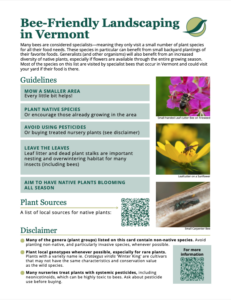
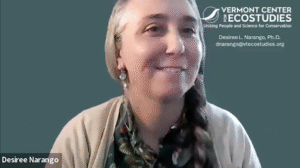
Video: Native Plants and Pollinators with Desirée Narango
Spend an hour getting excited about native plants and their pollinators. VCE Conservation Biologist Desirée Narango will share her extensive knowledge and delve into her research projects that center plant-pollinator interactions.
 Video: Vermont’s Wild Bees with Spencer Hardy
Join VCE Executive Director Susan Hindinger and bee biologist Spencer Hardy for insights into Vermont’s bee diversity. Together, they discuss key takeaways from the 2022 State of Vermont’s Wild Bees report and explore its conservation impacts in Vermont and beyond.