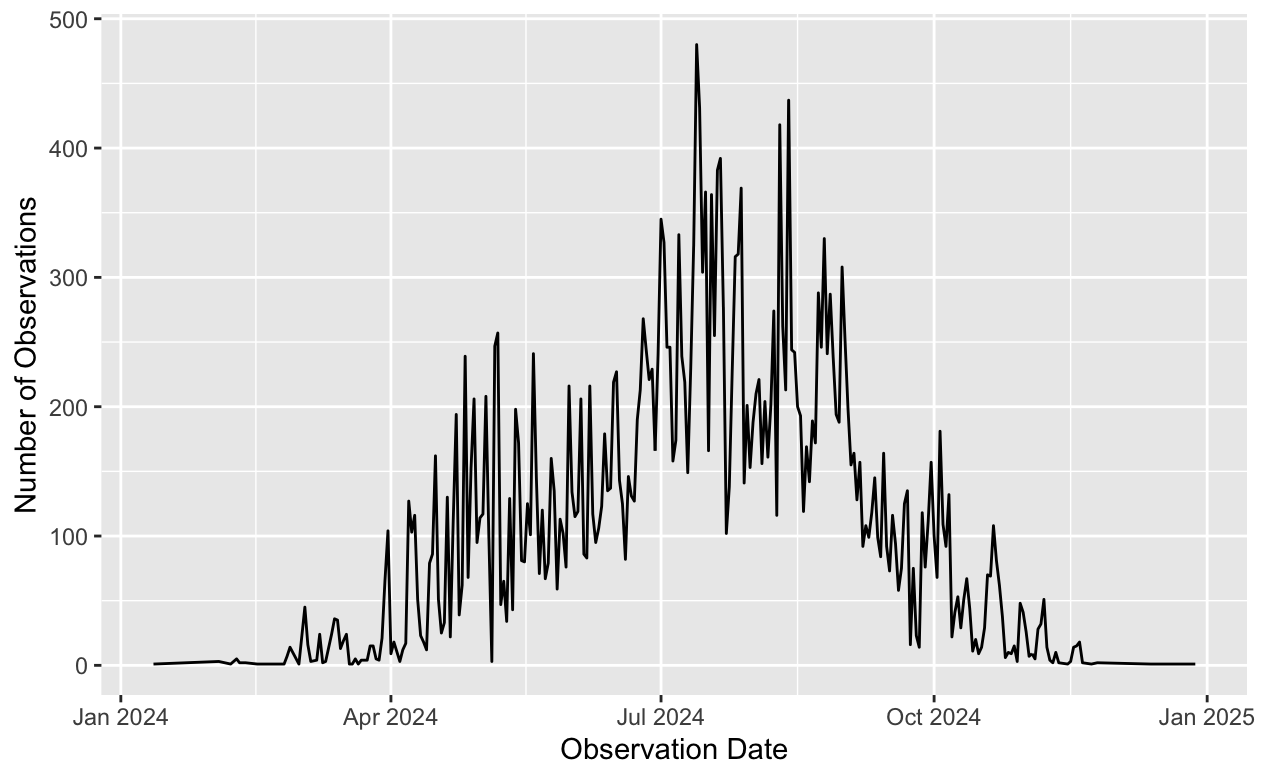
By July of 2025, over 250,000 observations had been submitted to the PIP project, whether from volunteers in the field, or combing through and annotating old records.
October 2025 Updates

PIP’s 250,000th record: Texas Leafcutter Bee (Megachile texana) in Massachusetts visiting a Butterflyweed by @rangerharles
PIP team seeking funding to scale predictive interaction modeling to the Northeast.
For the last two years, Desirée Narango has been working with a team in California to better understand how to best analyze opportunistic interaction data. The team received some funding from the National Ecological Synthesis and Analysis Center (NCEAS) to convene a few working group meeting (i.e., hack-a-thon) to think through this question. This group of dedicated scientists and practitioners across several universities and NGOs has resulted in a state-wide analysis of California plant-pollinator interaction data, as well as incorporation into California Native Plant Society’s Companion Plant Tool. You can read more about it here in Flora.
Now we are ready to scale to the Northeast! By combining observations from iNaturalist, plus Globi and GBIF, we have more than 550,000 interaction observations across nine states, and thousands of species distribution models for plants and insects. But the analysis, and incorporating those results into interactive tools, is not easy, and takes personnel time. We currently have two proposals in review to start that process and provide a foundation for bringing that reproducible workflow to the Northeast.
Papers in Progress
We have two papers we are currently working on that we submitted to be included in a special issue of ‘Network Ecology in the Anthropocene’. One of those uses more than 10,000 Ruby-throated Hummingbird observations to assess how observations of anthropogenic subsidies (feeders and non-native plants) changes over space and across the season. We also do a deep dive into what traits best predict hummingbird visitation, and whether the conclusions made at small single-site scales is simikar at large regional scales.

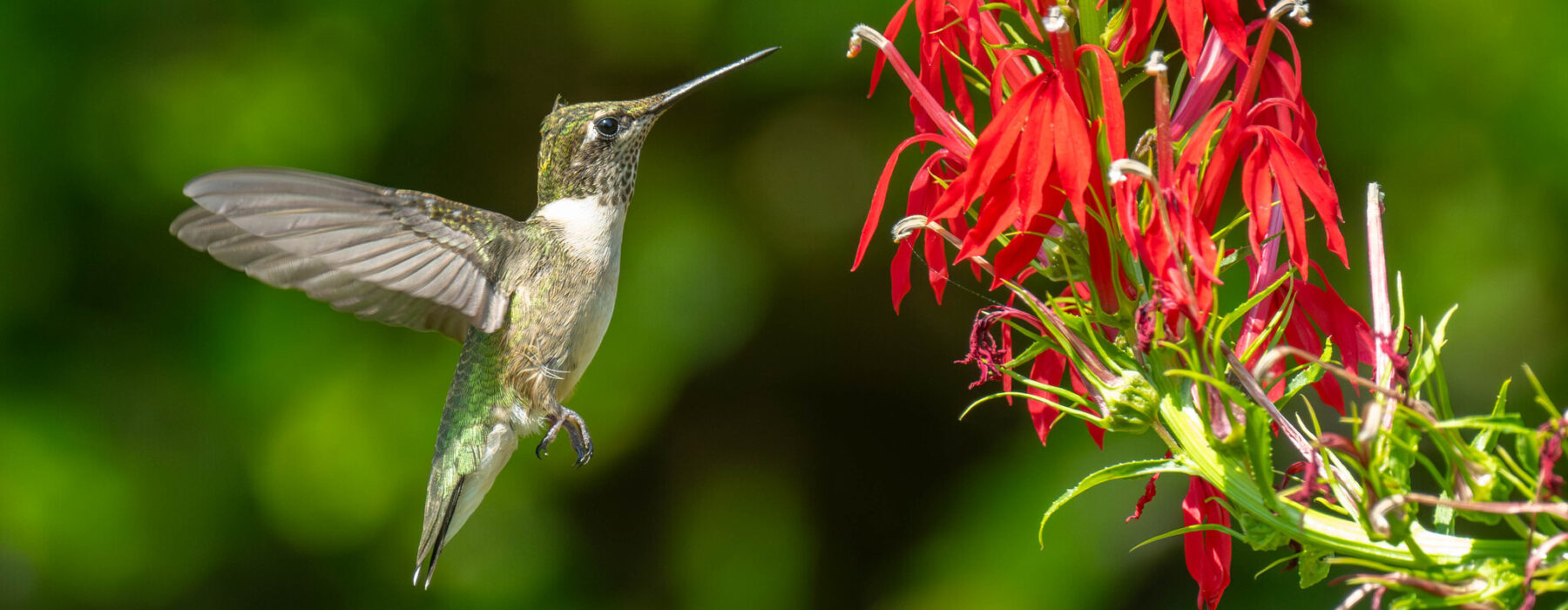
Ruby-throated Hummingbird visiting Cardinal Flower by @jbarcus
We also have a paper where we compare Bumblebee (Bombus sp.) interaction data across three different datasets to look at similarities, differences, and biases. Not surprisingly, different datasets provide different data, and the biases are related to who does the collecting, where it’s museum specimens, scientists, or volunteers. However, across species, iNaturalist data skyrocketed interaction data collection showing the strong potential for community scientists to transform our understanding of plant-pollinator interactions.
Science is slow, but we will be hoping to get these papers submitted this winter for publication next year. As soon as they are publicly available, we will share them with the group.
December 2024 Updates
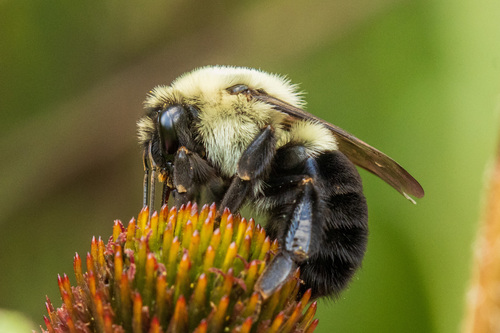
Bombus impatiens
In 2024, with the help of 3,126 individuals who contributed observations and the 1,392 who identified species, elevating them to research grade status, we documented 31,953 pollinator observations spanning 1,136 unique species across the Northeast’s urban and rural landscapes.
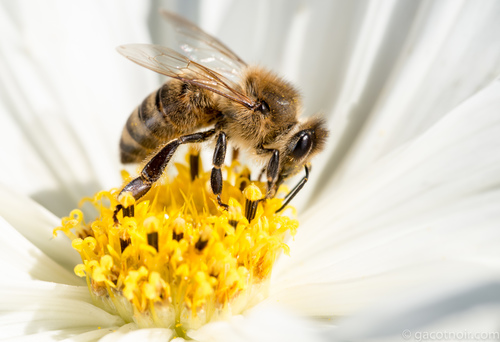
Apis mellifera
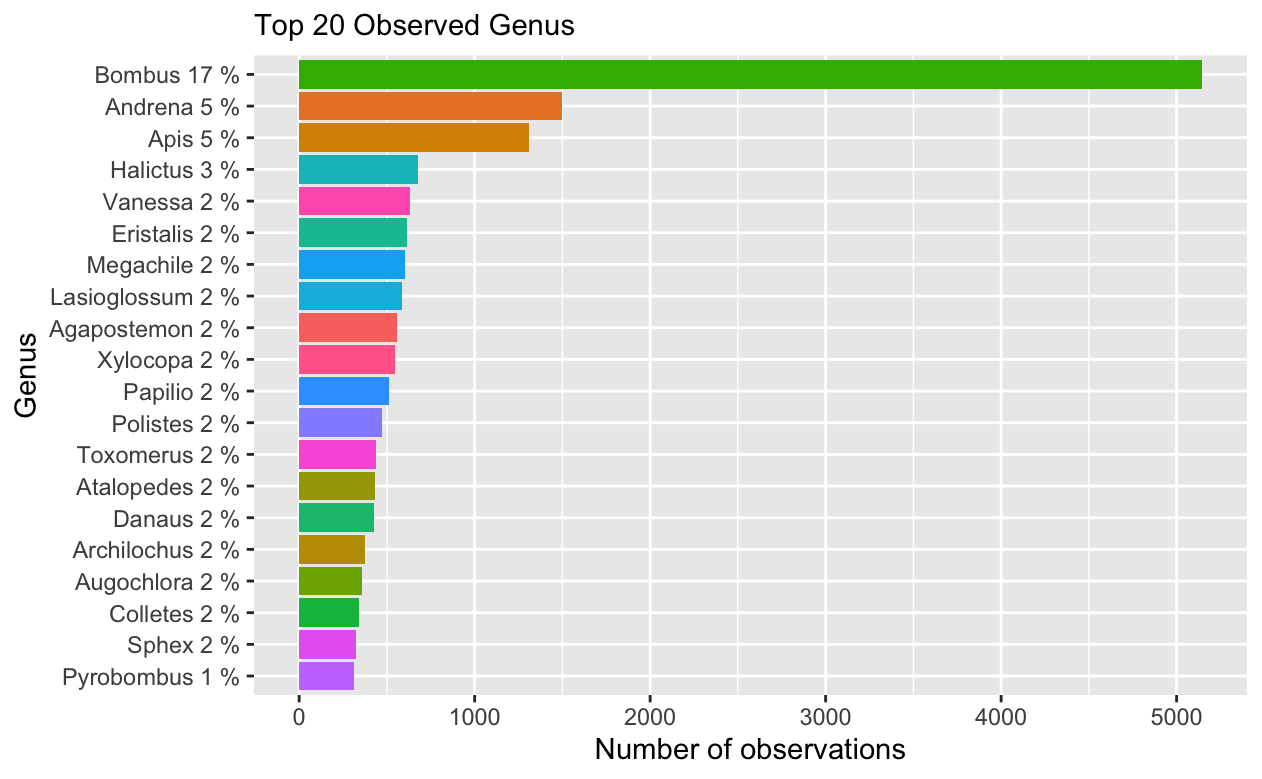
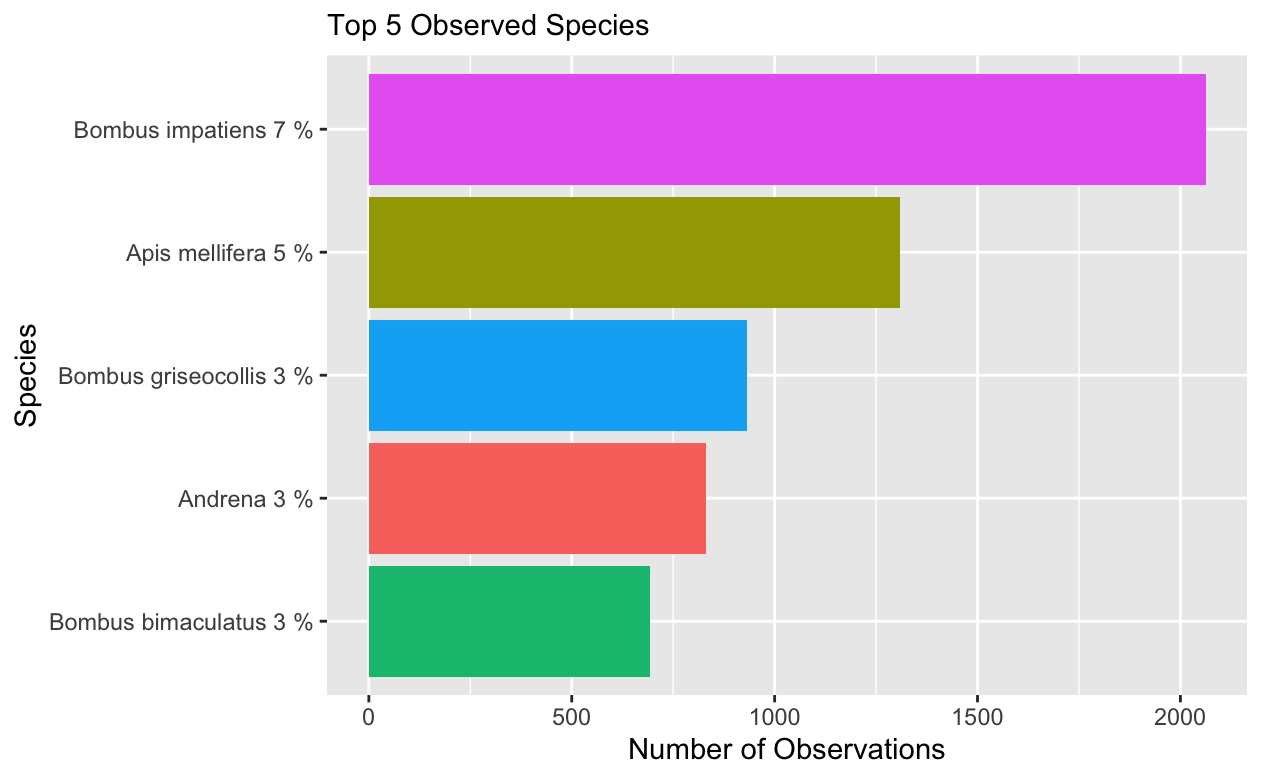
The Bombus genus, specifically the Bombus impatiens (Common Eastern Bumble Bee) reigned supreme with 2,062 observations. Following closely was the Apis mellifera (Western Honey Bee) at 1,309 observations.
Peak Season: As expected, observations peaked during the warmer months from May to October.