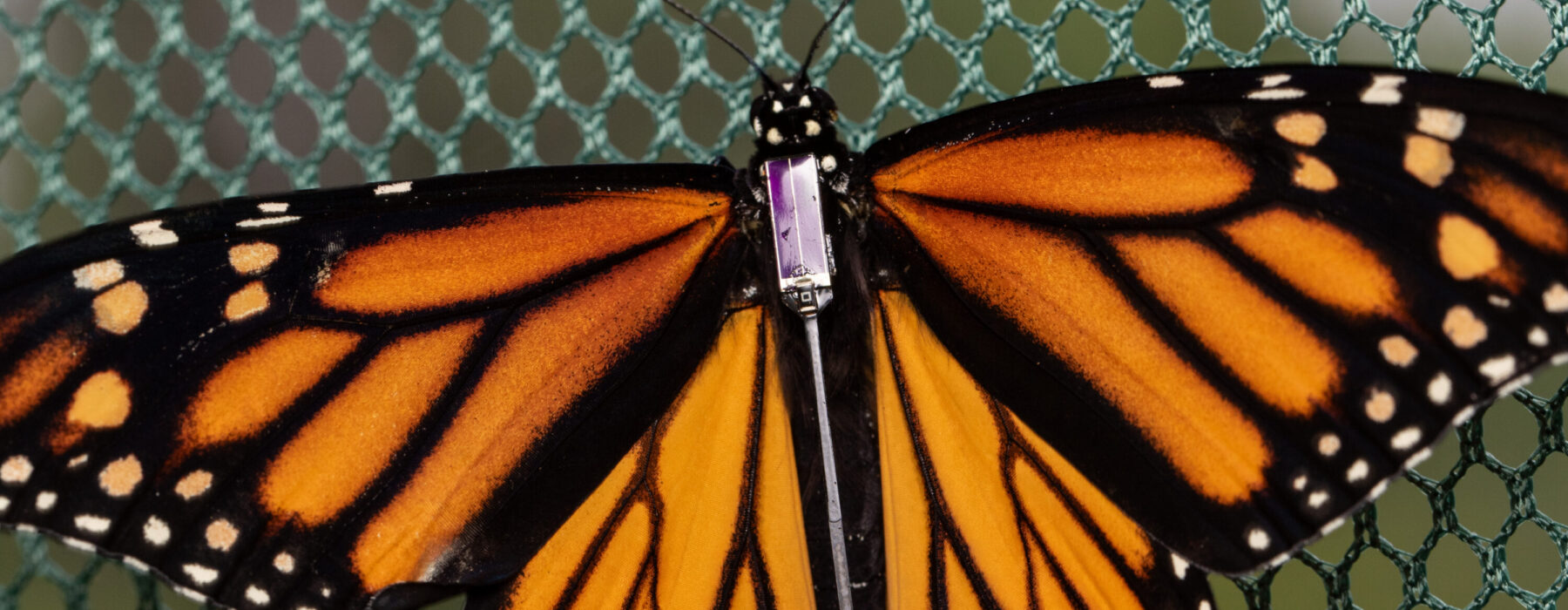
How many Vermont Monarchs make it to Mexico? Previous studies using isotopic chemistry and stickers have suggested that few wintering Monarchs in Mexico are migrants from our bioregion. But the data is sparse and imprecise. New high-frequency radio telemetry tags can help answer this question by tracking individuals on their migratory path, which can help us better understand what direction they fly, where they go, and how long it takes for them to get there.
These tags are detected by blue-tooth enabled devices: the millions of cell phones and tablets all over the US and Mexico that could detect these Monarchs if they fly within 300 feet. That large network of devices, plus all of the existing wildlife-tracking receivers, can provide unprecedented new precision in tracking the movement of Monarchs and other migratory insects.
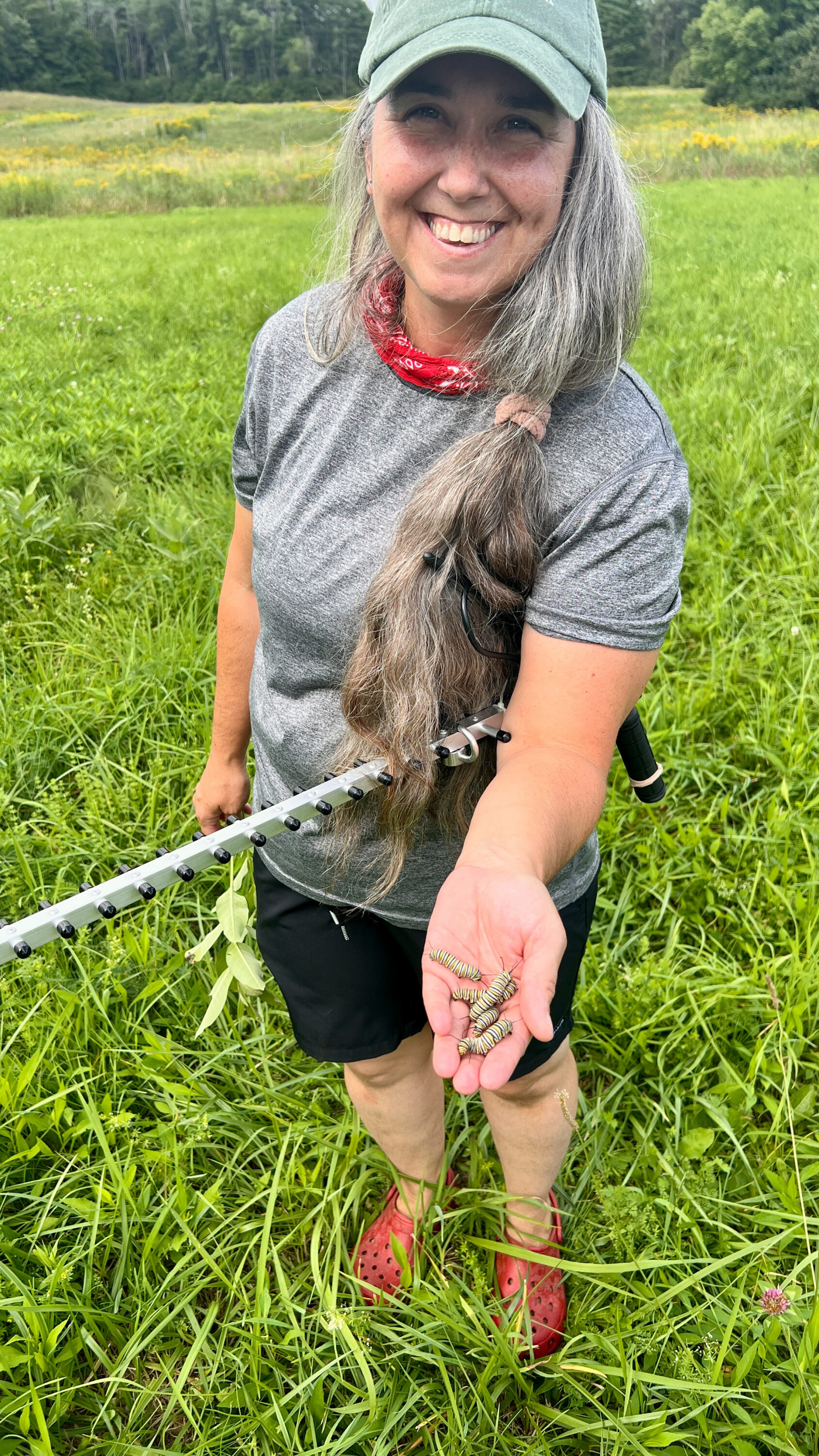
VCE scientist Desirée Narango holding monarch caterpillars © KP McFarland
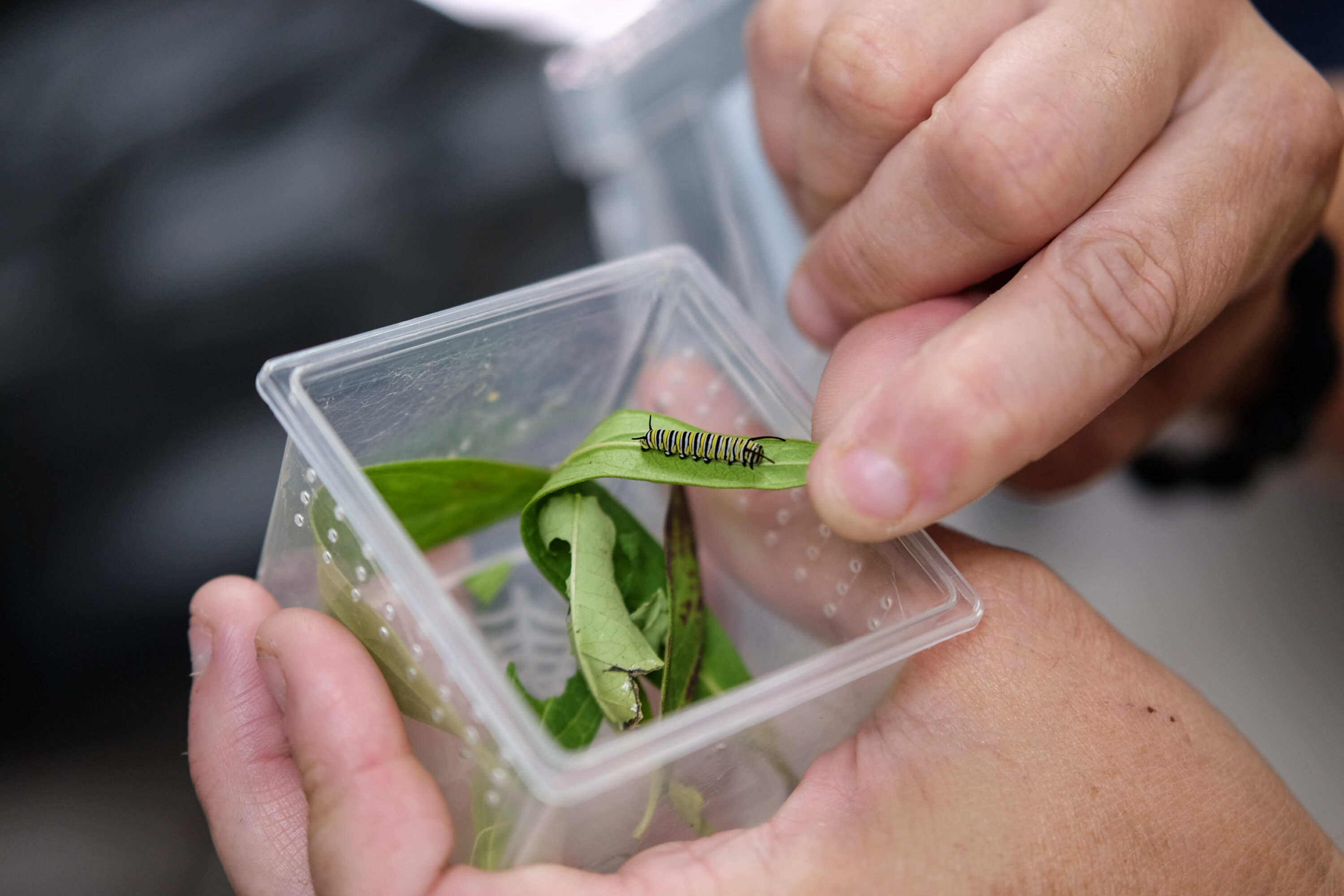
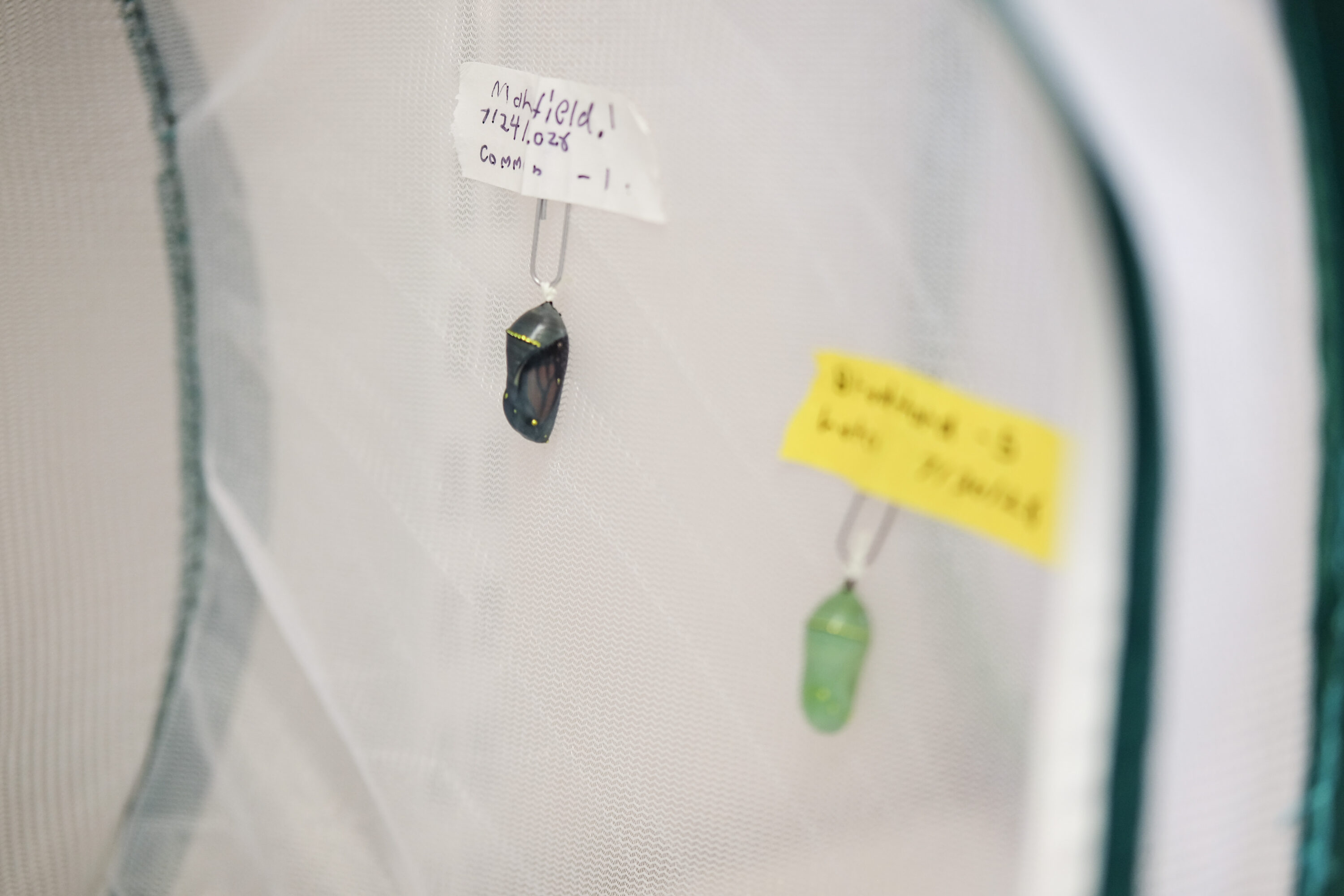
We’re raising the caterpillars in the lab so we know they’re Vermont Monarchs, and not just passing through on migration. © Alden Wicker
© Alden Wicker
Because the pilot study of tags didn’t include any Monarchs north of New Jersey, VCE scientists Kent McFarland, Mike Hallworth, and Desirée Narango were itching to get in on the action and make sure populations from our area would be included. This summer, seasonal and staff biologists are raising Monarchs from caterpillars so adults can be tagged and tracked as they migrate from here to Mexico. That way, we know they are Vermont Monarch butterflies, and not passing through during migration.
We applied these tags to Monarchs from mid-August to mid-October to also research whether Monarchs that fly early in the season have a better chance at migrating long distances than Monarchs that fly later. With climate and land-use change, fall phenology is getting later in the eastern U.S., and milkweed can still be green in October. That also means Monarch caterpillars can grow into adults much later than they used to. Our study will investigate whether those late-season Monarchs are making their way to Mexico to jumpstart the next generation, or traveling down an ecological dead end.
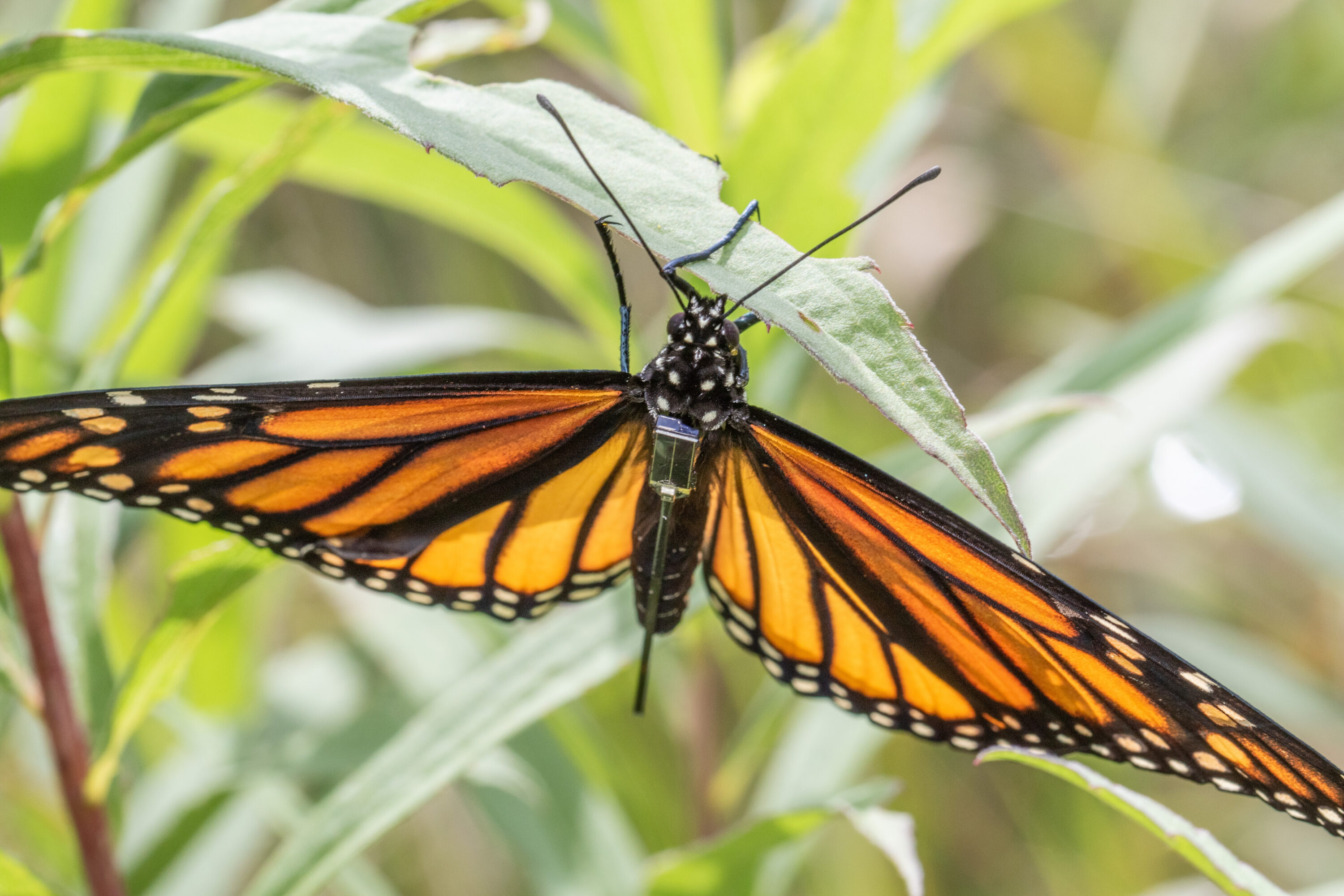
The tags are so lightweight that they don’t affect Monarchs’ ability to fly long distances, and fast! © KP McFarland
Are these tags safe for migrating Monarchs?
Butterflies have been shown to carry up to 30% of their weight without negative effect. In 2025, our colleagues at Cellular Tracking Technology showed that their brand new, very tiny solar tags (less than 0.06 grams, or less than a single grain of rice and 10% of a Monarch’s bodyweight) are small enough to be safe for Monarchs to carry. Monarchs with tags did not differ in flying, eating, or mating from monarchs without tags and no deterimental effects were observed. See the experimental results here. We only tag Monarchs that meet and exceed the weight safety threshold for carrying the tags.
Stay tuned to see this exciting new adventure in VCE insect ecology and follow along to see where our Monarchs go!