© © Kent McFarland
Little things with wings are catching our interest this month. We're affixing tiny trackers to migrating Monarch butterflies. We're waxing on about the wonderful world of wasps, which are not the villains but the heroes of the garden! And we're keeping an eye out for delightful Primrose Moths, which alight on the very tall, yellow, native flowers that just love recently disturbed space.
By Kent McFarland with updates by Desirée Narango
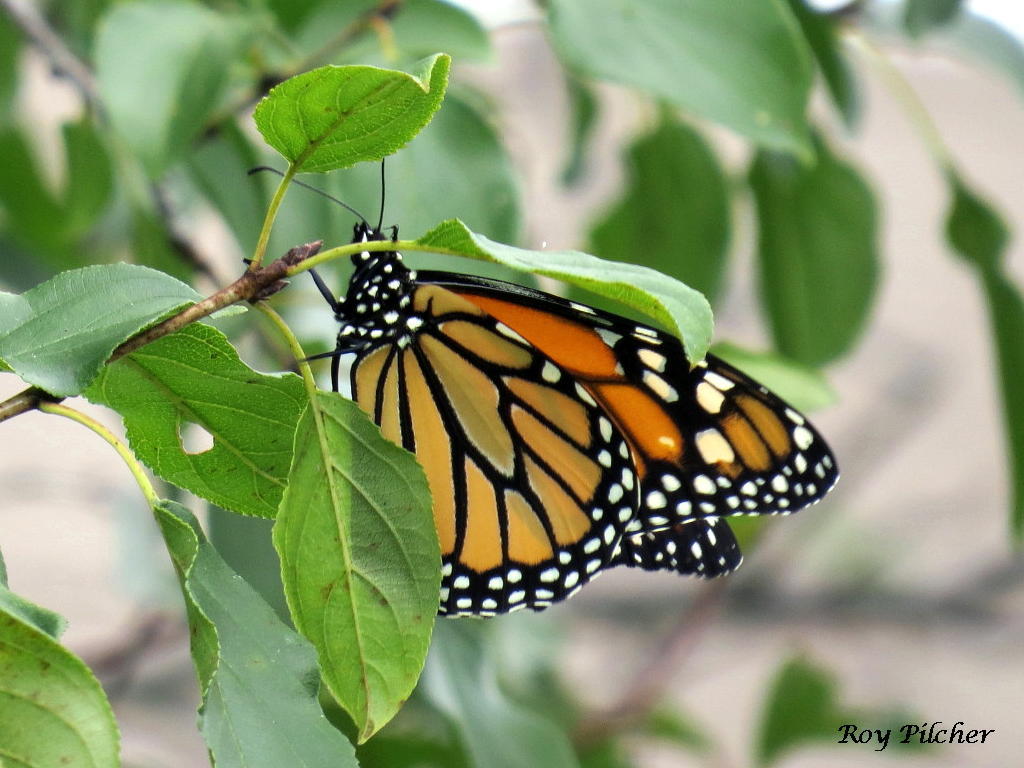
How do Monarchs hatched in Vermont navigate to Mexico where their great-great-great-great grandparents wintered?
The winter generation of butterflies lives up to eight months, while the successive spring and summer generations are lucky to live a single month. It takes four or five generations of spring and summer Monarchs in North America to produce the final “super generation,” which migrates to Mexico in the fall and then back to the southern United States in spring.
So how do they travel thousands of miles and arrive at a tiny area in the mountains of central Mexico? Research has shown that Monarchs use a time-compensated “sun compass” to maintain a southwesterly direction during flight. Monarchs monitor the position of the sun with their eyes, but because the sun changes position like clockwork, they also need to know the time of day. So Monarchs have an internal clock based on the rhythmic expression of key genes, which is centered in the antennae of the butterfly. The Monarch’s brain takes the information from the eyes and the antenna and integrates the time of day with the sun’s position in the sky to derive direction.
Keeping Track of the Monarchs
How do we know that Vermont Monarchs actually make it to Mexico? One way is by tagging them with small identifiable stickers on their wings. With millions of Monarchs, the odds of a recapture are poor; however, there have been at least eight tagged Monarchs from Vermont found in Mexico. The first lucky tag was applied in Essex Junction on September 9, 1999, and the monarch was found in El Rosario, Mexico on March 1st, 2,320 miles away!
We also know that Monarchs from the Northeast winter in Mexico by testing their chemistry. Hydrogen isotope analysis shows that New England Monarchs winter in Mexico. Rainwater contains slightly different amounts of these isotopes across North America, and this unique chemical signature is transferred from rainwater to milkweed to caterpillars to adult Monarchs. By selecting sites scattered across eastern North America, researchers have created a map displaying the chemical levels for each region. One study found that on average, about 15% of the Monarchs overwintering in Mexico originated in the Northeast, while 38% are from the Upper Midwest, the region with the highest representation in winter survey results.
VCE’s New Research on Monarchs
With isotopic chemistry showing few Monarchs in Mexico are migrants from our bioregion, we’ve wondered how many of our local Monarchs successfully make it to Mexico. New high-frequency radio telemetry tags can help answer this question, and also help us better understand what direction they fly, and how long it takes for them to get there.
Last year, our colleagues at Cellular Tracking Technology showed that their brand new, very tiny solar tags (less than 0.06 grams, or less than a single grain of rice) are small enough to be safe for Monarchs to carry, and can track individuals very long distances. These tags are detected by blue-tooth enabled devices: the millions of cell phones and tablets all over the US and Mexico that could detect these Monarchs if they fly within 300 feet. That large network of devices, plus all of the existing wildlife-tracking receivers, can provide unprecedented new precision in tracking the movement of Monarchs and other migratory insects.
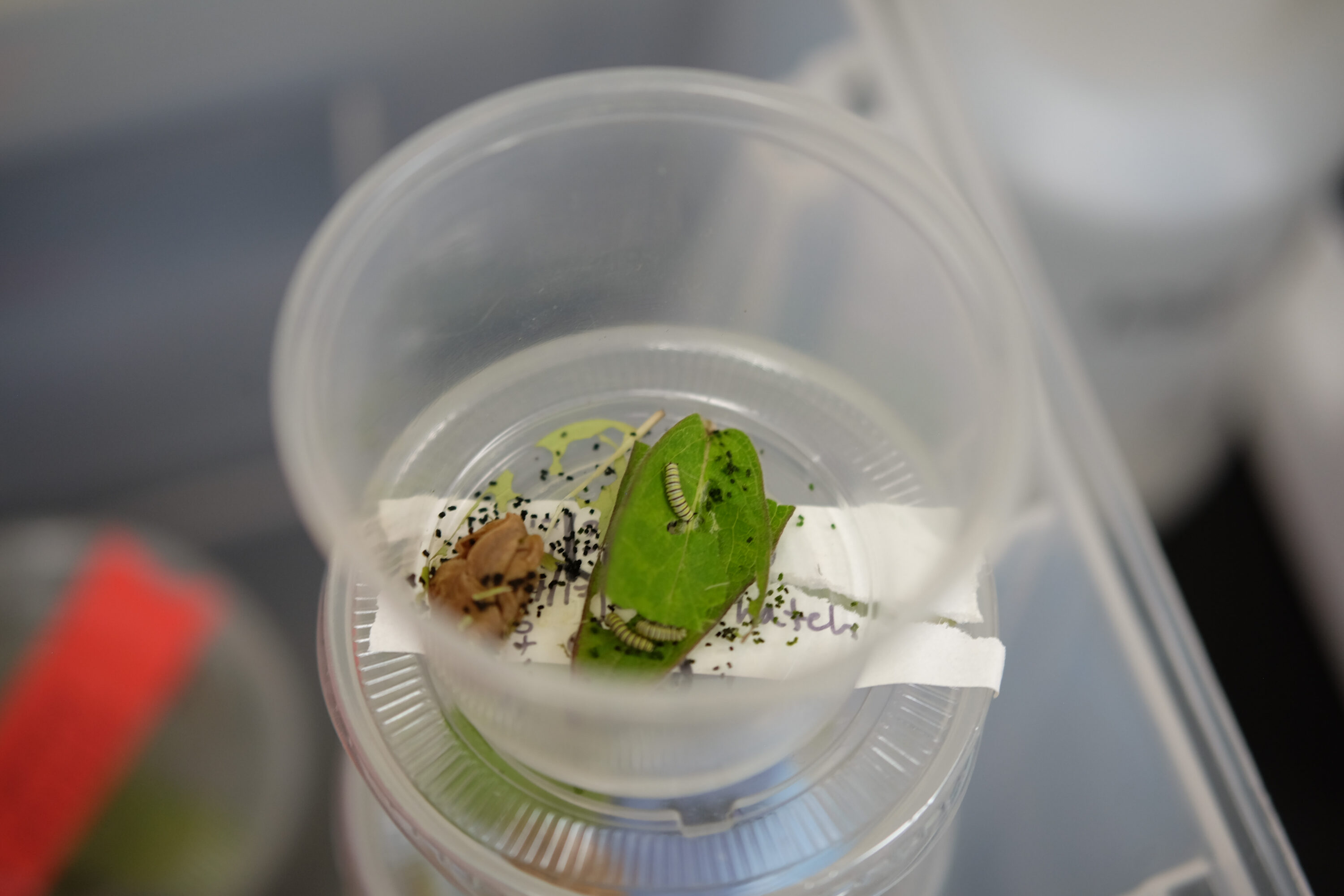
However, because their pilot study didn’t include any Monarchs north of New Jersey VCE scientists Kent McFarland, Mike Hallworth, and Desirée Narango were itching to get in on the action and make sure populations from our area would be included. This summer, seasonal and staff biologists are raising Monarchs from caterpillars so adults can be tagged and tracked as they migrate from here to Mexico. That way, we know they are Vermont Monarch butterflies, and not passing through during migration.
We’re applying these tags to Monarchs from mid-August to mid-October to also research whether Monarchs that fly early in the season have a better chance at migrating long distances than Monarchs that fly later. With climate and land-use change, fall phenology is getting later in the eastern U.S., and milkweed can still be green in October. That also means Monarch caterpillars can grow into adults much later than they used to. Our study will investigate whether those late-season Monarchs are making their way to Mexico to jumpstart the next generation, or traveling down an ecological dead end.
Stay tuned to see this exciting new adventure in VCE insect ecology and follow along to see where our Monarchs go!
Get Involved
It’s time for Mission Monarch across North America! Have you added a Monarch survey yet? It is so easy to do and takes as little as 15 minutes of your time. Find a milkweed patch of any size anywhere, survey the plants for eggs and caterpillars, add your data to Mission Monarch! And when Monarch migration begins, add your Monarch butterfly sightings to Journey North, eButterfly, or iNaturalist and help track their travels to Mexico.
By Amber Jones
Wasps. The insects everyone loves to hate.
There are over 4,000 species of wasps in the United States, but the ones that get the most attention are the social wasps: yellowjackets (Vespinae). Loathed by seemingly everyone, yellowjackets make their nests in unfortunate places and often find themselves the target of nest removal and pesticide eradication by property owners fearful of being stung.
But maybe these highly protective wasps aren’t the demons they are made out to be. Defensive around their nest? Certainly. They are protecting their hard work and growing young. Bloodthirsty stingers with wings? Not so much.
Social wasps like yellowjackets make up under 2% of all the wasp species in the United States and the world. The rest are solitary—nesting in cavities and underground burrows, and even laying their eggs in other insects (parasitic wasps). These wasps don’t create large colonies and thus don’t protect nests like social wasps. They lay their eggs in a nest typically provisioned with insect prey for when the young hatch. Some species guard the nest from predators, while others just let nature take its course.
I find wasps, which are quite diverse in their behaviors, their looks, and their nesting habits, fascinating and endearing. Each genus of wasp specializes in specific types of prey, including caterpillars, spiders, flies, grasshoppers, and cicadas, and true bugs (Hemiptera) like stink bugs or leaf or plant hoppers. Not only do wasps prey on herbivorous insects often considered pests by gardeners, but many are also pollinators. Adult wasps do not have the mouthparts to eat solid foods like meat and so drink flower nectar (as well as other liquids) just as bees do, and in doing so transfer pollen from one plant to another.
There are so many important and interesting wasps to discover right in our own backyards. The following is a minute sampling of the wasps you might encounter, from the tiniest parasitic wasp to the nearly two-inch Eastern Cicada Killer (Sphecius speciosus). Keep your eye out for these wonderful creatures.
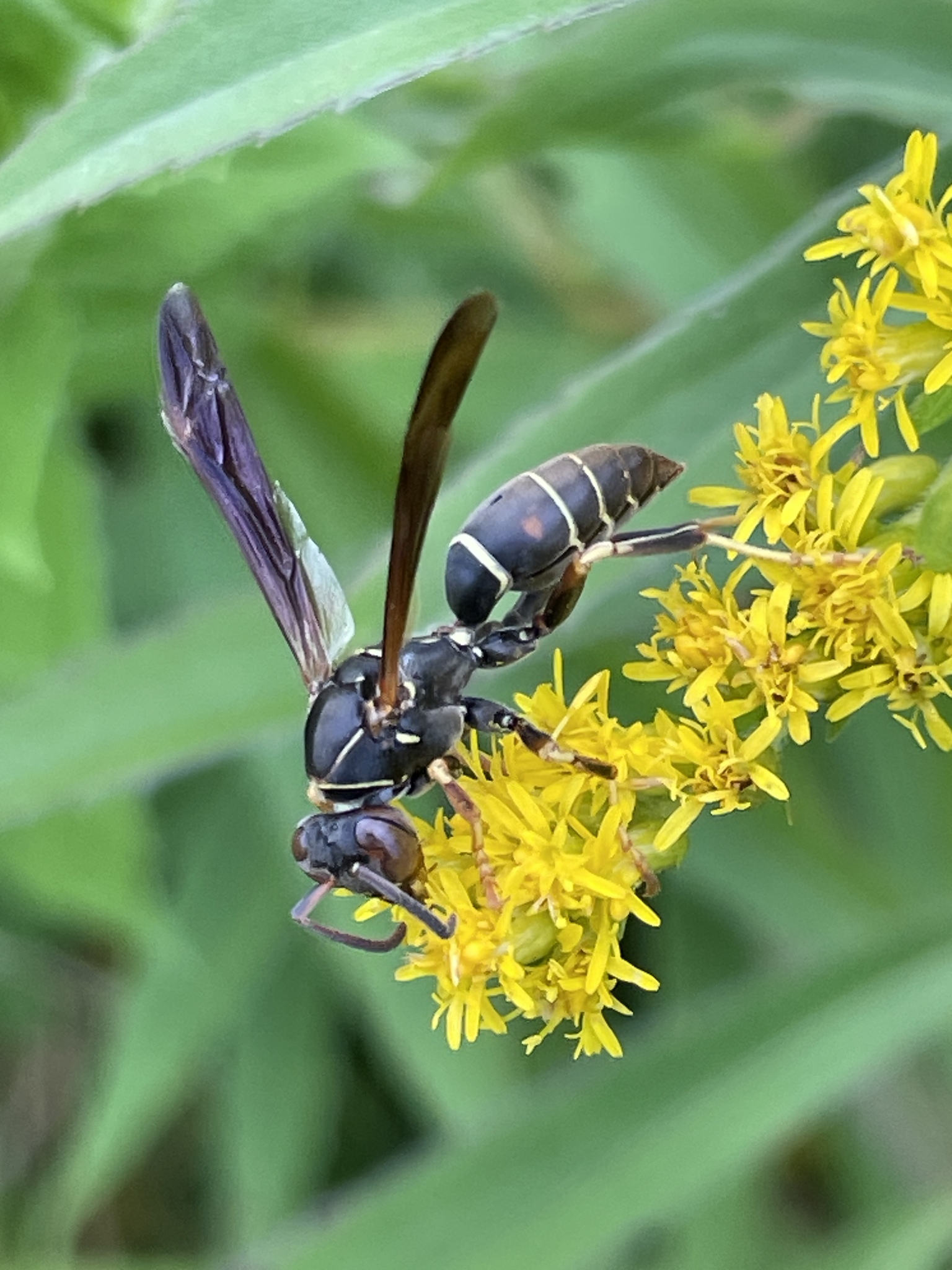
Paper wasps (Polistes) are “primitively eusocial,” consisting of a queen and a small group of workers, all tending to the nest and the grubby young. They collect insects like caterpillars from nearby vegetation and feed them to their larvae. Adults are typically quite docile, even when you are near the nest. You can get a great look at the care they take with their young, feeding, protecting, and even helping to chew them out of their cocoons when the time comes to pop their adult heads into the world for the first time!
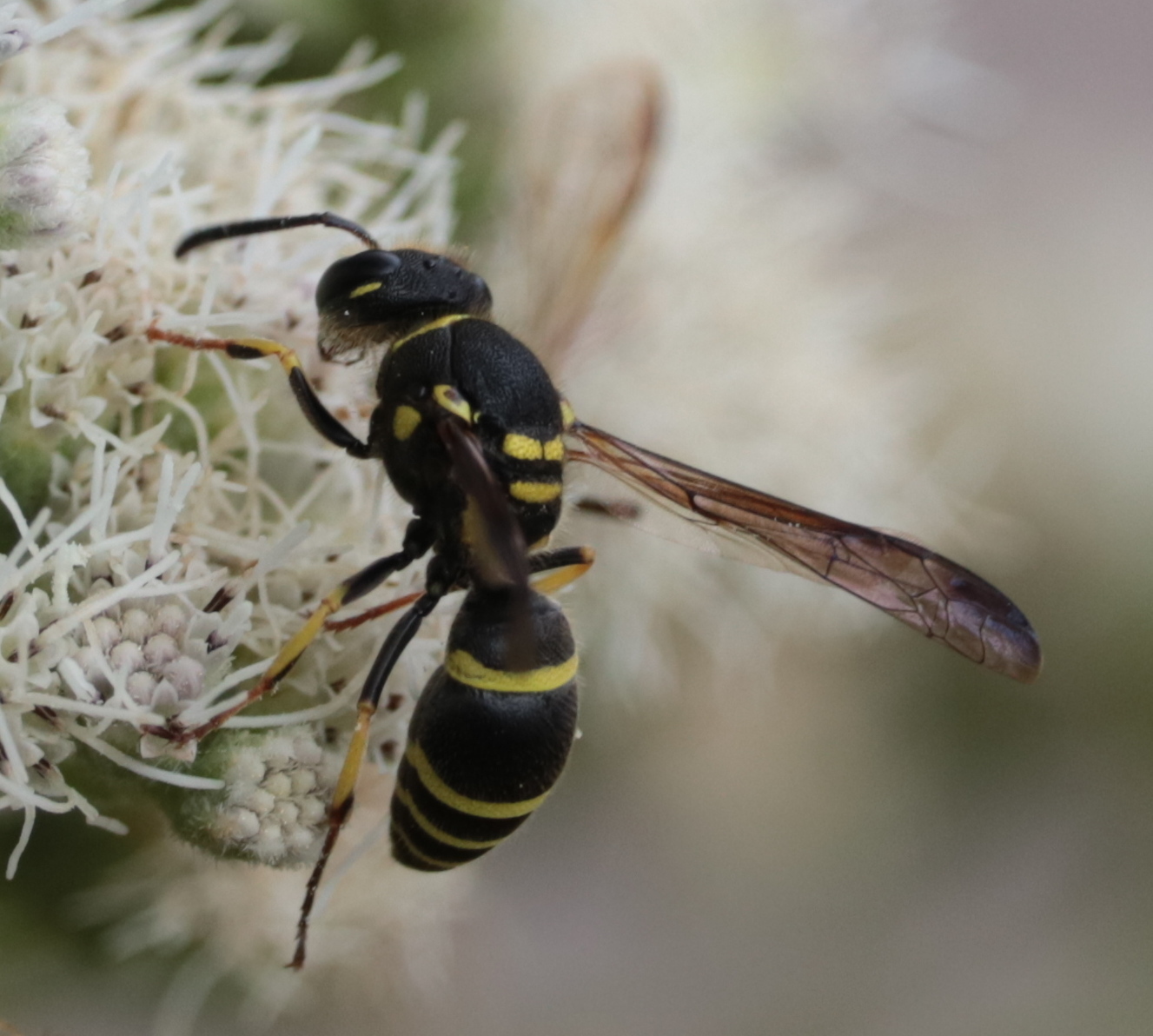
Many species of wasps use mud in their nest construction. Most solitary mason wasps make their nests in cavities like hollow stems or wood and seal them off with mud. Potter wasps make their own elaborate little mud pots akin to tiny vases where they safely store their paralyzed prey and eggs. Organ-pipe Mud Daubers build mud tubes resembling organ pipes to house their young.
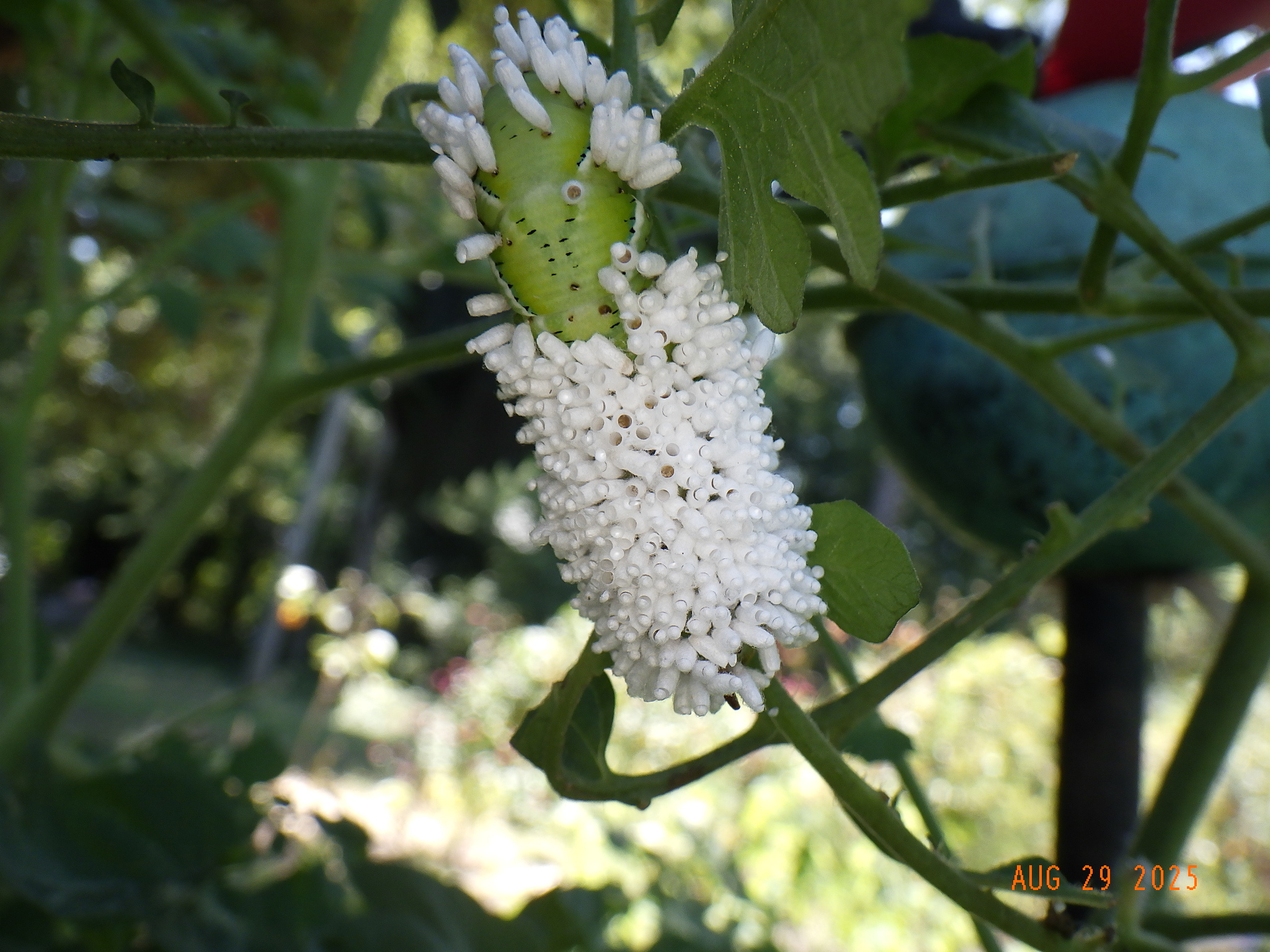
Parasitic wasps range in size, but many species are very, very small, like the size of a gnat! These solitary wasps lay their eggs on or in other unfortunate insects. When the eggs hatch, the larvae eat the host insect and may even use the insect as a substrate to build their cocoons on while they pupate.
While this may sound gruesome, parasitic wasps (and flies) are an important part of the ecosystem, helping keep insect numbers in check. If you want to see this sort of thing up close and in action, Tobacco Hornworms (Manduca sexta) are a great way to get acquainted with the world of parasitic wasps. The bane of a tomato gardener’s existence, these caterpillars, if left to live out their lives, will often become the host for Braconid wasps. When the wasps emerge from their cocoons as adults, they will fly away in search of new hornworm caterpillars to parasitize.
Every summer, I set aside several tomato plants in a different area from my garden, where I relocate my garden hornworms. I let them live out their life cycle on these plants, some making it to pupation in the soil, others parasitized and hosting the next generation of wonderful Braconid wasps.
By Melory Brandao
Common Evening-Primrose (Oenothera biennis) is a native wildflower of open fields, roadsides, and other disturbed areas. This biennial (having a two-year growing cycle) grows two to six feet high with green or red leafy stems covered in tiny white hairs. Its four-petaled flowers are bright yellow and have a mild lemon scent.
Primroses bloom from late spring into late summer, opening every night and closing around noon. Although Evening-Primroses produce no blossoms until their second year, they self-seed exceptionally well and support a variety of pollinators and other wildlife.
Hawkmoths, bees, and hummingbirds visit this flower for its nectar, and goldfinches can be seen foraging on its seeds well into the fall. Primroses are particularly vital to the Primrose Moth (Schinia florida), an endearing species that has a specialized bond with this plant.
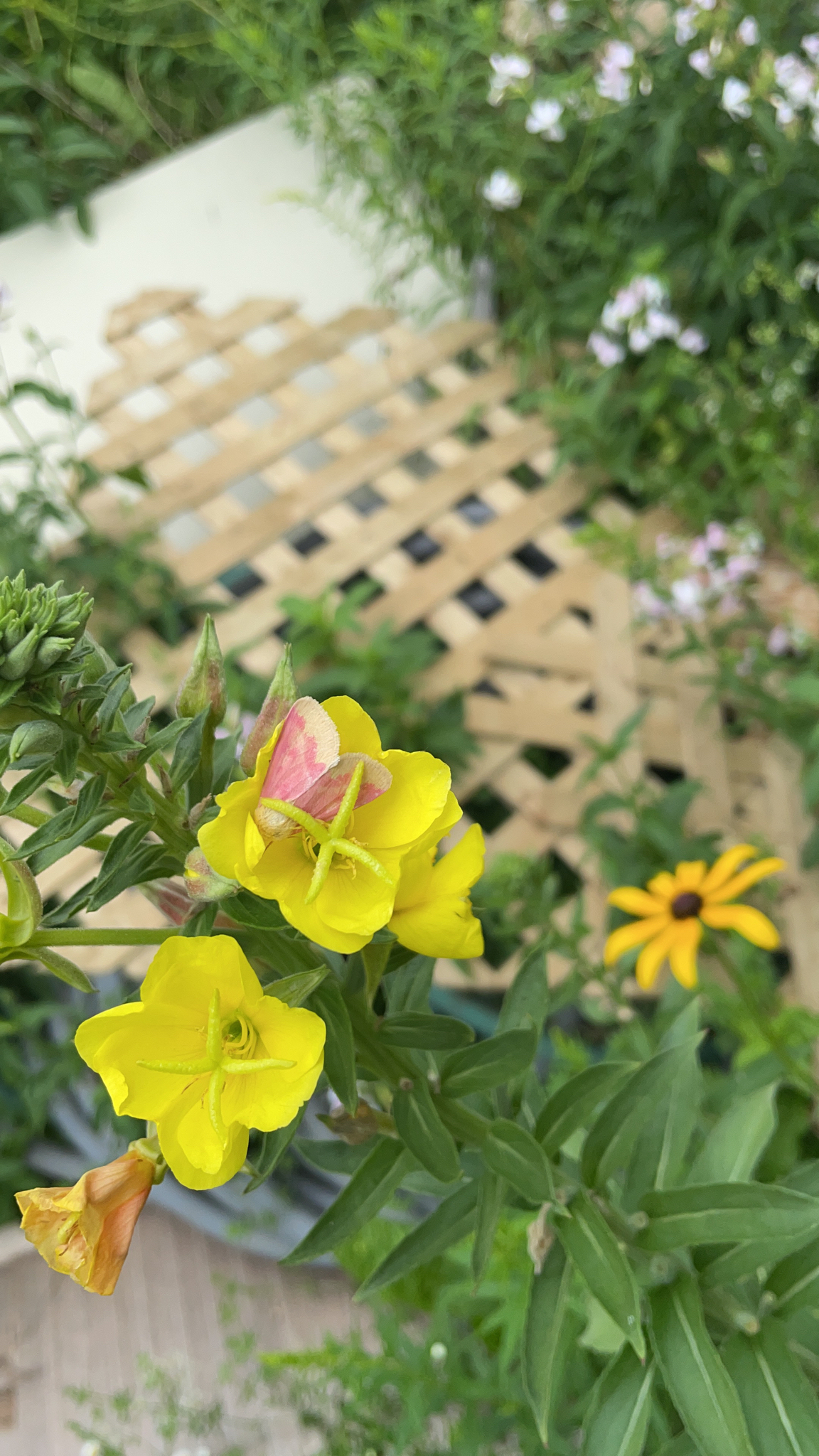
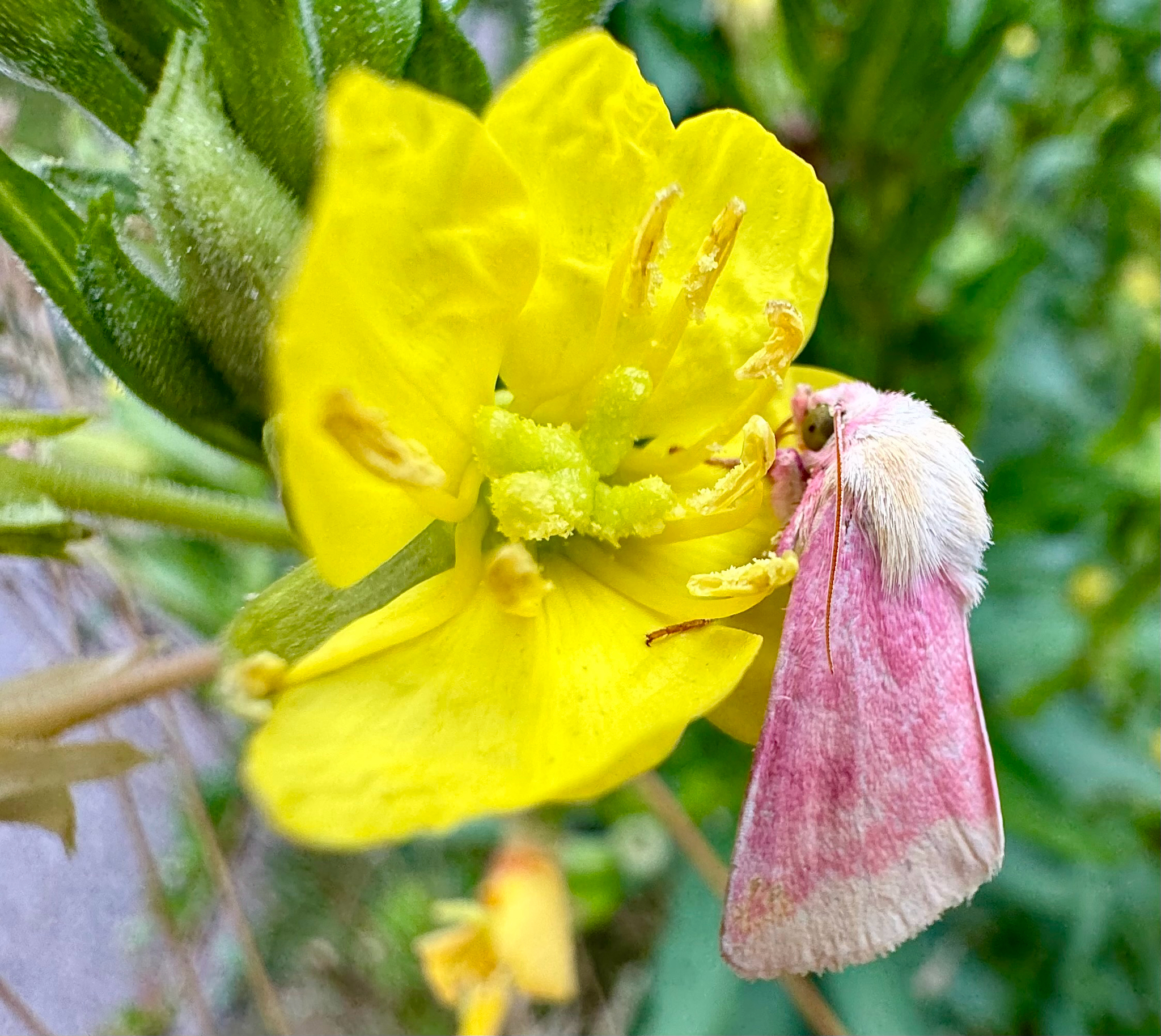
Adult Primrose Moths are bright pink with a creamy white to yellow thorax and abdomen and a pale yellow margin at the tip of their wings. Females lay eggs on the buds of this host plant, which serve as food for the caterpillars once they hatch. After growing through several molts, Primrose Moth caterpillars dig into the soil, where they pupate and overwinter within a few inches of the surface. Just as Evening-Primroses develop their buds the following summer, pink and yellow adults emerge from the ground and repeat the year-long cycle.

Primrose seeds released from the pod © Annkatrin Rose on iNaturalist, some rights reserved CC-BY-NC
If Common Evening-Primroses grow in your garden, peek inside a closed flower, and you might find a Primrose Moth resting there. Unlike most caterpillars that happily feast on leaves, Schinia florida feeds on its host plant’s seed capsules and flowers. Primrose Moth caterpillars convincingly mimic primrose seed pods, which they’ll bore into and eat until the seed pod is hollow. The caterpillars are usually green with a reddish hue towards the head, but some individuals appear bright pink.
If you’d like to support this unique moth species, you can purchase seeds from a local nursery. You can also easily collect your own seeds. The seed pods mature in late summer through the fall, turning brown from the tip downward. Once you see brown at the top of the pod, the seeds are ready for collection. Tilt the pod towards the inside of a paper bag or plastic container to catch the falling seeds, which can number in the hundreds. To plant the seeds, scatter them over loose soil in late fall or early spring and cover them lightly with soil.