Summer
© Kent McFarland
July is abundant—gardens bloom and buzz with insects, loon calls echo across lakes, berries ripen in the mountains. Alongside wonder, other feelings can crop up too: frustration that something is munching the leaves in your garden, worry over your local loon chicks surviving through summer, a distaste for the pungent smell of certain native species. This month, our scientists invite you to reconsider the ecological value of what you encounter out in the wild and in your own backyard.
By Amber Jones
On a warm, sunny day in mid-August, while conducting phenology surveys on our experimental gardens for the Native Plant Ecotype project, I noticed that many of the Swamp Milkweed (Asclepias incarnata) plants’ leaves were jagged and uneven. Some were chewed right down to the midrib, the leaves’ main vein that runs through the middle of the leaf. These were all signs that something was eating the plants.
We call this herbivory.
Was this defeat? No, just the opposite. This is exactly what we had hoped for. We intentionally planted these gardens to compare how seeds from different regions of the country would perform in plant growth and insect usage, such as pollinator visitation, herbivory, and more.
All too often, we grow plants for adult-stage pollinators that we hope will visit for nectar, but we put little thought into the other life stages and other insects that rely on these plants as well. Upon discovering their plants have been eaten by insects, many people might be upset that resources are being taken from bees or butterflies, or that the plants are being aesthetically ruined. But the animal that ate those plants might become a butterfly someday, too!
Support pollinator research and other projects like this by making a donation to Vermont Center for Ecostudies! Learn about other ways to support VCE here.
The thing is, native plants aren’t just for pollinators. Many plants support portions or entire life cycles of insects that aren’t bees or butterflies. They also support birds by growing the food (mainly caterpillars) birds need to feed their young. Many of the native plants we prize as pollinator food sources also make great caterpillar food. Our beautiful native violets are caterpillar host plants for fritillary butterflies. Blue Vervain (Verbena hastata) is a host plant for several moths and a butterfly species. Vermont’s asters support the caterpillars of over 100 moth and butterfly species, as do our goldenrods.
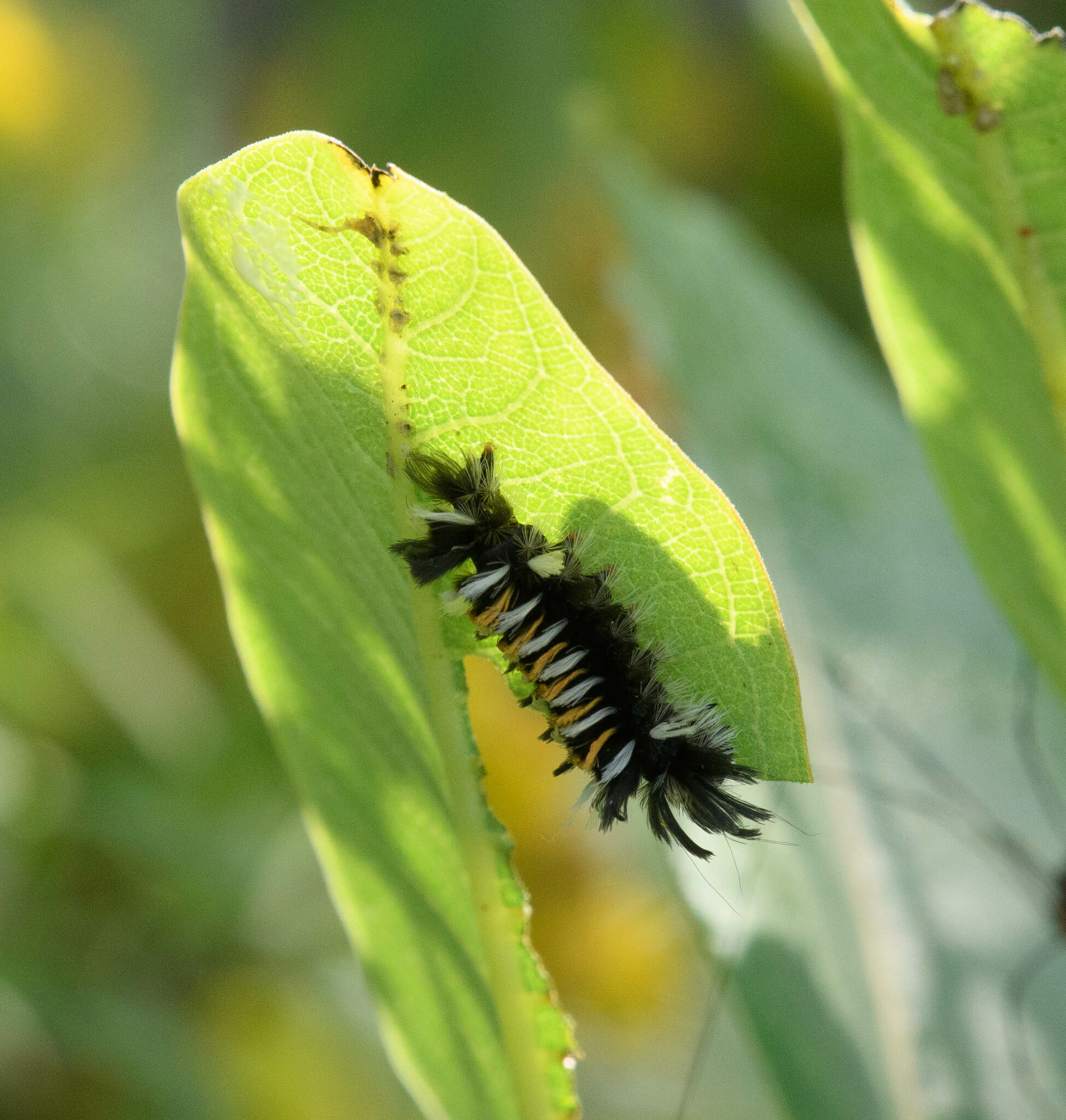
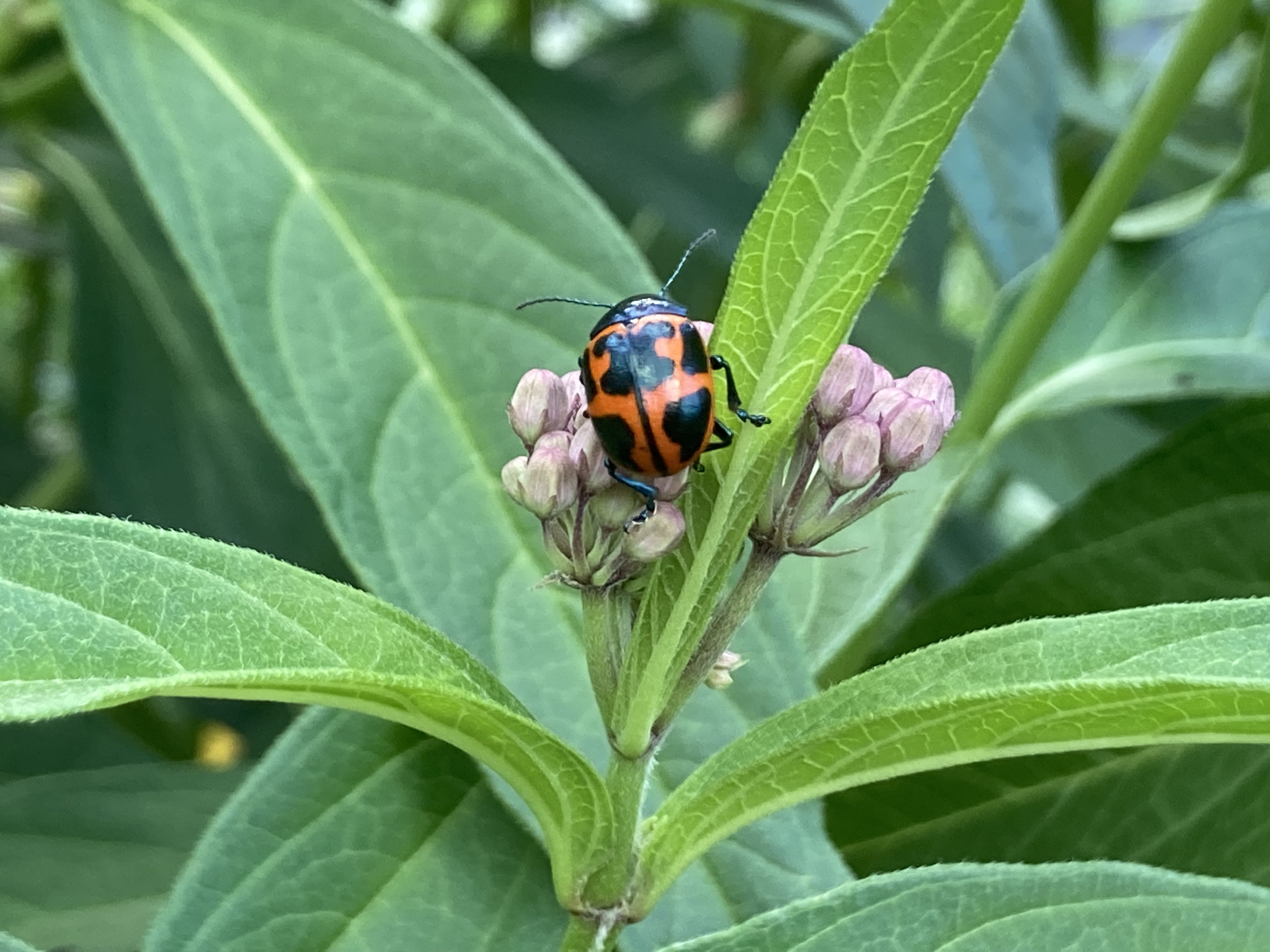
When we look beyond pollinators, we begin to see a whole world of interactions emerge. Seeing anything other than a Monarch caterpillar eating a milkweed plant can strike terror into the hearts of people trying to conserve the beloved butterfly, but it’s also the only host plant for the Milkweed Tussock Moth caterpillar (Euchaetes egle), the Milkweed Leaf Beetle (Labidomera clivicollis), the Red Milkweed Beetle (Tetraopes tetrophthalmus), and two true bugs: the Large Milkweed Bug (Oncopeltus fasciatus) and the Small Milkweed Bug (Lygaeus kalmii).
Avid gardeners may fear aphids. In large numbers, they can certainly wreak havoc on the vigor of flowers and vegetables, but the insects that eat them are in your garden, too! Flower fly larvae, and lady beetles and their larvae are voracious eaters of aphids that help to keep aphid populations in check. These insects hatch from eggs laid directly on the affected plants so that the larvae’s food sources are close by.
When we treat plants with pesticides to address one insect, the consequences often cascade beyond the intended target. The good news is that planting and maintaining our gardens or community areas with the intent to attract a wide range of beneficial insects, not just pollinators, is a great way to reduce or replace the need for pesticides.
So next time you find something eating your plants, try to look at it in a different light. Congratulations! You are supporting your local insect populations from egg to adult.
By Eric Hanson
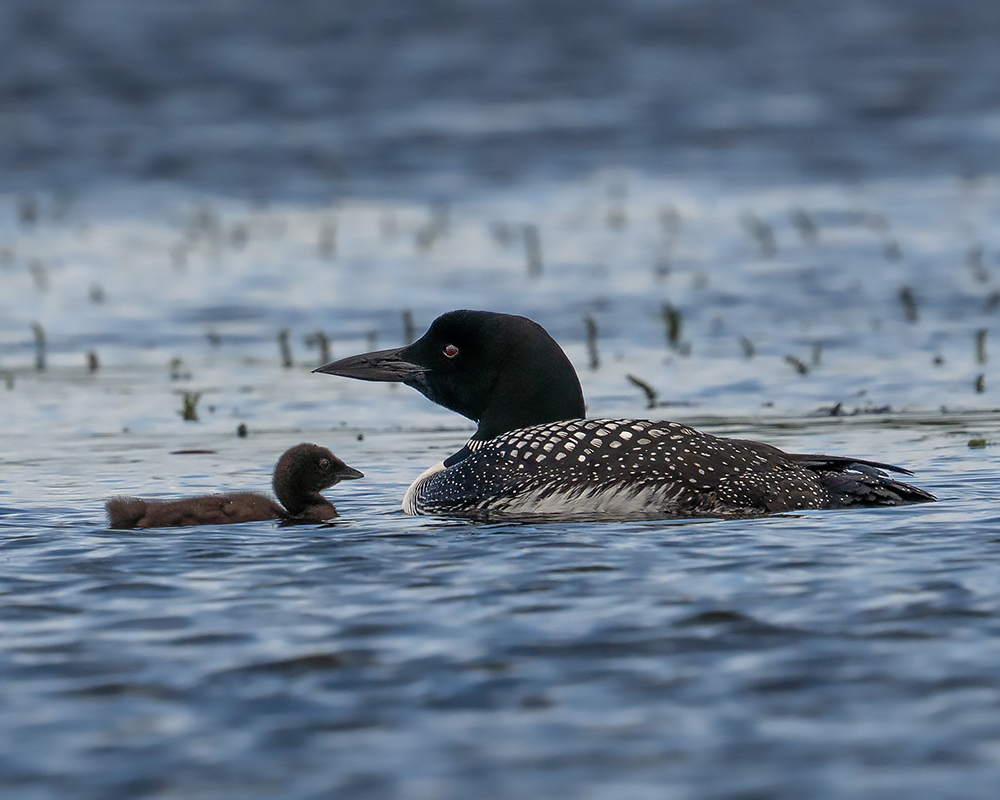
One concern we hear a lot is, “My loons didn’t have chicks this year!” or, “The chicks didn’t survive!” As heartbreaking as this can be for loon lovers, it’s actually okay from an ecological perspective to have only one chick every few years on your lake.
The Vermont Common Loon population has grown over the past 30 years thanks in part to high chick productivity, as measured by the number of chicks reared by each pair to the fledgling stage. From 1995 to 2009, both nesting success and chick survivorship averaged more than 80%, and Vermont loon pairs were producing seven to eight chicks over a 10-year period. Although these are statewide averages, and some lakes see more success than others, it’s no wonder people started expecting “their” loon pair to have a chick almost every year.
But beginning 15 years ago, chick productivity slowed down. By 2023 and 2024, the rate had dropped to about one chick every other year per loon-pair territory (or five chicks over a 10-year period).
That’s still higher than in northern and eastern Maine, where only two to three chicks survive per territorial year over a 10-year period. New Hampshire has a rate of about four chicks per 10 years, and the Adirondack region averages between five and six.
As you can see, the loon baby bust in Vermont is normal. And it’s due to several natural and ecologically sound factors.
With more nonbreeding adult loons looking to usurp a territory, we are documenting more conflict. VCE loon volunteers used to report the occasional skirmish, but for some pairs, these interactions are now occurring almost daily. Most of these interactions with extra loons are just “conversations.” The pair meets the intruder loon, they hoot a few times, swim and dive together for a while, and then something causes the extra loon to either swim or fly off.
However, some of these interactions escalate and can result in pairs spending so much time defending the territory that they abandon the nest or don’t nest at all. For example, May Pond is a pretty ideal loon lake, with 116 acres of water and good marsh habitat for nesting. From 1990 to 2007, the pair there nested 17 of 18 years and had 24 chicks, or 1.33 chicks on average per year. But then extra loons started visiting regularly and causing trouble. From 2007 to 2024, the pair has only nested in seven of 17 years, with five chicks surviving. There have also probably been several mate switches in recent years, which disrupt annual nesting because it takes time to establish a new pair bond.
Intruder loons will kill a chick to weaken a pair bond and make a takeover more possible. Extra loons have likely killed the chicks of the Maidstone Lake Southwest pair in three of the past six successful hatch years. This pair did not nest in 2024, and there is a good chance that at least one of the mates is a different loon!
Last summer on Lake Iroquois, the parent loons left their two chicks near the shore while dealing with two extra loons. While they were away, a lake resident witnessed a ring-billed gull kill both chicks.
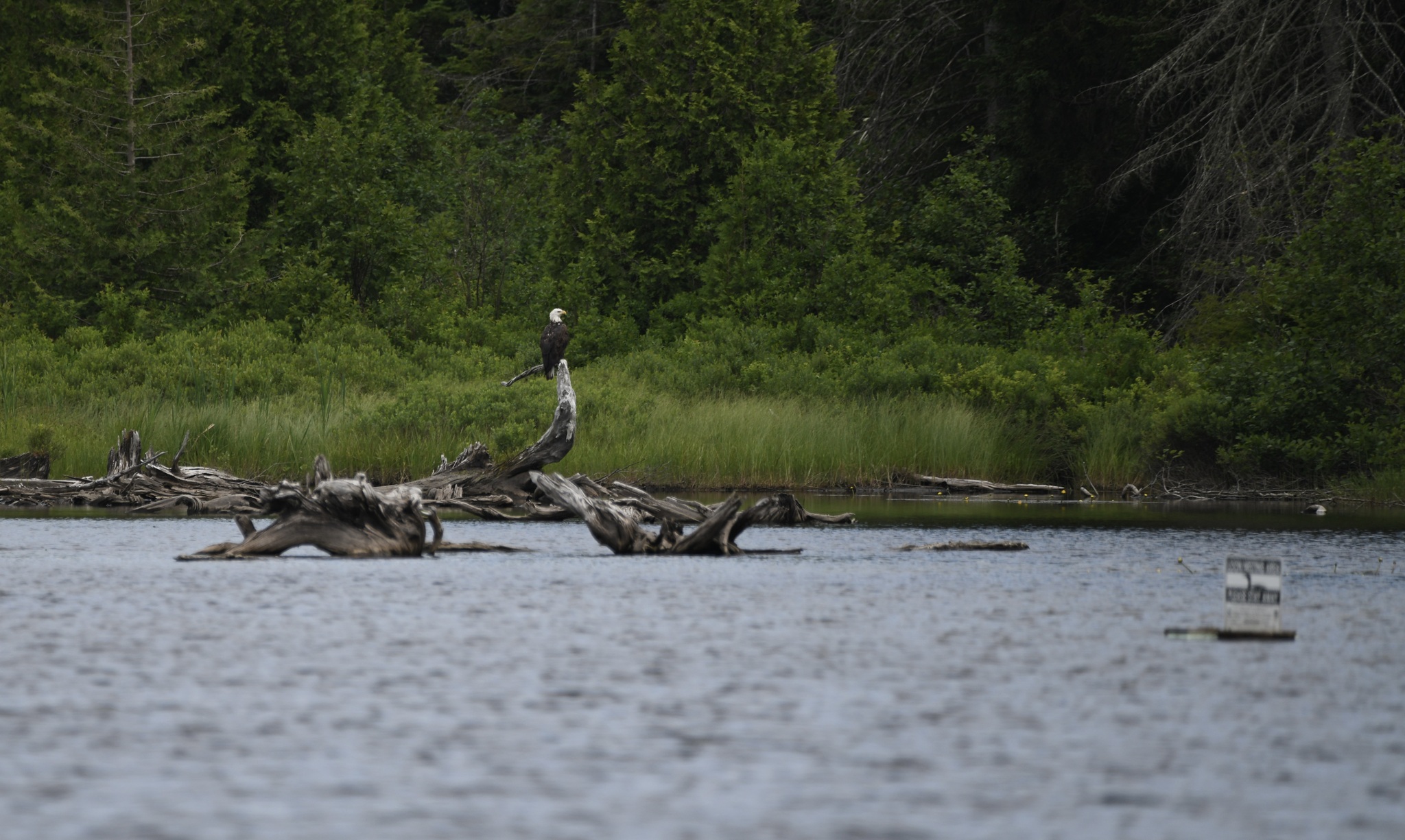
Although we don’t often observe eagles taking chicks and causing nest failure, it is likely happening. Northern Maine’s low chick survivorship is directly related to eagle predation of chicks, and eagles are now found statewide in Vermont. Volunteers often observe them harassing loons. In 2024, Ronda Bohovich on Spectacle Pond witnessed an eagle land on the loon raft and eat the egg; and elsewhere, at least nine chicks disappeared during periods when Bald Eagles were harassing loons in their territories.
The good real estate on large lakes with lots of fish, islands, and suitable marshes is now taken. We are seeing new pairs form on larger lakes with other established loon pairs; these new pairs try to nest in some pretty bad spots, such as sandbars and upland shorelines that are exposed to predators (raccoon, fox, and mink). We think these animals took eggs from more than 20 nests in 2024.
Twenty-five nests were flooded in 2023 and 2024 during extreme rain events, which are becoming more frequent as our climate changes; however, floating nest rafts can provide resiliency. And recreation pressures keep increasing, with more kayakers, other boaters, and more docks on our lakeshores.
With all this, it’s a wonder that nests are successful at all! It just shows that Common Loons are good parents: vigilant, attentive, caring, and tough when they need to be. We are the ones who need to relax, step back, and trust that seeing fewer chicks is normal and even a sign of our loon population’s overall health.
By Jason Hill
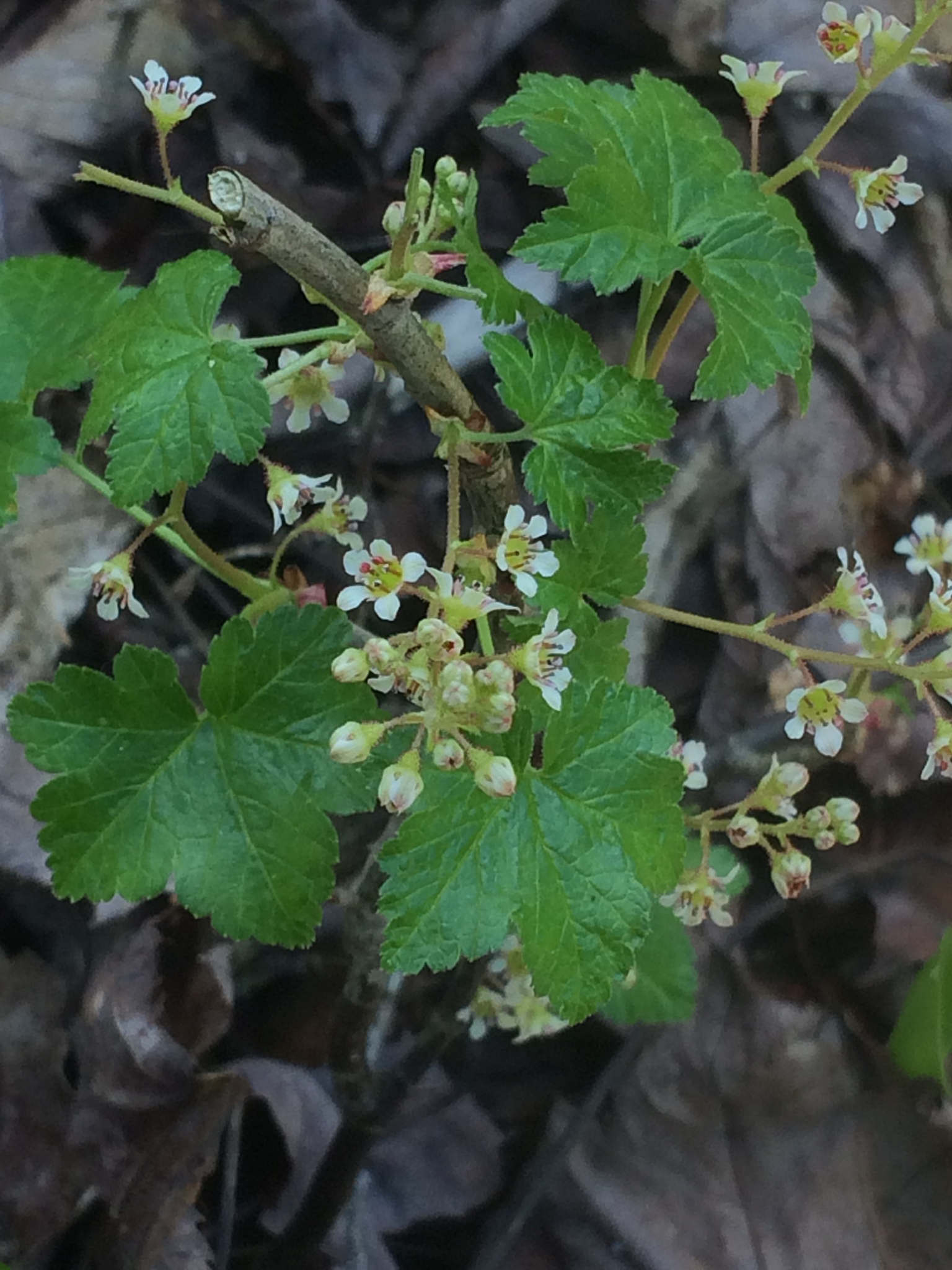
Despite the name, Skunk Currant (Ribes glandulosum) produces a tasty berry … if you can get past the pungent smell that develops as the fruit ripens.
This low-lying shrub of the subalpine zone grows in moist soils and in May produces a small, white, five-petaled flower with purple stamens. The Skunk Currant’s epithet (glandulosum) arises from the stiff glandular hairs that cover the ripening fruit in July and August. The leaves often take on a stunning assortment of red coloring in the fall.
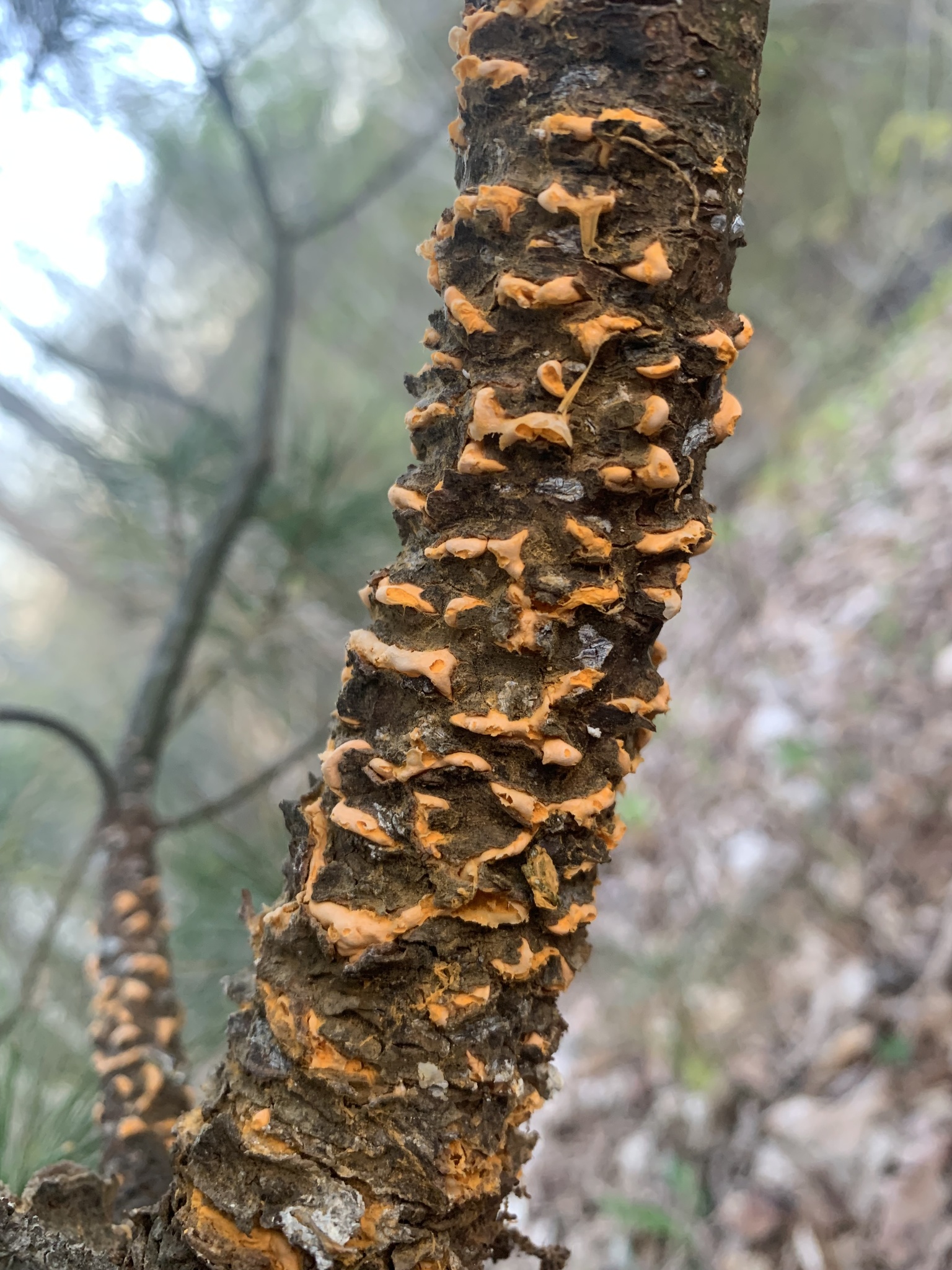
New Englanders love to add currant bushes to their property. However, species in the genus Ribes (currants and gooseberries) are carriers of White Pine Blister Rust, which can lead to localized loss of Eastern White Pine (Pinus strobus) in New England. Unfortunately, all North American white pines are susceptible.
This rust is caused by a fungus (Cronartium ribicola) native to Asia, with a complex life cycle requiring multiple hosts. Currants that carry this rust develop tiny yellow spots and orange-yellow fruiting bodies that resemble metal rust on the leaves, called uredia. These fruiting bodies produce wind-transported uredospores that can infect Eastern White Pines within several miles. Infected pines develop cankers that destroy the cambium, reducing the pine’s ability to transport water and nutrients. You’ll recognize infected pines by their browning needles, top dieback, and trunk lesions that leak abundant amounts of resin.
Infections on pines typically begin on the branches and progress towards the trunk over several years, so prune off infected pine branches as soon as you notice blister rusts and cankers. Rust-resistant varieties of native Ribes species (e.g., Red Currant, Ribes rubrum) are available commercially, but already-infected Ribes plants may require annual professional treatment with a fungicide or removal of the entire plant to protect nearby pines.
Still, don’t be discouraged from growing currants and gooseberries in your yard—I’ve had rust-free Eastern White Pines and a Red Currant growing side-by-side for the last decade next to my house. If you want to find the wild version, check out all the observations of Skunk Currant on iNaturalist Vermont, its phenology chart, and add your observations, too.