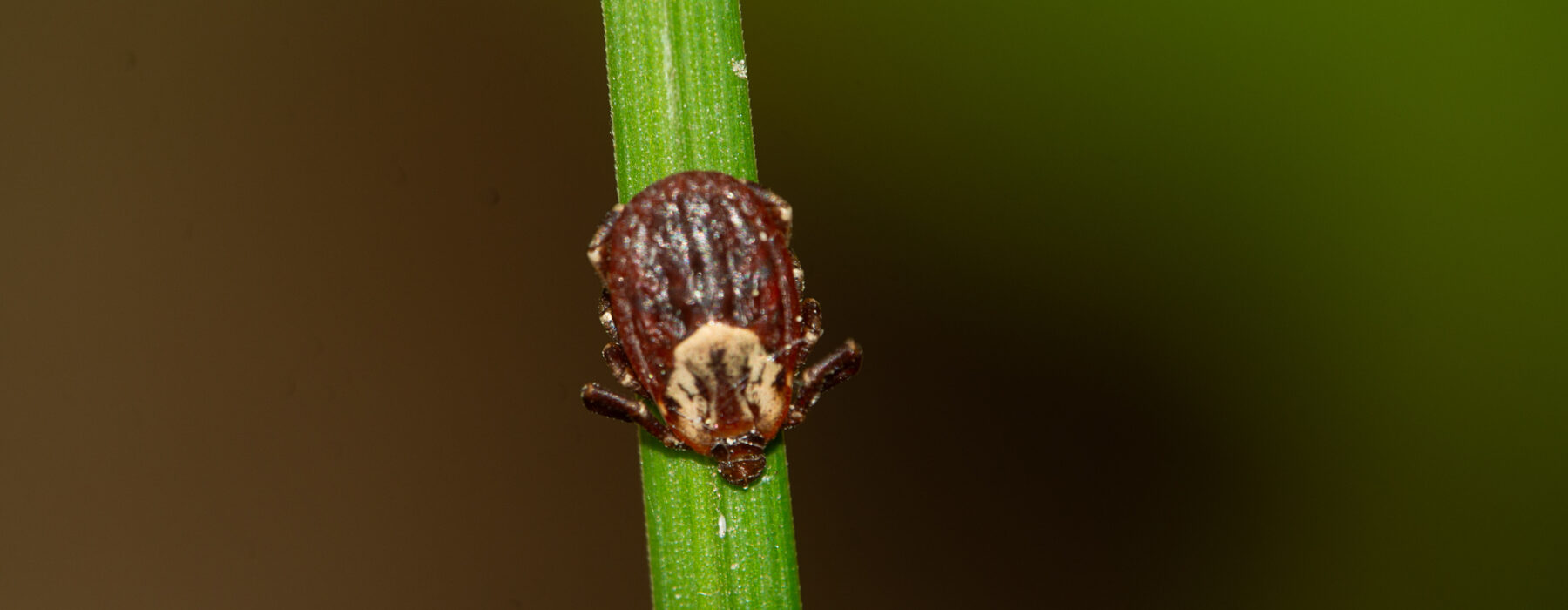
New Englanders are worried about ticks and the diseases they spread. And no wonder! As of 2022, the CDC reported that Vermont had the second highest per-capita rate of Lyme Disease, which is carried by Eastern Black-legged Ticks (a.k.a. Deer Ticks) in the country, second only to Rhode Island.
So many anxious homeowners are turning to a relatively new service: backyard tick spraying.
The proliferation of Tick Spraying signs in local front yards had VCE biologist Jason Hill wondering:
- Is tick spraying effective at reducing tick populations in backyards?
- Are there unintended consequences for harmless insects and beneficial pollinators?
In 2023 and 2024, VCE recruited homeowners with regularly-mowed, grassy lawns in the Upper Valley area of Vermont and New Hampshire. (No Mow May participants were also welcome.) The participating properties included those that had been sprayed by professional services with traditional and “green” or “eco-friendly” tick sprays, and Control properties that have never been sprayed for ticks.
The team visited Control properties for surveying twice, about four days apart. For Treatment properties, the team surveyed the lawns one to days before the spraying, and again one to two days after.
Standardized tick surveys were conducted by dragging a white cloth across different sections of mowed lawn and around the lawn edge. They sampled non-tick invertebrates (e.g., spiders, snails, and insects) from the shrubs and trees along the edge of lawns using a standardized sampling method known as beat sheeting. Beat sheeting is non-lethal—all non-tick invertebrates are immediately released unharmed after they are identified. The biologists collected all ticks to bring to the VCE lab for identification.
Over the course of two summers, the VCE team surveyed 245 private properties, counting and identifying hundreds of ticks, and thousands of non-tick invertebrates (e.g., spiders, beetles and moths).