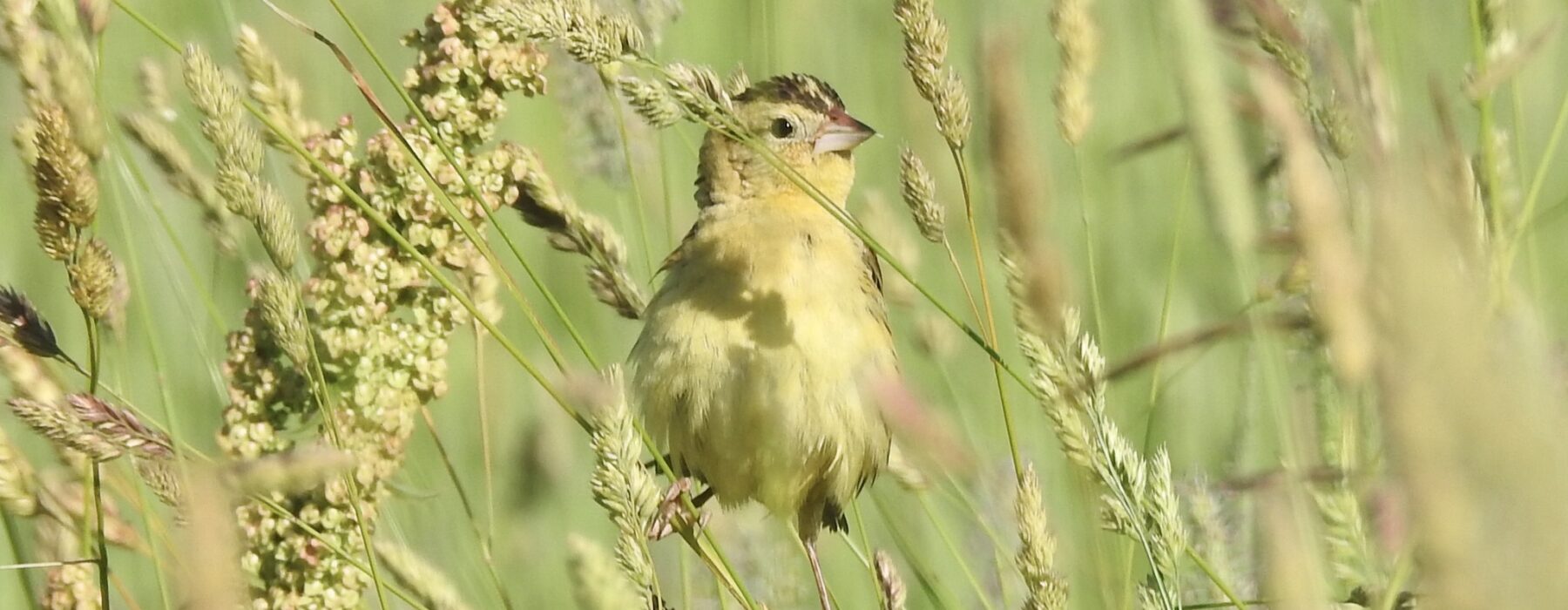
VCE has tracked the full annual cycle of migratory grassland birds, including Upland Sandpiper, Grasshopper Sparrow, Eastern Meadowlark, and Bobolink, using miniature satellite tags, nanotags, and light-level geolocators to uncover their migration routes, wintering sites, and movement patterns between breeding and non-breeding grounds. These lightweight tracking devices allow researchers to study birds that spend nearly three-quarters of their lives away from their breeding habitats, revealing population connectivity, migratory strategies, and critical habitats across North and South America.
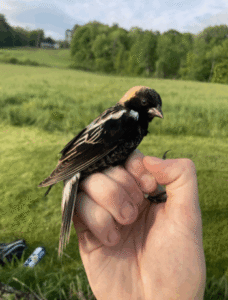
VCE biologist Kevin Tolan banding a male Bobolink.
Projects on six U.S. military installations, in partnership with the DoD Legacy Program, are providing vital data to inform conservation of at-risk grassland birds, helping to understand how shrinking populations, habitat fragmentation, and seasonal movements affect long-term survival.
Discover the sights, sounds, and full-color geolocator maps of Grasshopper Sparrow and Upland Sandpiper research in this educational Story Map.
Recruiting and unifying biologists from seven countries, VCE developed a plan to guide and coordinate research and conservation priorities for grassland birds across the Western Hemisphere, uniting groups throughout the Americas. It’s a recognition that the conservation of migratory bird species cannot limit its focus to one country or region.
Learn more about our research in the PBS film Plight of the Grassland Birds!