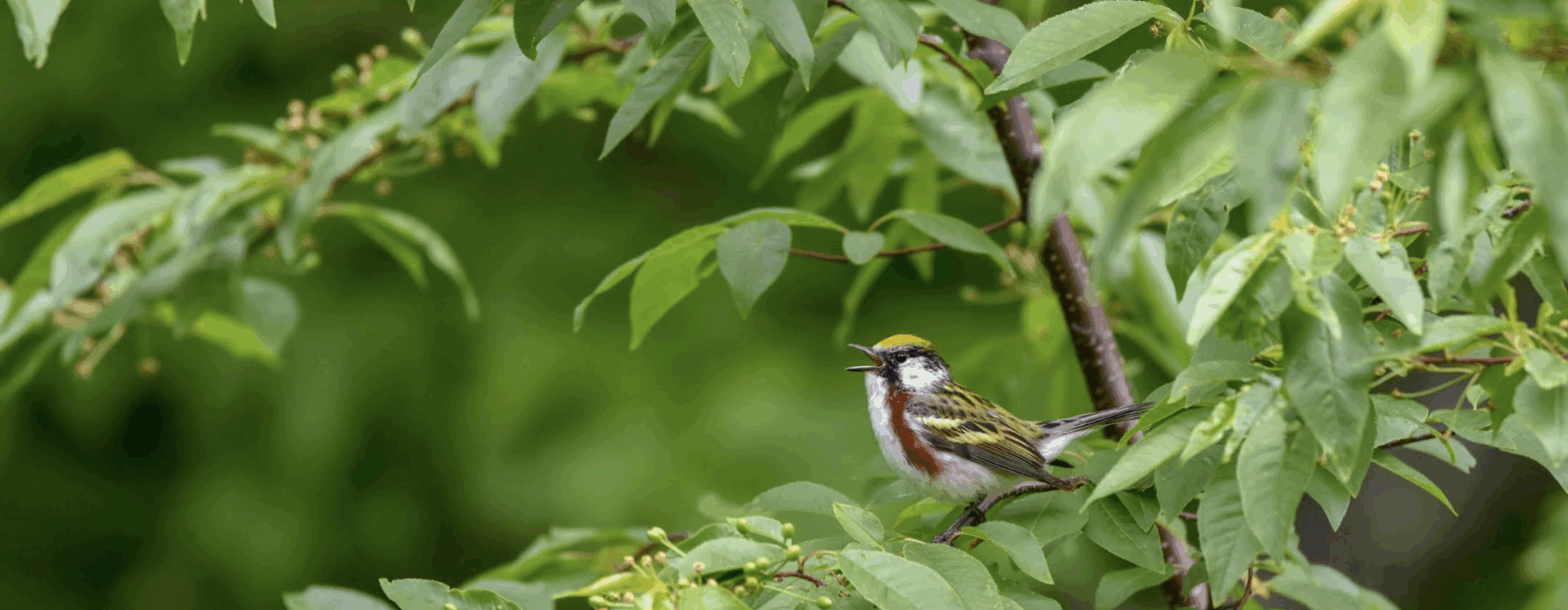
On two mornings every June for nearly 30 years, they have awakened well before dawn—earlier than even these hearty birdwatchers would care to admit. Packing little more than binoculars, a stopwatch, and a clipboard, they drive through the dark to forest sites across Vermont. As the woods around them rouse into a dawn chorus of song, they begin counting birds for one of North America’s most important population studies.
Volunteering with VCE is a small commitment to get out into the field during the summer months to record bird behavior and species diversity for local conservation goals. For me, immersing myself in Vermont's beautiful northeastern forests and learning bird songs and behavior was like learning their language. The field skills I started growing in Vermont have made me a better naturalist and served me well in my career in wildlife biology.
— Jude Dickerson
An Innovative Long-Term Study
Initiated in 1989, the FBMP is now one of the continent’s longest-running studies of forest bird population trends. While numerous studies have documented declines in songbirds inhabiting fragmented landscapes, few monitor birds in protected undisturbed forests in the Northeast. That is why we’re gathering data across a broad range of forest types. With troubling losses of forest habitats in Latin America and the Caribbean, where many of these birds spend the winter, it becomes critical to understand the long term effects of diversity and abundance on breeding summer grounds.
Here, by the numbers, is a summary of the project’s scope:
30: years of survey data
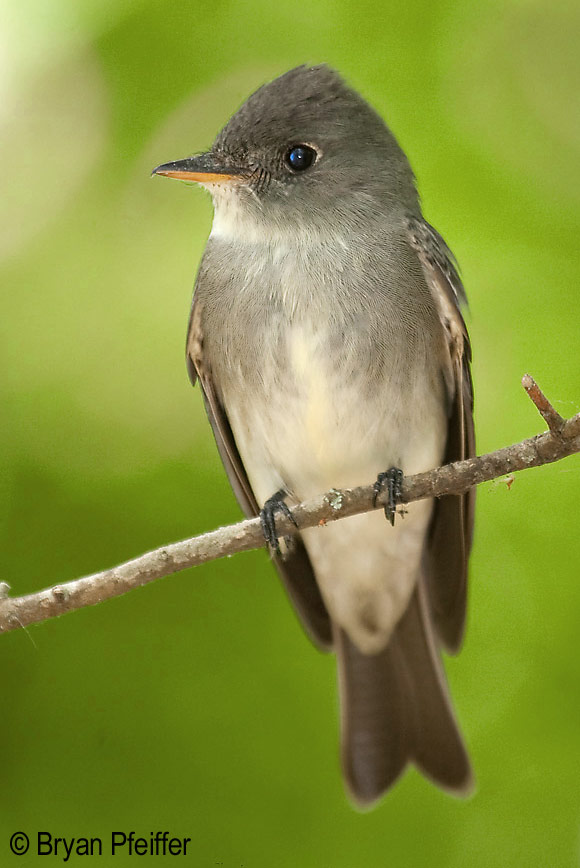
31: Vermont forest bird monitoring sites
61: community-scientists who have participated in the project
136: number of bird species encountered
3,295: hours spent in the woods
68,824: bird observations in the FBMP database
The Importance of Forest Birds
Vermont would hardly be Vermont without forests, which cover 75% of the state. Forests provide jobs, timber products, clean air and water, and countless recreational opportunities. Aside from trees, forests comprise a community of plants and animals. And among forest wildlife, no group is as iconic as birds.
Vermont forests support more than 80 species of breeding birds. Songbirds bring voice and color to our forests. The Scarlet Tanager adds a crimson blast to hardwoods. A rainbow of warblers, more than 20 species, spans forest niches from lowland swamps to mountain summits. And Vermont’s state bird, the Hermit Thrush, issues an ethereal, fluty song that hangs like mist in the woods.
Most of these songbirds are insectivores that appear to play a crucial role in sustaining the ecological balance and productivity of forests. A classic study in the 1990s demonstrated that forest songbirds significantly increase tree growth by consuming leaf-eating insects, and that a decline in bird abundance could dramatically reduce forest productivity and health.
But our forests and their birds now face more pervasive and urgent threats.
More than half of Vermont’s tree species are threatened with devastation from non-native forest pests, including the emerald ash borer, Asian long-horned beetle, hemlock wooly adelgid, and a nematode that causes beech leaf disease. A warming planet will gradually but profoundly alter biodiversity, productivity, and economics of our forests. Scientists in Vermont have already detected changes in the distribution of tree species in high elevation spruce-fir forests.