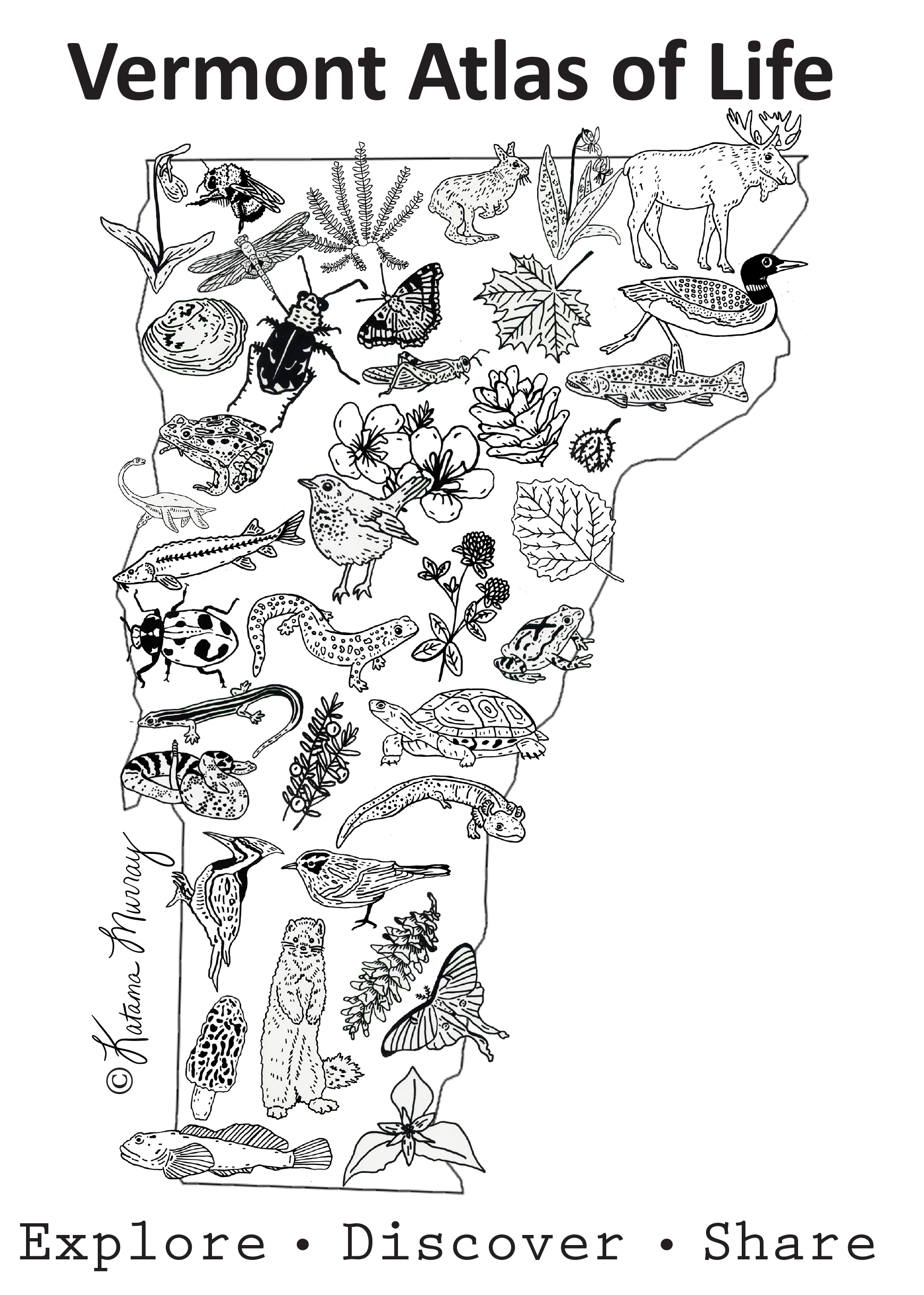
The Vermont Atlas of Life is a library of knowledge on Vermont’s animals, plants, fungi, and microorganisms—an online, real-time resource with maps, photographs, and primary biodiversity data open for anyone to use.
The average department store knows more about its inventory than we know about what lives in Vermont.
 What’s common? What’s at risk? What will be? Where is it? The answers lie scattered among books, reports, computers, museums, and even in the memories or journals of Vermonters now living or long passed. In the information age, this is troubling.
As human activity profoundly alters the map of life on local and global scales, our response requires knowledge of plant and animal distributions across vast landscapes and over long periods of time.
Vermonters cannot respond effectively to climate change, natural disasters, invasive species, and other environmental and economic threats without a current understanding of the state’s living resources. At stake is nothing less than the health of our natural world, economy, and human life itself.
The Vermont Center for Ecostudies’ solution is the Vermont Atlas of Life (VAL).
VAL is a central library of knowledge on the biodiversity of Vermont: animals, plants, and fungi. At VAL’s core are powerful computers holding every bit of data the atlas project continually accumulates. But VAL is less a computer system than a community of people contributing and using information about the changing nature of Vermont: distribution maps, photographs, and other data free of charge to anyone – from backyard naturalists to scientists to policy makers. In short, VAL is one of the most ambitious and far-reaching biodiversity projects Vermont has ever undertaken.