Go Touch Grass. Let Us Know What You See.
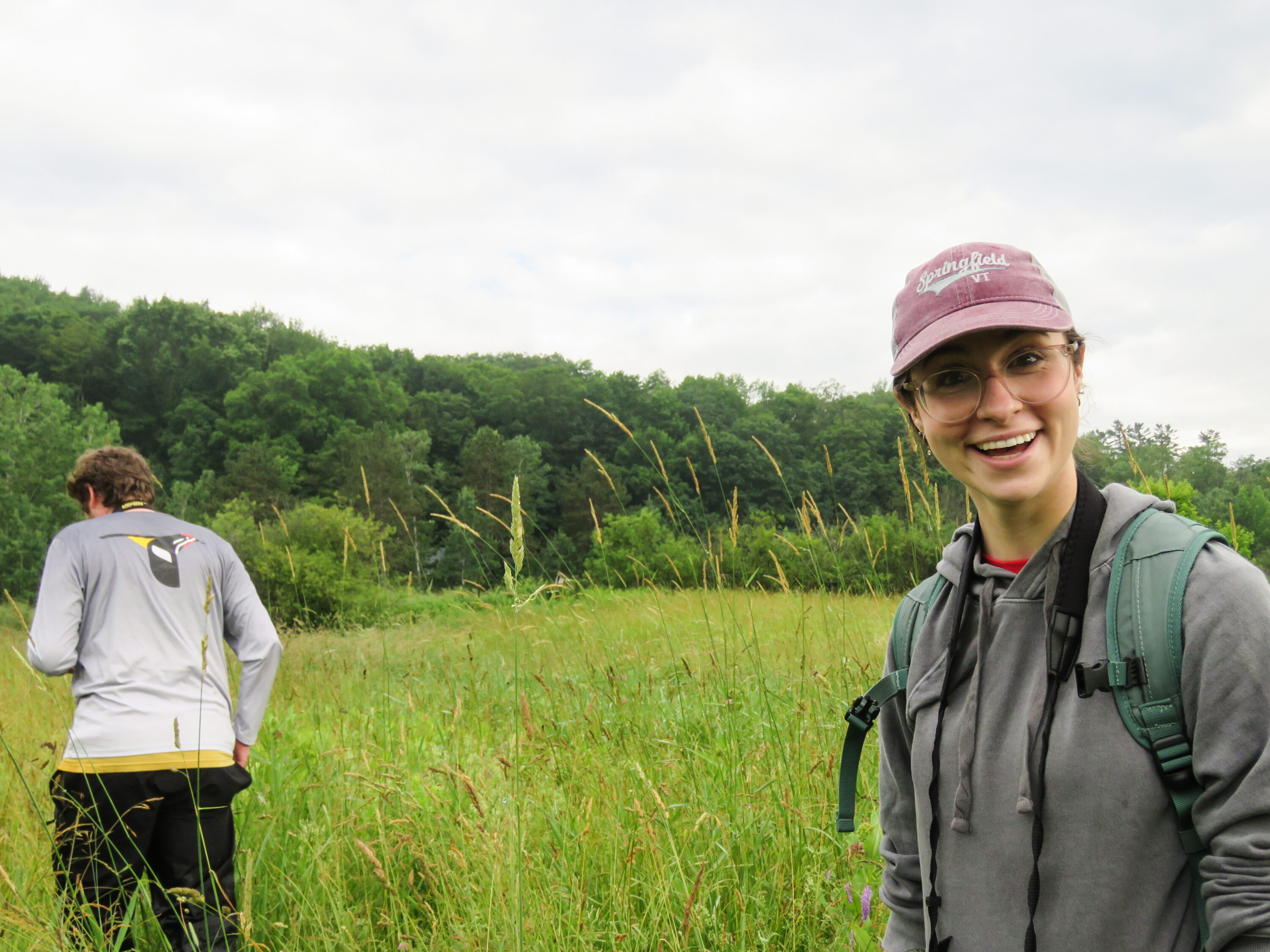
Exploring a hayfield and looking for grassland birds © Sammi Rizzo
Many of the staff here at VCE have never heard the phrase, “Go touch grass.”
That makes sense. If you’ve never heard it, it’s probably because you don’t need to hear it.
It’s a phrase that is commonly lobbed, with no small amount of snark, at people who spend way too much time online. Frankly, our conservation biologists are more likely to recognize a birdsong or rare butterfly than a Tiktok meme.
If you’re not chronically online, you might be wondering about proper “Go touch grass,” usage. So let me share some examples. Is someone spiraling about some truly unimportant internet drama? Go touch grass. Is a relative stalking your Facebook profile and reporting your every move to the family group text? Truly, they should touch grass. Is a friend getting all their life advice from a chat bot? Bestie, love you, but go touch grass.
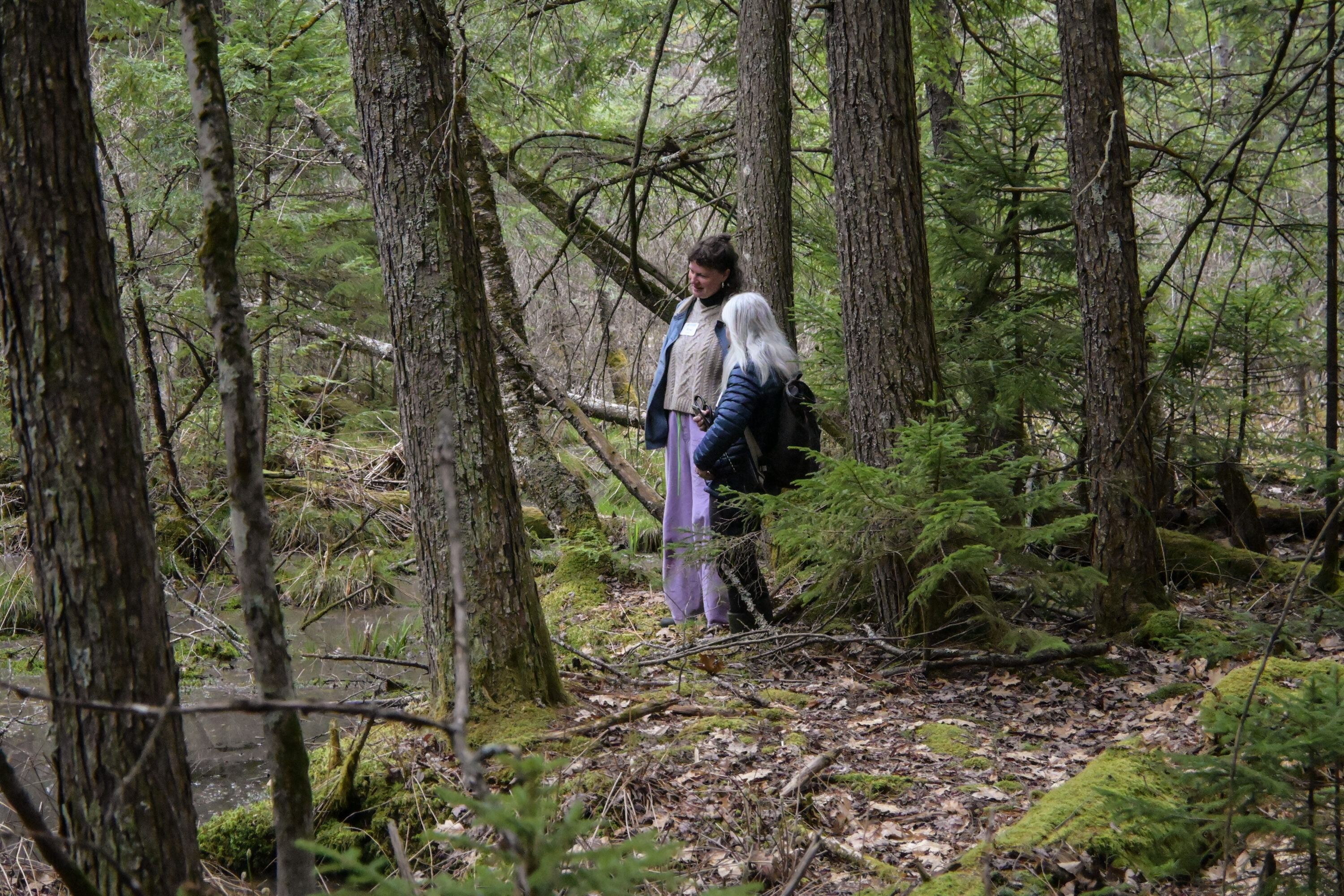
Enjoying a vernal pool and conversation © Alden Wicker
It’s solid advice to get outside into greenery. Research has shown that walks in nature can increase memory span and boost mood compared to built environments. A 90-minute walk in nature can reduce rumination, which is a precursor to more serious mental illness. Another study found that for college students, more time in nature (“green time”) and less time using devices (“screentime”) was associated with lower depression and stress.
Here at Vermont Center for Ecostudies we have a dozen different volunteer opportunities that will get you outside, calm your nervous system, and help you get to know the local flora and fauna, while also contributing to conservation science. Touch grass? Even better: identify grass…and the kind of birds that live in it.
And before you throw your smartphone in the pond to better connect with the outside world, know that there are plenty of apps that can connect you with nature, and with our research projects. That brain rot machine can actually help you identify species and find new, magical green nooks in which to forest bathe.
If you’re ready to stop girl bossing and start girl mossing instead (walking slowly through the forest taking photos of every cute little thing you see) then come with us.
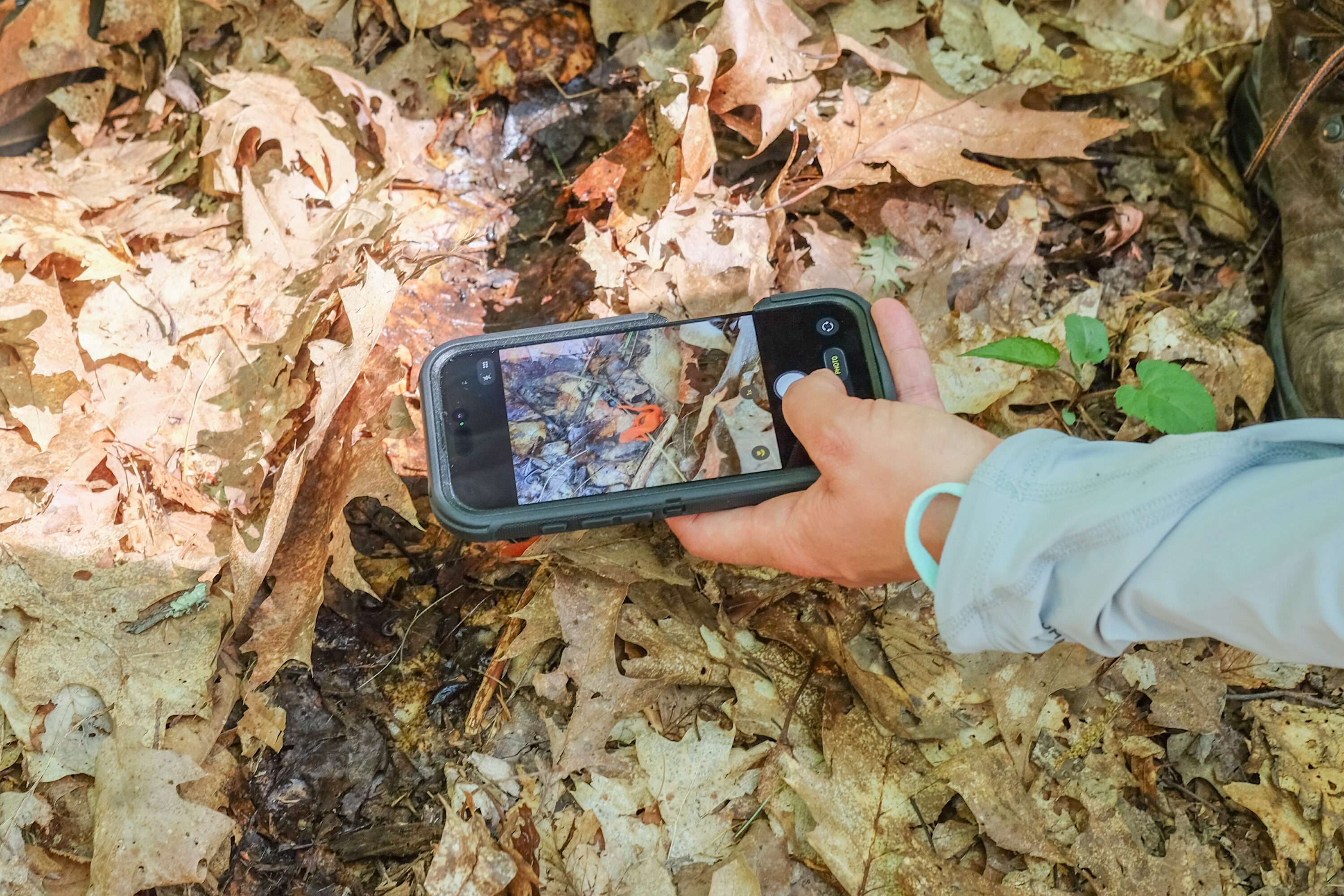
Taking a picture of a salamander to upload to iNaturalist © Alden Wicker
Level 1: Download iNaturalist and start taking photos.
You don’t have to be in Vermont for this one. Download the iNaturalist Classic app (the old version works better for our projects), sign up, and start taking photos! Once you upload the photos to iNat, it will suggest an ID, whether the exact species, genus, or family, and other naturalists will double-check to confirm. That observation then goes into an open-source database that scientists use for their research.
For example, any species you photograph in Vermont automatically goes into our Vermont Atlas of Life, a free library of knowledge on the biodiversity of Vermont: animals, plants, and fungi.
Once you get past the sometimes clunky design, iNaturalist is a pretty self-explanatory app. But if you would like a detailed explanation, we created a downloadable guide to get you started.
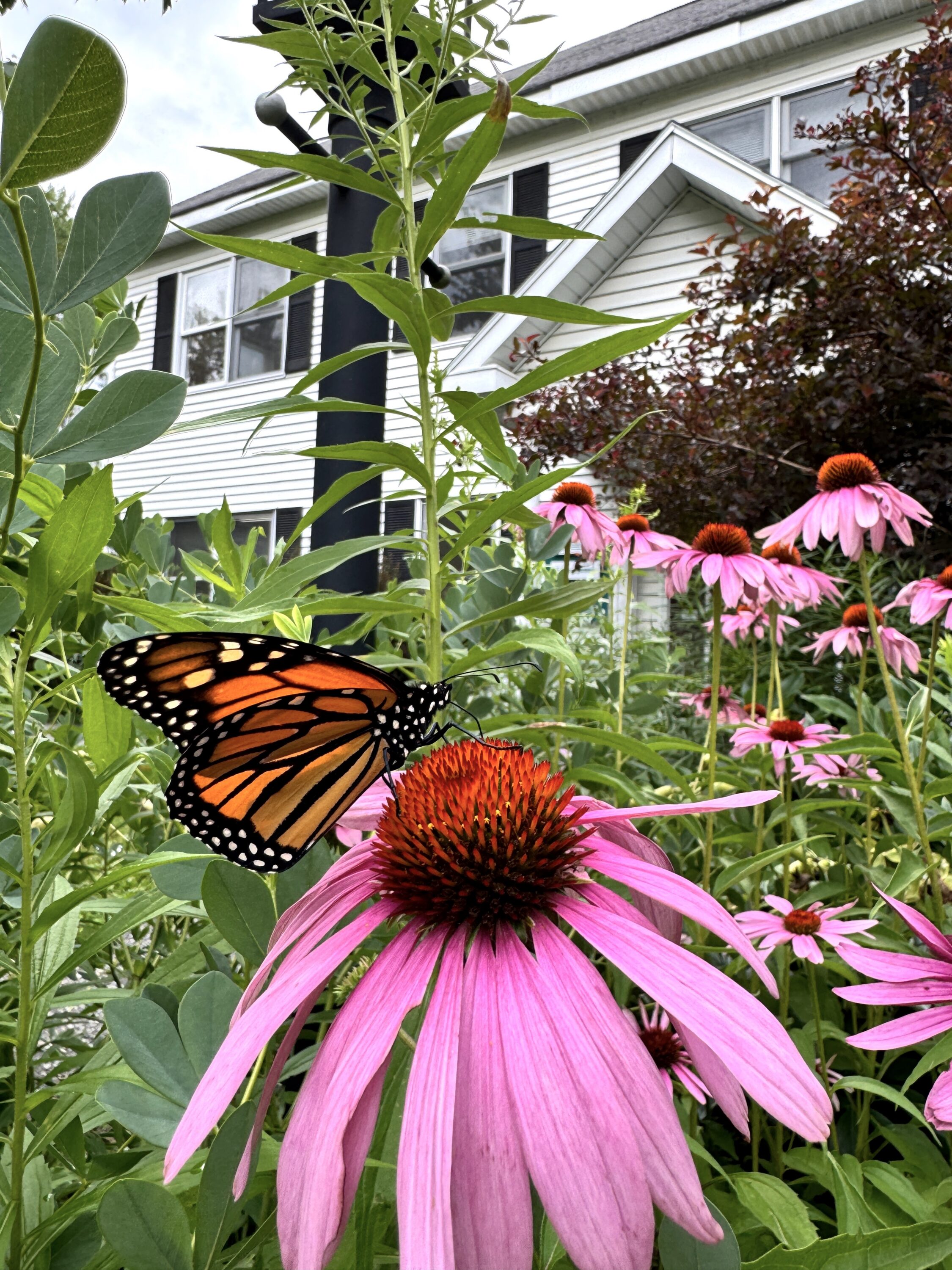
Monarch on coneflower (genus Echinacea) © Jill DeVito
Level 2: Take pictures of pollinators on plants.
Living that cottagecore lifestyle, wandering the garden with a mug of tea and looking at your flowers? (Or faking it by visiting the local botanical garden?)
There’s no better content than a bumble bee getting intimate with a blooming Foxglove Beardtongue, or a butterfly blessing a coneflower with its presence. Take a bunch of pictures close up and from far away! Get all its best angles.
But before you even upload it to Instagram or share in the groupchat, impress your friends by getting its proper name.
Here’s how: First, search for the Pollinator Interactions on Plants project on iNaturalist and join. Then, upload a picture of the flower to get an ID. In a separate observation, upload the closeup of the pollinator (which are more than just bees and butterflies!) to get an ID on it. Click on the Projects row to select Pollinator Interactions on Plants. Under Interaction->Visited flower of put the flower that the insect is visiting. If you don’t know, that’s okay. Select the insect for the observation. It will suggest an insect species, genus, or family. If you’re not sure, that’s okay! An expert will check. Click SHARE.
Bam. You just helped VCE scientists Desirée Narango and Amber Jones research native and non-native plants and how well they support pollinators. Find out more about the Pollinators Interactions on Plants project here.
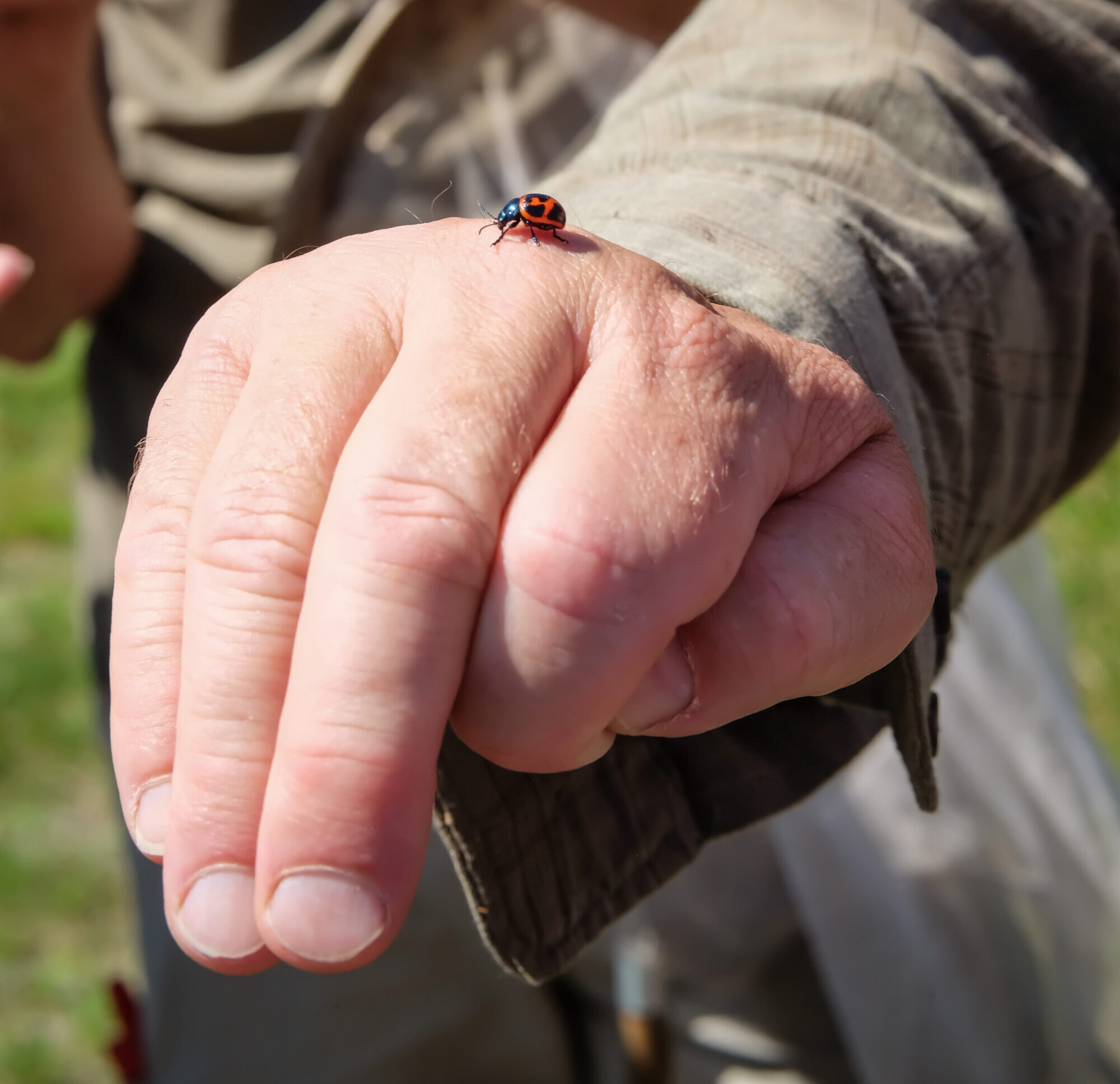
Care to collect lady beetle observations? © Alden Wicker
Level 3: Join a Vermont Atlas of Life mission.
Gotta catch ‘em all! The biologists with our Vermont Atlas of Life are always looking for help with particular projects or blitzes. Maybe you want to local survey milkweed for Monarch butterflies, caterpillars, and eggs. Maybe you want to collect fungus samples for a DNA sequencing project. Maybe you want to capture a photo of one of three elusive bumble bees. Or maybe you just wanted to focus on taking a picture of every coccinelllid (lady beetle) you see. (There are 36 native lady beetle species historically documented in Vermont, but some haven’t been seen in years. You can be their hero.)
At the Vermont Atlas of Life, there is a project waiting to be your particular (healthy) obsession.
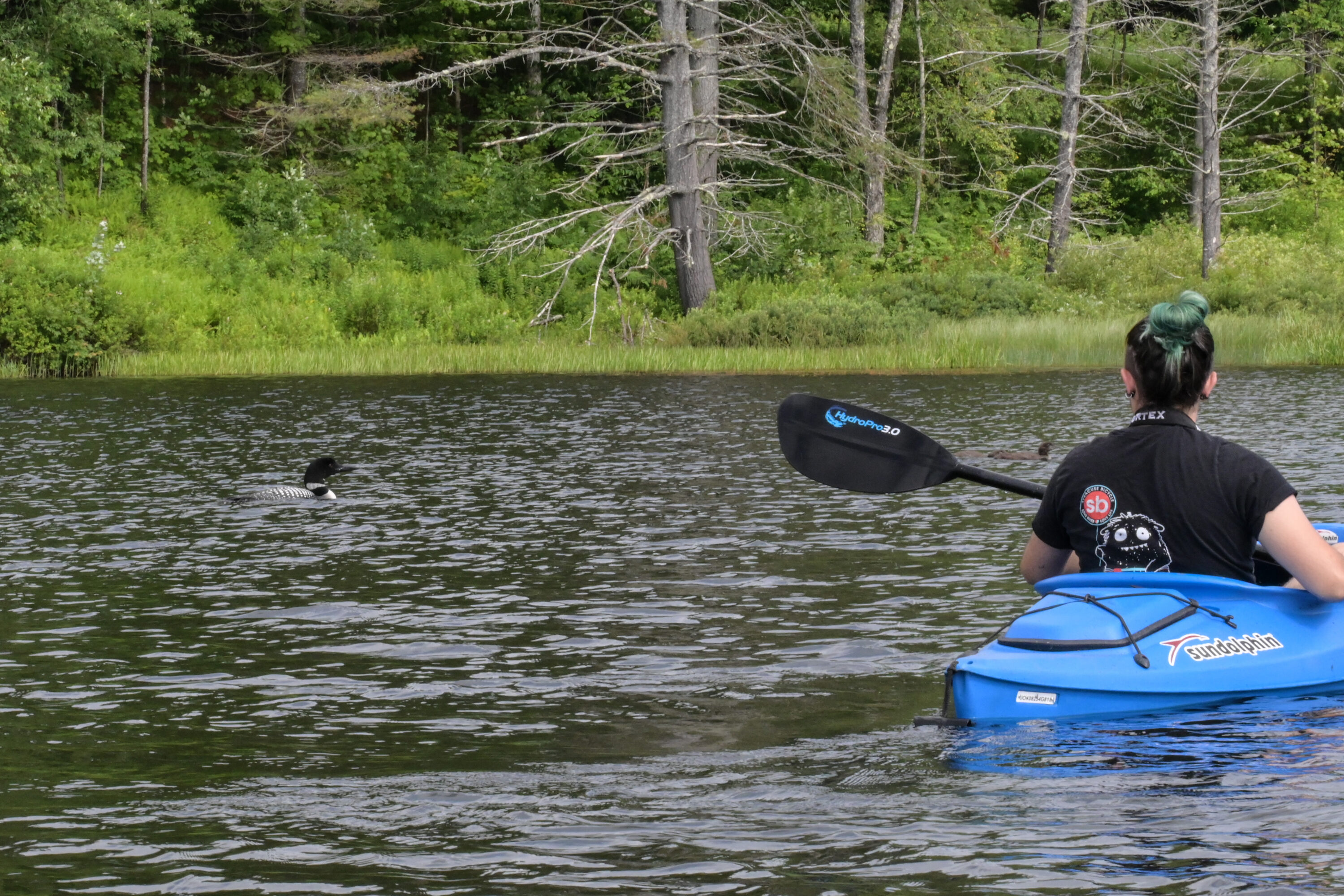
Monitoring for loons involves leisurely paddles on Vermont’s lakes © Alden Wicker
Level 4: Go see a Vermont loon.
Stand-up paddleboarding and kayaking are more fun with friends. And one way to get your friend off the couch and out onto the lake with you is by promising them loons. Yes, those large, beautiful water birds whose haunting wail has been used somewhat erroneously in many, many films. It’s giving creepy. It’s also giving outdoorsy.
We think they’re pretty cool birds. And that’s not just because our two loon biologists, Eric Hanson and Eloise Girard, lead the Vermont Loon Conservation Project along with the Vermont Fish and Wildlife Department. Loons used to be pretty rare—only seven pairs were counted in Vermont in the 1990s, and now we’re up to more than 400 adults! How’s that for some good news?
Stop doomscrolling and start paddling. In the summer in New England, you might catch two loon parents teaching a fluffy chick or two to fish. If you’re in Vermont, where there are hundreds of lakes, ponds, and reservoirs to choose from, you can do a bit of research ahead of time using LoonWeb to figure out which bodies of water near you are most likely to have loons.
Just make sure the LC (LoonCount) button is clicked at the top of the page, zoom into your area on the map of Vermont, click on nearby lakes, and it will show you how many adults and chicks have been observed on that lake every July from 2026 going back to 2015.
Before you go out, learn about proper loonwatching etiquette, and sign up for LoonWeb yourself and input a survey about the loons you saw for our LoonMonitor project. That helps our scientists keep track of whether loons nested, hatched one or two chicks, and whether those chicks survived until fall migration.
If that was fun, make sure to sign up for our Vermont Loon Conservation Project newsletter so you can learn more about loons and get updates on volunteer opportunities.
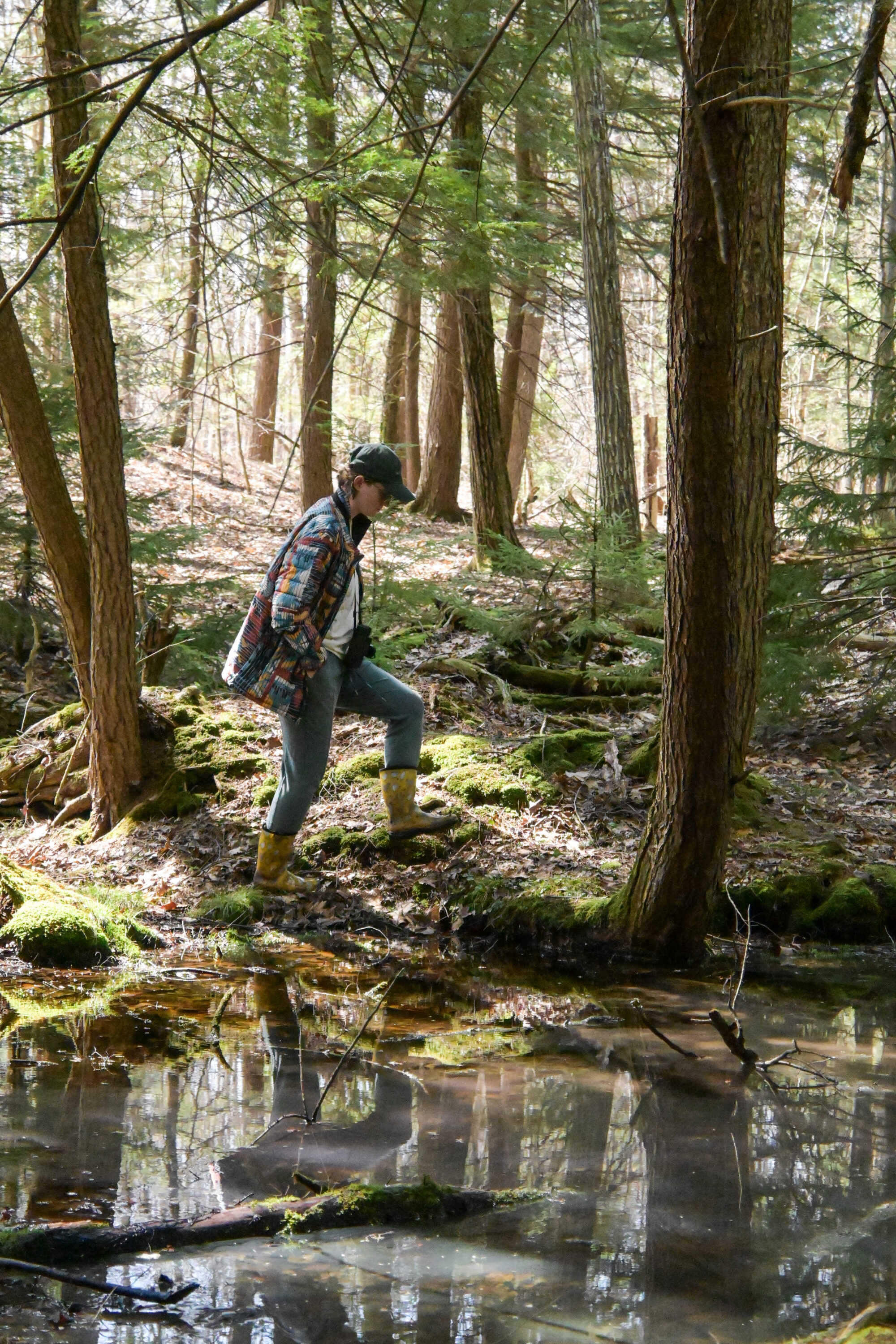
Exploring a vernal pool © Alden Wicker
Level 5: Go find a vernal pool.
Vernal pools are ephemeral pools of water in the forest that collect snow melt in the spring and provide a safe nursery for salamanders and frogs to lay their eggs, before shrinking or even drying up completely as the summer goes on.
It’s a magical experience to stumble upon one while you’re wandering through the woods. But we’ve created a map of Vermont with every potential and confirmed vernal pool. Our vernal pool biologist Kevin Tolan has used remote sensing technology to figure out where additional, unmapped vernal pools may be hiding, and he needs your help to confirm them! That’s the project we call Vernal Pool Atlas. Luckily, the VP Atlas app, when downloaded to your phone, will help you navigate to and fill out a survey for nearby potential pools.
The best vernal pool-hunting time is from April to June. But you can get to know VP Atlas now. Here’s everything you need to know. And if you want to be more involved next spring, drop Kevin a line at vpatlas@vtecostudies.org so you’re on his list of interested volunteers.
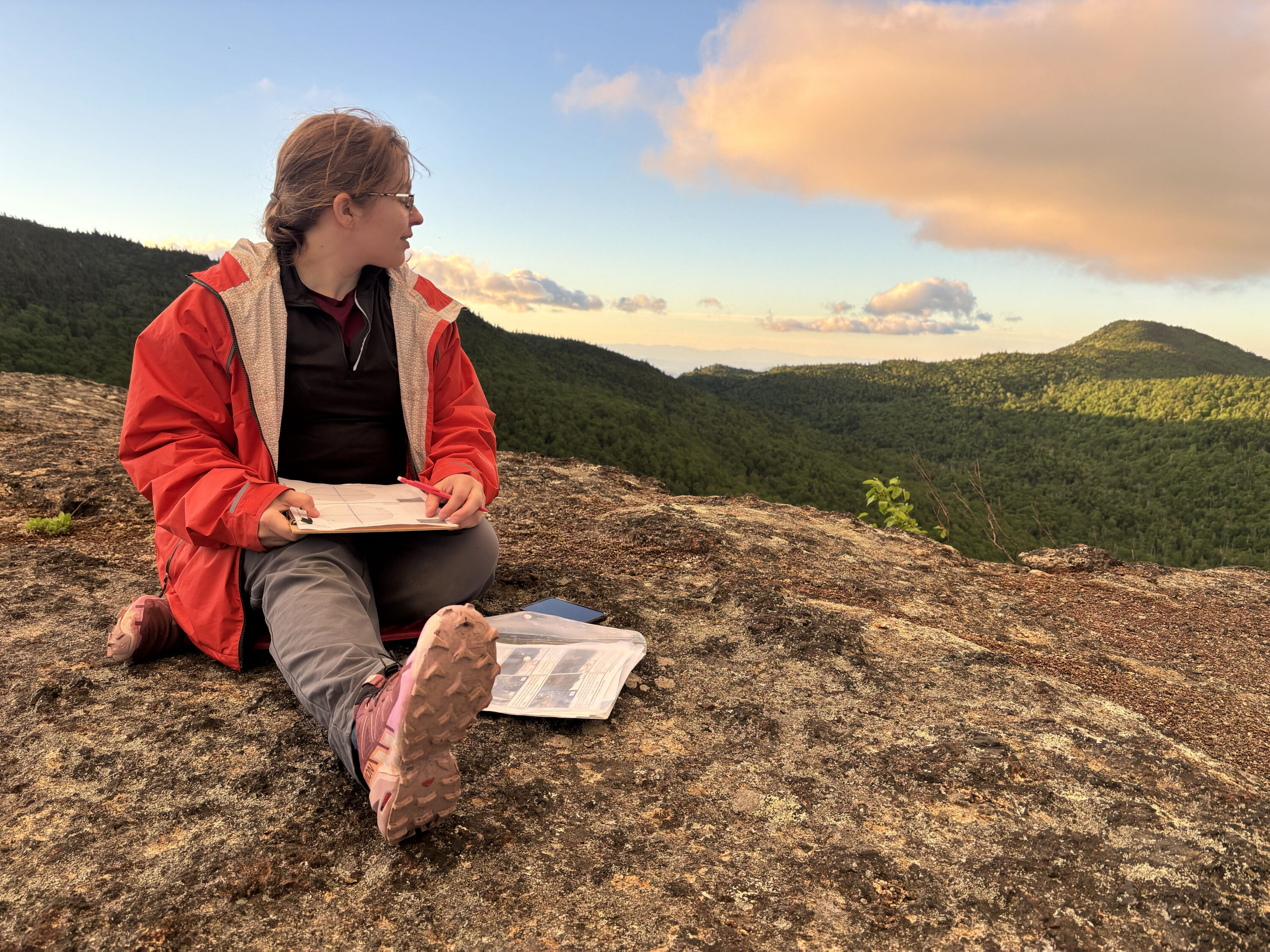
Listening for birds for Mountain Birdwatch © Molly Brogan
Level 6: Listen for birds at dawn.
Ready for some extreme grass-touching? Every June, volunteers across the Northeast pitch their tent on a mountain and wake up at dawn to listen for the song of montane birds (and the red squirrel). Mountain Birdwatch has collected data in this way for more than 25 years, helping scientists monitor mountain bird populations.
All you need to do is make sure you can hear the high-pitched song of the Blackpoll Warbler, learn the songs and calls of the 11 focal species, and understand a simple survey protocol. Nope, you can’t use the app Merlin or any other AI-assisted technology—you actually need to recognize the birdsong yourself!
There are about 100 available routes. Some are easy—you just get out of your car at a parking lot. Others are gnarly, involving a rock scramble in the dark. All are immensely rewarding. As Mara Scallon wrote in The Maine Journal of Conservation and Sustainability, “Learning new bird species has…caused me to be attuned to the available habitat, movements of species smaller than me, and the myriad sounds that surround me in some spaces. Practicing this intentional, slow attention-giving whether at home or further afield, has enriched my understanding of these places, and made my mental maps more complex.”
Sign up to hear about available routes when they open up in the spring.
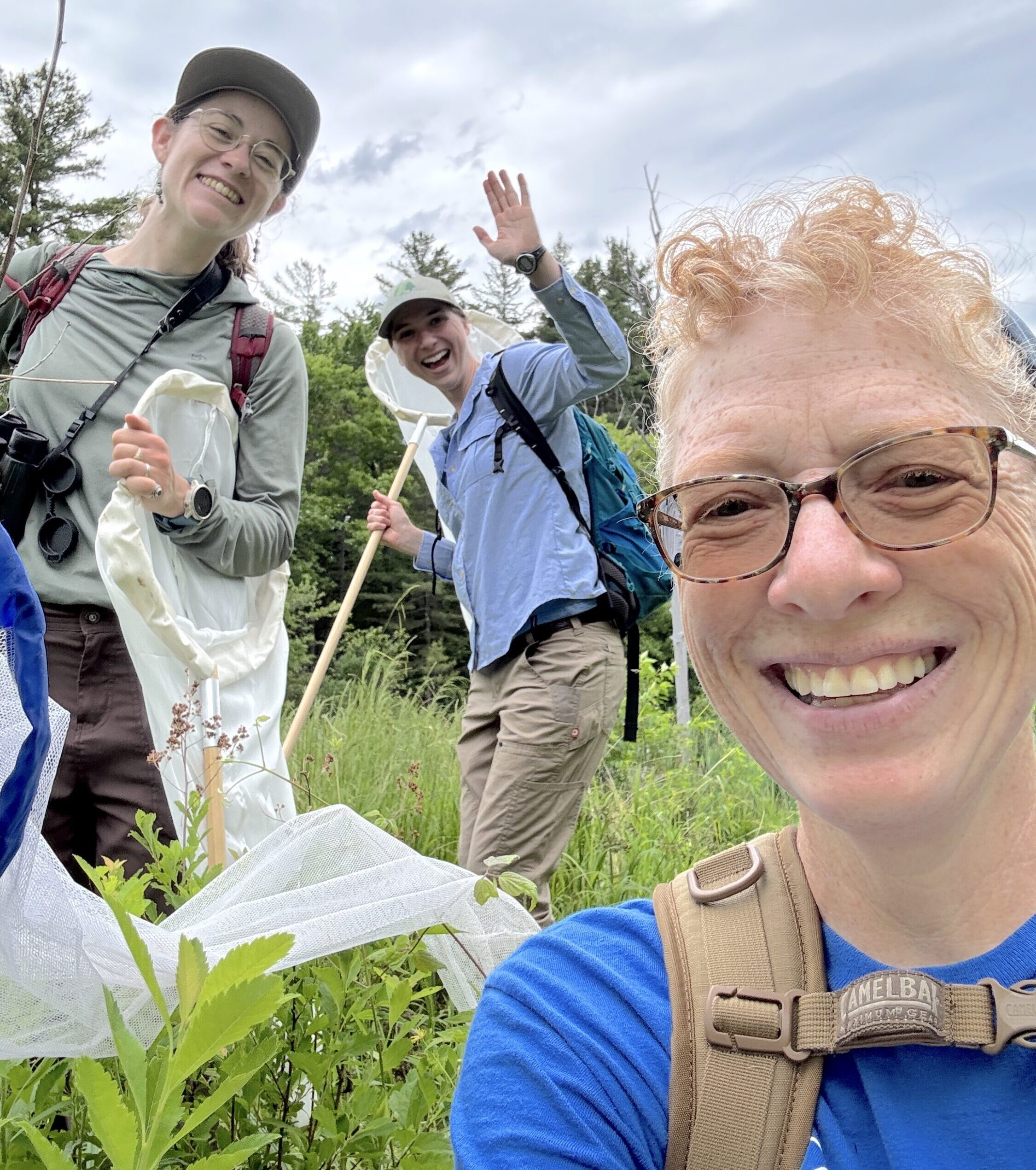
Vermont Butterfly Atlas Technician Jill DeVito takes a selfie with two volunteers © Jill DeVito
Level 7: Chase some butterflies.
The Vermont Butterfly Atlas is a five-year survey that is completed with the help of volunteer community scientists like you. Other states from Connecticut through the Canadian Maritimes have completed atlases, but Vermont will be the first state or province to do a second one. It will help us understand how butterfly populations have changed in the past 20 years so we can take action to protect these little guys.
It sounds whimsical, chasing butterflies, and it totally is. It also can be a hardcore scavenger hunt. So if you’ve taken a few photos of butterflies already, it might be time to do an official survey using eButterfly. We have directions here. Adopt a priority block to survey, which would really be doing butterfly scientists a solid by checking it off their lists. And we have badges for our top butterfly atlasers! That’s way better than a blue check.
Oh, and by the way, butterflies love themselves a meadow full of wildflowers and, you guessed it, grass. See you there!
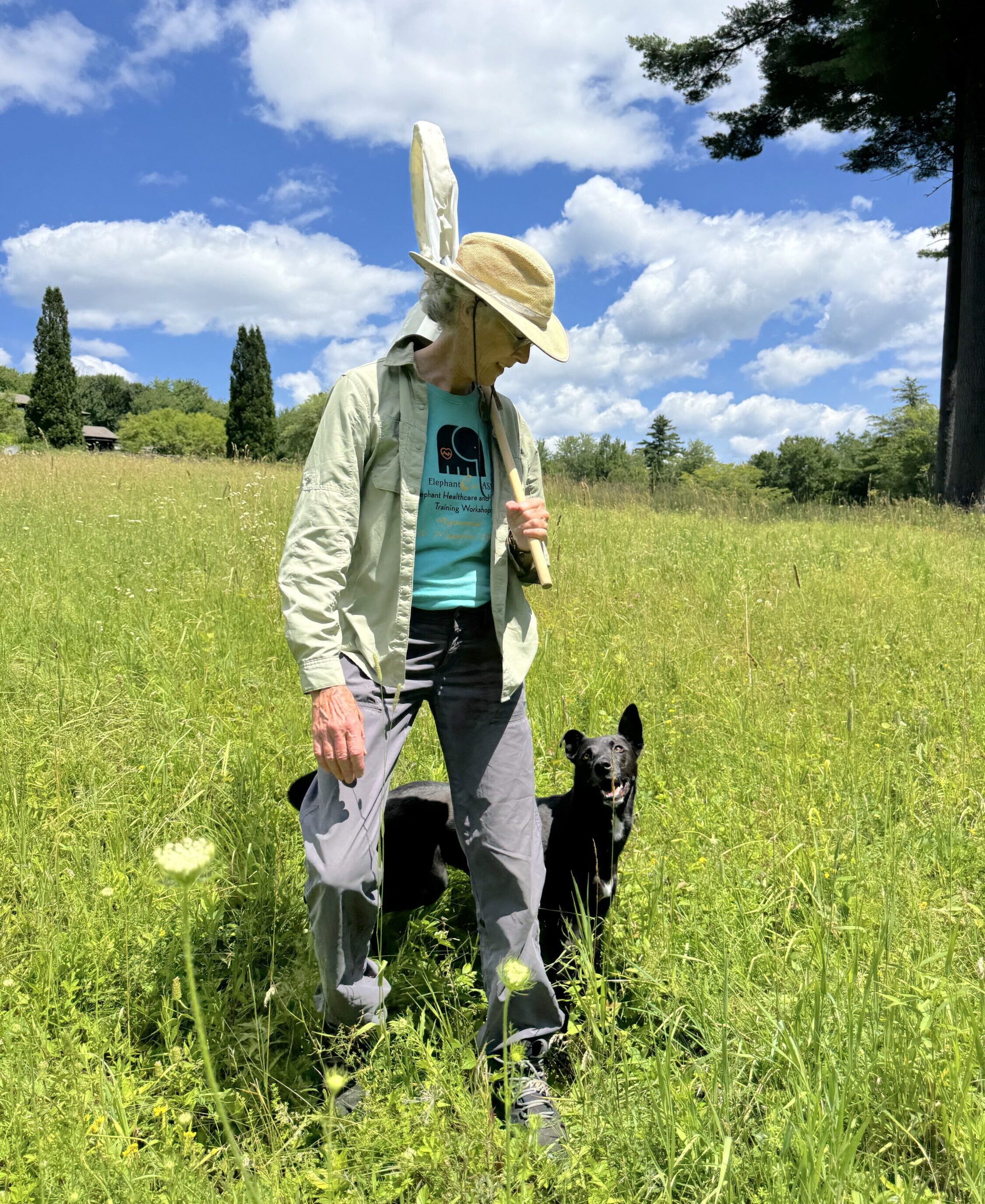
Volunteer Hollis Burbank and her dog in a grassy field ready to catch butterflies © Jill DeVito
Touch (Almost) All the Plants!
We keep a running list of projects that are recruiting volunteers. We know you can get out there today and contribute. But if you have any questions at all, our volunteer coordinator Dana is an email away at dwilliams@vtecostudies.org.
Oh, and one final note: Some plants should not actually be touched. iNaturalist can help you tell your Virginia Creeper from your Poison Ivy, and your Golden Alexanders from Wild Parsnip. Your skin can thank us later!


I read most of the posts in the blog and find them both well written and informative, but this post is great! It conveys infectious enthusiasm and joy while being useful and informative and the pictures pretty perfectly match the text. Fantastic job!
Love it! And didn’t know about the Pollinators interactions on Plants project, have a lot of photos to add.