Whether you live alongside a lake or only occasionally visit your favorite pond, you have many options for joining VCE in the conservation of Common Loons.
If you have any questions, contact our Volunteer Coordinator Dana at dwilliams@vtecostudies.org.
Annual LoonCount
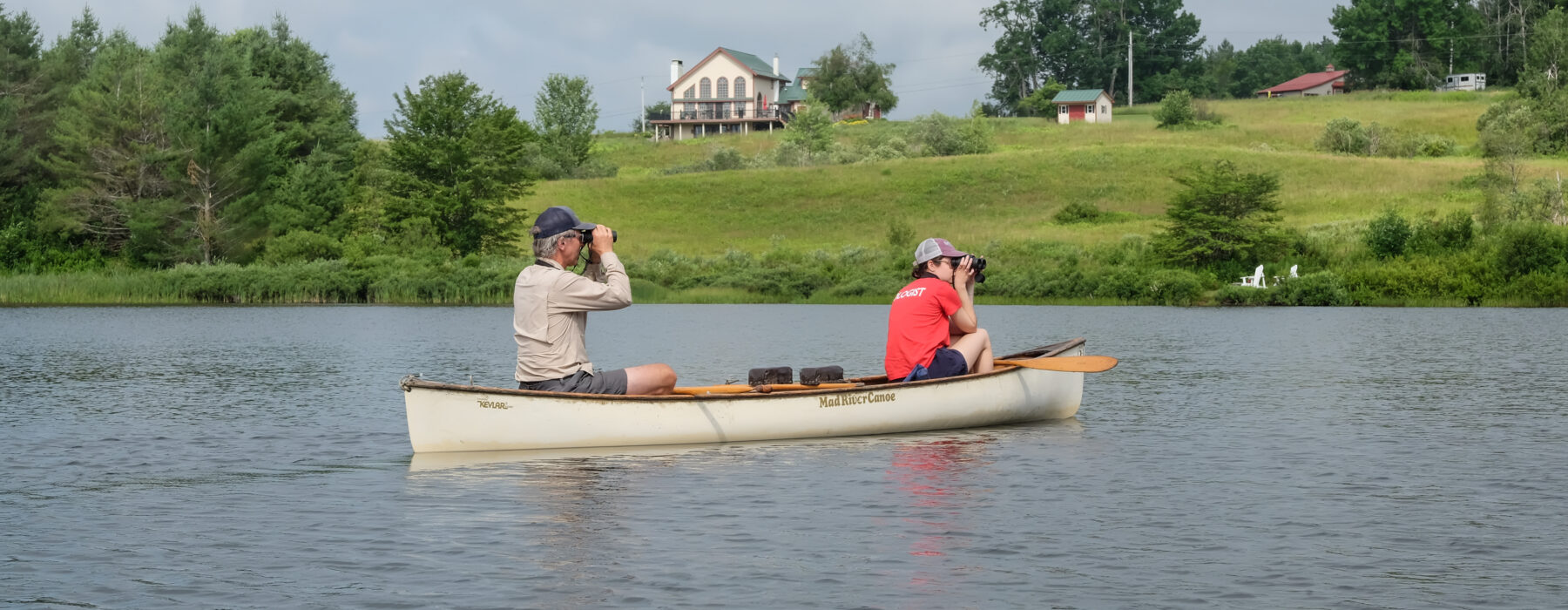
Each year on a single day on the third Saturday of July, VCE and our volunteers cover more than 160 lakes and ponds statewide. It’s the single most effective way for VCE to document and track loons across the state. Survey a lake—or if you’ve got time, a few—for one hour on that Saturday.
LoonMonitor
On lakes with nesting pairs or other known loon activity, volunteers monitor loons weekly or every two or three weeks from mid-May through August. On lakes with loon activity but no nests, volunteers visit and monitor the pair one to four times a month from mid-May to mid-July. This program is great for folks who have summer camps on lakes or live nearby. More than one volunteer can adopt a lake.
Help a Distressed Loon
Injured loons can be dangerous—do not try to rescue a Common Loon on your own. Learn the difference between loon distress and loon preening, then contact the VCE loon biologists at loon@vtecostudies.org. Finally, read up on what else you can do to help them.