Ambystoma jeffersonianum
The Jefferson Salamander is considered a “High Priority” Species of Greatest Conservation Need in the Vermont Wildlife Action Plan. Please follow forestry Best Management Practices around breeding pools to help sustain viable populations.
The number of Jefferson Salamanders is unknown but estimated to be between 10,000 and 1,000,000 individuals across the species’ range.
Jefferson Salamanders are found in forests throughout southern Ontario, through New York and western New England, all the way to northern Virginia, West Virginia, Kentucky, and eastern Illinois. They breed in vernal pools and shallow wetlands. See species distribution in Vermont here.
Want to know even more about the Jefferson Salamander? Visit Encyclopedia of Life to learn more about this species’ natural history and identification.
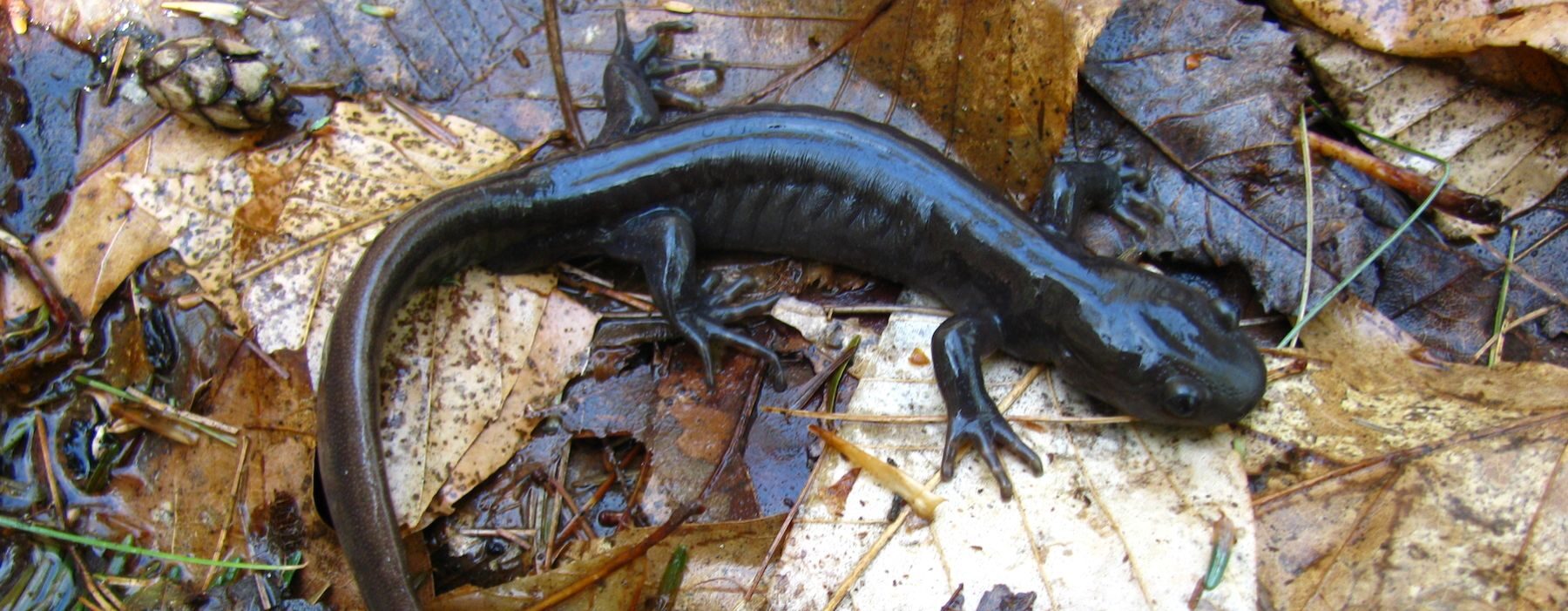
Along with the more flashy Spotted Salamander and the smaller Blue-spotted Salamander, the Jefferson Salamander is one of Vermont’s three species of “mole” salamanders. As their name implies, these rather large and stocky salamanders spend the majority of their time underground in small mammal tunnels or beneath rocks, logs, and other debris. Jefferson Salamanders are dark grey to brown, and may have tiny white to blueish flecks on their sides and belly. On rainy spring nights, adults emerge from their underground haunts and migrate en masse to vernal pools where they mate and lay eggs, before returning to the surrounding woodlands for the rest of the year.
The Jefferson Salamander is also a member of an unusual group known as the Jefferson-Blue-spotted Complex, which consists of two bisexual species (Jefferson and Blue-spotted salamanders) and a unisexual hybrid. The unisexual hybrid populations, which almost always consist entirely of females, co-occur with local populations of the two bisexual species, and are produced through complicated reproductive mechanisms using sperm from either Jefferson or Blue-spotted males. The resulting offspring are all female with varying amounts of Jefferson and/or Blue-spotted genes, depending on which species is present at a given site and the genetic make-up of the hybrid. This can make identification of some individuals a little tricky since unisexual hybrids can look very similar to pure Jefferson and Blue-spotted salamanders, or somewhere in between the two.
The range of the Jefferson Salamander stretches from southern Ontario through New York and western New England all the way to northern Virginia, West Virginia, Kentucky and eastern Illinois. They are typically found inhabiting mature deciduous and mixed deciduous-coniferous forests and woodlands and breed almost exclusively in upland vernal pools and shrub swamps. In Vermont, they are most commonly found in ridgetop, mid-elevation Northern Hardwood forests in the foothills of the Green and Taconic Mountains.
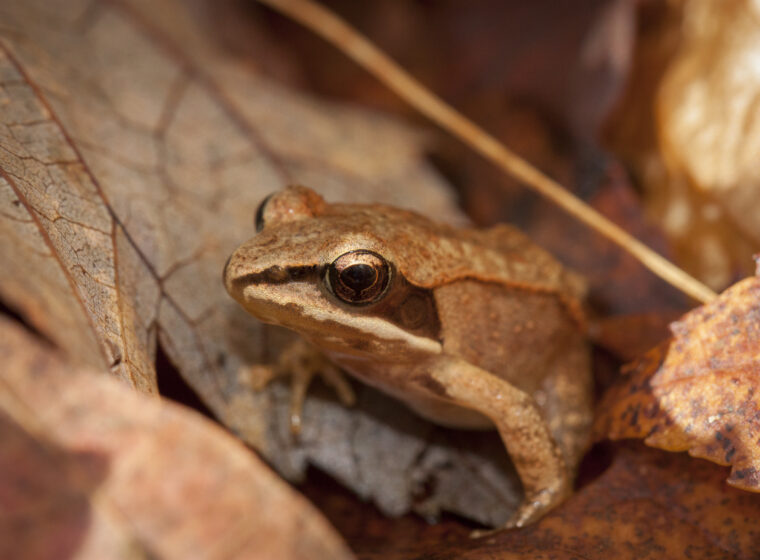
VCE’s work on Jefferson Salamanders is part of our larger effort to locate and monitor vernal pools. Vernal pools are forested wetlands that provide critical breeding habitat for a number of species including Jefferson Salamanders, Spotted Salamanders, Blue-spotted Salamanders, Wood Frogs, Fingernail Clams, Fairy Shrimp, and more. Additionally, VCE Conservation Biologist Steve Faccio has investigated the relationship between Jefferson Salamanders and the landscape by tracking where individuals move to from vernal pools following the spring breeding.
VCE Project
If learning more about the Jefferson Salamander has left you wondering how you can contribute to its conservation, please consider becoming a community scientist, making a gift, or keeping up with the latest VCE news! We also encourage you to report any sightings to iNaturalist Vermont, which helps us better understand this species throughout its range.