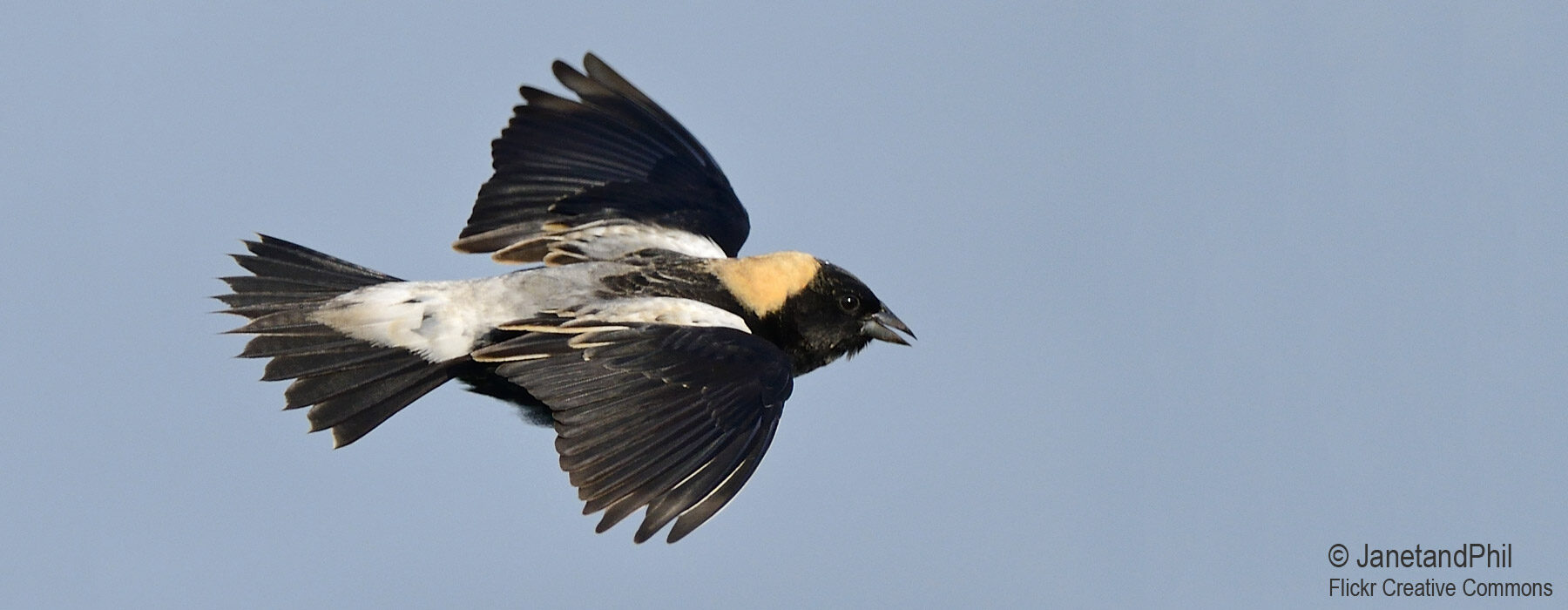
Dolichonyx oryzivorus
Bobolinks are listed as Threatened in one state, Special Concern in eight states, and Species of Greatest Conservation Need in 22 states. They are also considered Special Concern, Sensitive, or Vulnerable in four Canadian provinces.
Global Bobolink populations are estimated to be around eight million.
Bobolinks breed in grasslands throughout North America’s west-to-east band, from Oregon to Pennsylvania, and from Alberta to Nova Scotia. A core population area exists in the northern Great Plains and Midwest. This species eats seeds from grasslands, wetlands, rice, and other crops during the winter. It makes long stops in the LLanos of Venezuela, wintering primarily in northeastern Argentina and eastern Bolivia. Explore a dynamic eBird range map for this species.
Want to know even more about the Bobolink? Visit All About Birds to learn more about this species’ natural history and identification.
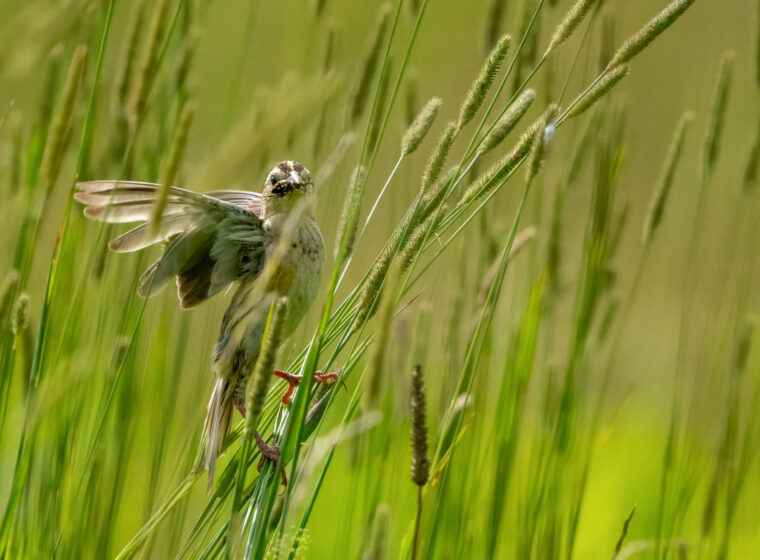
Inspiring poetry from the likes of Emily Dickinson, William Cullen Bryant, and James Russell Lowell, the Bobolink has been revered for deeper life lessons. In modern times, the Bobolink serves as an iconic species of North American grasslands, a poster child for the plight and conservation of grassland birds.
Sadly, this seed-eating bird has been viewed as a plague by rice farmers in North and South America – at both ends of its hemispheric range. About a decade ago, VCE led international work on the conservation of this classic grassland species.
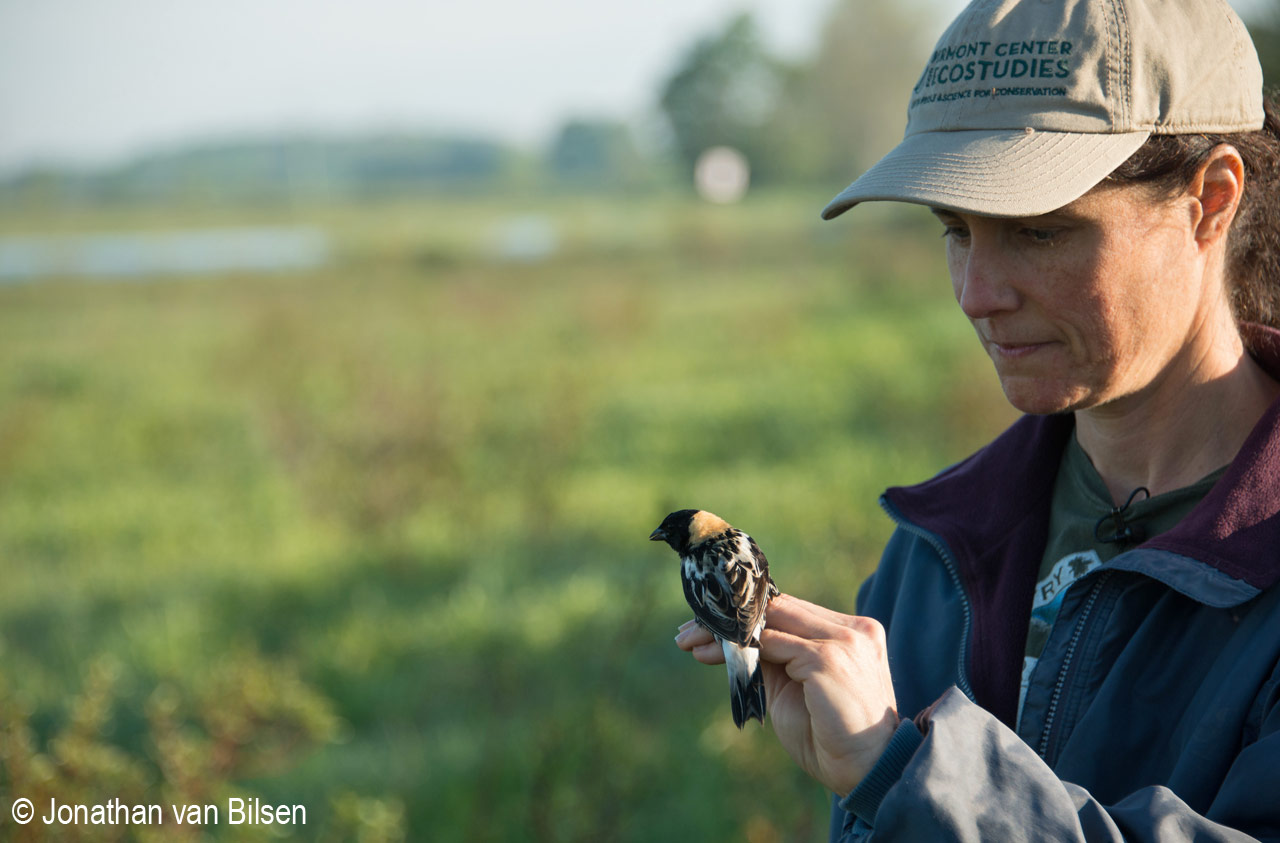 About half of the entire Bobolink population has been lost since 1970, and declines continue today. Restoring and maintaining quality grassland habitat in North America is central to conserving populations of Bobolinks by ensuring there is adequate breeding habitat.
But what happens to Bobolinks for eight months of the year after they leave their breeding grounds? Avian ecologists and conservationists agreed that to conserve a migratory species, we needed to understand the entire life cycle of a bird.
“Full life cycle” conservation means we address birds’ needs year-round, recognizing that what happens during the nonbreeding season can affect the breeding season, and vice versa. We must identify threats to bird populations during both the breeding and nonbreeding seasons and determine whether those threats significantly hinder survival and reproduction.
VCE worked hard to fill in what was once a gaping hole in our understanding of Bobolinks’ lives. We tracked down Bobolinks in South America and used remote methods to figure out what they’re up to. We discovered enormous roosts on the species’ wintering grounds, documented its reliance on rice in winter, and its exposure to harmful pesticides in rice-growing regions. Using geolocators, we described their range-wide migration patterns, important migratory stops, and wintering grounds.
Cool Bobolink Facts
- On Bolivian rice farms, Bobolinks are a pest species controlled with scare tactics. The species is known as “pin-pin,” a mimic of its winter call. Shooters that are sent out to scare the birds are sometimes called “pin-piñeros.”
- Bobolinks seem to prefer certain varieties of rice over others. The plant’s structure may be important, as birds may select varieties that make it easy for them to perch at the top of the plant and access the rice. In Bolivia, they appear to prefer the sweeter, more expensive varieties that humans also find tastiest.
- Although Bobolinks are primarily seed eaters during the nonbreeding season, we have seen them systematically working their way through soy fields in Bolivia, eating nothing but pest caterpillars. In these cases, they can be beneficial rather than pests to farmers.
Conservation Action
 In partnership with the U.S. Fish and Wildlife Service, several academic institutions, agencies, and non-profit organizations, VCE led the development of a full-life-cycle Bobolink Conservation Plan to address the needs of several grassland species. We also forged partnerships with South American organizations to coordinate conservation efforts between breeding, migration, and wintering grounds.
Most grasslands are privately owned, and Bobolink conservation requires that landowners have the incentives and information to manage their lands to provide the right habitat. To have an immediate impact, we are engaged with local on-the-ground conservation through outreach to private landowners. In Vermont and New Hampshire, we are providing willing landowners with the information they need to provide quality habitat for Bobolinks and other grassland birds.
If learning more about the Bobolink has left you wondering how you can contribute to its conservation, please consider becoming a community scientist, making a gift, or keeping up with the latest VCE news! We also encourage you to report any sightings to eBird, which helps us better understand this species throughout its range.